
What Increases Home Renovation Cost: Key Factors
You have a vision for your home. Maybe it is a brighter kitchen, a finished basement, or a master bathroom that finally feels like a retreat. You have started browsing Pinterest and flipping through magazines. Then you get the first contractor estimate, and the number feels like a punch to the gut. How did a simple renovation suddenly cost this much? The truth is that home renovation costs can spiral for reasons you may not have considered. Understanding what increases home renovation cost before you sign a contract can save you thousands of dollars and months of frustration. Let us walk through the hidden drivers that inflate your budget and how you can take control of them.
Scope Creep and Unforeseen Structural Issues
The single biggest factor that increases home renovation cost is scope creep. Scope creep happens when you start with a small project and keep adding tasks. One new light fixture turns into rewiring the whole room. Replacing a vanity turns into a full plumbing relocation. Every addition compounds labor and material costs. What began as a $15,000 bathroom refresh can quickly become a $30,000 gut renovation.
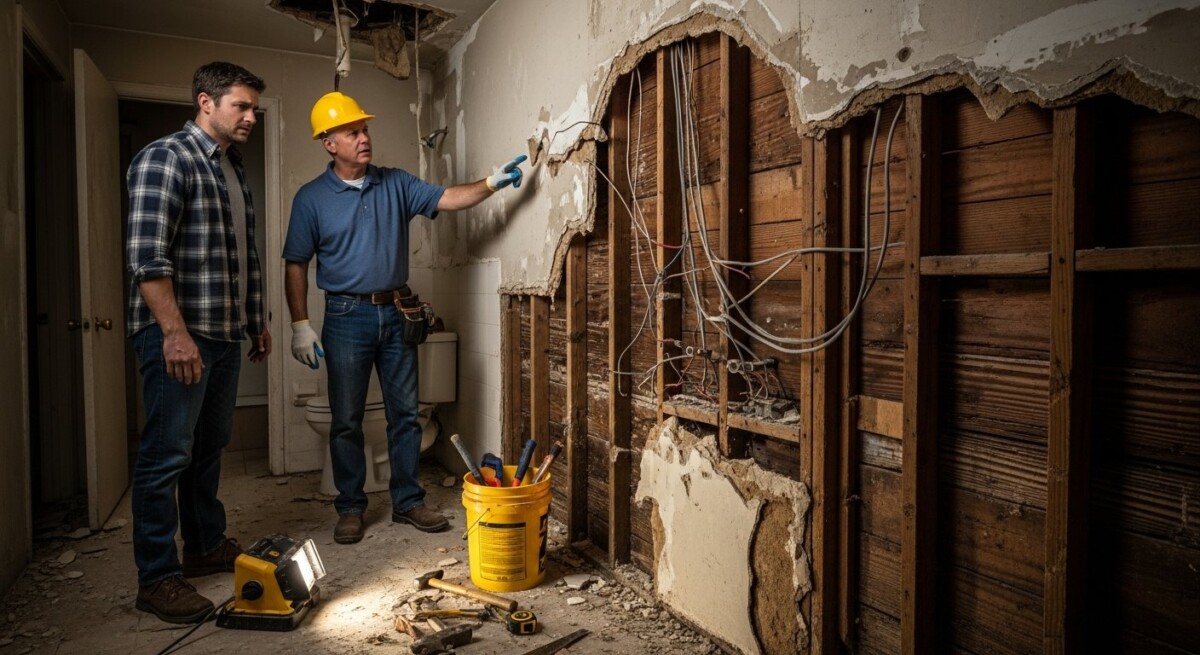
Beyond your own decisions, hidden problems inside the walls are a major culprit. When a contractor opens up a wall, they may find outdated wiring, rotting wood, mold, or an improper load-bearing beam. These discoveries are not optional repairs. They are safety necessities. For example, if your 1970s home has knob-and-tube wiring, your electrician must bring it up to code before enclosing the wall. That alone can add $2,000 to $5,000 to your project. In our guide on average cost of home renovation projects, we break down how much these hidden issues typically add to common room remodels.
To protect yourself, always budget a 15 to 20 percent contingency fund on top of your estimated project cost. This buffer absorbs the financial shock of unexpected structural repairs. It also prevents you from having to pause the project mid-way to find more money.
Material Selection and Supply Chain Pressure
The materials you choose directly answer the question of what increases home renovation cost more than almost any other factor. Countertops illustrate this perfectly. Laminate can cost $20 to $40 per square foot installed. Quartzite or marble can run $100 to $200 per square foot. The same kitchen footprint with the same labor cost can double or triple in price simply based on slab selection.
Here are the main material cost drivers you need to watch:
- Grade and origin: Imported stone, exotic hardwoods, and custom tiles carry premium prices due to shipping and scarcity.
- Finish and fabrication: A simple edge profile is cheap. A bullnose or ogee edge adds fabrication time and waste.
- Brand premium: High-end appliance brands like Sub-Zero or Wolf cost two to three times more than comparable mid-range models.
- Custom vs. stock: Custom cabinetry is built to your exact space. Stock cabinets are mass-produced. Custom can cost three times more.
Supply chain disruptions also play a role. If a specific tile is backordered for eight weeks, your contractor may have to source a more expensive alternative to keep the project on schedule. Always confirm material availability before finalizing your budget. Ask your contractor for a list of approved substitutes in case your first choice is delayed.
Labor Shortages and Skilled Trade Costs
Labor is often the largest line item in any renovation budget, and it is highly sensitive to market conditions. Skilled tradespeople like plumbers, electricians, and carpenters are in short supply in many regions. When demand outpaces supply, hourly rates rise. In major metropolitan areas, master electricians can charge $100 to $150 per hour. In smaller towns, the same work may cost $60 to $80 per hour.
The complexity of the work also drives labor costs. A simple floor plan with straight walls is fast and cheap. A kitchen with an island, a peninsula, and a butler’s pantry requires more cuts, more connections, and more time. Similarly, a bathroom with a curbless shower, linear drain, and custom tile layout demands a higher skill level than a standard tub-and-shower combo. Specialty trades like glass installers or metal fabricators often have minimum service fees that add $500 to $1,000 to a project just for showing up.
To manage labor costs, get at least three detailed bids from licensed contractors. Compare the scope of work line by line. A lower bid may omit critical tasks like permit fees or debris removal. A higher bid may include premium project management. Use platforms like FreeQuotes.Contractors to connect with pre-vetted local pros who provide transparent pricing and detailed scopes.
Permits, Inspections, and Code Compliance
Many homeowners skip the permit process to save money. This is a dangerous mistake. Permits exist to ensure that your renovation meets safety and structural standards. When you pull a permit, the city inspects the work at key stages. If you skip the permit and later sell your home, the unpermitted work can kill the sale or force you to tear it out at your own expense.
Permit fees vary widely by municipality. A simple bathroom remodel might cost $150 to $500 for a permit. A full home addition can cost $2,000 to $5,000 or more. These fees are a direct answer to what increases home renovation cost, but they are non-negotiable for legal and safe work. Beyond fees, code compliance may require upgrades you did not plan. For example, adding a new bedroom may require you to install a fire-rated door or upgrade your HVAC system to handle the increased load.
Work with a contractor who handles permits as part of their service. They know the local inspectors and can schedule inspections efficiently. This saves you time and ensures the work is done right the first time. If you are curious about how different regions handle permitting, our article on home renovation bids Phoenix Arizona offers a helpful example of local requirements.
Design Complexity and Customization
The more unique your design, the more it costs. Off-the-shelf solutions are cheaper because they are mass-produced. Custom solutions require individual attention from designers, fabricators, and installers. A standard 30-inch sink base cabinet costs $200. A custom cabinet built to fit a 27-inch opening with a specific door style and finish costs $600 or more.
Customization extends to every element of the renovation. Custom millwork, built-in bookcases, arched doorways, and vaulted ceilings all require skilled carpenters and extended timeline. Even something as simple as a backsplash pattern can add cost. A straight lay pattern is fast. A herringbone or chevron pattern takes twice as long to install and wastes more tile, so you need to buy extra square footage.
If you love a custom look but need to control costs, consider a hybrid approach. Use stock cabinets for the main run and splurge on a custom island. Choose a standard tile shape with a unique color. Limit structural changes to one or two key areas. This strategy gives you the feeling of a custom renovation without the full price tag.
Geographic Location and Local Market Factors
Where you live dramatically affects your renovation costs. Labor rates, material availability, and permit fees vary by city and state. Coastal cities and high-cost-of-living areas have higher rates across the board. A kitchen remodel in San Francisco can cost $80,000 while the same kitchen in Birmingham, Alabama might cost $40,000.
Climate also plays a role. In cold climates, exterior walls require thicker insulation and vapor barriers. In hurricane zones, windows must meet impact-resistance standards. In earthquake-prone areas, foundations and framing require additional reinforcement. These regional requirements are not optional. They are building code mandates that directly answer what increases home renovation cost in your specific area.
Local competition among contractors also matters. In areas with many qualified contractors, prices tend to be more competitive. In rural areas with few options, you may pay a premium for travel time and limited availability. Always research local rates before setting your budget. Use FreeQuotes.Contractors to receive multiple quotes from local professionals so you can compare pricing and scope side by side.
Project Management and General Contractor Fees
Hiring a general contractor adds overhead to your project, but it can save you money in the long run. A GC manages the schedule, coordinates subs, orders materials, and handles permits. Their fee typically ranges from 10 to 20 percent of the total project cost. For a $50,000 renovation, that is $5,000 to $10,000 in management fees.
If you act as your own general contractor, you keep that money but take on the risk. You must schedule electricians, plumbers, and drywallers so that they do not conflict. You must order materials on time and handle any mistakes. One scheduling error can delay the project by weeks and cost you more than the GC fee would have been. For most homeowners, the peace of mind and time savings are worth the cost.
When vetting a GC, ask about their fee structure. Some charge a flat percentage. Others charge a fixed management fee plus a markup on materials. Get this in writing before you sign a contract. A clear fee structure prevents surprises later and helps you understand exactly what increases home renovation cost in your project management line.
Financing Costs and Interest Rates
If you are borrowing money for your renovation, the cost of financing adds to your total project expense. Home equity loans, personal loans, and credit cards all carry interest. A $30,000 loan at 7 percent interest over five years costs you about $5,600 in interest. That is real money that could have gone toward better materials or a larger project.
Interest rates fluctuate based on the broader economy. When rates are high, borrowing costs more. This can effectively increase your renovation budget by thousands of dollars over the life of the loan. To minimize this, shop for the best rate before you start spending. Consider a home equity line of credit (HELOC) which often has lower rates than personal loans. Pay off the balance as quickly as your budget allows to reduce total interest paid.
Also factor in any loan origination fees, appraisal fees, or closing costs. These upfront charges add to your total cost before you even buy a single tile. Include them in your overall budget calculation so you have a realistic picture of the total financial commitment.
How to Take Control of Your Renovation Costs
Knowledge is your best tool. Now that you understand what increases home renovation cost, you can make informed decisions at every stage. Start with a clear written scope of work. Do not change it once construction begins. Budget a 20 percent contingency for surprises. Get multiple bids and compare them carefully. Choose materials that fit your budget without sacrificing quality where it matters most.
If you are planning a major renovation, use FreeQuotes.Contractors to connect with local professionals who can provide detailed, competitive quotes. We help you compare bids, verify credentials, and find contractors who fit your project and your budget. Renovating your home should be exciting, not financially overwhelming. With the right preparation and the right team, you can achieve the home of your dreams without breaking the bank.
Remember that the cheapest bid is rarely the best value. Look for a contractor who communicates clearly, provides a detailed contract, and has a track record of finishing projects on time and on budget. Invest in quality where it counts: structural integrity, waterproofing, and electrical safety. These are the areas where cutting corners costs you the most in the long run. For more practical advice on keeping your project affordable, check out our strategies on how to reduce home renovation costs without sacrificing quality.