Average Bathroom Remodel Pricing: What to Budget in 2026
Few home improvement projects deliver as much daily satisfaction as a bathroom remodel. A fresh vanity, a walk-in shower, heated floors, and brighter lighting can make a tired space feel like a private spa. But when homeowners first ask about average bathroom remodel pricing, they often face a frustrating range of numbers. Some estimates come in at $8,000, while others climb past $30,000. That gap is not a sign of shady contractors. It is the result of real differences in project scope, materials, labor rates, and site conditions.
Before you settle on a final number, you need to know what you are buying. A refresh that keeps the existing layout will always cost less than a full gut renovation that moves plumbing and electrical lines. That is why comparing total bid prices without comparing the work behind them can lead to poor decisions. To build a reliable budget, start by reading our guide on understanding bathroom remodeling quotes, then use that knowledge to evaluate every estimate you receive.
What Drives Average Bathroom Remodel Pricing?
Average bathroom remodel pricing is not a single number on a national chart. It is a starting point that shifts based on your room size, your home’s age, and the standard of finish you want. A half bath and a primary bathroom can differ by thousands of dollars even when they are in the same house. A 40-square-foot powder room will naturally require less tile, less plumbing, and fewer fixtures than a 120-square-foot master bathroom.
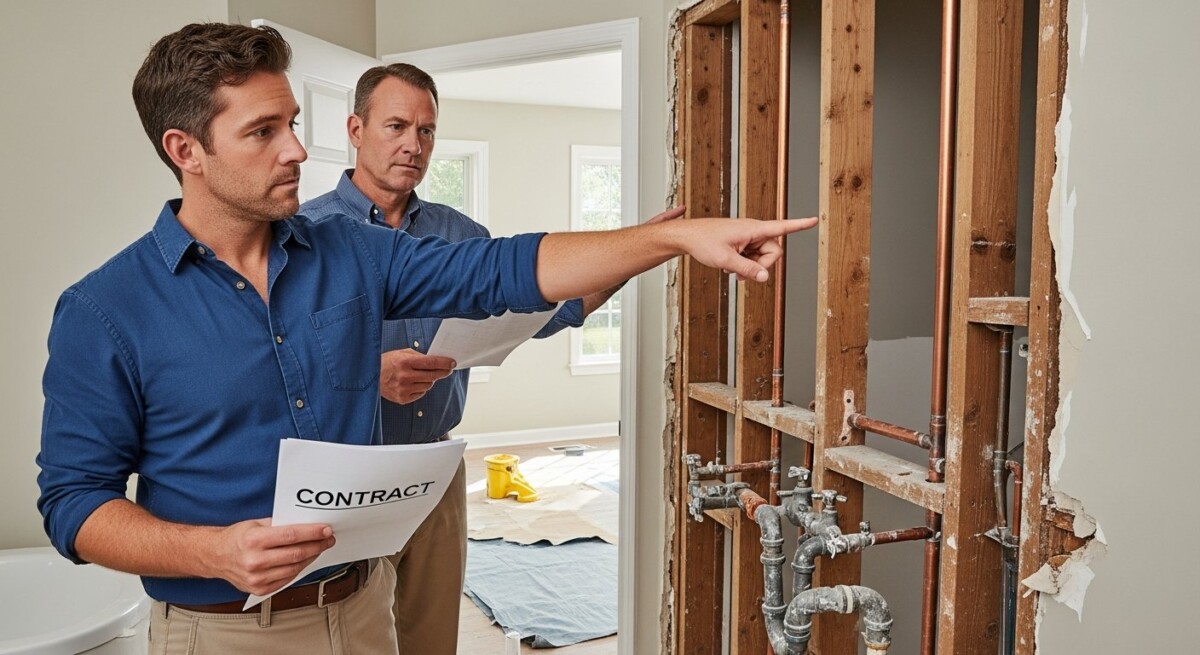
Your home’s construction also matters. Older homes often have outdated plumbing, cast iron pipes, or electrical panels that cannot handle modern lighting and heated floors. Once walls are open, contractors may find corroded valves, water damage, or framing that needs repair. These hidden conditions can add $2,000 to $8,000 to a project. Newer homes generally have fewer surprises, but they may require more expensive waterproofing and ventilation work to meet current building codes.
Location is another major driver. Labor rates vary sharply between cities and suburbs. A contractor in Chicago or Atlanta may charge $75 to $125 per hour, while a contractor in a smaller market might charge $50 to $85 per hour. Material costs also depend on regional availability, shipping distances, and the level of local competition. That is why the same design can cost $18,000 in one zip code and $26,000 in another. When you research average bathroom remodel pricing, always look for data that is national in scope but filtered through local quote comparisons.
Bathroom Remodel Costs by Project Scope
The most helpful way to understand cost is to separate projects by scope. Real-world bathroom remodels fall into three broad buckets, and each one has a distinct price range. Keep in mind that these ranges reflect total costs, including labor, materials, permits, cleanup, and basic fixtures, but not the cost of hiring an interior designer.
- Minor refresh: $5,000 to $10,000. This keeps the existing layout, replaces the vanity, mirror, lighting, faucet, toilet, and maybe the shower curtain or tub door, and includes fresh paint or new wall tile.
- Mid-range remodel: $10,000 to $25,000. This is the most common project for homeowners. It includes new fixtures, new tile, a bathtub or shower replacement, upgraded lighting, and often a new vanity with a stone countertop.
- Upscale renovation: $25,000 to $50,000 or more. This involves a full layout change, custom tile work, a freestanding tub, premium fixtures, heated floors, and high-end finishes like quartz or marble.
These ranges are useful benchmarks, but your own average bathroom remodel pricing will depend on how many line items you change. You can easily spend $12,000 on a small bathroom if you choose designer tile and a smart toilet. You can also spend $9,000 on a larger bathroom if you keep the layout and buy mid-range fixtures. The key is to decide which elements matter most to you and where you are willing to compromise.
If you are planning a full renovation, a clear guide for homeowners can help you set expectations before you meet with contractors. That guide covers the cost of every major component, from tubs and showers to tile and cabinetry, so you can walk into a quote conversation with confidence.
Where the Money Goes: A Budget Breakdown
Understanding the line items in an estimate is the best way to compare bids and avoid overpaying. On a typical mid-range bathroom remodel, labor and materials are the two biggest pieces of the pie. Labor usually accounts for 40 to 60 percent of the total because you are paying for demolition, plumbing, electrical work, tile setting, waterproofing, and installation. Materials account for another 30 to 40 percent, and the remaining 10 percent goes to permits, dump fees, and miscellaneous supplies.
Within the materials category, tile is often the biggest single expense. A mid-range ceramic tile might cost $3 to $7 per square foot, while natural stone or large-format porcelain can cost $10 to $25 per square foot. Fixtures are the second largest material cost. A standard toilet can be $200, but a comfort-height model with a concealed tank can reach $1,200. A basic vanity with a laminate top might cost $450, while a custom double vanity with quartz can run $3,500 or more.
Labor costs are also broken into trades. Plumbing work, electrical work, drywall, and tile installation each come with separate rates. Some contractors include all of these in one bid, while others provide a base carpentry bid and add allowances for plumbing and electrical changes. Always ask how the estimate is structured. A well-organized bid will list each trade separately, include the square footage used for tile pricing, and state the exact models and materials included.
Unexpected Costs That Move Your Final Total
Even a well-researched average bathroom remodel pricing estimate will not catch every issue. Once demolition begins, contractors see behind the walls and under the subfloor. Water damage is the most common surprise. A slow leak behind a shower valve can rot the wall framing, and repairing that damage adds time and money. Mold is another frequent finding, especially in bathrooms that had poor ventilation for years.
Plumbing and electrical upgrades are also common in older homes. Moving a drain line for a new shower layout can cost $1,500 to $3,500. Adding a dedicated circuit for heated floors or an exhaust fan can add another $500 to $1,500. These are not unnecessary upsells; they are necessary to meet code and protect your family. A good contractor will explain why the upgrade is required before doing the work.
You can protect yourself by adding a contingency to your budget. Most remodeling experts recommend setting aside 10 to 20 percent of your total budget for unforeseen conditions. If you have an older home, plan for the higher end of that range. If your contractor does not find any hidden issues, the contingency can be used for upgraded fixtures or better tile, so it is never wasted money.
How to Get Accurate Bathroom Remodel Quotes
Your next step is to collect reliable quotes from contractors who actually perform bathroom renovations. A quote is only useful if it is detailed, realistic, and aligned with your scope. Before you request bids, take time to measure the room, write down your priorities, and decide on a budget range. This preparation will help you compare contractors on an apples-to-apples basis.
One of the fastest ways to gather quality bids is through a contractor matching platform like FreeQuotes.Contractors. The service connects homeowners with pre-vetted local contractors who specialize in bathroom remodeling. You submit a short description of your project, and the platform routes your request to pros in your area. You can then compare pricing, timelines, and communication styles without spending hours on the phone.
When you receive estimates, follow this simple comparison process:
- Ask for a written scope of work that lists every task, including demolition, waterproofing, tile installation, and cleanup.
- Check that the quote includes the specific brands and model numbers for fixtures, tile, and finishes.
- Confirm the payment schedule and whether the contractor charges extra for change orders.
- Ask about the timeline, including how many days the bathroom will be out of service.
- Verify that the contractor is licensed, insured, and willing to pull the required permits.
The lowest bid is not always the best bid. A quote that comes in far below the others may omit important steps like waterproofing or building permits. A quote that comes in far above the others may include premium materials you did not ask for or simply reflect a busier schedule. Your goal is to find the contractor who offers the most complete scope at a fair price.
If you want a deep dive into every line item before you request quotes, bookmark the average bathroom remodel pricing guide on FreeQuotes.Contractors. It walks through the numbers section by section and shows where you can save money without sacrificing quality.
Is Your Bathroom Remodel Worth the Investment?
A bathroom remodel is one of the most valuable home improvement projects you can undertake, even when the price tag feels steep. According to real estate data, a mid-range bathroom renovation typically recovers 60 to 70 percent of its cost when you sell the home. That means a $20,000 remodel can add $12,000 to $14,000 to your resale value, and you enjoy the upgraded space while you live there.
The return depends on several factors. A full remodel in a primary bathroom has strong appeal to buyers, especially if the home is otherwise updated. An outdated bathroom with pink tile and a cracked tub can make an entire house feel dated. On the other hand, overbuilding a bathroom for your neighborhood can hurt your resale value. If the rest of the homes in your area have mid-range finishes, an ultra-luxury bathroom may not return its cost.
Beyond resale, think about daily comfort, safety, and utility. Heated floors, a curbless shower, and grab bars can make a bathroom more accessible as you age. Better lighting and ventilation reduce mold and improve air quality. A new water-efficient toilet and showerhead can lower your utility bills. These benefits are harder to measure than dollars, but they are the real reasons most homeowners renovate.
When you plan your budget, be honest about how long you plan to stay in the home. If you will live there for another decade, invest in the features that make you happy. If you are preparing to sell, focus on neutral finishes and mid-range upgrades that appeal to the broadest group of buyers. Either way, a clean, functional, and modern bathroom is rarely a mistake.
The smartest approach is to gather real numbers from real contractors before you make decisions. Start with a written scope of work, compare detailed bids, and leave room for surprise repairs. The time you spend getting quotes will pay off in the quality of your final project.
When you are ready to take the next step, submit a free bathroom remodel request through FreeQuotes.Contractors. You will receive competitive quotes from local pros who understand your market, your home, and your budget. That clarity transforms average bathroom remodel pricing from a confusing range into a confident, well-planned investment.