
Fall Home Maintenance and Repair Checklist Before Winter
Use this fall home maintenance and repair checklist before winter to prevent costly damage. Call 8332111668 to compare local contractor quotes now.
By Adnan Nazir
Learn more about Handyman for guides, costs, and what to expect.
Compare Handyman Pros Near You

Enter your ZIP code to compare top-rated local professionals and request free quotes.
The first cold snap does not announce itself politely. It arrives on a windy Tuesday, finds the gap under your garage door, and suddenly every small oversight from the past six months becomes an expensive emergency. Homeowners who spend a weekend in early autumn addressing a fall home maintenance and repair checklist before winter consistently avoid the frantic calls for burst pipes, ice dams, and dead furnaces that dominate January. The math is simple: a 20 dollar tube of caulk in October beats a 2,000 dollar drywall and insulation repair in February. This guide walks through the highest-priority tasks in the order that makes sense, so you can protect your largest investment without wasting time on work that does not matter yet.
Start With the Roof and Gutters, Your First Line of Defense
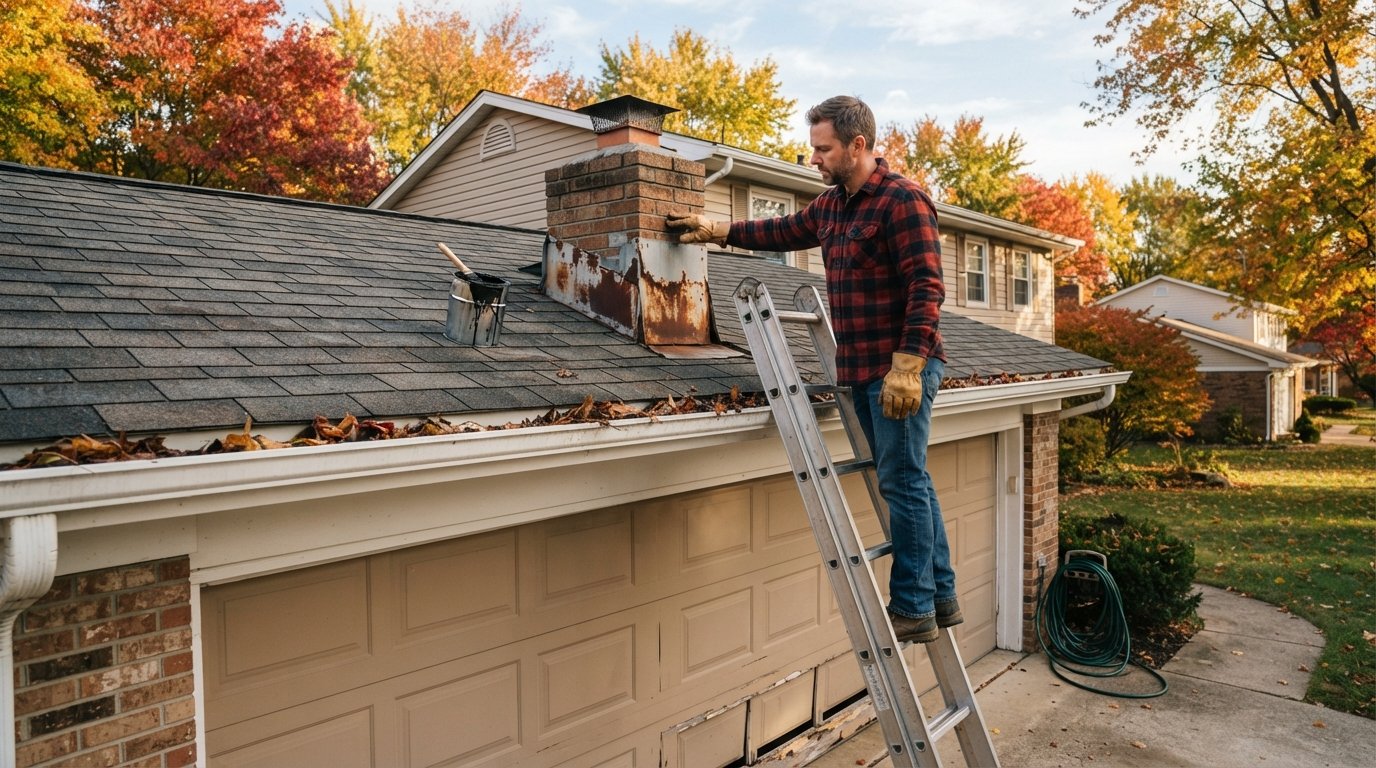
Nothing takes more winter punishment than the roof, and nothing is easier to inspect while the weather is still mild. Climb up safely (or use binoculars from the ground) and look for lifted, cracked, or missing shingles, rusted flashing around chimneys and vents, and any granule buildup in the gutters, which signals that shingles are nearing the end of their service life. If you spot widespread damage or the roof is more than 15 to 20 years old, it is worth getting professional eyes on it before snow loads test its weak points. You can request free roofing quotes through a vetted contractor marketplace and compare bids side by side rather than guessing at repair costs.
Once the roof itself checks out, turn your attention to drainage. Gutters clogged with leaves and twigs are the single most common cause of ice dams, because trapped water backs up under the shingles and freezes. Clear every run of gutter, flush the downspouts with a hose, and confirm that water discharges at least 4 to 6 feet away from the foundation. If your downspouts dump right at the base of the house, add inexpensive extensions or splash blocks. This one task prevents basement seepage, foundation cracks, and fascia rot all at once.
While you are at it, inspect the attic underside of the roof deck for dark stains or daylight. Both indicate that warm air is escaping and will soon melt snow from below, refreezing at the eaves. Sealing those air leaks now is far cheaper than repairing water damage later.
Seal the Building Envelope Before the Cold Finds the Gaps
Air infiltration accounts for a surprising share of winter heating bills, and most of it sneaks through a handful of predictable spots. Walk the exterior with a tube of exterior-grade caulk and a can of expanding foam, and address the following:
- Gaps around window and door frames, especially on the north and west sides of the house
- Penetrations where pipes, wires, and HVAC lines enter the siding
- Dryer vents, hose bibs, and outdoor outlet covers
- The sill plate and rim joist area in basements and crawl spaces
Interior sealing matters just as much. Add or replace weatherstripping on exterior doors, install door sweeps, and fit foam gaskets behind switch plates on exterior walls. If your windows are single pane or visibly drafty, temporary shrink film costs very little and delivers an immediate comfort improvement. For homeowners planning a permanent upgrade, comparing window replacement costs before winter often reveals that new units pay for themselves through energy savings faster than expected.
Do not forget the attic hatch and any pull-down stairs. These are notorious bypasses for heated air. A simple insulated cover or a few strips of weatherstripping can make a measurable difference in how hard your furnace has to work.
Prepare Your Heating System for Constant Use
Your furnace or heat pump is about to run every day for months, so it deserves attention before the first cold night rather than after it fails. Schedule a professional tune-up if you have not had one in the past year. A technician will clean the burners, check the heat exchanger for cracks, test the blower motor, and verify that the system is venting safely. This is also the right moment to replace the air filter, and to stock a few spares so you can swap them monthly through the heating season.
If you heat with gas, test every carbon monoxide detector in the home and replace the batteries. If you use a wood stove or fireplace, have the chimney swept and inspected for creosote buildup and cracked flue tiles. Creosote is highly flammable, and chimney fires are almost entirely preventable with an annual cleaning. For households relying on space heaters, confirm that each unit has an automatic shutoff and tip-over protection, and keep them at least 3 feet from anything combustible.
Do not overlook the humble thermostat. If yours is an older manual model, consider upgrading to a programmable or smart thermostat before winter. Scheduling lower temperatures overnight and while you are away typically trims 8 to 15 percent off heating costs, and the device often pays for itself within a single season.
Winterize Plumbing to Prevent Burst Pipes
Water damage from a frozen pipe is one of the most expensive and most avoidable winter disasters. Start outdoors by disconnecting garden hoses, draining them, and storing them for the season. Shut off the interior valves that feed exterior hose bibs, then open the outdoor spigots to let any remaining water drain out. If your home has a sprinkler system, blow it out with compressed air or hire a professional to do it.
Indoors, focus on pipes that run through unheated spaces such as garages, crawl spaces, basements, and exterior walls. Fit them with foam pipe insulation, which costs very little and takes minutes to install. On nights when temperatures are forecast to drop well below freezing, let a thin stream of water trickle from the faucet farthest from your water main. Moving water freezes far more slowly than standing water. If you plan to travel during the winter, leave the thermostat set no lower than 55 degrees Fahrenheit and ask a neighbor to check the house.
It is also wise to locate your main water shutoff valve now, before you need it in a hurry. Label it clearly and make sure every adult in the household knows how to close it. In a burst-pipe scenario, those few seconds of quick action can mean the difference between a mop and a full flooring replacement.
Handle Exterior Surfaces, Landscaping, and Drainage
Winter is hard on concrete, decks, and driveways, and small cracks become large ones once water seeps in and freezes. Walk your driveway, walkways, and patio, and seal any cracks wider than a credit card with a concrete patching compound. Seal or stain wood decks while temperatures are still above 50 degrees Fahrenheit, because most products will not cure properly in the cold. This is also the right time to inspect exterior paint for peeling or blistering; bare wood that absorbs winter moisture will rot quickly, and touching up now saves a full repaint later.
Landscaping deserves attention too. Trim tree branches that hang over the roof or power lines, since ice loading will bring weak limbs down. Cut back perennials, spread mulch around the base of shrubs to insulate roots, and water young trees deeply before the ground freezes. Drain and store hoses, fountains, and irrigation timers. If you live in an area with heavy snowfall, stage your snow shovel, ice melt, and roof rake somewhere accessible now, not in the back of a cluttered garage when a storm is already underway.
Finally, check your grading. The soil around your foundation should slope away from the house at roughly a 6 inch drop over the first 10 feet. If it has settled and now slopes inward, add soil to restore the pitch. This simple fix directs snowmelt away from your basement and foundation walls, where it would otherwise cause hydrostatic pressure and cracking.
Safety Systems and Emergency Readiness
A fall checklist is not complete without a pass through your home safety systems. Test every smoke detector and carbon monoxide alarm, replace batteries, and note the manufacture date on each unit. Detectors older than 10 years should be replaced entirely, since their sensors degrade over time. Check the pressure gauge on your fire extinguishers and confirm that they are still within their inspection window.
Assemble or restock a winter emergency kit for the house and for each vehicle. A basic home kit includes bottled water, nonperishable food, flashlights, extra batteries, a battery-powered radio, blankets, and a first aid kit. Car kits should add an ice scraper, jumper cables, a small shovel, sand or kitty litter for traction, and warm gloves. If you rely on a generator during outages, test it now, store fuel safely, and never run it indoors or in an attached garage because of carbon monoxide risk.
For homeowners who would rather hand off the heavy lifting, an established contractor matching platform can connect you with vetted local pros for everything from gutter cleaning and furnace tune-ups to roof repairs and plumbing winterization. Gathering several free quotes before the busy season hits means you get competitive pricing and a vetted professional rather than whoever happens to answer the phone during a January emergency. Repairmen, a nationwide network of licensed and reviewed service professionals, offers a similar directory covering appliance repair, remodeling, maintenance, and emergency repairs, which can be useful when you need a second source for a specific trade. Whether you hire out or do the work yourself, treating this checklist as a single weekend project pays dividends all winter long. Repairmen