
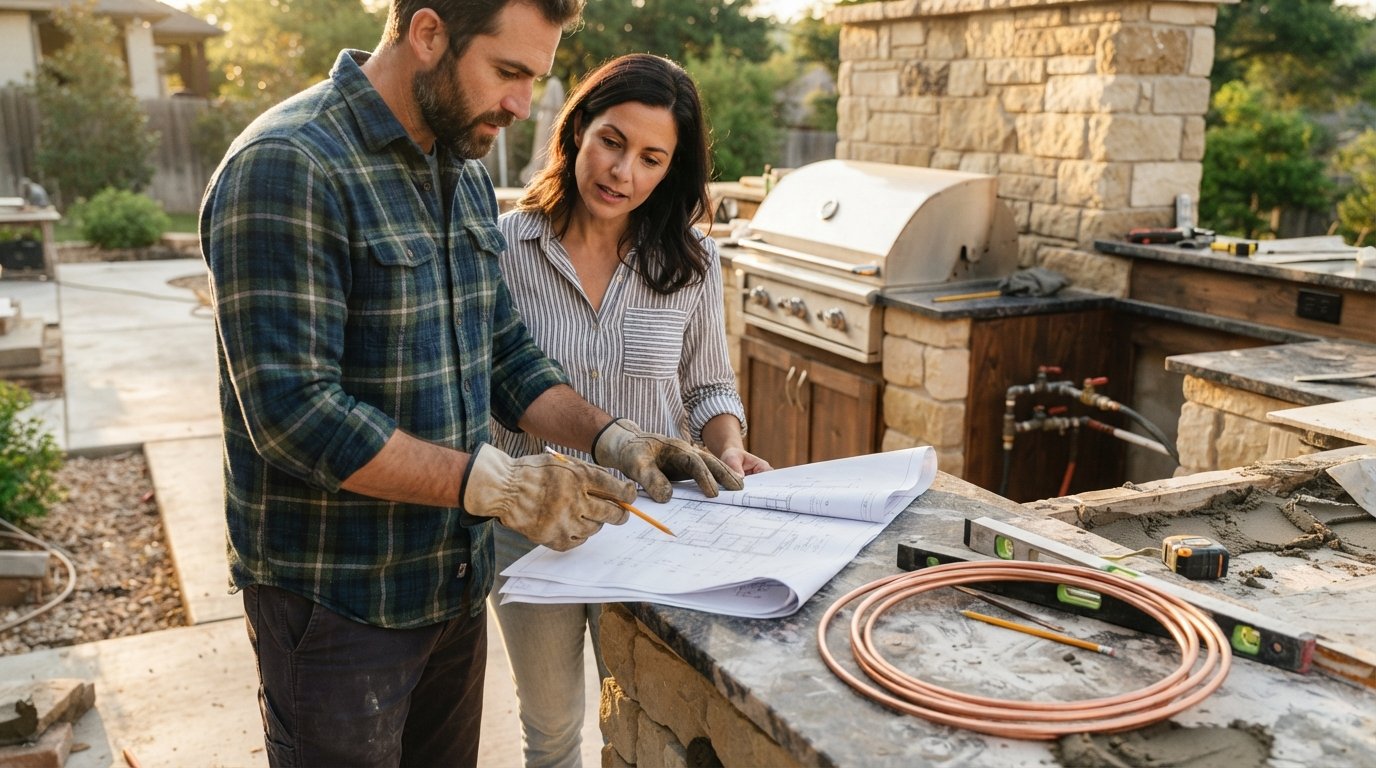
How to Hire an Outdoor Kitchen Contractor
Hire the right outdoor kitchen contractor with this step-by-step guide covering vetting, bids, contracts, and red flags to avoid.
By Adnan Nazir
Learn more about General Contracting for guides, costs, and what to expect.
Compare General Contracting Pros Near You

Enter your ZIP code to compare top-rated local professionals and request free quotes.
Standing on your patio, you can already picture it: the sizzle of a built-in grill, the warm glow of string lights, and friends gathered around a sleek countertop. But before you pour a single slab of concrete, you need to make one of the most important decisions of your project. Who will build this outdoor kitchen? The answer will determine not only how your project looks, but also how it performs, how long it lasts, and how much stress you endure along the way.
Hiring the right professional is not about luck. It is about following a proven process that separates dependable, skilled contractors from those who will leave you with a half-finished project and a pile of excuses. This outdoor kitchen contractor hiring guide walks you through every stage, from defining your project to signing a watertight contract, so you can move forward with confidence.
Why the Right Contractor Matters for an Outdoor Kitchen
An outdoor kitchen is a unique beast. It is not just a grill on a cart. It combines plumbing, gas lines, electrical wiring, masonry, and custom cabinetry, all exposed to sun, rain, and temperature swings. That complexity means you need someone who understands both construction and the specific demands of outdoor living spaces.
A contractor with true outdoor kitchen experience will know how to spec weatherproof materials, how to route gas lines safely, and how to design a layout that actually works for cooking and entertaining. They will also understand local building codes and permit requirements. The wrong pro, on the other hand, might treat your project like a simple patio extension, leading to cracked counters, corroded appliances, or worse, a gas leak.
Beyond technical skills, the right contractor protects your financial and legal interests. They carry proper insurance, offer clear warranties, and communicate honestly about costs and timelines. That level of professionalism is not a luxury. It is a necessity for a project that can easily run from $15,000 to over $50,000, depending on scope and materials. For a deeper look at what you might spend and what you can expect in return, check out our guide on outdoor kitchen cost and ROI.
Step 1: Define Your Project Scope and Budget
Before you talk to any contractor, you need to know what you actually want. This is the foundation of your entire hiring process. If you cannot articulate your vision, you will struggle to compare bids or evaluate whether a contractor understands your needs.
Start by answering these questions:
- What will the kitchen be used for? Weekend family cookouts, large parties, or everyday meal prep?
- Which appliances are essential? A basic grill, a side burner, a refrigerator, a sink, or a pizza oven?
- What style and materials fit your home and landscape? Stone veneer, stucco, brick, or stainless steel?
- Will you need utilities extended to the space? Gas, water, and electricity all add cost and complexity.
- Do you want a simple counter and grill setup, or a full outdoor room with seating, lighting, and a roof?
Once you have a clear picture, set a realistic budget. Include a 10 to 20 percent contingency fund for unexpected issues, such as discovering a buried utility line or needing to reinforce a foundation. This buffer will prevent you from having to compromise on quality halfway through the build.
Your budget is also a screening tool. When you share a clear range with contractors, you will naturally filter out those who work at very different price points. You are not being rude. You are saving everyone time.
Step 2: Research and Build a Candidate List
With your project defined, you can start your search. Do not just grab the first name from a search engine. A thoughtful approach will yield far better results. Begin by asking for recommendations from friends, neighbors, and local homeowner groups. People who have recently built an outdoor kitchen can give you candid feedback about their experience.
Then, search for contractors who specialize in outdoor living spaces. Look for portfolio photos of completed projects that resemble what you want. Pay attention to details like counter seams, appliance integration, and drainage. A good portfolio demonstrates craftsmanship and design sense.
You can also use platforms that connect homeowners with vetted professionals. For example, Homes.Contractors is a comprehensive online directory and informational resource where you can find qualified, pre-vetted contractors for home improvement and repair services, including outdoor kitchen construction. Narrow your list to three to five candidates. That is enough to compare without becoming overwhelming.
Step 3: Vet Credentials, Insurance, and References
Now it is time to dig deeper. Every contractor you consider should be licensed, insured, and willing to provide references. A license proves they meet basic state or local requirements. Insurance, specifically general liability and workers compensation, protects you if someone is injured on your property or if your home is damaged during construction.
Ask for proof of both. Do not just take their word for it. Call their insurance provider if necessary to confirm the policy is active. This step is non-negotiable. If a contractor is unlicensed or uninsured, walk away immediately. The risk is simply not worth it.
References are your window into how a contractor actually works. Ask each candidate for three recent projects that are similar to yours. Contact those homeowners and ask specific questions:
- Did the contractor stay on schedule and on budget?
- How did they handle unexpected problems or change orders?
- Was the worksite kept clean and safe?
- Did they communicate regularly and clearly?
- Would you hire them again?
If a contractor hesitates to provide references or if previous clients give lukewarm feedback, treat that as a red flag.
Step 4: Conduct In-Person Interviews
An interview is your chance to gauge a contractor's expertise and personality. Schedule a meeting at your home so they can see the site and understand your vision in context. A professional will arrive on time, ask thoughtful questions, and offer constructive suggestions. They should not pressure you or dismiss your ideas.
Prepare a list of questions that go beyond surface level:
- How many outdoor kitchens have you built in the past two years?
- Will you use your own crew or subcontractors?
- Who will be the on-site project manager?
- How do you handle permits and inspections?
- What is your typical timeline for a project like this?
- How do you handle change orders and unexpected costs?
- Do you offer a workmanship warranty, and what does it cover?
Listen carefully to their answers. The best contractors are transparent about their process and realistic about challenges. They do not overpromise or guarantee impossible timelines. They also communicate in plain language, not just industry jargon.
Take notes during each interview. After you have met with all candidates, you will have a clearer sense of who aligns with your project goals and your working style.
Step 5: Compare Detailed Bids Side by Side
After the interviews, request a written bid from each contractor. A proper bid is detailed and itemized. It should list every material, appliance, and labor cost. It should also include the timeline, payment schedule, and any warranty terms. If a bid is vague or just a single number, ask for more detail. You cannot make an informed comparison without it.
When you review the bids, look beyond the bottom line. A low bid can indicate lower quality materials or a contractor who does not fully understand the scope. A high bid might reflect premium materials or a more experienced team. Identify what is included in each price and what is excluded. For example, does the bid include demolition of an old patio? What about electrical and plumbing rough-in? Does it cover permits and final inspections?
Use a simple comparison chart to evaluate each bid across these criteria:
- Total price and payment terms
- Materials specified, including brand and model numbers
- Timeline and milestones
- Warranty coverage
- Cleanup and debris removal
- Communication policy and on-site supervision
Do not be afraid to ask clarifying questions. A reputable contractor will be happy to explain their bid. If one contractor is significantly cheaper than the others, ask why. There may be a legitimate reason, but you need to understand it before you commit.
Step 6: Check Online Reviews and Complaints
Your bid comparison should be paired with due diligence on each contractor's reputation. Search for their business on the Better Business Bureau website, local review sites, and social media. Look for patterns. A single negative review is not a dealbreaker, but multiple complaints about the same issue, such as poor communication or sloppy work, should give you pause.
Pay attention to how contractors respond to negative reviews. A professional who addresses criticism constructively shows they care about their reputation and their customers. A contractor who attacks reviewers or ignores complaints entirely is a risk.
Also verify their status with your local licensing board. You can usually search for active licenses and any disciplinary actions. This is a simple step that can save you from a serious mistake.
Step 7: Review the Contract Thoroughly
Once you have selected a contractor, it is time to formalize the agreement. A comprehensive contract protects both you and the contractor. It should be in writing and signed by both parties before any work begins or any money changes hands. Review it carefully, and do not be shy about asking for changes.
Your contract should include, at a minimum:
- A detailed description of the work, including all materials and appliances by brand and model
- A clear timeline with start and completion dates and milestones
- A payment schedule that ties payments to completed phases of work
- Provisions for change orders, including how they are documented and priced
- Warranty terms for both workmanship and materials
- A process for resolving disputes
- Proof of insurance and license numbers
- An agreement to obtain all necessary permits and pass inspections
If a contractor resists putting promises in writing, that is a red flag. The contract is not just a formality. It is your safeguard if something goes wrong. Have a lawyer review it if you have any doubts, especially for a high-value project.
Red Flags to Avoid in Any Contractor
Even with a solid process, you need to stay alert for warning signs. Some are obvious, while others are more subtle. Trust your instincts. If something feels off, it probably is.
Be wary of contractors who:
- Demand a large deposit before starting work or before ordering materials
- Pressure you to make a decision immediately or offer a "special discount" for signing that day
- Ask you to pull the permits yourself
- Cannot provide proof of insurance or a valid license
- Refuse to provide references or show you past work
- Use high-pressure sales tactics or vague, evasive answers
- Have no physical business address or only a cell phone number
These behaviors point to a lack of professionalism and, in some cases, outright fraud. Do not ignore them. Your project is too important.
How to Use a Quote Request Service to Simplify Hiring
If the idea of researching, vetting, and interviewing multiple contractors feels overwhelming, you are not alone. Many homeowners use a quote request service to streamline the process. These platforms match you with pre-vetted local contractors who are ready to provide competitive bids for your specific project.
When you submit a detailed request, you receive quotes from qualified professionals without having to cold call or sift through endless search results. This saves time and gives you a stronger negotiating position. You can then apply the same vetting principles from this guide to evaluate the bids you receive.
For a free, no-obligation way to connect with local outdoor kitchen experts, consider using a platform like FreeQuotes.Contractors. It is designed to simplify the contractor selection process by providing transparent pricing information and access to pre-screened professionals, empowering you to make an informed decision with less hassle.
In the end, the effort you put into hiring the right contractor pays off in every future barbecue, every quiet evening by the fire, and every time a guest asks, "Who built this?" You will know you chose someone who shared your vision and had the skill to make it real. Take your time, follow the steps in this outdoor kitchen contractor hiring guide, and you will create a space that serves you well for decades.
Learn more about General Contracting for guides, costs, and what to expect.
Compare General Contracting Pros Near You
Enter your ZIP code to compare top-rated local professionals and request free quotes.