
Specialized Home Repair Contractors Types Explained
Specialized home repair contractors types range from plumbers to roofers. Match the right pro to each project and avoid costly, unpermitted work.
By Adnan Nazir
Learn more about Home Inspection for guides, costs, and what to expect.
Compare Home Inspection Pros Near You

Enter your ZIP code to compare top-rated local professionals and request free quotes.
When a pipe bursts behind a wall, a circuit breaker panel starts buzzing, or a foundation crack widens after a heavy rain, the handyman who fixed your squeaky door last spring is not the right call. Modern homes are complex systems, and the professionals who keep them running are increasingly specialized. Understanding the different types of specialized home repair contractors matters because hiring the wrong trade wastes money, delays projects, and can even void warranties or fail inspection. This guide breaks down the major categories of specialists, what each one handles, and how to match the right pro to the right problem, whether you are managing an emergency or planning a scheduled upgrade.
Why Specialization Matters More Than Ever
Building codes, manufacturer specifications, and insurance requirements have all grown more demanding over the past two decades. A roofing shingle installed without the manufacturer's specified underlayment can void a 30-year warranty. A water heater replaced without a permit can complicate a home sale years later. Specialized contractors carry the licensing, insurance, and manufacturer certifications that generalists typically lack, and that credentialing exists for a reason: it protects your largest financial asset.
There is also a practical cost dimension. A licensed electrician diagnoses a faulty circuit in an hour, while a generalist may spend a day guessing and still need to call in help. Specialists bring the right tools, the right parts inventory, and the experience of having solved your exact problem hundreds of times. The upfront hourly rate may be higher, but the total project cost is often lower.
Finally, specialization affects accountability. When a specialist performs the work, liability for defects sits clearly with one licensed party. When a generalist subcontracts or improvises, responsibility gets murky, and homeowners can end up caught between two trades pointing fingers at each other. Before you hire anyone, it helps to know which category of professional your project actually requires.
The Main Types of Specialized Home Repair Contractors
The trades below cover the vast majority of residential repair and improvement work. Some projects overlap two or more categories, which is normal; a bathroom remodel, for example, may involve a plumber, an electrician, a tile setter, and a general contractor coordinating them. The key is knowing who owns which part of the job.
Plumbing Contractors
Plumbers handle water supply lines, drain and sewer systems, gas piping in many jurisdictions, water heaters, and fixture installation. Within plumbing, further specialization exists: repiping specialists, sewer line and trenchless repair experts, and backflow prevention technicians. If you are dealing with a slab leak, a recurring clog, or a failed water heater, you want a licensed plumber rather than a general repair service. Ask whether they pull permits for water heater replacements, because many states require it.
Electrical Contractors
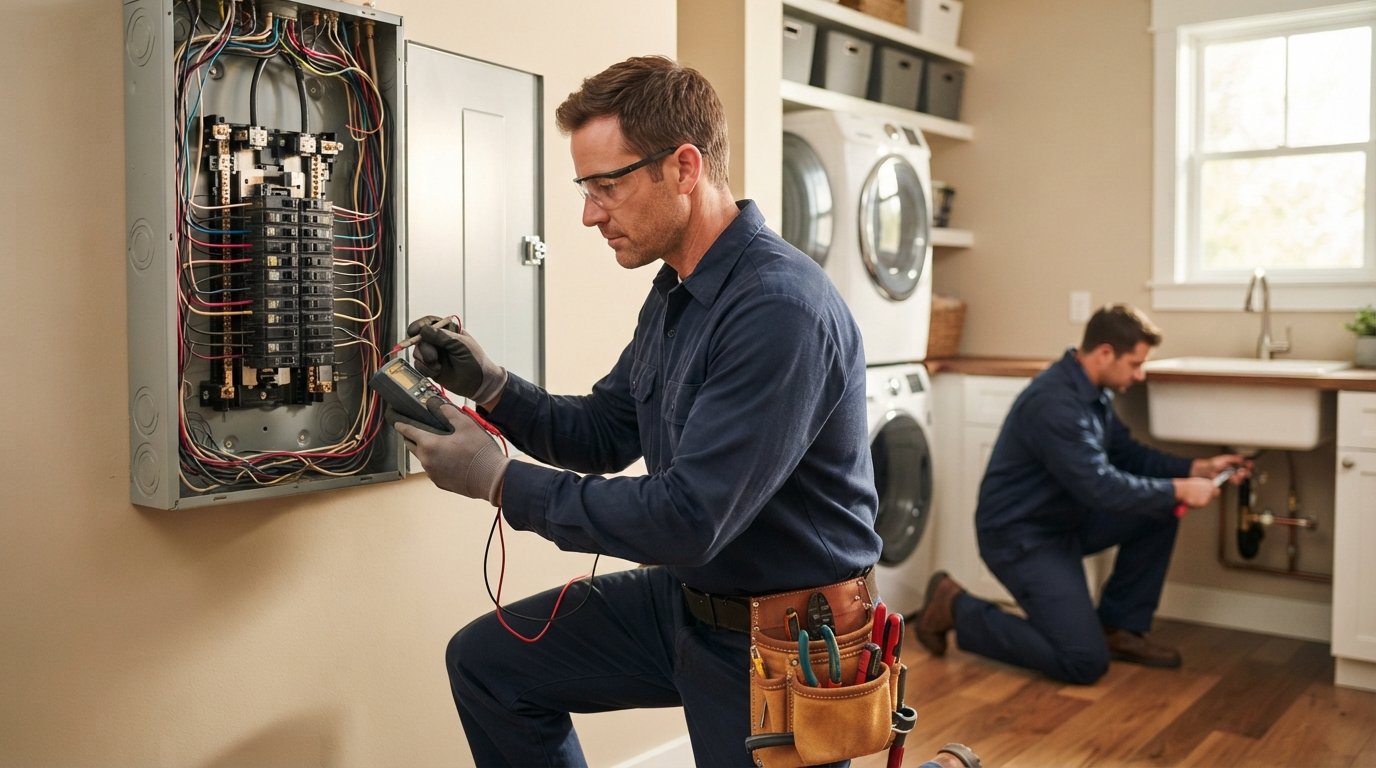
Electricians install and repair wiring, outlets, panels, generators, EV chargers, and lighting systems. Panel upgrades and service changes almost always require a licensed electrician and a permit. Some electricians specialize further into low-voltage work such as security systems, home networking, and audio wiring, which is a different skill set from high-voltage work. Never let a non-licensed handyman open your electrical panel; the risk of fire and the insurance implications are too serious.
HVAC Contractors
Heating, ventilation, and air conditioning contractors install, service, and repair furnaces, air conditioners, heat pumps, ductwork, and indoor air quality equipment. HVAC sits at the intersection of electrical, mechanical, and refrigerant work, which is why most states require a specific license. Look for technicians certified to handle refrigerants, and for companies that perform manual J load calculations before sizing new equipment. An oversized or undersized system costs more to run and fails sooner.
Roofing Contractors
Roofers handle shingles, tiles, metal panels, flat membrane systems, flashing, gutters, and attic ventilation. Roofing is one of the most fraud-prone categories in home repair, so verification matters: check for a physical local address, a state license where required, manufacturer certifications, and proof of workers compensation insurance. A roofing specialist should also be able to assess decking, underlayment, and ice-and-water shield, not just the visible surface material.
Foundation and Structural Specialists
Foundation repair contractors address settling, cracks, bowing walls, and moisture intrusion using piers, anchors, and drainage solutions. Structural engineers often work alongside them to diagnose whether a crack is cosmetic or serious. If a contractor proposes a five-figure foundation repair without an engineer's report, get a second opinion. This category also includes waterproofing specialists who seal basements and crawl spaces.
Restoration and Remediation Contractors
Water damage, fire damage, mold, and storm damage require restoration specialists who understand insurance documentation, drying science, and safe demolition. These contractors often work directly with adjusters and can provide the moisture readings and photo documentation that claims require. Mold remediation in particular should follow industry standards for containment and clearance testing, not just a spray-and-wipe approach.
Specialty Trade Contractors
Beyond the major systems, a long list of specialty trades handles finishes and fixtures: tile setters, flooring installers, painters, drywall finishers, cabinet installers, countertop fabricators, window and door installers, and solar installers. Each has its own failure modes. A poorly installed shower pan, for instance, can cause thousands of dollars in hidden water damage before anyone notices. Hiring the trade that specializes in the specific material or system is almost always the safer path.
If you are unsure which specialist your project needs, a nationwide matching platform such as Repairmen can help you sort categories, review vetted local professionals, and compare options before you commit to anyone. For homeowners who prefer to gather multiple bids at once, FreeQuotes.Contractors offers a free quote request system that connects you with pre-vetted local contractors across roofing, HVAC, plumbing, electrical, remodeling, and more, so you can compare pricing and scope side by side.
How to Match the Right Specialist to Your Repair
Choosing well starts with an honest diagnosis of the problem. Homeowners often misidentify the trade they need, which leads to wasted service calls. A stain on the ceiling might be a roof leak, a plumbing leak, or an HVAC condensate issue. A warm outlet might be a loose connection or an overloaded circuit. The more precisely you can describe symptoms, the better the first contractor can route you correctly.
A simple decision sequence helps narrow the field before you make any calls:
- Identify the system involved: water, power, air, structure, or finish.
- Note whether the issue is urgent (active leak, no heat, sparking) or can be scheduled.
- Check whether your state or city requires a licensed specialist and a permit for that scope of work.
- Gather at least three quotes for anything beyond a minor repair.
- Verify license, insurance, and recent local references before signing.
Urgency changes the calculus. For an active water leak, shut off the supply and call a plumber or restoration company immediately rather than collecting quotes first; damage compounds by the hour. For a planned project like a bathroom remodel, you have time to compare bids carefully and check reviews. Either way, document everything: photos of the problem, dates, and any communication with contractors. This record protects you if a dispute arises or an insurance claim follows.
What to Verify Before Hiring Any Specialized Contractor
Credentials vary by state, but a consistent set of checks applies almost everywhere. Skipping them is how homeowners end up with unpermitted work, voided warranties, or liens on their property. The verification process takes about 20 minutes and is the single highest-value step in the entire project.
At minimum, confirm the following for every specialized contractor you consider:
- Active state or local license for the specific trade, verified through the official licensing board website.
- General liability insurance and workers compensation coverage, confirmed with a certificate of insurance.
- A written contract that lists scope, materials, timeline, payment schedule, and warranty terms.
- Permits pulled in the contractor's name where required, not left to you as the homeowner.
- Recent local references and verifiable reviews, ideally from projects similar to yours.
Payment structure deserves special attention. A common and reasonable deposit is 10 to 30 percent, with remaining payments tied to completed milestones. Be cautious of anyone demanding full payment upfront, offering a large discount for cash, or pressuring you to sign the same day. Legitimate specialists are busy and do not need high-pressure tactics to win work.
Warranty terms also distinguish professionals from fly-by-night operators. Ask how long the workmanship warranty lasts, whether it is transferable if you sell the home, and what the manufacturer's warranty covers on materials. Get these answers in writing. A one-year workmanship warranty is a reasonable baseline for most repair work, while some trades, such as roofing and foundation repair, may offer longer terms.
Emergency Repairs and When to Call Immediately
Some situations do not allow time for comparison shopping. Gas smells, sparking outlets, sewage backups, and active flooding all require immediate professional attention. In these cases, your priority shifts from price comparison to rapid, competent response. Keep a short list of trusted emergency numbers on hand before you need them, including a licensed plumber, electrician, and restoration company.
For emergencies, take these steps in order: shut off the relevant utility if you can do so safely (water main, gas valve, or breaker), evacuate if there is any risk of fire or gas exposure, and call the appropriate specialist or utility. Do not attempt DIY repairs on gas lines or main electrical panels under any circumstances. Once the immediate danger is controlled, document the damage with photos and contact your insurance company before starting permanent repairs, since many policies require prompt notice and may specify approved vendors.
After the emergency passes, it is worth reviewing what happened and whether preventive work could avoid a repeat. A sump pump failure, for example, might point to a need for a backup system or a battery upgrade. A recurring tripped breaker might signal an overloaded panel that a licensed electrician should evaluate. Emergency repairs are stressful and expensive; the follow-up conversation is where you turn that expense into long-term protection.
Cost Expectations and How to Compare Bids Fairly
Specialized repair costs vary widely by region, home age, and project scope, but the structure of a fair bid is consistent. A good estimate itemizes labor, materials, permits, and any subcontractor costs, and it specifies what is excluded. Vague, lump-sum quotes with no breakdown are difficult to compare and easy to inflate later through change orders.
When comparing bids, normalize them before deciding. Ask each contractor to confirm the same scope of work, the same material grades, and the same timeline assumptions. A bid that looks 20 percent cheaper often reflects thinner materials, excluded permits, or omitted prep work rather than genuine savings. The lowest number is rarely the best value in specialized trades, where workmanship quality determines how long the repair lasts.
It also helps to ask each contractor what could go wrong and how they handle surprises. Hidden rot under a roof, corroded pipes inside a wall, or outdated wiring behind drywall are common discoveries once work begins. A professional who explains likely contingencies upfront and provides a clear change-order process is far easier to work with than one who promises a fixed price and then renegotiates. Transparency during the bidding stage is a strong predictor of how the project will actually go.
Finally, factor in your own time. Managing multiple trades yourself can save the contractor's markup, but it also means coordinating schedules, resolving disputes, and holding permits. For complex projects that touch several systems, a qualified general contractor who coordinates specialists often delivers a better result at a comparable total cost. For single-system repairs, going directly to the specialist is usually faster and cheaper. Matching the structure of your hiring to the structure of the job is the simplest way to avoid both overspending and unnecessary headaches.
Specialized home repair contractors exist because homes have become too complex for any one person to master every system. Knowing the types, what they do, and how to verify them puts you in control of the process, whether you are facing a midnight plumbing emergency or planning a deliberate renovation. Start with a clear diagnosis, gather multiple quotes, verify credentials, and put everything in writing. Do that, and the right specialist will be easier to recognize when they show up.