
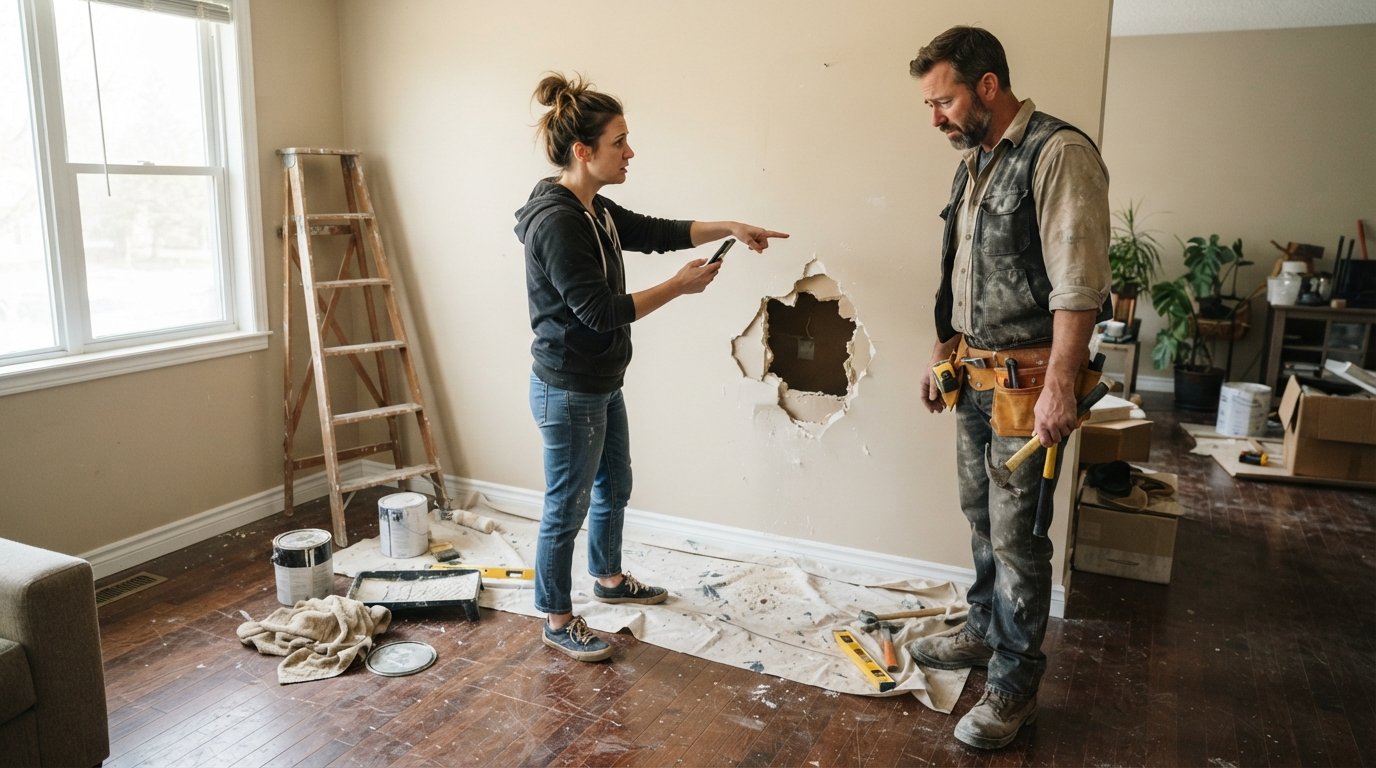
Contractor Damaged Property? Steps to Get It Fixed
Discover the essential steps to take when a contractor damages your property, from documenting the issue to filing claims and protecting your rights.
By Adnan Nazir
Learn more about Home Inspection for guides, costs, and what to expect.
Compare Home Inspection Pros Near You

Enter your ZIP code to compare top-rated local professionals and request free quotes.
Discovering that a contractor has damaged your property can be a stressful and frustrating experience. Whether it is a scratched hardwood floor, a hole in a wall, or a broken window, the immediate shock often gives way to questions about responsibility, cost, and next steps. You hired a professional to improve your home, not to cause new problems. The good news is that property damage caused by contractors is typically covered, and you have clear rights and options. This guide explains what to do if contractor damages property, from documenting the issue to negotiating a fair resolution without burning bridges or draining your bank account.
Immediate Steps After Discovering the Damage
The moment you notice damage, your first instinct might be to call the contractor and express your frustration. While that is understandable, taking a few deliberate steps first can put you in a much stronger position. Acting quickly and methodically helps preserve evidence, establishes a clear record, and demonstrates that you are handling the situation reasonably.
Start by taking detailed photographs and videos of the damage from multiple angles. Include a ruler or a common object for scale in at least a few shots. If the damage is not visible in a single image, take close-ups and wide shots. Write down the date and time you discovered the issue. If there are any witnesses, such as a neighbor or a family member, ask them to provide a brief written or verbal statement. This documentation will be essential when you contact the contractor, their insurance company, or a dispute resolution service.
Document Everything in Writing
Beyond photos, keep a written log of all communications with the contractor. Note the date, time, and method of each conversation (phone, email, text). Summarize what was discussed and any promises made. This habit is invaluable if the situation escalates or if you need to file an insurance claim. Written communication, especially email, creates a clear paper trail that both parties can reference later.
If the damage is extensive or affects the structural integrity of your home, consider having a third-party inspector or another contractor assess the damage independently. This provides an unbiased estimate of repair costs, which you can use as leverage when negotiating with the original contractor. You can find vetted professionals through platforms like Repairmen, a nationwide network of licensed service pros who can provide quotes and assessments.
Review Your Contract and the Contractor's Insurance
Your contract is the first place to look when assigning responsibility. Most standard home improvement contracts include clauses about property damage, cleanup, and liability. Look for the section titled "Damage to Property" or "Liability." It should outline who is responsible for what, and it may specify a process for filing a claim. If you do not have a written contract, or if it lacks such a clause, state law often steps in to protect the homeowner.
Next, verify that the contractor carries valid liability insurance. In most states, contractors are required to have general liability insurance that covers damage to your property. Ask for a certificate of insurance directly from the contractor or their insurer. This document confirms coverage limits and the policy period. If the contractor is insured, you can file a claim directly with their insurance company, which usually covers the cost of repairs minus any deductible specified in their policy.
Contractor's Insurance vs. Your Homeowners Policy
Typically, the contractor's liability insurance is the primary source of compensation for damage they cause. Your own homeowners insurance may also cover certain types of damage, but filing a claim on your policy can lead to higher premiums. It is usually better to exhaust the contractor's insurance first. However, if the contractor is uninsured or the damage exceeds their policy limits, your homeowners insurance may become a secondary option, though you should weigh the long-term cost of a claim.
Communicating With the Contractor: The Right Approach
Effective communication is often the difference between a quick resolution and a legal battle. Approach the conversation with a problem-solving mindset, not an accusatory one. Start by calmly explaining the damage and referencing your documentation. Many contractors value their reputation and will want to fix the issue promptly to secure future work and positive reviews.
Propose a clear path forward: either the contractor repairs the damage directly, or they compensate you for the cost of hiring another professional. If they agree to repair it themselves, set a timeline and get it in writing. If they offer to pay you, ask for a specific amount and a date for payment. If they are hesitant or refuse to take responsibility, you can gently remind them of their contractual obligations and insurance coverage, and state your intention to file a claim if necessary.
When a Contractor Refuses to Pay or Repair
Unfortunately, not every contractor responds reasonably. Some may deny responsibility, claim the damage was pre-existing, or simply stop returning your calls. If the contractor refuses to cooperate, you still have several effective options. Do not resort to threats or aggressive behavior, as this can make the situation worse and may hurt your case if it goes to court.
Your first escalation step is to file a formal complaint with your state's contractor licensing board. Most states have a regulatory body that investigates complaints against licensed contractors. A finding of negligence or contract violation can result in fines, license suspension, or even revocation. This creates significant pressure on the contractor to resolve the issue. You can also file a claim against their bond if they are bonded, which is a common requirement for licensed contractors.
Legal Action as a Last Resort
If the damage is significant and the contractor remains unresponsive, you may need to consider legal action. Small claims court is designed for disputes involving relatively modest amounts, typically under $5,000 to $10,000 depending on your state. You can file a claim without a lawyer, and the process is relatively quick. For larger damages, you may need to hire an attorney and file a civil lawsuit. Before taking this step, consult with a lawyer to understand your chances of success and the potential costs. Court should be a last resort, as it can be time-consuming and stressful, but it is sometimes necessary to protect your investment.
How to Prevent Property Damage in Future Projects
While knowing what to do if contractor damages property is essential, preventing the issue altogether is even better. Thorough vetting before you hire can significantly reduce the risk. Always check a contractor's license, insurance, and references. Look for reviews on reputable platforms and ask for examples of similar projects they have completed. A professional with a strong track record is far less likely to cause damage or mishandle it if it occurs.
Before work begins, walk through the project area with the contractor and note the condition of surfaces, floors, and landscaping. Take pre-project photos and share them with the contractor. This creates a shared baseline that prevents disputes about whether damage was pre-existing. Clearly discuss how they will protect your property, such as using drop cloths, protective film, or plywood over floors and furniture. Put these protective measures in writing as part of the contract.
Steps to File an Insurance Claim for Contractor Damage
If you need to file a claim with the contractor's insurance company, follow a structured process to ensure a smooth outcome. First, obtain the contractor's policy number and the name of their insurance provider. Then, contact the insurance company directly to report the damage. They will assign a claims adjuster to assess the situation. Provide the adjuster with all your documentation, including photos, videos, and any written communication with the contractor.
The adjuster will likely schedule a site visit to inspect the damage. Be present during the inspection and point out all the areas of concern. Ask for a written estimate of the repair costs. The insurance company will then decide whether to approve the claim and issue payment. The payment may go directly to you or to the contractor, depending on the policy and the situation. If you disagree with the insurance company's assessment, you have the right to appeal or hire a public adjuster to represent you.
Resolving Disputes Through Mediation or Arbitration
Before heading to court, consider alternative dispute resolution methods like mediation or arbitration. Many contracts include a clause requiring these steps before litigation. Mediation involves a neutral third party who helps you and the contractor reach a mutually acceptable agreement. It is less formal and often faster than court. Arbitration is more structured, where the arbitrator makes a binding decision after hearing both sides.
These methods can save you time, money, and stress. They also allow for creative solutions that a court may not offer, such as a discount on future work or a referral to another professional. If your contract does not mention mediation or arbitration, you can still propose it as a voluntary step. Many contractors prefer this route to avoid the negative publicity of a lawsuit.
Understanding Your Rights as a Homeowner
State laws generally protect homeowners from contractor negligence. In most jurisdictions, a contractor is liable for any damage they cause to your property, regardless of whether it was intentional or accidental. This liability is based on the principle that the contractor assumes responsibility for the work area and the safety of your home while they are working. Your rights include the right to have the damage repaired at the contractor's expense, the right to compensation for the loss of use of your property, and the right to cancel a contract if the contractor breaches their duties.
However, there are limits to your rights. For example, you cannot demand compensation for pre-existing damage or for normal wear and tear. You also have a duty to mitigate damages, which means you should take reasonable steps to prevent the damage from worsening. For instance, if a contractor leaves a hole in your roof, you should cover it with a tarp to prevent water intrusion, even if the contractor is responsible for the hole. Failing to do so could reduce your claim.
In the unfortunate event that you face property damage, knowing your rights and the proper procedures can make a stressful situation manageable. For further reading on handling related issues, our guide on what to do when a contractor damages your property offers additional detailed strategies. Remember, the goal is to restore your home to its original condition without unnecessary conflict or expense. By staying organized, communicating clearly, and using the resources available to you, you can navigate this challenge and come out with your home and your peace of mind intact.
Learn more about Home Inspection for guides, costs, and what to expect.
Compare Home Inspection Pros Near You
Enter your ZIP code to compare top-rated local professionals and request free quotes.