
Permeable Driveway Cost and Installation Guide for 2026
Explore permeable driveway cost and installation guide details. Call (833)-211-1668 for free quotes from local pros.

By Julian Ellis
Learn more about Asphalt Installation for guides, costs, and what to expect.
Compare Asphalt Installation Pros Near You

Enter your ZIP code to compare top-rated local professionals and request free quotes.
A permeable driveway solves two problems at once: it gives you a durable parking surface and it manages stormwater on your property instead of pushing it into the street or your basement. But the price tag can surprise homeowners who assume it costs roughly the same as a standard concrete pour. In reality, permeable driveway cost and installation requirements vary widely based on material, soil conditions, and local drainage codes. This guide breaks down real numbers, site prep demands, and contractor vetting steps so you can budget with confidence and avoid expensive mistakes.
Types of Permeable Driveways and Typical Installed Costs
Permeable driveways fall into four main categories, and each carries a different price point based on material cost, labor intensity, and the depth of the base layer required. The national average for a permeable driveway installation runs between $4 and $20 per square foot installed, compared to $3 to $12 per square foot for traditional concrete or asphalt. The wide range reflects how much site work is needed and which surface material you select.
Here is a breakdown of the most common options and their typical installed cost ranges:
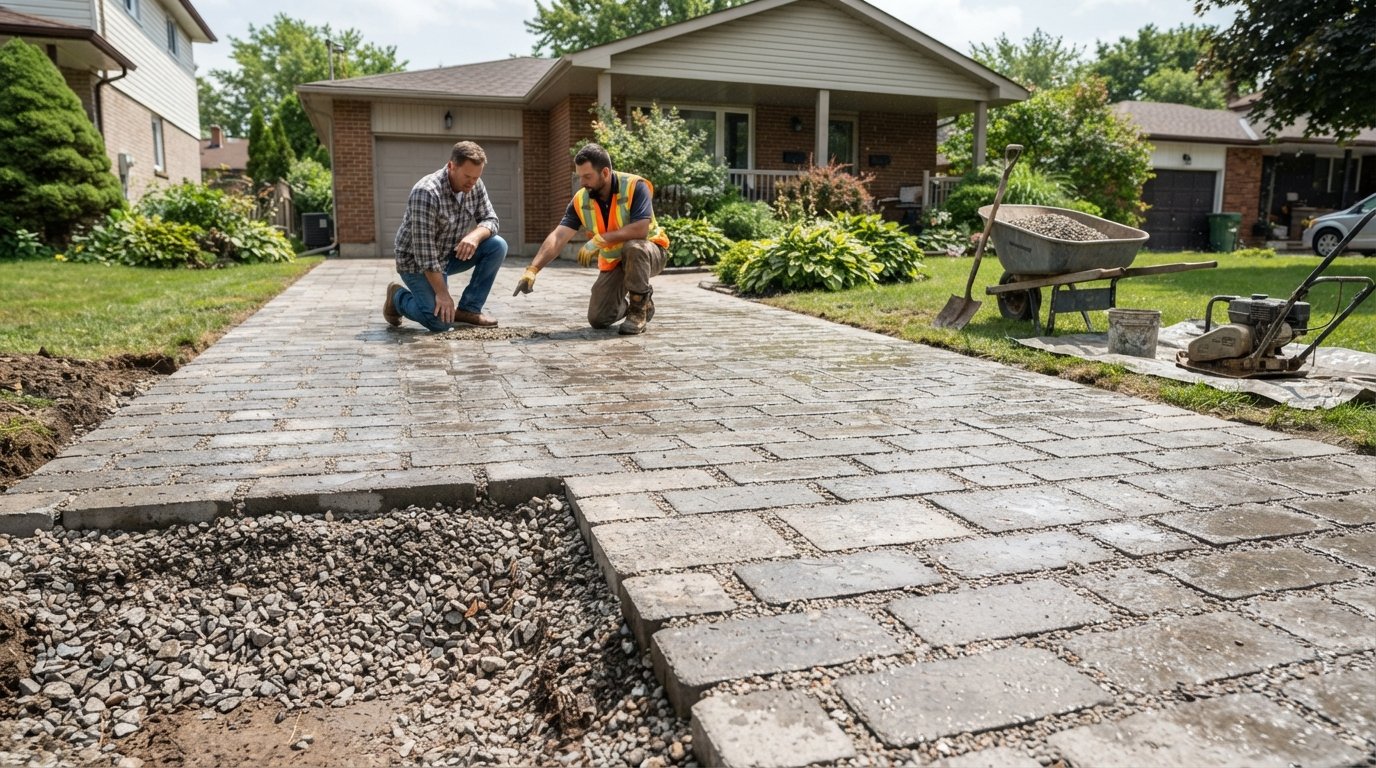
- Permeable pavers: $8 to $20 per square foot. These interlocking concrete or clay units have wider joints filled with gravel or sand, allowing water to drain between them. They offer the highest design flexibility and are the most common choice for residential driveways.
- Pervious concrete: $6 to $12 per square foot. This material uses a mix with little to no fine aggregate, creating a honeycomb of voids that lets water pass through. It requires an experienced installer because the mix is sensitive to moisture during curing.
- Porous asphalt: $4 to $8 per square foot. Similar to pervious concrete but with a bitumen binder. It looks like standard asphalt but has an open-graded aggregate structure. It is often the most affordable permeable option.
- Grass or gravel grids: $4 to $10 per square foot. Plastic or concrete grids filled with soil and grass or gravel. These are the most DIY-friendly but still need a proper base to prevent rutting.
These figures include excavation, base preparation, and installation but not major regrading or drainage corrections that may be required by your local code. A 400-square-foot driveway, for example, could cost $3,200 with porous asphalt or $8,000 with high-end pavers. Always get at least three quotes to compare the scope of work, not just the bottom line.
Drainage, Soil, and Site Prep Requirements That Affect Feasibility
Permeable surfaces only work if water can move through them and into the ground below. That means your soil must drain well enough to accept the volume of stormwater. If you have heavy clay soil, a high water table, or a slope that directs runoff toward your foundation, you may need additional engineering, which adds cost and complexity.
A standard permeable driveway installation involves several layers. From bottom to top: a compacted subgrade, a washed stone reservoir base (typically 6 to 12 inches deep), a bedding layer of smaller aggregate, and the surface material. The reservoir base is critical because it stores water temporarily while it infiltrates. In areas with poor drainage, you may need a deeper base, perforated pipes, or a French drain to redirect excess water. These additions can add $2 to $5 per square foot to the project.
Site prep also includes grading to ensure water flows away from your home and not into your garage or basement. Your contractor should perform a percolation test or soil infiltration test before finalizing the design. Skipping this step is a common mistake that leads to standing water, cracked surfaces, and costly repairs. If your property has a slope greater than 5 percent, you may need terraced sections or a retaining wall, which further increases the budget.
Before you commit, check local regulations. Some municipalities offer stormwater credits or rebates for permeable driveways because they reduce the load on public drainage systems. Others require a permit and a site plan showing how runoff will be managed. A knowledgeable contractor will handle these details, but you should confirm that the bid includes permit fees and any required engineering stamps.
Maintenance Needs and Lifespan Compared to Standard Concrete or Asphalt
Permeable driveways are not maintenance-free. The voids that let water through can also trap dirt, leaves, and debris, which reduces permeability over time. You will need to clean the surface periodically with a leaf blower, power washer, or specialized vacuum. For pavers, you may need to replenish the joint aggregate every few years. Pervious concrete and porous asphalt require annual vacuum sweeping to keep pores open. If you neglect maintenance, the surface can clog and become as impermeable as traditional pavement, defeating the purpose.
Lifespan is comparable to conventional materials when properly installed and maintained. Permeable pavers can last 25 to 30 years, pervious concrete 20 to 30 years, and porous asphalt 15 to 20 years. Standard concrete typically lasts 30 to 40 years, while asphalt lasts 15 to 20 years. The key difference is that permeable surfaces may need more frequent cleaning and occasional spot repairs. However, they eliminate the need for detention ponds or dry wells, which can save money on larger projects.
From a resale perspective, a permeable driveway can be a selling point in eco-conscious markets. It also reduces the risk of ice buildup in winter because water drains away instead of pooling and freezing. That said, you should avoid using sand or certain de-icing salts, which can clog pores and damage the surface. Use a plastic shovel or snow blower with skid shoes to avoid gouging the surface.
How to Vet Contractors with Permeable Paving Experience
Not all paving contractors understand permeable systems. A standard concrete or asphalt crew may not know how to design the base reservoir or test soil infiltration. Hiring the wrong contractor can lead to a failed installation that costs more to fix than the original job. When you request quotes, ask specific questions to separate true specialists from generalists. For broader guidance on comparing bids and understanding material trade-offs, see our related article on flooring materials durability vs cost, which covers similar evaluation principles.
Here are key steps to vet a permeable paving contractor:
- Verify experience: Ask for at least three local projects they have completed in the last two years. Request addresses or photos and, if possible, visit a site to see how the driveway has held up.
- Check credentials: Look for certifications from the Interlocking Concrete Pavement Institute (ICPI) or the National Ready Mixed Concrete Association (NRMCA) for pervious concrete. Membership in a local home builders association is a plus.
- Review the proposal: A detailed bid should include a percolation test, base depth specifications, surface material type and thickness, drainage plan, and a maintenance guide. If the quote is vague, ask for clarification.
- Confirm insurance and licensing: Ensure the contractor carries general liability and workers compensation insurance. Ask for a copy of their license and verify it with your state or local licensing board.
- Ask about warranties: A reputable installer will offer a workmanship warranty of at least two years. Manufacturer warranties on materials vary, so read the fine print.
Once you have a shortlist, use a platform like Contractor.Homes to compare pre-vetted local contractors and request free quotes. This can save time and help you avoid unqualified bidders. Always get at least three written estimates and never pay more than a small deposit upfront. If a contractor pressures you to pay in full before work begins, walk away.
Finally, plan your budget with a contingency of 10 to 15 percent for unexpected site issues. Permeable driveway cost and installation guide figures are estimates, and hidden problems like poor soil or buried debris can add thousands. A thorough site evaluation before signing a contract is your best protection against surprise bills.
With the right material, proper site prep, and an experienced installer, a permeable driveway can be a beautiful, functional, and environmentally responsible addition to your home. Take the time to compare quotes, ask questions, and verify credentials, and you will enjoy a durable surface that manages stormwater for decades.