
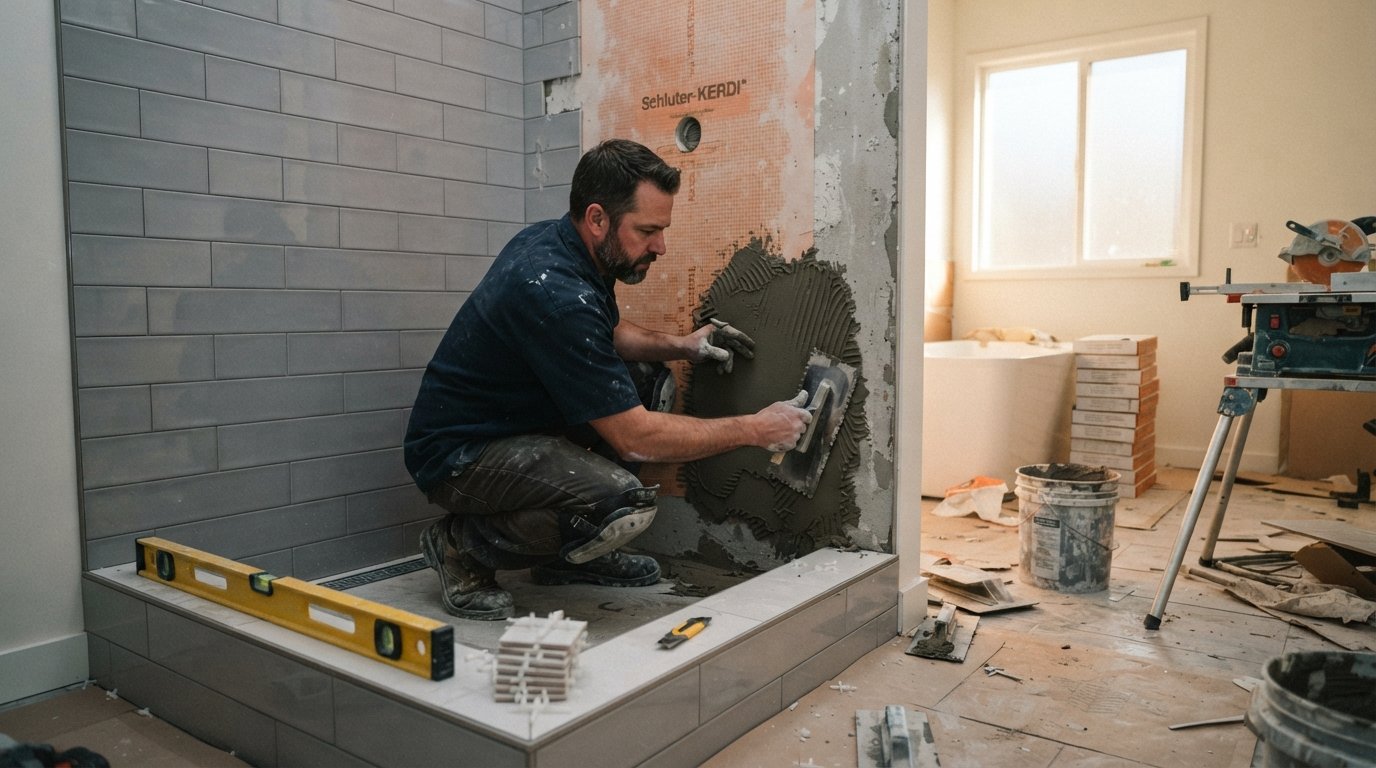
Tile Shower Remodel Cost and Waterproofing Questions
Get clear tile shower remodel cost and waterproofing questions answered. Call (833)-211-1668 to compare quotes from independent local providers.

By Ethan Turner
Learn more about Bathroom Remodel for guides, costs, and what to expect.
Compare Bathroom Remodel Pros Near You

Enter your ZIP code to compare independent local professionals and request free quotes.
Planning a tiled shower remodel can feel like navigating a maze of dollar signs and technical jargon. You want a beautiful, durable shower, but you also need to know what it will cost and how to ensure it does not leak. The difference between a shower that lasts decades and one that fails in a few years often comes down to one thing: proper waterproofing. In this guide, we will break down the real costs of a tile shower remodel and answer the critical waterproofing questions you should ask before hiring a professional.
What Drives the Cost of a Tile Shower Remodel?
The cost of a tile shower remodel varies widely based on size, materials, and labor. On average, homeowners spend between $3,000 and $12,000, with many projects landing around $6,500. However, luxury upgrades or complex layouts can push the price beyond $15,000. Understanding the components helps you budget accurately and compare quotes from independent local providers.
Several factors influence the total price. Demolition and disposal of the old shower, plumbing changes, waterproofing materials, tile selection, and labor rates all play a role. For example, a simple alcove shower with ceramic tile costs far less than a custom walk-in shower with frameless glass and natural stone. Labor alone can account for 40% to 60% of the total, depending on your region and the complexity of the job.
Breaking Down the Cost Components
To help you plan, here is a typical cost breakdown for a standard 3x5-foot shower remodel. Keep in mind that these are ballpark figures; your actual costs will depend on your location and specific choices.
- Demolition and disposal: $300 to $800. This includes removing the old shower, hauling away debris, and preparing the space.
- Plumbing rough-in: $500 to $2,000. If you relocate the drain or change valve locations, costs increase.
- Waterproofing materials: $400 to $1,200. This covers waterproof membranes, backer board, sealants, and related supplies.
- Tile and setting materials: $500 to $3,000 or more. Tile prices range from $2 to $50 per square foot, plus thinset and grout.
- Labor for installation: $1,500 to $5,000. This includes waterproofing application, tile setting, and grouting.
- Fixtures and glass: $400 to $2,500. Showerheads, valves, drains, and glass doors vary widely in price.
These numbers give you a starting point, but every project is unique. When you request quotes from independent local providers through a service like FreeQuotes.Contractors, you can compare detailed estimates and spot any missing items.
Why Waterproofing Is the Most Important Part of Your Shower
Waterproofing is not just an extra step; it is the foundation of a long-lasting shower. Without proper waterproofing, water will penetrate the tile and grout, leading to mold, rot, and structural damage. In fact, most shower failures are due to poor waterproofing, not the tile itself. A well-waterproofed shower can last 20 years or more, while a poorly waterproofed one may start leaking within a year.
Modern waterproofing methods go beyond traditional tar paper and cement board. Today, professionals use liquid-applied membranes, sheet membranes, and bonded waterproofing systems that create a continuous barrier. These systems protect the substrate and framing from moisture intrusion. The choice of method depends on the installer's preference and the specific shower design, but the key is that the entire shower enclosure, including the floor, walls, and seams, must be sealed.
Common Waterproofing Methods
There are several accepted waterproofing methods in the tiling industry. Each has its pros and cons, and your contractor should explain which one they use and why.
- Liquid-applied membranes: A liquid coating that dries to form a seamless barrier. It is popular for its flexibility and ease of application, but it requires multiple coats and careful attention to thickness.
- Sheet membranes: Pre-formed sheets that are adhered to the substrate. They provide consistent thickness and are quick to install, but seams must be properly sealed.
- Cement backer board with a waterproof coating: A traditional approach where cement board is coated with a waterproof membrane. This is reliable if done correctly, but the seams and fasteners must be treated.
- Foam board systems: Lightweight waterproof panels that are easy to cut and install. They often come with pre-formed niches and benches.
Regardless of the method, proper installation is critical. A common mistake is skipping the waterproofing on the shower pan or not tying the wall membrane into the pan membrane. This creates a path for water to escape. Your contractor should be able to explain how they will handle the transitions and corners.
Critical Questions to Ask Before Hiring a Tile Installer
Hiring the right professional for your tile shower remodel is essential. The lowest bid may not be the best value if the contractor cuts corners on waterproofing. Before you sign a contract, ask these questions to gauge their expertise and ensure your shower will be built to last.
- What waterproofing system do you use, and why? A knowledgeable installer will have a preferred system and can explain its benefits. They should also be able to show you manufacturer specifications and warranty information.
- How do you handle the shower pan and curb? The pan is the most critical area for waterproofing. Ask how they create the pre-slope, install the liner, and tie it into the walls. A proper pre-slope ensures water flows to the drain.
- Do you have experience with this type of tile and layout? Different tiles require different installation techniques. For example, large-format tiles need a flat substrate and may require a different thinset. Ask for examples of similar projects.
- What is your process for sealing and grouting? Grout and sealant are the first line of defense, but they are not waterproof on their own. The installer should use epoxy grout or sealed grout and apply a flexible sealant at all changes of plane.
- Can you provide references and photos of past shower remodels? Look for detailed photos of the waterproofing stage, not just the finished tile. This shows they take waterproofing seriously.
- What does your warranty cover? A reputable installer will stand behind their work. Ask for a written warranty that covers both labor and materials, and clarify what is excluded.
Asking these questions not only helps you choose a qualified professional but also signals that you are informed and expect quality. When you compare quotes from independent local providers, use these questions to evaluate each bid beyond the bottom line.
Signs of Bad Shower Waterproofing After Installation
Even with careful hiring, problems can arise. Knowing the warning signs of poor waterproofing can help you address issues before they become major repairs. Some signs appear soon after installation, while others may take months or years to develop.
Watch for these red flags:
- Loose or hollow-sounding tiles: If tiles sound hollow when tapped, it could indicate that water has compromised the thinset or that the substrate is failing.
- Cracked or missing grout: While grout cracks can be normal due to settling, widespread cracking or crumbling grout may signal moisture movement behind the tile.
- Mold or mildew growth: Persistent mold in corners or along the floor, despite regular cleaning, suggests water is trapped behind the tile.
- Water stains on ceilings below: If you see water stains on the ceiling below the shower, it is a clear sign of a leak in the pan or drain.
- Musty odors: A constant musty smell in the bathroom can indicate hidden mold growth due to moisture buildup.
- Efflorescence: A white, powdery substance on the tile or grout is a sign of water migrating through the substrate and leaving mineral deposits.
If you notice any of these signs, contact a professional immediately. Early intervention can save you from costly repairs and potential health hazards. Remember that waterproofing failures often stem from installation errors, so having a detailed contract and warranty is crucial.
How to Budget for Your Tile Shower Remodel
Budgeting for a tile shower remodel requires more than just picking a number. You need to account for contingencies, compare quotes carefully, and understand where you can save and where you should splurge. A common rule of thumb is to set aside 10% to 20% of your budget for unexpected issues, especially in older homes where plumbing may need updates.
Start by getting at least three quotes from independent local providers. Use a free quote request service to streamline the process and ensure you are comparing apples to apples. When reviewing estimates, check that they include waterproofing details, material specifications, and labor breakdowns. The lowest bid might exclude waterproofing or use cheap materials, which can lead to costly problems later. For broader home improvement projects, such as a roof replacement, having accurate estimates is equally important; you can explore resources like a roof replacement cost planner to understand how to plan and budget effectively.
Another way to manage costs is to choose materials wisely. Porcelain tile can mimic the look of natural stone at a fraction of the price. Consider keeping the existing layout to avoid plumbing changes. And do not skimp on waterproofing; it is the one area where cutting corners almost always backfires. Investing in quality waterproofing now will save you thousands in repairs down the road.
Final Thoughts
A tile shower remodel is a significant investment, but with the right knowledge, you can achieve a beautiful, durable result. Focus on waterproofing as the core of your project, ask potential contractors the right questions, and budget for quality materials and labor. When you are ready to find independent local providers, consider using a platform like Contractor.Homes to compare quotes and make an informed decision. By prioritizing waterproofing and understanding the costs, you will enjoy a shower that looks great and performs well for years to come.