Basement Finishing Cost Breakdown: A Homeowner’s Guide
You finally decide to turn that dark, dusty basement into a home gym, a playroom for the kids, or a cozy guest suite. You start dreaming of the finished space,and then you start wondering about the price. How much does it actually cost to finish a basement? Between framing, drywall, flooring, electrical work, plumbing, and permits, the numbers can feel overwhelming. If you haven’t planned carefully, the project can stall before it even begins. But understanding the basement finishing cost breakdown is the first step toward making your dream space a reality without blowing your budget.
Understanding Basement Finishing Cost Breakdown
Simply put, a basement finishing cost breakdown is a detailed look at every expense involved in turning an unfinished basement into livable square footage. It includes materials, labor, permits, and unexpected surprises like waterproofing or structural repairs. Knowing this breakdown helps you decide where to spend and where to save.
Costs vary widely because every basement is different. Older homes may have low ceilings, uneven floors, or outdated wiring. Newer homes might need less prep work. The most affected homeowners are those with unfinished basements that have never been touched,especially homes built before 1990, where moisture and foundation issues are more common.
Key Components of the Cost Breakdown
The major cost categories include framing and insulation (15,20% of the total), drywall and ceiling (20,25%), flooring (10,15%), electrical and lighting (10,15%), plumbing if adding a bathroom (15,20%), and finishing touches like paint, trim, and doors (10,15%). Permits and professional fees usually add 5,10%. Understanding these percentages helps you allocate your money wisely.
Why This Matters for Your Home
Skipping a proper cost breakdown can lead to budget overruns that leave your basement half-finished for years. An incomplete project not only wastes money but also lowers your home’s value. Worse, ignoring moisture problems or improper insulation can cause mold, wood rot, and higher energy bills.
Safety is another major concern. Unfinished basements often have exposed wiring, sharp edges, and tripping hazards. A professionally finished basement eliminates these risks and protects your family. Plus, finished basements typically return 70,75% of their cost in added home value, making it a smart long-term investment.
If you notice signs of this issue in your home, it may help to speak with a qualified contractor. Request a free quote or call to explore your repair or remodeling options.
Common Problems Homeowners Experience
Many homeowners jump into a basement finishing project without a clear plan, only to discover hidden problems halfway through. They find water stains on the floor, cracked foundation walls, or outdated electrical panels that can’t handle modern loads. These surprises can double your original budget if you aren’t prepared.
Another common issue is underestimating the cost of labor. Skilled trades like plumbing, HVAC, and electrical work often cost more than homeowners expect. If you’re comparing DIY versus hiring pros, remember that mistakes in these areas can be expensive to fix later.
- Moisture seepage through walls or floors
- Insufficient ceiling height (under 7 feet)
- Old or unsafe electrical wiring
- No existing HVAC registers in the basement
- Uneven or cracked concrete floors
- Radon gas or other air quality concerns
How Professionals Solve the Problem
Experienced contractors start with a thorough inspection to identify issues like water intrusion, foundation cracks, or inadequate insulation. They then create a detailed plan that includes all costs, from materials to permits. This upfront work prevents surprises and keeps the project on schedule.
- Inspection and design: Measure the space, check for moisture, test radon levels, and plan the layout.
- Waterproofing and prep: Seal cracks, install drainage systems if needed, and level the floor.
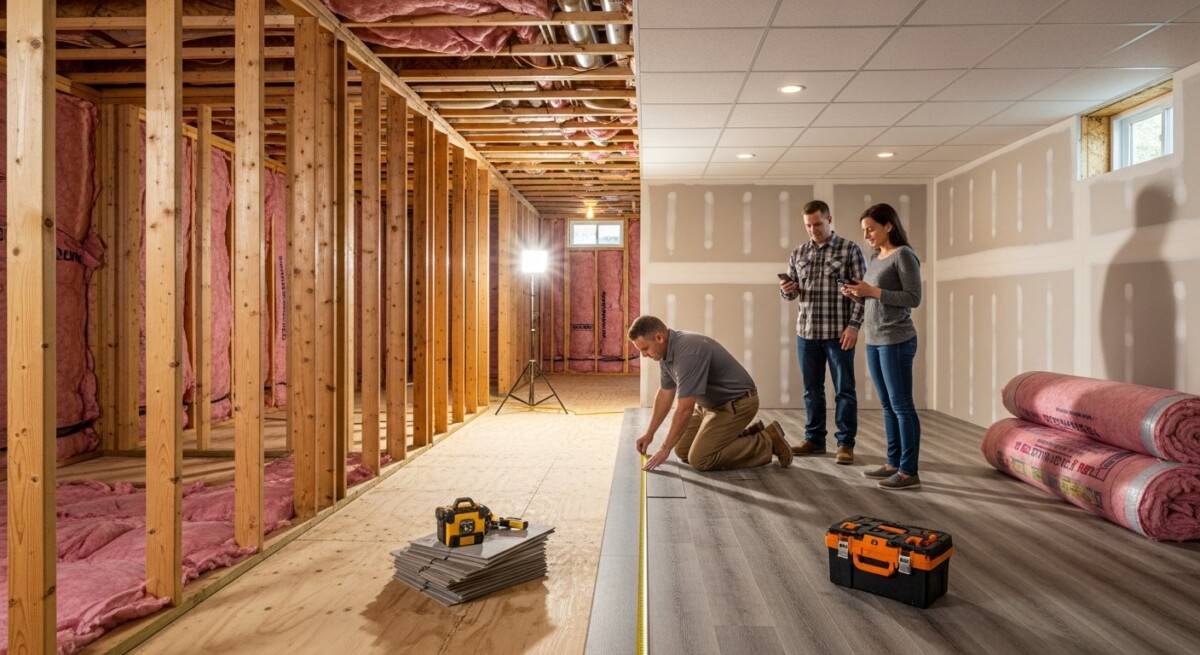
- Framing and insulation: Build walls and add vapor barriers, insulation, and soundproofing.
- Rough-in work: Run electrical, plumbing, and HVAC lines before closing up walls.
- Finishing: Hang drywall, install flooring, paint, add trim, and set fixtures.
Professional work is safer because licensed contractors follow building codes and secure permits. DIY mistakes,like improper electrical work or inadequate insulation,can lead to fires, mold, or structural problems. Hiring a pro gives you peace of mind and a finished space that lasts.
A professional inspection can reveal hidden issues before they become expensive repairs. Compare contractor quotes here or call to discuss your project.
Warning Signs You Should Not Ignore
Your basement may be telling you it’s not ready for finishing. Look for clues like musty odors, efflorescence (white powder on walls), or standing water after rain. These signs point to moisture problems that must be fixed before you spend a dime on drywall or flooring.
Other red flags include cracks in the foundation, bowing walls, or visible mold. If you notice any of these, address them first. Finishing a basement without resolving underlying issues is like painting over rust,the problem will come back, and it will cost more to fix later.
- Musty or damp smell that lingers
- Water stains or peeling paint on walls
- Cracks wider than 1/8 inch in foundation walls
- Visible mold or mildew on surfaces
- Condensation on pipes or windows
- Bowing or leaning walls
What Affects the Cost of Repairs or Installation
Several factors influence the final price of a basement finishing project. The size of the space is obvious,more square footage means more materials and labor. But the condition of your basement matters just as much. A dry, level, clean basement costs less to finish than one that needs extensive prep work.
Materials also play a big role. Luxury vinyl plank flooring costs more than carpet, and custom cabinetry costs more than stock units. Your location matters too: labor rates vary by region, and urban areas with higher costs of living tend to have higher contractor prices. Finally, the complexity of the layout,like adding a bathroom or wet bar,will increase costs significantly.
Costs can vary depending on the condition of your home. The best way to know the price is to get a personalized estimate. Request free quotes from contractors or call today.
How to Choose the Right Contractor
Not all contractors are created equal. Some specialize in basement finishing, while others are general handymen. For a project this complex, you want someone with proven experience in basement remodeling. Ask for references and photos of past basement projects similar to yours.
Don’t just pick the lowest bid. A cheap price often means shortcuts,like skipping waterproofing or using low-quality materials. Instead, compare three to four detailed quotes that break down costs for materials, labor, and permits. This gives you a clear picture of what you’re paying for and helps you avoid hidden fees.
- Verify their license and insurance (general liability + workers’ comp)
- Read recent reviews on Google, Yelp, or the Better Business Bureau
- Ask for a written contract with a clear payment schedule
- Check how long they’ve been in business and how many basements they’ve finished
- Request a detailed timeline and ask who will be on-site daily
Long-Term Benefits of Professional Work
Professional basement finishing doesn’t just look better,it performs better. Proper insulation and vapor barriers keep the space dry and energy-efficient, lowering your heating and cooling bills. Quality materials and workmanship mean fewer repairs down the road, saving you money over time.
A finished basement also adds usable living space without the cost of an addition. Whether you use it as a home office, rental suite, or entertainment room, it increases your home’s resale value. In fact, a well-finished basement can recoup 70,75% of its cost at resale, making it one of the best home improvement investments you can make.
Finally, professional work gives you peace of mind. You know the job is done to code, safe for your family, and built to last. That’s worth more than any DIY savings.
Frequently Asked Questions
What is the average cost per square foot to finish a basement?
The average cost ranges from $30 to $75 per square foot, depending on materials, labor, and your location. A basic finished basement with carpet, drywall, and standard lighting falls on the lower end. Adding a bathroom, wet bar, or luxury finishes pushes the price higher.
Should I finish my basement myself or hire a contractor?
DIY can save money on labor, but it carries risks like electrical mistakes, moisture issues, and code violations. If you have experience with framing, electrical, and plumbing, DIY might work for a simple project. For most homeowners, hiring a licensed contractor ensures safety, quality, and compliance with local building codes.
How long does it take to finish a basement?
A typical basement finishing project takes 4 to 8 weeks, depending on the size and complexity. Simple projects like a single room with no plumbing can be done in 3,4 weeks. Larger projects with bathrooms, bars, or complex layouts may take 10,12 weeks.
Do I need a permit to finish my basement?
Yes, most municipalities require permits for basement finishing, especially if you’re adding electrical, plumbing, or structural changes. Permits ensure the work meets safety codes and protects your home’s value. Skipping permits can lead to fines and problems when you sell your home.
What is the most expensive part of finishing a basement?
Plumbing is typically the most expensive single item if you’re adding a bathroom or wet bar. Rough-in plumbing alone can cost $3,000,$8,000. Electrical work and custom cabinetry are also high-cost items. Framing and drywall are usually the largest combined expense for a standard finish.
Can I finish a basement with low ceilings?
It’s possible, but you need at least 7 feet of ceiling height to meet most building codes. If your basement has low ceilings, you may need to dig down the floor or raise the roofline,both expensive options. A contractor can assess your specific situation and suggest cost-effective solutions.
How do I prevent moisture problems in a finished basement?
Start with a professional moisture inspection before finishing. Install a vapor barrier, seal foundation cracks, and make sure gutters and downspouts direct water away from your home. A sump pump and dehumidifier can also help keep the space dry. Proper insulation and ventilation are critical.
Does finishing a basement increase home value?
Yes, a finished basement typically adds 70,75% of its cost to your home’s resale value. It also makes your home more attractive to buyers by adding usable square footage. However, the exact return depends on your local real estate market and the quality of the finish.
Finishing your basement is an exciting project, but it’s one that requires careful planning and a clear budget. By understanding the basement finishing cost breakdown, you can make informed decisions, avoid costly surprises, and create a space your family will love for years. Start by comparing quotes from qualified contractors to see what’s possible within your budget.