
Home Renovation Material Cost Guide for 2026
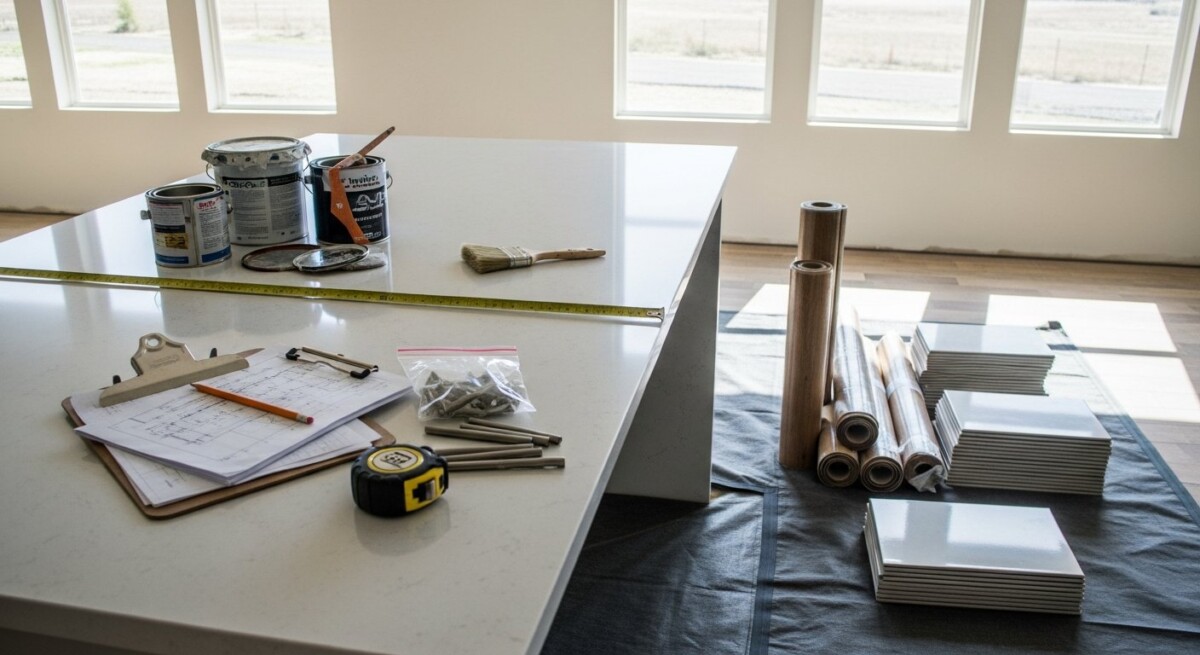
Planning a home renovation is exciting, but the price tag on materials can quickly turn that excitement into anxiety. Whether you are updating a single bathroom or gutting a whole kitchen, the cost of materials often makes up the largest portion of your budget. Without a clear picture of what each item costs, you risk overspending or making choices that compromise quality. This home renovation material cost guide breaks down current pricing for flooring, cabinetry, countertops, fixtures, and more. It gives you the data you need to plan a realistic budget and avoid surprise expenses.
Why Material Costs Vary by Project Type
Not all renovations are created equal, and the materials you choose depend heavily on the room you are remodeling. A kitchen renovation typically demands higher-end finishes like quartz countertops and custom cabinetry, while a basement finishing project might prioritize affordable laminate flooring and drywall. Understanding these differences is the first step in using this home renovation material cost guide effectively.
For example, bathroom renovations often require waterproof materials such as ceramic tile and specialized plumbing fixtures. These items come with a premium compared to standard-grade alternatives. On the other hand, a living room update might focus on paint, new trim, and carpet. Each category has its own price range, and knowing where your project falls helps you allocate funds wisely.
If you are still unsure about your project scope, consider using a home renovation budget planner to map out expenses before you start shopping. This tool can help you compare material costs against labor and permits, giving you a full financial picture.
Flooring Material Costs
Flooring is one of the most visible and impactful elements of any renovation. Prices vary widely based on material type, quality, and installation method. Below is a breakdown of common flooring options and their typical costs per square foot installed.
- Laminate: $2 to $8 per square foot. Durable and water-resistant options are available, making it a popular choice for basements and family rooms.
- Engineered Hardwood: $5 to $12 per square foot. Offers the look of real wood with better stability in humid environments.
- Solid Hardwood: $8 to $15 per square foot. Classic and long-lasting, but requires professional installation and may not suit basements.
- Ceramic or Porcelain Tile: $3 to $10 per square foot. Ideal for bathrooms and kitchens due to water resistance.
- Luxury Vinyl Plank (LVP): $3 to $7 per square foot. Combines affordability with realistic wood or stone visuals.
When selecting flooring, consider the room’s traffic level and exposure to moisture. Higher-traffic areas may justify spending more on durable materials like tile or engineered hardwood. Always request samples and compare prices from multiple suppliers. Your final choice should balance aesthetics with long-term maintenance costs.
Cabinetry and Countertop Pricing
Kitchen and bathroom cabinets represent a significant investment. Stock cabinets are the most affordable option, typically costing $100 to $300 per linear foot. Semi-custom cabinets range from $300 to $600 per linear foot, while fully custom cabinets can exceed $1,000 per linear foot. The material, finish, and hardware all affect the final price.
Countertop materials also span a wide price spectrum. Laminate countertops start at $10 to $30 per square foot installed. Butcher block ranges from $20 to $40 per square foot. Quartz and granite are mid-to-high-end choices at $40 to $100 per square foot. Marble and other natural stones can cost $50 to $150 per square foot or more. Consider durability and maintenance when choosing. For example, quartz is non-porous and resists staining, while granite requires periodic sealing.
To get accurate pricing for your specific layout, it is wise to request detailed estimates from local contractors. You can use the platform at FreeQuotes.Contractors to compare bids and find professionals who specialize in cabinetry and countertop installation.
Wall Finishes and Paint
Paint is one of the lowest-cost materials in a renovation, but it can dramatically change a room’s appearance. Interior paint costs $20 to $60 per gallon for standard brands, with premium lines reaching $80 or more. A single gallon typically covers 350 to 400 square feet. For a 10×12 room with two coats, you will need about two gallons. Add primer at $15 to $30 per gallon for better coverage on dark walls or new drywall.
Wallpaper is another option, ranging from $20 to $100 per roll. Installation costs vary, but professional hanging can add $30 to $50 per roll. If you are on a strict budget, painting is the more economical choice. For high-impact areas like an accent wall, wallpaper can provide a custom look without the expense of full-room coverage.
Trim and molding costs depend on material and complexity. Basic MDF baseboards cost $0.50 to $2 per linear foot, while solid wood or intricate crown molding can run $3 to $10 per linear foot. Painting or staining trim adds labor costs, but it is a detail that elevates the overall finish of your renovation.
Plumbing Fixtures and Hardware
Bathroom and kitchen fixtures like faucets, sinks, and toilets vary widely in price. A basic bathroom faucet costs $40 to $100, while a high-end model with touchless features can exceed $400. Kitchen faucets range from $100 to $600 depending on finish and functionality. Sinks also vary: a standard stainless steel drop-in sink costs $100 to $300, while a farmhouse apron-front sink can cost $400 to $1,200.
Toilets are another major expense. Basic two-piece models start at $100 to $200. One-piece and comfort-height toilets range from $200 to $500. Water-efficient models with dual-flush technology may cost more upfront but save money on water bills over time. Shower systems, including valves and trim kits, can cost $200 to $1,000 or more for luxury rain heads and body sprays.
Hardware like cabinet pulls and drawer knobs is a small detail that adds up. Budget $2 to $10 per piece for basic styles, and $10 to $30 per piece for designer options. A typical kitchen might require 20 to 30 pieces, so plan to spend $100 to $300 on hardware alone.
Electrical and Lighting Materials
Lighting fixtures affect both function and ambiance. Recessed lighting cans cost $10 to $30 each, with LED retrofit kits adding $15 to $40 per fixture. Pendant lights and chandeliers range from $50 to $500 or more. Under-cabinet lighting for kitchens typically costs $50 to $200 for a basic LED strip kit.
Switches, outlets, and wiring are often overlooked but essential. A standard outlet costs $1 to $3, while USB-equipped or GFCI outlets cost $15 to $30 each. Wiring costs depend on the length and type of cable, but expect to pay $0.30 to $0.60 per linear foot for Romex. For a full electrical panel upgrade, budget $1,500 to $3,000 including labor.
Smart home devices like dimmers, smart switches, and motion sensors add convenience but increase costs. Plan for $30 to $60 per smart switch. If your renovation includes a home office or media room, factor in additional outlets and data cabling for internet and entertainment systems.
HVAC and Insulation Considerations
If your renovation involves changing room layouts or finishing a basement, you may need to adjust your HVAC system. Ductwork costs $1,000 to $5,000 depending on complexity. Adding a new register or return vent typically costs $200 to $500. For mini-split systems, expect $2,000 to $5,000 per zone installed.
Insulation is another critical material for energy efficiency. Batt insulation costs $0.50 to $1.50 per square foot, while spray foam ranges from $1.50 to $3.50 per square foot. Proper insulation in exterior walls and attics reduces heating and cooling costs. For a typical 2,000-square-foot home, insulating the attic alone can cost $1,500 to $3,000.
Before making decisions on HVAC and insulation, it is smart to get multiple quotes. You can learn how to request home renovation bids and compare contractors to ensure you receive competitive pricing for these specialized trades.
Windows and Doors
Replacing windows improves energy efficiency and curb appeal. Vinyl windows cost $300 to $700 each installed, while wood or fiberglass windows range from $500 to $1,200. Double-pane or triple-pane options add $100 to $300 per window. For a standard home with 10 to 15 windows, the total cost can reach $5,000 to $15,000.
Interior doors are more affordable. A hollow-core prehung door costs $50 to $100, while solid-core or solid wood doors range from $150 to $400. French doors and sliding patio doors cost $500 to $2,000 depending on size and material. Hardware like handles and hinges adds $20 to $100 per door.
When selecting doors, consider sound transmission and privacy. Solid-core doors offer better acoustic insulation than hollow-core models. For exterior doors, prioritize energy efficiency and security features such as multi-point locking systems.
Flooring Underlayment and Subfloor
Underlayment is a layer between your subfloor and finished flooring. It provides moisture protection, sound dampening, and a smooth surface. Prices range from $0.10 to $0.50 per square foot for basic felt or foam underlayment, up to $1.00 per square foot for premium cork or rubber products. Subfloor repairs or replacements cost $2 to $5 per square foot for plywood or OSB.
If your renovation involves removing old flooring, budget for disposal fees. Many contractors charge $50 to $200 for debris removal. Consider donating reusable materials like old cabinets or doors to reduce waste and offset costs.
Miscellaneous Materials and Contingency
Other materials like adhesives, grout, caulk, and fasteners may seem minor but can add up. Set aside $200 to $500 for these consumables. Also include a contingency fund of 10% to 20% of your total material budget. This covers price increases, damage during installation, or unexpected discoveries like mold or rot behind walls.
For example, if your material budget is $15,000, allocate an additional $1,500 to $3,000 for contingencies. This buffer prevents small surprises from derailing your project. Review your material list with your contractor to identify potential substitutions that could save money without sacrificing quality.
How to Use This Guide for Your Project
Start by creating a detailed scope of work for each room. List every material you need, from flooring and paint to fixtures and hardware. Research current prices at local home improvement stores and online suppliers. Request quotes from at least three contractors to compare material markups and installation fees.
Platforms like FreeQuotes.Contractors simplify this process by connecting you with pre-vetted local professionals. You can submit one request and receive multiple bids, making it easier to find competitive pricing on both materials and labor. Remember, the cheapest quote is not always the best value. Evaluate each contractor’s experience, reviews, and warranty offerings.
If you want to reduce home renovation costs, consider buying materials during seasonal sales or opting for mid-grade products that offer good durability without the premium price tag. Combining cost-saving strategies with accurate pricing data ensures your renovation stays on track.
Finally, keep all receipts and contracts organized. This helps with warranty claims and future resale value. A well-documented renovation also makes it easier to budget for future projects. By following this home renovation material cost guide, you can approach your remodel with confidence and clarity.