
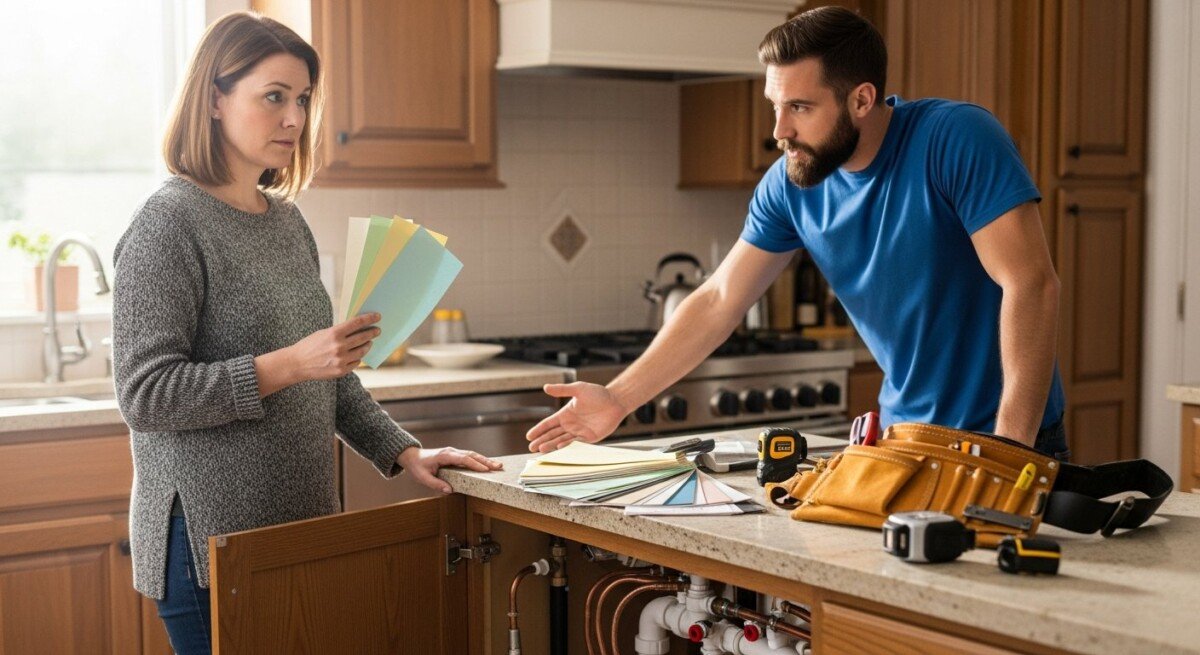
How Accurate Are Contractor Estimates for Homeowners?
A practical guide for homeowners on the accuracy of contractor estimates, explaining why they vary and how to get a reliable quote for your project.

By Elena John
Learn more about General Contracting for guides, costs, and what to expect.
Compare General Contracting Pros Near You

Enter your ZIP code to compare top-rated local professionals and request free quotes.
You’ve finally decided to tackle that kitchen remodel or fix that sagging porch. You call a few contractors, and the estimates start rolling in. One quote is surprisingly low, another is shockingly high, and a third is somewhere in the middle. As a homeowner, you’re left wondering which number is the “real” one and how accurate contractor estimates truly are. This confusion can lead to delays, choosing the wrong professional, or even financial strain if the final bill is much higher than expected. Understanding the factors behind these numbers is the first step to a smooth, predictable project.
Understanding How Accurate Contractor Estimates Are
An estimate is a contractor’s best professional guess at the scope, timeline, and cost of your project. It’s based on their experience, current material prices, and the visible details of your job. Accuracy depends heavily on how much information is available during the quoting stage.
Hidden issues behind walls or under floors are the most common reason estimates change. A contractor can’t price what they can’t see. The more detailed your project plan and the more access you provide during the estimate, the more precise the initial number will be.
Any home can face estimate variances, but older homes are particularly prone to surprises. Properties with past DIY work or those where the full extent of damage isn’t yet visible also present challenges for creating a perfectly accurate upfront quote.
Why This Matters for Your Home
An inaccurate estimate isn’t just a number on a page; it has real consequences for your home and budget. A quote that’s too low often leads to rushed work, cut corners, or the contractor requesting significant additional payments mid-project. This can compromise the quality and safety of the work done on your largest investment.
Conversely, an inflated estimate means you’re potentially overpaying or missing out on a qualified professional who offers fair value. More importantly, if a lowball estimate leads to a contractor abandoning an unfinished job because they’re losing money, you’re left with a half-finished project and the costly hassle of finding someone to fix it.
If you notice signs of this issue in your home, it may help to speak with a qualified contractor. Request a free quote or call to explore your repair or remodeling options.
Common Problems Homeowners Experience
The gap between an estimate and the final invoice often stems from unforeseen complications. A contractor might quote to replace a section of roof decking, only to discover widespread rot once the old shingles are removed. What seemed like a simple plumbing update can reveal outdated, non-compliant pipes throughout the wall.
These aren’t cases of contractors being dishonest. They are the reality of working on complex structures where problems are often hidden. Homeowners experience stress and budget overruns when these discoveries are made after work has begun.
- Discovering mold, rot, or insect damage behind walls or under floors.
- Finding outdated electrical wiring or plumbing that doesn’t meet current building codes.
- Realizing structural supports are weaker than expected once walls are opened.
- Encountering previous repairs that were done incorrectly and must be redone.
- Experiencing delays and cost increases due to unforeseen material availability issues.
- Dealing with change orders that significantly increase the project’s scope and price.
How Professionals Solve the Problem
Experienced contractors build contingencies and clarity into their process to protect both you and their business. They use detailed estimates and clear contracts to outline what is included, what assumptions were made, and how unforeseen issues will be handled. This transparency is key to managing expectations.
The goal of a professional isn’t to give the lowest possible number, but the most realistic one. They solve the accuracy problem through thoroughness, communication, and proper planning, which ultimately leads to a smoother project for you. For a deeper look at this process, our guide on understanding contractor estimates for homeowners breaks down what a good estimate should include.
- Initial Consultation & Detailed Scope: They ask thorough questions and often perform a preliminary inspection to understand the full project.
- Transparent Quoting: A good estimate itemizes labor, materials, permits, and profit margin, so you see what you’re paying for.
- Contingency Planning: Reputable contractors may include a line item for potential unknowns (especially in older homes) or clearly state how such issues will be priced.
- Clear Change Order Process: If a hidden problem arises, they pause, document it, provide a new price for the additional work, and get your written approval before proceeding.
A professional inspection can reveal hidden issues before they become expensive repairs. Compare contractor quotes here or call to discuss your project.
Warning Signs You Should Not Ignore
While some estimate inaccuracies are unavoidable, certain red flags during the quoting process can signal future trouble. If a contractor is reluctant to put details in writing, pressures you to sign immediately, or gives a vague verbal quote that’s “about” a certain amount, proceed with caution.
Paying attention to these signs early can save you from a stressful and costly partnership. Trust your instincts,if a quote seems too good to be true, it often is, because the contractor may be planning to use inferior materials or hit you with numerous change orders.
- The estimate is a single, round number with no itemization or breakdown.
- The contractor demands a large deposit (more than 10-30%) before starting work.
- They are evasive about licensing, insurance, or pulling required permits.
- The quote is significantly lower than others you’ve received for the identical scope.
- They pressure you to decide on the spot or offer a “today only” discount.
- Communication is slow, unclear, or unprofessional from the very beginning.
What Affects the Cost of Repairs or Installation
Many factors influence why estimates vary and what your final project might cost. The size and complexity of the job are the most obvious,a full second-story addition costs more than a bathroom vanity update. However, the materials you choose (standard vs. premium tile, for example) create a major price difference.
Labor is another significant component. Specialized skills, like electrical or custom carpentry, cost more than general labor. The accessibility of the work area also matters; a roof with a steep pitch or a bathroom on a home’s third floor is more challenging and time-consuming to work on. As outlined in understanding contractor estimates for your home renovation, the age and condition of your home are perhaps the biggest wildcards, directly impacting the potential for hidden costs.
Costs can vary depending on the condition of your home. The best way to know the price is to get a personalized estimate. Request free quotes from contractors or call today.
How to Choose the Right Contractor
Selecting the right professional is your best defense against estimate nightmares. It’s not just about the bottom line; it’s about finding a communicator who is transparent, experienced, and trustworthy. This relationship is crucial for navigating the inevitable bumps in any home project.
Take your time in this stage. A contractor who is worth hiring will be patient, answer all your questions, and provide the documentation you need to feel confident. They view the estimate as the start of a partnership, not just a transaction.
- Verify Credentials: Always check for a valid state license and proof of liability and workers’ compensation insurance.
- Read Reviews & Ask for References: Look at recent reviews on multiple platforms and actually call past clients to ask about their experience, especially regarding budget accuracy.
- Get Detailed, Written Estimates: Compare quotes that break down costs for materials, labor, profit, and permits. Apples-to-apples comparisons are impossible with vague quotes.
- Interview Multiple Contractors: Get at least three detailed estimates. This gives you a realistic price range and helps you gauge who you communicate with best.
- Ask About Their Process for Unknowns: How do they handle discoveries mid-project? Their answer will tell you a lot about their integrity and planning.
Long-Term Benefits of Professional Work
Investing in a thorough, accurate estimate and a quality contractor pays dividends long after the project is complete. Proper repairs and installations are safer, built to code, and designed to last. This means fewer callbacks, less maintenance, and peace of mind knowing the job was done right.
Quality work also protects and enhances your home’s value. Whether it’s a repaired foundation, a updated electrical system, or a beautiful kitchen remodel, professional craftsmanship is a key selling point. It also improves your daily comfort and can lead to lower energy bills through efficient installations.
How can I get the most accurate estimate possible?
Provide contractors with as much information as you can. Have old blueprints, a list of preferred materials, and clear ideas about what you want. Allow them to do a thorough inspection of the work area. The more they can see and understand upfront, the fewer assumptions they have to make.
What’s the difference between an estimate, a quote, and a bid?
In practice, these terms are often used interchangeably. However, an “estimate” is typically a preliminary, approximate cost. A “quote” or “bid” is usually a more formal, fixed-price offer for the defined scope of work. Always ask a contractor what level of price commitment their document represents.
Should I always choose the lowest estimate?
Rarely. The lowest estimate often signals that something is missing,either in scope, quality of materials, or the contractor’s overhead (like proper insurance). It can be a tactic to win the job with plans to increase price later. Value, reliability, and clarity are more important than the absolute lowest price.
What should a good contractor estimate include?
A detailed estimate should include a project description, breakdown of material costs (types and quantities), labor costs, costs for subcontractors, permit fees, a payment schedule, project timeline, and terms & conditions. It should clearly state what is and is NOT included.
How do contractors handle unexpected problems?
Professional contractors should use a “change order” process. They halt work on the unexpected issue, provide you with a written description and cost for the additional work, and get your signed approval before proceeding. This keeps you in control of budget changes.
Is a fixed-price contract better than time-and-materials?
For most homeowners, a fixed-price contract for a well-defined scope is safer. It sets a maximum cost unless you request changes. Time-and-materials (T&M) contracts are better for small, undefined jobs but can lead to runaway costs if not managed with a strict cap.
Why do estimates from contractors in the same city vary?
Variation is normal. It reflects differences in business overhead, labor costs, profit margins, material suppliers, and how they’ve accounted for potential risks. A detailed breakdown helps you understand these differences. For local insights, you can explore resources like our article on understanding contractor estimates in Chicago, Illinois as an example of regional considerations.
What questions should I ask when reviewing an estimate?
Ask: Is this a fixed price? How long is this price guaranteed? What is your payment schedule? Who pulls permits? How do you handle cleanup? What is your process for change orders? What is NOT included in this price? The answers will provide crucial clarity.
Navigating contractor estimates requires a blend of due diligence and realistic expectations. By understanding that estimates are educated forecasts,not fixed guarantees,you can approach your project with the right mindset. The most successful home improvements start with clear communication, detailed planning, and choosing a professional you trust. Taking the step to compare detailed quotes from qualified contractors is the surest way to protect your investment and turn your vision into a reality you can enjoy for years to come.
Learn more about General Contracting for guides, costs, and what to expect.
Compare General Contracting Pros Near You
Enter your ZIP code to compare top-rated local professionals and request free quotes.