Understanding Your Concrete Installation Estimate
Getting a concrete project done at your home is a big investment, and the estimate you receive is your first real look at what’s involved. It’s more than just a price tag—it’s a blueprint for your project’s success. A clear, detailed estimate is your best tool for planning your budget, comparing contractors, and knowing exactly what you’re paying for. This guide will walk you through how to read, understand, and use your concrete installation estimate with confidence.
A Simple Breakdown of Your Concrete Estimate
A professional concrete installation estimate should be a clear document that outlines every aspect of your project. Think of it as a roadmap that explains where your money is going. A good estimate will break down costs into categories, so you can see the cost of materials, labor, and other expenses separately.
This transparency is crucial. It helps you understand the value you’re getting and prevents misunderstandings later. Unlike a vague quote that just gives one big number, a detailed estimate builds trust and sets clear expectations for both you and the contractor from the very beginning.
Key Sections in Every Good Estimate
A comprehensive estimate will typically include a project description, a breakdown of labor and material costs, a list of any subcontractors (like for grading or excavation), a timeline, payment terms, and warranty information. This level of detail is a sign of a professional who takes their work seriously and respects your role as a homeowner.
Why a Detailed Estimate Matters for Homeowners
An accurate estimate protects your budget and your peace of mind. It helps you avoid the stress of surprise costs popping up halfway through the job, which can strain both your finances and your relationship with the contractor. When you know the costs upfront, you can make informed decisions about the scope of your project and ensure it aligns with your financial plan.
Furthermore, it allows you to compare offers from different contractors fairly. You can see who is including essential steps like proper site preparation or sealing, and who might be cutting corners to give a lower initial price. This document is your first line of defense against poor workmanship and unexpected financial strain, making it one of the most important parts of your concrete project.
Ready for a clear, no-obligation estimate on your concrete project? Contact our team of professionals today at 888-777-6666 or visit our estimate page to get started with confidence.
Common Issues in Estimates and Their Causes
The most frequent problem homeowners face is receiving a vague or incomplete estimate. This often happens when a contractor is rushing or trying to win a job with a lowball price, only to add charges later for “unforeseen” issues.
Another common issue is underestimating the cost of site preparation. If your yard has poor drainage, roots, or uneven terrain, extra work will be needed to create a stable base for the concrete. A thorough contractor will inspect the site in person before providing a final estimate to account for these variables. Skipping this step is a major red flag.
- Vague Line Items: Terms like “labor and materials” without specifics make comparison impossible.
- Missing Preparation Costs: Failing to include excavation, grading, or base material (gravel) costs.
- Omitted Finishing Details: Not specifying the type of finish (broomed, stamped, stained) or sealing.
- Unclear Scope: Not defining the exact dimensions, thickness, or strength (PSI) of the concrete.
How Professionals Create an Accurate Estimate
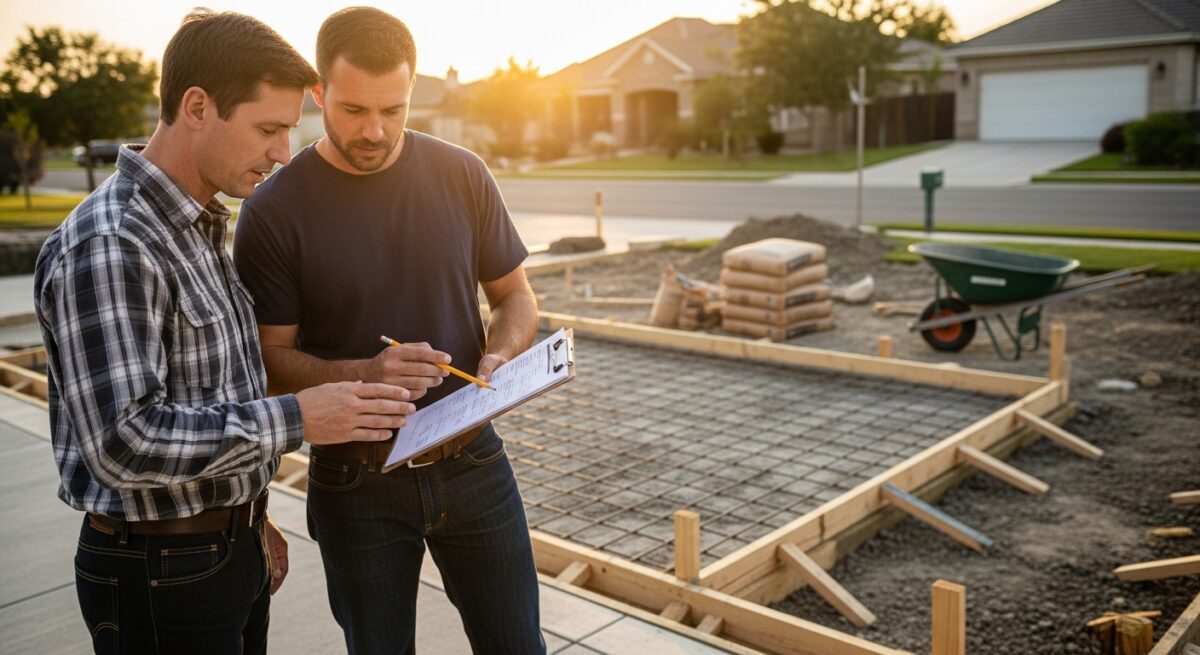
A reputable contractor starts with a thorough on-site visit. They measure the area precisely, assess the ground conditions, and discuss your vision in detail. This allows them to identify potential challenges, like tree roots or slope issues, before any work begins.
Next, they calculate the exact volume of concrete needed, the type and amount of base material, and the labor hours for preparation, pouring, finishing, and clean-up. They factor in costs for permits, any necessary subcontractors, and project management. This meticulous process, much like the approach detailed in our home expansion cost estimate guide, ensures the number they give you is realistic and comprehensive, with minimal surprises.
- Site Inspection & Measurement: Evaluating terrain, access, and taking precise measurements.
- Material Calculation: Determining concrete yardage, rebar, gravel base, and forms.
- Labor & Timeline Planning: Estimating crew hours for each phase of the project.
- Final Documentation: Compiling everything into a clear, written estimate for your review.
Don’t settle for guesswork on your next project. For a transparent and professional estimate from experienced concrete specialists, call us at 888-777-6666 or request your free estimate online.
Signs Your Estimate Might Be Problematic
If a contractor is hesitant to put everything in writing or pressures you to sign quickly, take it as a warning. A trustworthy professional wants you to be fully informed and comfortable with the agreement. They will encourage you to ask questions and will provide clear answers.
Be wary of estimates that seem significantly lower than others you’ve received. This often means critical steps are being omitted, or the contractor plans to use subpar materials. Remember, a quality concrete installation is an investment in your home’s value and safety. Cutting corners on price usually leads to costly repairs down the road.
- It’s Verbal Only: A professional estimate is always in writing.
- The Price is Surprisingly Low: It likely excludes necessary steps or uses inferior materials.
- Large Upfront Payment Demands: Reputable contractors typically require a reasonable deposit, not full payment upfront.
- No License or Insurance Information: This is non-negotiable for your protection.
Cost Factors and What Affects Your Concrete Pricing
Several key elements directly influence the final cost of your concrete installation. The size and thickness of the slab are the most obvious—more square footage and a thicker slab for driveways require more material. The complexity of the job also plays a huge role. A simple patio is less expensive than a stamped, stained, or intricately colored concrete feature.
Site accessibility and preparation are major cost drivers. If the area is hard to reach with trucks and equipment, or if significant grading, excavation, or tree root removal is needed, the price will reflect that extra labor. Finally, geographic location affects material costs and labor rates, similar to variations seen in other major projects like a bathroom renovation estimate.
Additional factors include the strength (PSI) of the concrete mix, the need for reinforcement like rebar or wire mesh, the type of finish, and whether a protective sealant is applied. A good estimate will itemize these choices so you understand their value.
Understanding costs is the first step to a successful project. Let us provide you with a detailed, honest estimate. Call 888-777-6666 now or get your free custom estimate here.
How to Choose the Right Concrete Professional
Start by checking credentials. A reliable concrete contractor should be licensed, insured, and bonded. This protects you from liability in case of accidents and ensures they meet local building codes. Always ask for proof of insurance and look up their license status with your state’s licensing board.
Next, review their portfolio and ask for references from recent projects. A reputable company will be proud to show you their work and connect you with past clients. When you receive estimates, compare them line-by-line, not just the bottom line. The most helpful estimate is clear and detailed, making it easy to see exactly what you’re comparing. For more tips on this selection process, our resource on choosing the right concrete contractor offers additional guidance.
- Verify license and insurance.
- Read online reviews and ask for local references.
- Compare detailed estimates, not just total price.
- Trust your gut about communication and professionalism.
Long-Term Benefits for Your Home
Investing in a professionally installed concrete surface pays off for years to come. Properly poured and finished concrete is incredibly durable, resisting weathering, cracking, and wear with minimal maintenance. This translates to long-term savings, as you won’t need to repair or replace it frequently.
Beyond durability, a well-executed concrete project enhances your home’s curb appeal and functionality. A new driveway, patio, or walkway creates usable outdoor living space and can significantly boost your property’s market value. Knowing the job was done correctly, with proper drainage and base preparation, gives you enduring peace of mind that your investment is secure.
Frequently Asked Questions
How long is a concrete estimate valid?
Most estimates are valid for 30 to 90 days. This is because material prices, especially for concrete, can fluctuate. Always ask for the validity period on your written estimate.
What’s the difference between an estimate and a quote?
An estimate is a professional’s best calculated guess of the project cost. A quote or bid is typically a fixed price that you agree to pay. A detailed estimate often forms the basis of the final contract and quote.
Should I get multiple estimates?
Yes, getting at least three detailed estimates is highly recommended. It helps you understand the fair market price for your project and gauge the professionalism and communication style of different contractors.
What questions should I ask when reviewing an estimate?
Ask about what is NOT included, the payment schedule, who pulls permits, the project timeline, the crew’s experience, and the warranty details on both materials and workmanship.
How much should I pay as a deposit?
A typical deposit ranges from 10% to 30% of the total project cost to secure the start date and cover initial materials. Be cautious of contractors who demand 50% or more upfront.
Does the estimate include removing old concrete?
Not always. Demolition and disposal of existing concrete is a separate labor and dump fee cost. Make sure this is specifically listed if your project requires removal.
What happens if there’s a change during the project?
A professional contractor will provide a “change order”—a written document detailing the change in scope and the adjusted cost—for you to approve before proceeding with the extra work.
How thick should my concrete driveway be?
For residential driveways that will hold passenger vehicles, a standard thickness is 4 inches. For heavier vehicles or RVs, 5 to 6 inches is recommended. Your estimate should specify the proposed thickness.
Taking the time to thoroughly understand your concrete installation estimate is the smartest first step you can take. It empowers you to make confident decisions, ensures you partner with the right professional, and lays the foundation for a durable, beautiful addition to your home that you’ll enjoy for decades.


About Elena John