
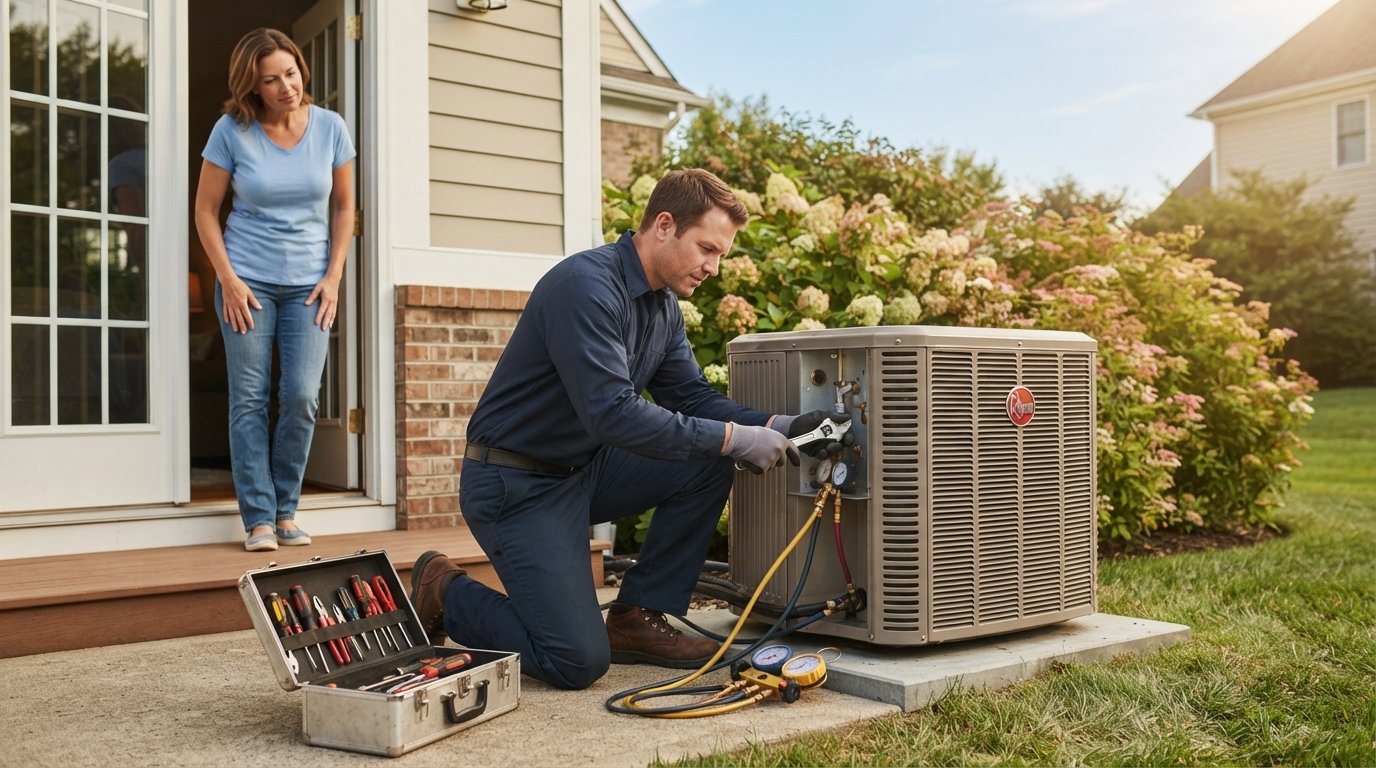
Why HVAC Maintenance Matters for Homeowners
Regular HVAC maintenance protects comfort and prevents costly breakdowns. Call (833)-211-1668 to compare maintenance plan quotes from independent local providers.

By Sophie Reed
Learn more about Central Air Conditioning Repair or Maintenance for guides, costs, and what to expect.
Compare Central Air Conditioning Repair or Maintenance Pros Near You

Enter your ZIP code to compare independent local professionals and request free quotes.
Your HVAC system is one of the most expensive and hardworking pieces of equipment in your home. It quietly heats and cools every room, manages humidity, and filters the air you breathe, often running for thousands of hours each year. Yet because it operates out of sight and out of mind, it is also one of the most neglected. Skipping routine service feels harmless until the system fails on the hottest day of July or the coldest night in January. The importance of regular HVAC system maintenance for homeowners is not a marketing slogan; it is the difference between predictable comfort and costly emergencies, and between a system that lasts fifteen years and one that struggles to reach ten.
What a Typical Seasonal Tune-Up Actually Covers
A professional maintenance visit is far more than a quick glance at the furnace or air conditioner. A thorough seasonal tune-up is a structured inspection and adjustment process designed to restore efficiency, catch worn parts before they fail, and confirm the system is operating within the manufacturer's specifications. For a cooling system, the visit typically happens in spring; for heating equipment, the ideal window is early fall, before the first cold snap. Many independent local providers offer both visits as part of an annual maintenance plan, which spreads the cost and keeps both sides of the system covered.
During a cooling tune-up, a technician will clean or replace the air filter, inspect and clean the condenser and evaporator coils, check refrigerant charge, test electrical connections and capacitors, lubricate moving parts, and clear the condensate drain line. The technician also measures airflow and temperature differential to confirm the system is cooling as intended. Heating visits focus on the heat exchanger, burners, ignition system, blower motor, and safety controls. These checks matter because a cracked heat exchanger or a blocked flue can be a serious safety concern, not just a performance issue.
Homeowners often ask what a fair maintenance visit should include, and the answer is a documented checklist rather than a verbal assurance. A reputable independent provider will leave you with a written summary of what was inspected, what was adjusted, and what parts or repairs may be needed soon. That record becomes valuable when you compare quotes for future work or evaluate whether a repair is worth the investment. If you want to understand how a well-maintained system translates into long-term savings, our guide on new HVAC system ROI and energy savings explains how efficiency gains and equipment lifespan affect the payback on replacement decisions.
Filter Schedules, Coil Cleaning, and Condensate Line Care
Among all maintenance tasks, filter changes deliver the most benefit for the least effort. A clogged filter restricts airflow, which forces the blower to work harder, raises energy consumption, and can cause the evaporator coil to freeze. The right schedule depends on the filter type, the number of occupants, and whether pets live in the home. As a practical baseline, many homeowners should check the filter monthly and replace it every one to three months, moving toward the shorter end of that range during peak heating and cooling seasons or in homes with shedding pets.
Coil cleaning is the task most often skipped by do-it-yourselfers and the one that quietly erodes efficiency. The evaporator coil sits indoors and collects dust, while the condenser coil outdoors collects pollen, grass clippings, and debris. Dirty coils reduce the system's ability to transfer heat, which means longer run times and higher utility bills. Outdoor coils can be rinsed carefully after the power is shut off, but deep cleaning of the indoor coil usually requires access panels, coil cleaner, and a drain pan that will not overflow. This is one of the jobs best left to an independent provider who can clean the coil without bending fins or soaking insulation.
The condensate line is another underappreciated component. As the system cools, it removes moisture from the air, and that water must drain away through a line that often runs to a floor drain or outside the home. Algae, dust, and sludge can clog the line, causing water to back up into the drain pan and eventually onto the ceiling or floor. During a tune-up, a technician flushes the line, checks the drain pan for rust or cracks, and confirms the safety switch works. Homeowners can help by keeping the area around the indoor unit dry and by scheduling service if they notice standing water or a musty smell near the air handler.
Signs Your System Needs Attention Before a Breakdown
HVAC failures rarely happen without warning. The system usually gives signals for weeks or months before it stops altogether, and homeowners who recognize those signals can schedule service on their own terms rather than paying emergency rates during a heat wave. One of the earliest signs is a change in sound: rattling, buzzing, or grinding suggests loose components, failing bearings, or debris in the system. Another is uneven performance, such as rooms that never quite reach the thermostat setting or a system that runs constantly without making the home comfortable.
Rising energy bills are a quieter indicator. If your usage habits have not changed but your utility costs are climbing, a dirty coil, low refrigerant charge, or failing blower motor may be forcing the system to work longer. Similarly, increased dust in the home, frequent filter changes, or visible moisture around the indoor unit point to airflow or drainage problems. Musty odors can indicate mold growth in the ductwork or drain pan, while a burning smell near the furnace warrants immediate attention.
Homeowners should also watch for short cycling, where the system turns on and off in rapid succession. This behavior wears out the compressor and other components quickly and often signals an oversized system, a thermostat issue, or a refrigerant problem. Any of these symptoms is a reason to schedule a diagnostic visit with an independent local provider rather than waiting for the system to fail completely. Catching a failing capacitor or a clogged drain line during a routine visit costs far less than replacing a compressor or repairing water damage.
DIY Tasks Versus Work Best Left to an Independent Provider
Some maintenance is genuinely within reach for most homeowners, and doing it consistently reduces strain on the system between professional visits. Other tasks require tools, training, and a comfort level with electrical and refrigerant systems that most homeowners do not have. Knowing the line between the two protects both your equipment and your safety.
- Safe DIY tasks: replacing or cleaning air filters, keeping outdoor units clear of leaves and debris, vacuuming supply and return vents, and checking that the condensate drain pan is dry and unobstructed.
- Tasks for an independent provider: cleaning evaporator coils, checking refrigerant charge, inspecting the heat exchanger, testing electrical components, and flushing the condensate line.
- Tasks that should never be DIY: any work involving refrigerant handling, gas line connections, or opening the sealed combustion chamber of a furnace.
Beyond safety, there is a practical reason to leave complex work to professionals: documentation. Many manufacturers require proof of regular maintenance when a warranty claim is filed, and a record of professional service strengthens your position. A homeowner who changes filters diligently but never has the coils cleaned may still face a denied claim if the failure is traced to neglect. The middle path, consistent DIY basics plus one or two professional visits per year, delivers the best balance of cost and protection.
How to Compare Maintenance Plan Quotes Without Overcommitting
Maintenance plans are increasingly common, and they can be a smart way to lock in seasonal service at a predictable price. However, not all plans are created equal, and some bundle services you do not need or lock you into long commitments with cancellation fees. The first step is to clarify what the plan includes: how many visits per year, which components are inspected, whether filters are included, and whether any repairs or labor are covered. A plan that offers two visits but excludes coil cleaning is less valuable than one that covers the tasks your system actually needs.
Second, compare the plan price against the cost of paying for individual visits. In many markets, a plan costs roughly the same as two standalone tune-ups but adds perks such as priority scheduling or a discount on repairs. Those perks are only worth paying for if you would use them. Third, read the fine print on cancellation, auto-renewal, and exclusions. Some plans exclude refrigerant, duct cleaning, or after-hours calls, and those exclusions matter when something goes wrong.
Finally, treat the quote process as an opportunity to evaluate the provider, not just the price. Ask how long the company has served your area, whether technicians are employees or subcontractors, and what happens if a repair is recommended during a visit. A provider who explains the scope clearly and puts the plan terms in writing is easier to trust than one who quotes a low price with vague coverage. If you would rather compare options from multiple independent local providers before committing, you can compare quotes from independent local providers and review plan terms side by side, with no obligation to hire.
It also helps to align the plan with your equipment's age. A system under five years old may need only basic seasonal service, while an older system benefits from a plan that includes more frequent inspections and priority repair scheduling. Homeowners planning a replacement in the next few years should ask whether the plan can be transferred or prorated if the equipment changes. These details are easy to overlook in the excitement of a low monthly price, but they determine whether the plan actually saves money.
The Long-Term Case for Staying on Schedule
The financial case for regular maintenance rests on three pillars: efficiency, lifespan, and avoided emergencies. A well-maintained system consumes less energy because clean coils and proper refrigerant charge allow it to heat and cool with shorter run times. It lasts longer because worn parts are replaced before they damage the compressor or blower. And it fails less often because small problems are caught during routine visits rather than discovered during a holiday weekend when emergency rates apply.
There is also a comfort dimension that homeowners feel every day. Balanced airflow, consistent temperatures, and controlled humidity are the products of a system that is tuned and clean. A neglected system may still run, but it often runs unevenly, leaving some rooms too warm and others too cold. For households with allergies or respiratory concerns, clean filters and coils also mean fewer particles circulating through the home.
The importance of regular HVAC system maintenance for homeowners ultimately comes down to control. A maintenance schedule puts you in charge of when service happens and what it costs, rather than reacting to breakdowns on the equipment's timetable. Whether you handle the basics yourself and hire an independent provider for seasonal visits, or enroll in a plan that covers both, the goal is the same: predictable comfort, lower long-term costs, and a system that serves your home for as long as it reasonably can.
Learn more about Central Air Conditioning Repair or Maintenance for guides, costs, and what to expect.
Compare Central Air Conditioning Repair or Maintenance Pros Near You
Enter your ZIP code to compare independent local professionals and request free quotes.