
Choosing the Best Countertop Material for Kitchen Remodels
Compare quartz, granite, laminate, and solid surface for durability, cost, and upkeep. Call (833)-211-1668 for free quotes on your kitchen remodel.

By Elena John
Learn more about Countertop Installation for guides, costs, and what to expect.
Compare Countertop Installation Pros Near You

Enter your ZIP code to compare top-rated local professionals and request free quotes.
Your kitchen countertop is more than a work surface. It is the focal point of the room, a daily workhorse, and a significant line item in any remodel budget. With dozens of materials available, each offering a different mix of durability, price, and maintenance needs, choosing the best countertop material for kitchen remodels can feel overwhelming. This guide breaks down the most popular options, compares them on the factors that matter most, and explains how your choice affects everything from your quote to your home's resale value.
Quartz, Granite, Laminate, and Solid Surface: A Head-to-Head Comparison
When homeowners start comparing countertop materials, four options dominate the conversation: quartz, granite, laminate, and solid surface (such as Corian). Each has a distinct personality and price point, and understanding these differences is the first step in choosing the best countertop material for kitchen remodels. Quartz is an engineered stone made from ground quartz crystals mixed with resin. Granite is a natural stone quarried from the earth. Laminate is a synthetic product made from layers of paper and resin. Solid surface is a man-made material composed of acrylic and polyester.
Durability and price are the two factors that shape most decisions. Here is how the four materials stack up:
- Quartz: Highly durable and non-porous, resistant to stains and scratches, priced mid-to-high (roughly $50 to $100 per square foot installed).
- Granite: Extremely hard and heat-resistant, but porous and requires periodic sealing, priced mid-to-high ($40 to $100 per square foot installed).
- Laminate: Moderately durable but susceptible to heat damage and chipping, very affordable ($20 to $50 per square foot installed).
- Solid Surface: Soft and repairable, seamless appearance, moderately priced ($40 to $80 per square foot installed).
Quartz and granite sit at the top of the durability spectrum, but they demand different levels of care. Quartz never needs sealing, while granite should be sealed annually to prevent stains. Laminate is the budget champion, but it cannot match stone for longevity. Solid surface occupies a middle ground: it scratches more easily than stone, but scratches can be sanded out, and seams can be made nearly invisible. For a busy family kitchen, quartz often wins on low maintenance; for a period home or a homeowner who loves natural variation, granite remains a favorite.
Heat, Stain, and Scratch Resistance by Material
Every countertop material handles heat, stains, and scratches differently, and these differences matter in daily use. Heat resistance is critical if you frequently set down hot pans or use slow cookers and air fryers near the counter. Stain resistance matters for anyone who cooks with turmeric, red wine, or beets. Scratch resistance affects how the surface looks after years of chopping, sliding dishes, and accidental impacts.
Here is a quick reference for how each material performs:
- Heat: Granite and quartz handle heat well, though quartz can be damaged by extreme temperature changes; laminate scorches easily; solid surface can melt or discolor under hot cookware.
- Stains: Quartz and solid surface are non-porous and resist stains; granite is porous and can absorb liquids if unsealed; laminate resists stains but can stain at seams.
- Scratches: Granite is very scratch-resistant; quartz is scratch-resistant but not scratch-proof; solid surface scratches easily but can be sanded; laminate scratches and chips.
These distinctions should guide your choice based on how you actually use your kitchen. If you do a lot of high-heat cooking, granite or a quartz with high heat tolerance is a safer bet. If you have young children who might spill juice or drop dishes, quartz or solid surface offers peace of mind. If you are remodeling a rental unit or a budget-conscious flip, laminate may be sufficient, provided you use trivets and cutting boards.
Fabrication and Installation Variables That Change the Quote
The price per square foot you see online rarely tells the full story. Countertop quotes vary widely based on fabrication details, edge profiles, cutouts, and installation logistics. When choosing the best countertop material for kitchen remodels, it is essential to understand these variables so you can compare bids fairly and avoid surprise charges.
Fabrication is the process of cutting and finishing the material to fit your kitchen. For stone and quartz, fabrication is typically done in a shop using digital templates, and the cost depends on the complexity of your layout. A simple L-shaped counter with a standard edge costs less than a complicated layout with multiple angles, waterfall edges, or integrated backsplashes. Edge profiles (e.g., eased, beveled, bullnose, ogee) also affect the price, with simple edges being the most economical.
Cutouts for sinks and cooktops are another line item. Undermount sinks require polishing the cutout edge, which adds labor. Farmhouse sinks often require extra support and custom fabrication. Cooktop cutouts are generally simpler but still add to the total. Additionally, the number of seams matters: longer counter runs may require seams, and seam placement affects both appearance and cost.
Installation logistics can also impact your quote. If you live in a walk-up building or have a narrow staircase, moving a heavy slab into place may require extra labor or equipment. Removing old countertops and disposing of them is often a separate charge. Finally, material availability plays a role: exotic or rare stones may have higher fabrication costs and longer lead times.
To get accurate quotes, provide contractors with a detailed drawing or sketch of your kitchen layout, including dimensions, sink and cooktop locations, and any special requests. Ask each contractor to itemize fabrication, cutouts, edge profiles, and installation so you can compare apples to apples. For help finding pre-vetted local contractors who can provide competitive quotes, consider using a platform like Contractor.Homes to connect with professionals in your area.
How Countertop Choice Affects Resale Appeal
Kitchen remodels are among the most popular home improvement projects, and countertops play a starring role in resale appeal. Real estate agents often say that kitchens and bathrooms sell homes, and the countertop is one of the first things buyers notice. Choosing a material that balances your personal taste with broad market appeal can pay off when you sell.
Quartz and granite are currently the most sought-after materials in many markets. Quartz offers a clean, uniform look that appeals to modern buyers, while granite provides a natural, high-end feel that many buyers still associate with luxury. Both materials signal quality and durability, which can justify a higher asking price. Laminate, while budget-friendly, may be seen as a downgrade by some buyers, though high-quality laminate with realistic patterns can still look attractive. Solid surface is less common but can appeal to buyers looking for a seamless, integrated design.
Beyond the material itself, color and pattern matter. Neutral colors (white, gray, beige, black) tend to have the broadest appeal and stay in style longer. Bold or highly patterned stones can be stunning but may narrow your buyer pool. If you plan to sell within a few years, it is wise to choose a timeless look that complements a wide range of cabinet styles and decors.
It is also worth considering the overall kitchen design. A high-end countertop paired with cheap cabinets may look mismatched, while a modest countertop in a well-designed kitchen can still impress. Investing in a quality countertop that fits the home's price point and neighborhood is a smart strategy. According to Remodeling magazine's Cost vs. Value report, minor kitchen remodels (including countertop replacement) consistently return a significant portion of their cost at resale, making countertops a relatively safe investment.
Practical Steps for Choosing the Best Countertop Material for Kitchen Remodels
With so many factors to weigh, it helps to follow a structured approach. The following steps will guide you from initial research to final selection, ensuring you consider durability, cost, maintenance, and resale value in equal measure.
- Assess your cooking and lifestyle habits. Do you chop directly on the counter? Do you frequently set down hot pans? Do you have young children? Your answers will point you toward materials that prioritize heat resistance, scratch resistance, or stain resistance.
- Set a realistic budget. Countertops typically account for 10 to 15 percent of a kitchen remodel budget. Remember to include fabrication, installation, and removal of old countertops in your calculations.
- Research local availability and contractors. Some materials are more readily available in certain regions, and fabrication costs vary. Get quotes from at least three contractors to compare pricing and scope.
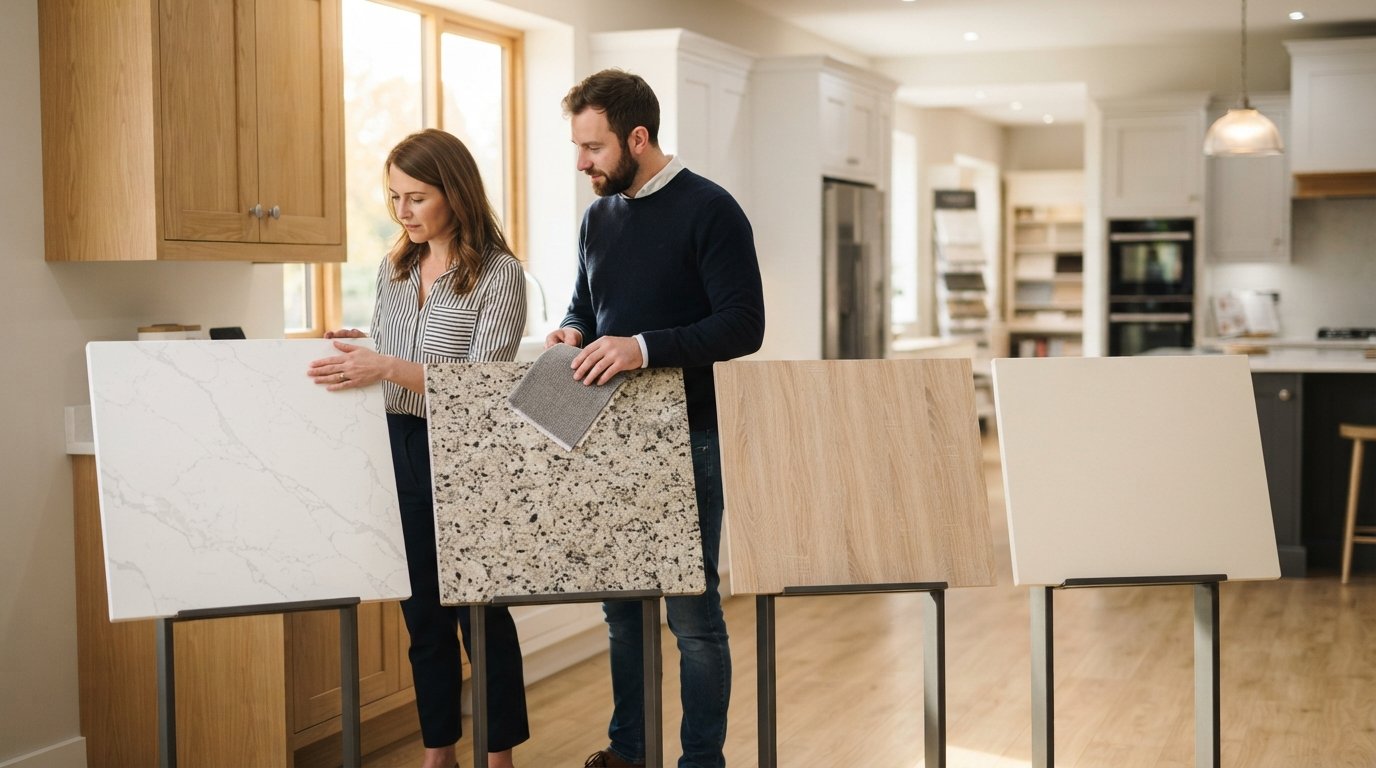
- Visit showrooms and view samples. Seeing and touching samples in person helps you understand color, texture, and finish. Bring cabinet and flooring samples to ensure a cohesive look.
- Review the quote details carefully. Ensure each quote itemizes material, fabrication, edge profile, cutouts, installation, and disposal. Ask about lead times and warranties.
Following these steps reduces the risk of costly surprises and helps you make a confident decision. It also positions you to negotiate effectively with contractors, as you will understand exactly what each line item means.
Common Mistakes to Avoid When Selecting Countertops
Even well-informed homeowners can stumble when choosing countertops. One common mistake is prioritizing appearance over function. A stunning marble countertop, for example, is softer and more prone to etching than quartz or granite, which may not suit a busy family kitchen. Another mistake is underestimating the importance of sealing. Natural stone like granite requires regular sealing to prevent stains, and neglecting this maintenance can lead to permanent damage.
Homeowners also frequently overlook the fabrication details. A low bid that does not include edge polishing, sink cutouts, or installation can end up costing more than a comprehensive quote from another contractor. It is essential to compare quotes on an apples-to-apples basis, ensuring all labor and materials are included. Finally, some homeowners choose a countertop without considering the overall kitchen design, resulting in a mismatch with cabinets or flooring. Bringing samples home and viewing them in your kitchen's lighting can prevent this.
Another pitfall is ignoring resale value. While it is important to love your kitchen, if you plan to sell in the near future, choosing a highly personalized or trendy material could limit your buyer pool. Neutral, durable materials tend to hold their value and appeal to a wider audience.
Working with Contractors: What to Expect
Once you have narrowed down your material options, the next step is hiring a qualified contractor for fabrication and installation. Countertop installation is not a DIY project for most homeowners, especially with heavy stone and quartz slabs. A professional contractor will template your kitchen, fabricate the countertops in a shop, and install them on site. The process typically takes one to three weeks from template to installation, depending on material availability and shop workload.
When vetting contractors, ask for proof of licensing and insurance, and request references from recent countertop projects. A reputable contractor will be transparent about lead times, warranty terms, and payment schedules. It is standard to pay a deposit at the time of template and the balance upon completion. Avoid contractors who demand full payment upfront or who are vague about fabrication details.
If you need help finding pre-vetted local contractors for your kitchen remodel, a service like Contractor.Homes can connect you with professionals who specialize in countertop installation and other remodeling services. Getting multiple quotes is one of the best ways to ensure you are getting a fair price and a quality job.
Final Thoughts on Choosing the Best Countertop Material for Kitchen Remodels
Selecting a countertop is a balance of art and science. You want a surface that looks beautiful, fits your budget, and stands up to daily life. By comparing materials on durability, price, heat and stain resistance, and resale appeal, you can make a choice that serves you well for years to come. Remember to factor in fabrication and installation costs, get multiple quotes, and work with a reputable contractor. With careful planning, your new countertop will be a highlight of your remodeled kitchen and a smart investment in your home.