
Benefits of Gutter Guard Installation for Homeowners
Reduce gutter cleaning and protect your home with gutter guards. Call (833)-211-1668 for free quotes from independent local providers.

By Maya Parker
Learn more about Gutter Installation or Replacement for guides, costs, and what to expect.
Compare Gutter Installation or Replacement Pros Near You

Enter your ZIP code to compare independent local professionals and request free quotes.
Your gutters do a simple job, but when they fail, the damage is anything but simple. Clogged gutters can lead to fascia rot, foundation cracks, and basement flooding, turning a minor maintenance task into a major repair bill. If you are tired of climbing a ladder every few months or paying someone to scoop out decomposing leaves, gutter guards might seem like the obvious fix. But do they really deliver on the promise of less maintenance, and at what cost? This guide breaks down the real benefits of gutter guard installation for homeowners, from reduced upkeep to long-term savings, and explains what guards can and cannot do so you can decide if they are right for your home.
How Gutter Guards Work and the Main Styles Available
Gutter guards are covers or inserts that sit over or inside your gutters to keep debris out while allowing water to flow through. They range from simple mesh screens to reverse-curve systems, and each design has strengths and weaknesses depending on your roof, tree cover, and climate. Understanding how each style works will help you choose the right one for your situation.
Here are the most common types of gutter guards and where they perform best:
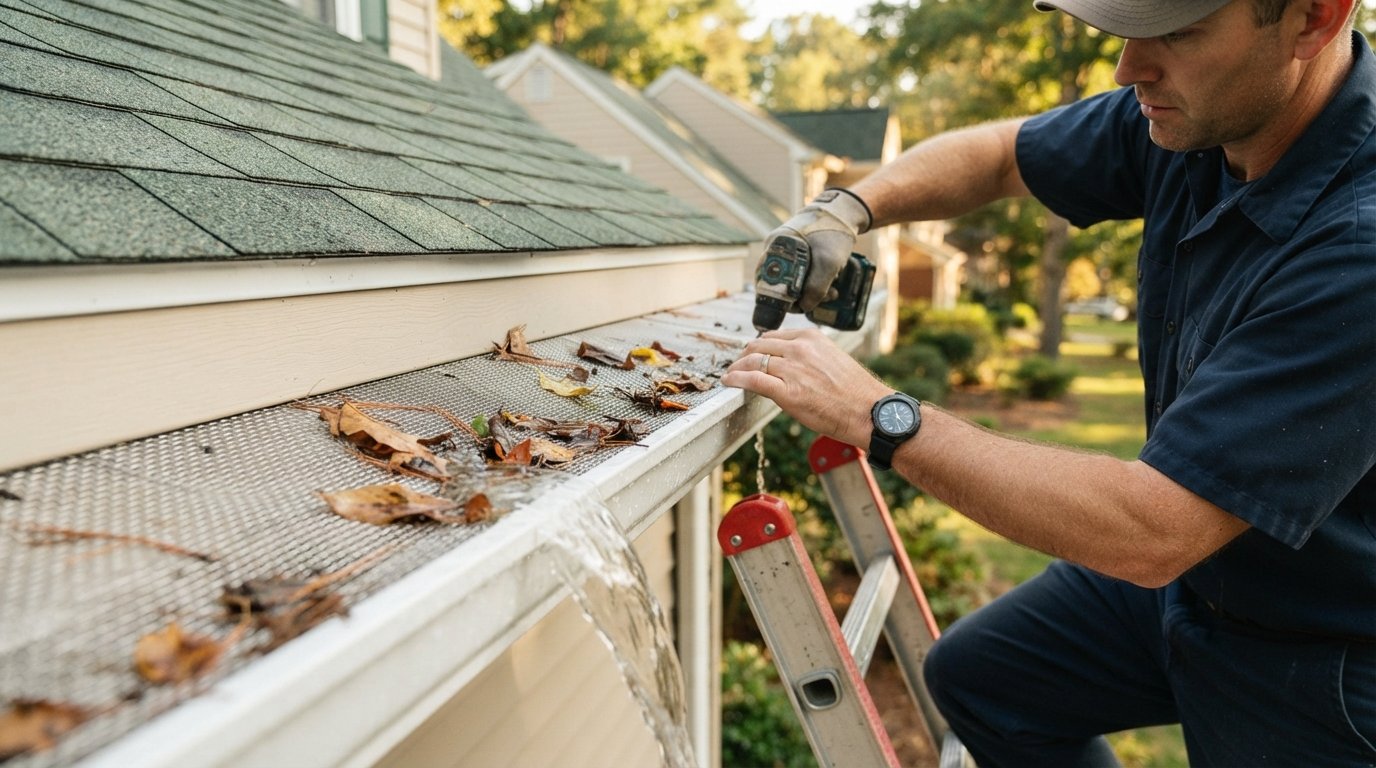
- Mesh screens: Fine stainless steel or aluminum mesh that blocks even small debris like pine needles and shingle grit. Best for homes with heavy tree cover and moderate rainfall.
- Reverse-curve guards: Solid covers that use surface tension to pull water into the gutter while debris falls off the edge. Effective in areas with large leaves, but less ideal for very small debris.
- Brush or foam inserts: Porous materials placed inside the gutter that let water through but trap debris on top. A budget-friendly option for homes with light debris, though they require more frequent cleaning.
- Perforated metal covers: Rigid panels with holes that allow water in but keep larger debris out. Durable and long-lasting, but smaller particles can still slip through.
Each style has trade-offs. Mesh screens offer the best protection against fine debris but may need periodic brushing to prevent surface clogging. Reverse-curve guards shed large leaves effectively but can be overtopped in heavy rain if not installed with the correct pitch. Brush inserts are inexpensive but tend to collect debris and require more hands-on maintenance. The right choice depends on your specific conditions, which we will explore next.
What Gutter Guards Do and Do Not Eliminate in Maintenance
One of the most touted benefits of gutter guard installation for homeowners is reduced maintenance, but it is important to set realistic expectations. Guards are not a "set it and forget it" solution. They significantly cut down on the frequency and difficulty of cleaning, but they do not eliminate maintenance entirely.
Gutter guards prevent large debris like leaves, twigs, and seed pods from entering the gutter trough, which means you will not have to scoop out heavy, rotting material. This reduces the risk of clogs that cause water to back up and overflow. However, small particles such as shingle grit, pollen, and small seeds can still accumulate on top of the guard or wash into the gutter. Over time, this can form a sludge that blocks water flow, especially on flat or low-slope roofs. Homeowners should still plan to inspect and occasionally clean the guards, typically once a year, and more often if you have nearby trees that drop fine debris.
Another factor is wildlife. Birds and rodents may nest on or under guards, and wasps can build nests in the sheltered space. Regular visual inspections from the ground can catch these issues early. In short, gutter guards reduce the frequency of cleaning from several times a year to perhaps once a year, and they make the task safer and easier, but they do not make your gutters completely maintenance-free.
How Roof Pitch, Tree Cover, and Rainfall Affect Performance
The effectiveness of any gutter guard depends heavily on your home's specific environment. Three key factors determine how well a guard will perform: roof pitch, tree cover, and local rainfall patterns.
Roof pitch: Steeper roofs accelerate water flow, which can cause water to shoot over the guard and miss the gutter entirely if the guard is not designed for high-volume flow. On steep roofs, reverse-curve guards or high-capacity mesh systems are often recommended. Flat or low-slope roofs allow debris to sit on top of the guard, so fine mesh that sheds debris easily is preferable.
Tree cover: The type of trees near your home matters more than the quantity. Pine needles and shingle grit are notorious for slipping through larger openings and matting down fine mesh. If you have pine trees, choose a micro-mesh guard with openings small enough to block needles. Deciduous trees with large leaves are easier to manage with most guard types. Homes surrounded by dense woods may need professional installation to ensure proper pitch and support.
Rainfall: In areas with heavy rainfall, the guard must handle high water volume without overflowing. Some guards have a lower water intake capacity, which can cause water to bypass the gutter during intense storms. Check the manufacturer's flow rate specifications and choose a guard rated for your region's typical rainfall intensity. In regions with frequent freeze-thaw cycles, metal guards are more durable than plastic, which can crack.
Before choosing a guard, take a walk around your property and note the types of trees, the roof pitch, and how water flows off your roof during a storm. This information will help you and your contractor select the right system.
Cost Factors and How to Compare Quotes for the Same Scope
The cost of gutter guard installation varies widely based on the type of guard, the length of your gutters, the accessibility of your roof, and local labor rates. On average, homeowners can expect to pay between $1,500 and $4,000 for a full installation, but prices can range from a few hundred dollars for DIY brush inserts to over $10,000 for high-end reverse-curve systems on large homes.To compare quotes fairly, you need to ensure each contractor is bidding on the same scope of work. Here are the key items to include in every quote request:
- Linear feet of gutters: The total length to be covered, including downspouts and any detached structures like garages.
- Guard type and material: Specify the exact product or at least the material (aluminum, stainless steel, plastic) and design (mesh, reverse-curve, etc.).
- Installation method: Will the guards be screwed, clipped, or slid under shingles? This affects labor and warranty.
- Warranty terms: Clarify what is covered (material defects, labor) and for how long.
- Cleanup and disposal: Confirm that the contractor will remove old debris and dispose of it properly.
When you request quotes, ask each contractor to break down the cost by labor and materials so you can see where the differences lie. Be wary of quotes that are significantly lower than others; they may use inferior materials or skip important steps like reinforcing hangers. To simplify the process of finding independent local providers and comparing competitive quotes, you can use a free service like Contractor.Homes to connect with professionals in your area.
Also consider the long-term value. A higher upfront cost for a durable metal guard may save you money over time by reducing maintenance and replacement costs. Ask about the expected lifespan of the product and whether it includes a warranty that covers labor as well as materials.
Questions to Ask Before Choosing a Gutter Guard System
Before you commit to a gutter guard installation, ask potential contractors these questions to ensure you are getting a system that suits your home and your maintenance preferences:
- What type of guard do you recommend for my roof pitch and tree cover? A good contractor will assess your specific conditions and explain why a particular guard is suitable.
- How is the guard attached, and will it affect my roof warranty? Some attachment methods can void roof warranties if not done correctly.
- What is the expected maintenance schedule after installation? Be clear about how often you will need to inspect or clean the guards.
- Can you provide references from homeowners with similar roofs and trees? Real-world feedback is invaluable.
- What does the warranty cover, and who honors it? Understand whether the manufacturer or the installer backs the warranty and what it includes.
Additionally, ask about the installation process itself. Will they remove and reattach the gutters? How will they handle downspouts? A thorough contractor will walk you through each step and address any concerns about water flow or debris accumulation. If you also need maintenance for other home systems, such as your heating and cooling, you might find our guide on why HVAC maintenance matters for homeowners helpful for planning a comprehensive home care schedule.
Finally, consider the benefits of gutter guard installation for homeowners in terms of safety and property protection. By reducing the need to climb ladders, you lower the risk of falls and injuries. By keeping water flowing away from your foundation, you protect against costly water damage and erosion. And by minimizing debris buildup, you reduce the chance of pests nesting in your gutters. While the upfront investment may seem significant, the long-term savings in maintenance costs and avoided repairs often outweigh the initial expense.
Gutter guards are not a one-size-fits-all solution, but when chosen and installed correctly, they can be a smart investment for many homeowners. Take the time to assess your home's needs, compare quotes carefully, and ask the right questions. With the right system in place, you can spend less time on ladders and more time enjoying your home.