
How to Prepare Your Plumbing System for Winter Weather
Protect your pipes from freezing and avoid costly water damage. Learn how to prepare your plumbing system for winter weather. Call (833)-211-1668 for guidance.

By Maya Parker
Learn more about Plumbing Pipe Repair for guides, costs, and what to expect.
Compare Plumbing Pipe Repair Pros Near You

Enter your ZIP code to compare independent local professionals and request free quotes.
When the first hard freeze of the season arrives, the last thing any homeowner wants is to hear the sound of a pipe bursting in the middle of the night. Water damage from a burst pipe can cost thousands of dollars in repairs, disrupt your daily routine, and create a stressful insurance claim process. The good news is that most winter plumbing failures are entirely preventable with a few hours of preparation before temperatures drop. Understanding how to prepare your plumbing system for winter weather is one of the most cost-effective maintenance tasks you can perform, and it does not require specialized tools or professional help for the basic steps. This guide walks you through the essential tasks, from insulating exposed pipes to safely thawing a frozen line, so you can protect your home and your budget.
Why Winter Plumbing Preparation Matters More Than You Think
Water expands when it freezes, and that expansion creates immense pressure inside pipes. Even a small crack can release hundreds of gallons of water into your home before you notice the problem. Pipes located in unheated areas such as basements, crawl spaces, garages, and exterior walls are the most vulnerable. According to the Insurance Institute for Business and Home Safety, water damage from frozen and burst pipes is one of the most common causes of homeowner insurance claims during winter months. The financial impact goes beyond the plumbing repair itself: ruined drywall, damaged flooring, and mold remediation can multiply the final bill.
Preparing your plumbing system for winter weather is also about peace of mind. When you know your pipes are insulated, your outdoor faucets are drained, and your family knows where the main shutoff valve is located, you can handle a cold snap without panic. The steps in this guide are practical, inexpensive, and can be completed over a single weekend. If you discover during your inspection that you need professional help with a complex issue, such as replacing a corroded shutoff valve or insulating a hard-to-reach crawl space, you can compare quotes from independent local providers through a free matching service to find the right professional for the job.
Insulate Exposed Pipes in Basements, Crawl Spaces, and Garages
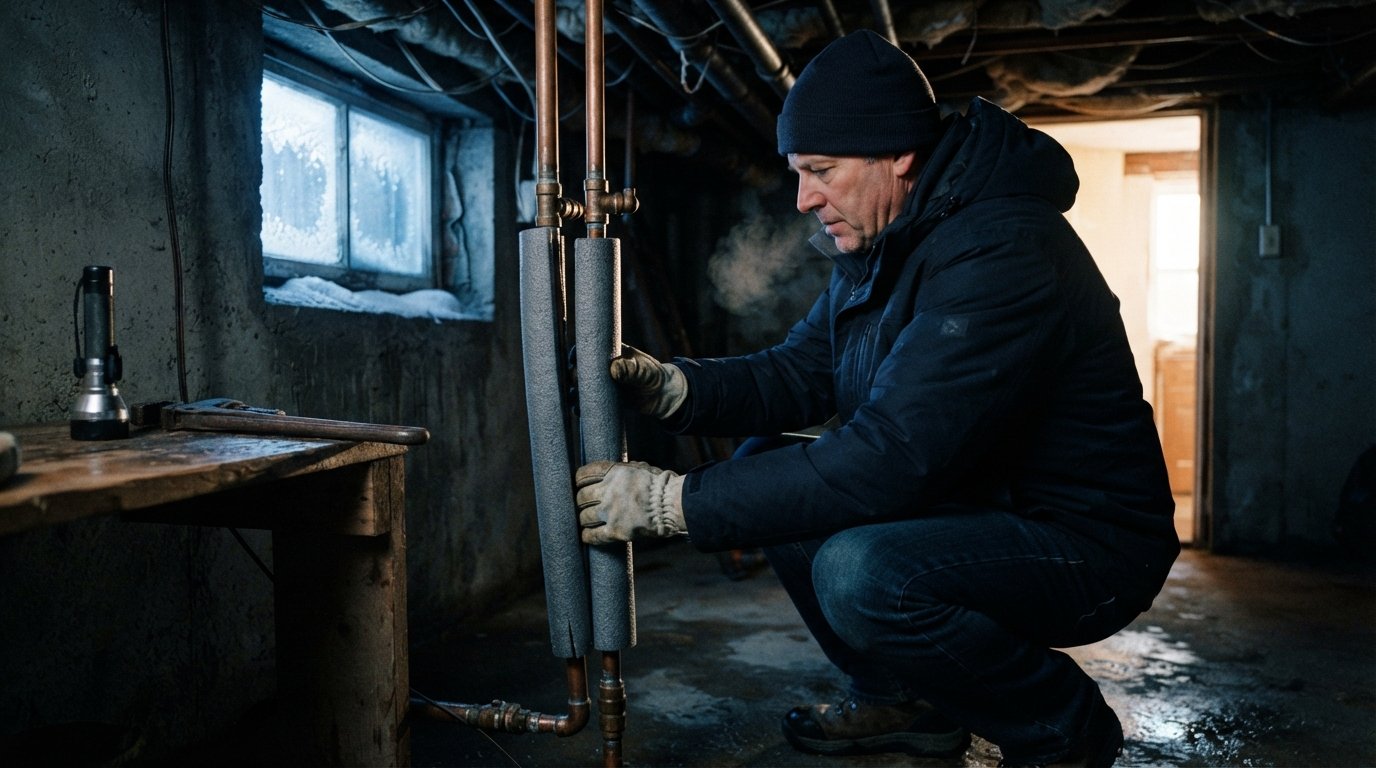
The first line of defense against freezing is insulation. Pipes in unconditioned spaces are exposed to the same outdoor temperatures that cause ice dams and frozen gutters, and they need a protective barrier. Start by locating all exposed pipes in your basement, crawl space, attic, garage, and any exterior walls. Look for pipes that run along exterior walls, near drafty windows, or in areas where you can feel cold air. Once you have identified them, you can choose from several insulation options: foam pipe sleeves, fiberglass pipe wrap, or self-regulating heat cable for especially vulnerable sections.
Foam pipe sleeves are the simplest and most common solution. They slip over the pipe and are held in place with tape or zip ties. For pipes that are difficult to access, such as those tucked behind drywall or in tight corners, fiberglass wrap may be easier to apply. Heat cable, which plugs into a standard outlet and warms the pipe during extreme cold, is a good option for pipes that have frozen before or that run through particularly cold zones. Before installing any insulation, inspect the pipes for existing leaks, corrosion, or damage. Insulating a leaking pipe can trap moisture and lead to mold growth.
Pay special attention to the areas where pipes enter the home from outside. These entry points are common spots for cold air infiltration. Use expanding foam or caulk to seal gaps around pipes where they penetrate exterior walls. This not only keeps cold air out but also prevents pests from entering. If your crawl space has open vents, consider installing insulated vent covers during the winter months. Just remember to remove them in spring to allow proper ventilation and moisture control.
Outdoor Spigot and Irrigation Winterization Steps
Outdoor plumbing is the most exposed part of your system, and a forgotten garden hose can cause a pipe to burst inside the wall. Before the first freeze, disconnect all garden hoses and store them indoors. A hose left connected to a spigot traps water inside the pipe, and when that water freezes, it can crack the pipe or the spigot itself. After removing the hose, drain the spigot by turning off the water supply to that fixture (if it has a separate shutoff valve) and opening the spigot to let any remaining water escape.
For homes with an irrigation system, winterization is a bit more involved. The goal is to remove all water from the sprinkler lines and valves so that freezing temperatures do not cause them to burst. You can blow out the lines with compressed air, but this requires specific equipment and some technical knowledge. Many homeowners choose to hire an independent local irrigation specialist for this task. If you decide to do it yourself, follow the manufacturer's instructions carefully and wear eye protection. Here are the key steps for winterizing an irrigation system:
- Shut off the water supply to the irrigation system at the main valve.
- Open the drain valves on the backflow preventer and allow water to drain.
- Connect an air compressor to the blow-out port and blow air through each zone, one at a time, until no water comes out.
- Close all valves and insulate the backflow preventer with a cover or insulation wrap.
If you do not have the right compressor or are unsure about the process, it is safer to call a professional. A failed blow-out can leave water in the lines, leading to costly repairs in spring. Similarly, if you are planning a long absence during the winter, you may need to take additional steps to protect your plumbing. Our guide on how to prepare your home for a long renovation absence covers broader shutdown procedures that can be adapted for winter travel.
What to Do Before a Freeze Warning and During a Deep Freeze
When a freeze warning is issued, you still have time to take action. The most important step is to ensure that warm air can reach vulnerable pipes. Open cabinet doors under sinks, especially on exterior walls, so that indoor heat can circulate around the plumbing. If you plan to be away, set your thermostat to at least 55 degrees Fahrenheit and do not lower it further. A common mistake is to turn the heat down too far to save money, only to return to a flooded home.
During a deep freeze, when temperatures stay below freezing for an extended period, take additional precautions. Let faucets drip slightly, both hot and cold, to relieve pressure inside the pipes. Even a slow trickle can prevent a burst. Keep your garage doors closed if there are water lines running through the garage. If you have a crawl space, make sure the access door is insulated and closed tightly. For homes with a basement, check that the basement windows are closed and sealed.
It is also wise to know where your main water shutoff valve is located and to make sure it works. If a pipe does burst, shutting off the water quickly can minimize damage. Test the valve by turning it off and on before winter arrives. If it is stuck or corroded, have it replaced by a professional. A plumbing provider can also install an automatic leak detection system that shuts off the water supply if it senses abnormal flow, which is a smart investment for homeowners who travel frequently or own older homes.
Early Warning Signs of a Frozen Pipe and Safe Thawing Steps
Sometimes, despite your best efforts, a pipe freezes. Knowing the warning signs can help you act before it bursts. The most common signs include: no water or only a trickle coming from a faucet, frost visible on the outside of a pipe, a bulging pipe, or a faint whistling or gurgling sound when you turn on the tap. If you notice any of these, act immediately. First, turn off the main water supply to prevent flooding if the pipe has already cracked. Then, locate the frozen section. It is often near an exterior wall or in an unheated space.
Safe thawing requires patience. Never use an open flame, such as a blowtorch, to thaw a pipe. This is a serious fire hazard and can also damage the pipe. Instead, use a hair dryer, a heat lamp, or a portable space heater set to a safe distance. You can also wrap the frozen section with towels soaked in hot water. Start thawing from the end closest to the faucet and work your way toward the frozen section. This allows melting water to escape through the open faucet. If you cannot locate the frozen section or if the pipe is behind a wall, it is best to call an independent local plumbing provider. They have specialized equipment, such as infrared cameras, to find the blockage without tearing into walls.
When to Call an Independent Local Plumbing Provider
While many winterization tasks are DIY-friendly, some situations require professional expertise. If you are unsure about the condition of your pipes, if you have experienced a previous freeze, or if your home has complex plumbing such as a tankless water heater or a sprinkler system, a professional inspection is a wise investment. A plumbing provider can identify vulnerabilities you might miss and perform tasks like insulating hard-to-reach pipes, installing heat tape, or repairing leaks before they become emergencies.
Finding a reliable provider does not have to be a hassle. FreeQuotes.Contractors connects homeowners with independent local providers for plumbing and other home services. You can compare quotes from independent local providers for winterization services, repairs, or upgrades, with no obligation. The platform provides educational content and a free quote request system to help you make informed decisions. Whether you need a simple pipe insulation job or a full plumbing inspection, comparing multiple quotes ensures you get competitive pricing and a clear understanding of the scope of work. Remember that FreeQuotes.Contractors is a referral service and does not perform the work itself; all work is completed by independent local providers.
By taking the time to prepare your plumbing system for winter weather, you protect your home from costly water damage and gain confidence that your pipes can handle whatever the season brings. From insulating exposed pipes to knowing how to safely thaw a freeze, these steps are simple but effective. If you need help, reach out to compare quotes and find the right professional for the job.
Learn more about Plumbing Pipe Repair for guides, costs, and what to expect.
Compare Plumbing Pipe Repair Pros Near You
Enter your ZIP code to compare independent local professionals and request free quotes.