
Crawl Space Encapsulation Cost and Benefits: 2026 Homeowner Guide
Crawl space encapsulation cost and benefits explained: expect $4,000 to $8,000 for most homes. Call (833)-211-1668 for free quotes from local pros.

By Elena John
Learn more about Home Waterproofing for guides, costs, and what to expect.
Compare Home Waterproofing Pros Near You

Enter your ZIP code to compare top-rated local professionals and request free quotes.
If your home sits on a crawl space, you may be losing money and comfort without even realizing it. Moist air rising from an unprotected crawl space can drive up energy bills, warp floors, and create a breeding ground for mold. Crawl space encapsulation is the permanent solution, but many homeowners hesitate because they do not know what it costs or whether the benefits justify the investment. This guide breaks down crawl space encapsulation cost and benefits in plain terms, so you can decide with confidence and hire the right specialist.
What Is Crawl Space Encapsulation and Why Does It Matter?
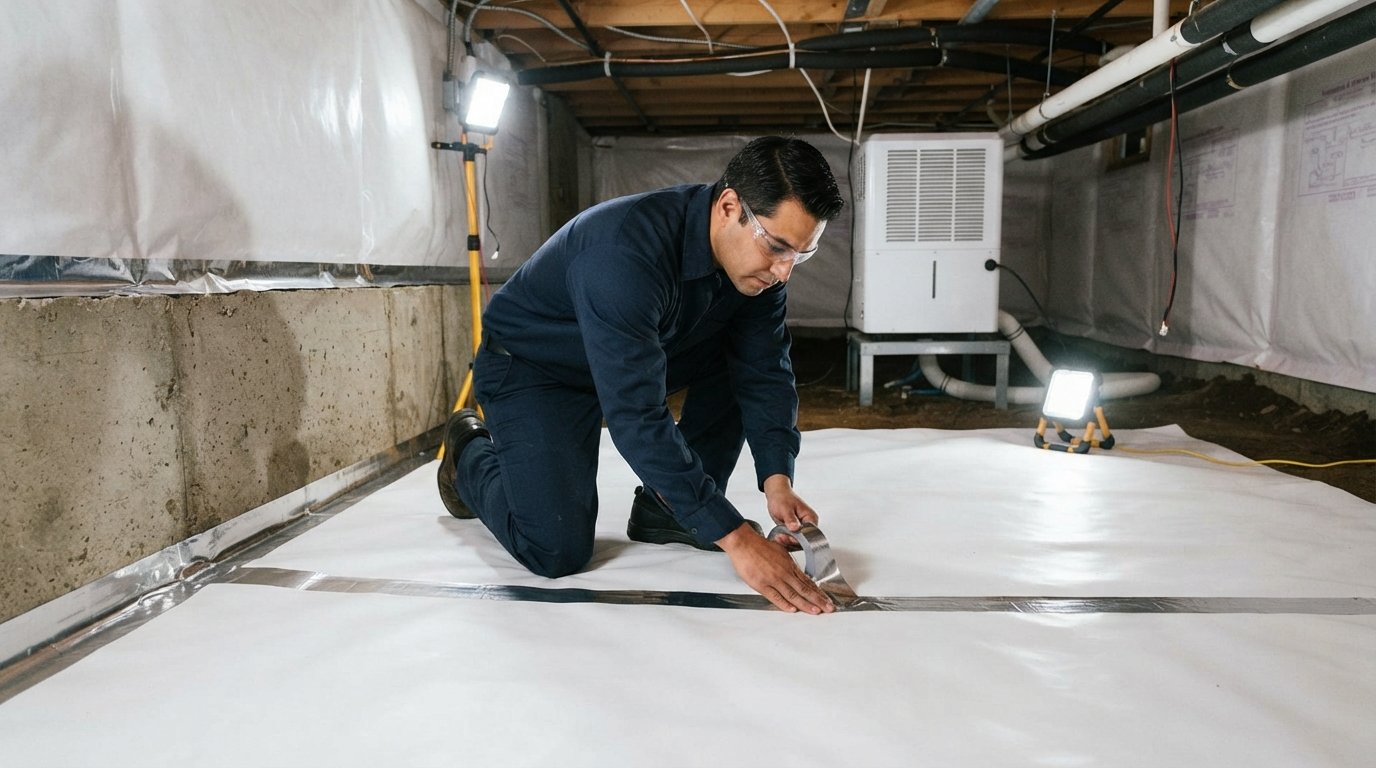
Crawl space encapsulation is a comprehensive moisture control system. It involves sealing the crawl space floor and walls with a heavy-duty vapor barrier, sealing vents, insulating the walls, and often adding a dehumidifier and drainage system. The goal is to isolate the crawl space from ground moisture and outdoor humidity, turning it into a dry, semi-conditioned space. Unlike a simple vapor barrier laid on the dirt, encapsulation is a whole-system approach that addresses air leaks, insulation, and moisture at the source.
Why does this matter? The crawl space sits directly beneath your living area. In a vented crawl space, the stack effect pulls air upward from the crawl space into the home. That air carries moisture, allergens, and even pests. According to the U.S. Department of Energy, a vented crawl space can increase energy costs and introduce humidity into the home. Encapsulation stops this cycle, improving indoor air quality and reducing the load on your HVAC system. For homeowners planning broader renovations, understanding how to break down renovation costs can help you budget for encapsulation alongside other upgrades.
Typical Crawl Space Encapsulation Cost Ranges
The cost of crawl space encapsulation varies widely based on square footage, the condition of the crawl space, and the method chosen. On average, homeowners pay between $1,500 and $15,000, with most projects falling in the $4,000 to $8,000 range. For a typical 1,000-square-foot crawl space, expect to spend $5,000 to $7,000 for a full encapsulation with a dehumidifier. Smaller spaces (500 square feet) may cost $2,500 to $4,000, while larger or more complex spaces can exceed $12,000.
Here is a breakdown of common encapsulation methods and their typical cost per square foot:
- Basic vapor barrier (6-mil polyethylene): $0.50 to $1.50 per square foot, but this is not true encapsulation and offers limited protection.
- Heavy-duty vapor barrier (10-20 mil reinforced): $1.50 to $3.00 per square foot, often used as part of a full encapsulation.
- Full encapsulation with wall insulation and vent sealing: $3.00 to $7.00 per square foot, including labor and materials.
- Encapsulation with dehumidifier and drainage: $5.00 to $10.00 per square foot, depending on the equipment and site conditions.
These ranges are for planning purposes. Actual quotes depend on factors like accessibility, existing water issues, and local labor rates. For a more precise estimate, request free quotes from pre-vetted crawl space specialists in your area.
Vapor Barrier vs. Full Encapsulation: What Is the Difference?
A vapor barrier is a single layer of plastic sheeting laid over the crawl space floor. It slows moisture evaporation but does not seal the space. Vents remain open, and walls are left uninsulated. Full encapsulation, by contrast, seals the entire crawl space: the floor is covered with a durable liner, the walls are insulated and covered, vents are sealed, and a dehumidifier is often installed. The result is a dry, clean, and conditioned space that is protected from humidity and pests.
The cost difference is significant, but so is the performance. A vapor barrier might cost $1,000 to $3,000, while full encapsulation runs $5,000 to $15,000. However, a vapor barrier often fails within a few years, requiring replacement. Encapsulation, when professionally installed, can last 20 years or more. If you plan to stay in your home long-term, encapsulation delivers better value. For a detailed comparison of costs, see our guide on how to break down renovation costs, which covers how to evaluate long-term value versus upfront price.
How Encapsulation Affects Humidity, Air Quality, and Energy Bills
One of the most immediate benefits of encapsulation is humidity control. By sealing the crawl space, you prevent moist air from entering the home. This reduces the risk of mold growth, musty odors, and condensation on windows and walls. Homeowners often report that their homes feel drier and fresher within days of installation. Improved air quality is especially important for allergy sufferers, as encapsulation reduces the presence of dust mites, pollen, and other allergens that thrive in damp environments.
Energy savings are another key benefit. A sealed crawl space acts as a buffer between the ground and your living area, reducing heat loss in winter and heat gain in summer. The U.S. Department of Energy estimates that sealing and insulating a crawl space can save 10 to 20 percent on heating and cooling costs. While savings vary by climate and home design, many homeowners recoup the cost of encapsulation through lower utility bills over 5 to 10 years. Additionally, encapsulation can extend the life of your HVAC equipment by reducing the load on the system.
Vetting Crawl Space Specialists and Licensing Requirements
Encapsulation is a specialized job. Not all general contractors have the training or equipment to do it correctly. Poor installation can lead to trapped moisture, mold, or structural issues. Therefore, it is critical to vet your contractor carefully. Start by checking licensing: most states require contractors to hold a general contractor license or a specialty license for moisture control. Ask for proof of insurance and bonding. Then, look for experience: a qualified specialist should have a portfolio of completed encapsulation projects and be able to provide references.
Here are key steps to vet a crawl space specialist:
- Verify licensing and insurance: Ask for license numbers and certificates of insurance. Confirm with your state licensing board.
- Request references and photos: Ask to see before-and-after photos of similar projects and contact references.
- Get multiple quotes: Compare at least three detailed written estimates. Be wary of unusually low bids.
- Check for certifications: Look for certifications from organizations like the Basement Health Association or the International Association of Certified Home Inspectors.
- Ask about warranties: A reputable installer should offer a warranty on materials and labor, typically 10 years or more.
For a reliable way to find and compare pre-vetted contractors, consider using a platform like Contractor.Homes, which connects homeowners with licensed professionals. FreeQuotes.Contractors also offers a free quote request system that matches you with local specialists. When comparing estimates, pay attention to the scope of work: does it include sealing vents, insulating walls, and installing a dehumidifier? A low quote that omits these steps may not deliver the benefits you expect.
Maximizing Your Investment: Tips for Homeowners
To get the most out of your encapsulation project, plan ahead. First, address any existing water issues, such as poor drainage or leaks, before encapsulation. Otherwise, trapped moisture can cause problems. Second, consider combining encapsulation with other energy efficiency upgrades, like air sealing and insulation, to maximize savings. Third, maintain the system: empty the dehumidifier regularly and inspect the liner for damage.
Finally, keep documentation of the installation, including warranties and photos. This can be valuable if you sell your home, as encapsulation is a selling point. Many real estate agents highlight a dry crawl space as a sign of a well-maintained home. With proper installation and care, encapsulation can provide decades of benefits, making it one of the most cost-effective home improvements for homes with crawl spaces.
Ready to explore encapsulation for your home? Request free quotes from local specialists and compare costs and benefits side by side. A dry, healthy home is within reach.