
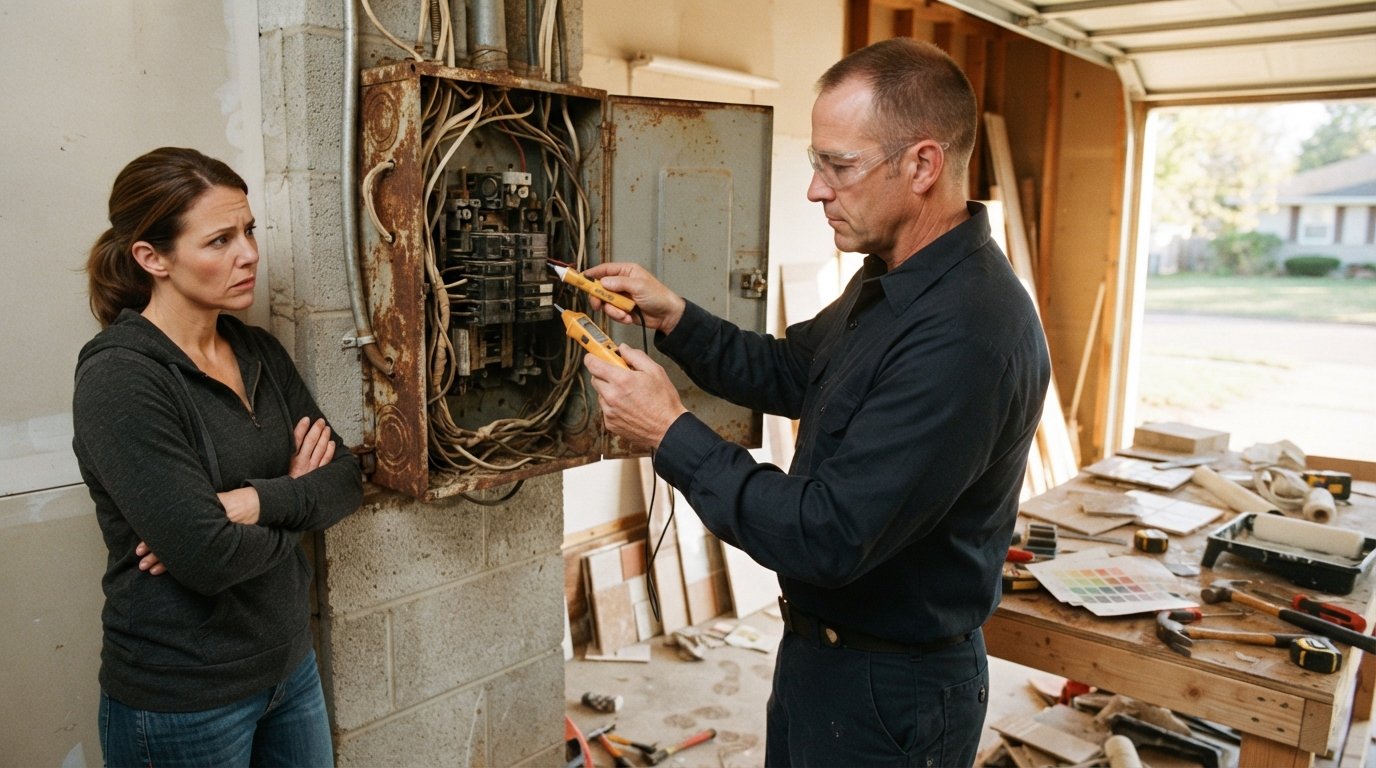
Electrical Panel Upgrade Needed Before Renovation: What to Know
Need an electrical panel upgrade needed before renovation? Call (833)-211-1668 for free quotes from vetted local electricians and keep your project on track.

By Julian Ellis
Learn more about Circuit Breaker Panel or Fuse Box Installation for guides, costs, and what to expect.
Compare Circuit Breaker Panel or Fuse Box Installation Pros Near You

Enter your ZIP code to compare top-rated local professionals and request free quotes.
You have picked out the tile, the cabinets, and the paint colors. Then your electrician takes one look at the panel in the garage and says the renovation cannot move forward until it is replaced. This scenario plays out in homes across the country every single day, and it usually catches homeowners off guard. The electrical panel is the silent gatekeeper of every remodeling project. It decides how much power your home can safely deliver to new appliances, added circuits, and modern lighting. If it cannot handle the load, your renovation stalls, your budget takes a hit, and your timeline stretches out.
Understanding why an electrical panel upgrade is often required before renovation can save you thousands of dollars and weeks of frustration. Older homes, especially those built before the 1990s, frequently have panels that were sized for a very different era of electricity use. A single modern kitchen remodel can demand more power than an entire 1960s house once used. Add an electric vehicle charger, a heat pump, or a home office full of equipment, and the math becomes impossible for an outdated panel. This article breaks down the warning signs, the costs, the code requirements, and the steps you can take to plan ahead, so your renovation stays on track from day one.
Why Renovations Push Older Electrical Panels Past Their Limits
Electrical panels are rated by amperage, which measures how much electricity they can safely distribute throughout your home. Common ratings include 60 amps, 100 amps, 150 amps, and 200 amps. Many homes built between the 1950s and 1980s were equipped with 60-amp or 100-amp panels. At the time, households ran a refrigerator, a few lights, a television, and maybe a washing machine. Today, a single kitchen renovation can add a wall oven, an induction cooktop, a dishwasher, a microwave, and a dozen recessed lights, all on dedicated circuits. That load alone can exceed what an entire 100-amp panel was designed to carry.
Beyond raw capacity, the physical space inside the panel matters. Every new circuit requires a breaker slot. If your panel is already full, there is nowhere to land new wires. Electricians sometimes use tandem breakers to squeeze two circuits into one slot, but this workaround has limits and is not always permitted by local code. When a panel is both full and undersized, replacement becomes the only safe path forward.
Age is another critical factor. Panels do not last forever. The metal bus bars corrode, breakers weaken, and connections loosen over decades of heating and cooling cycles. A renovation adds new demand to a system that may already be near the end of its service life. Pushing an aging panel harder is a recipe for nuisance tripping, flickering lights, and in worst-case scenarios, electrical fires. Insurance companies know this, which is why many now ask pointed questions about panel age and brand before issuing or renewing a policy.
Warning Signs Your Panel Cannot Support Your Renovation
Not every renovation triggers a panel upgrade, but certain red flags make it almost certain. The earlier you identify these signs, the better you can plan and budget. A qualified electrician can perform a load calculation, which is a formal assessment of your home's current and projected electrical demand. This calculation often determines whether your existing panel can legally and safely support the new work.
Here are the most common indicators that an upgrade is unavoidable:
- The panel is rated at 60 or 100 amps, and your renovation adds major appliances or a new addition.
- No open breaker slots remain, and tandem breakers are not an option for your panel model.
- The panel is a known hazardous brand, such as Federal Pacific Electric (FPE) or Zinsco, which have documented failure rates.
- You see rust, scorch marks, melted plastic, or signs of overheating inside the panel enclosure.
- Your renovation includes an electric vehicle charger, a heat pump, a tankless water heater, or a solar installation.
Each of these conditions signals that the panel is either unsafe, undersized, or both. Ignoring them does not make the problem disappear. It simply shifts the risk onto your family and your property. In many jurisdictions, a permitted renovation will trigger an electrical inspection, and the inspector will flag an inadequate panel before issuing a final sign-off. That means the upgrade happens anyway, but on the inspector's timeline rather than yours.
If you are unsure whether your panel qualifies, start by gathering information. Check the amperage printed on the main breaker. Note the brand and the number of open slots. Then schedule a professional evaluation. Getting a clear picture early lets you fold the upgrade cost into your renovation budget instead of scrambling for emergency funds mid-project. You can also read our guide on understanding your electrical panel upgrade quote to know exactly what line items to expect.
How Much Does an Electrical Panel Upgrade Cost
Cost is the question every homeowner asks first, and the answer depends on several variables. A straightforward panel replacement in a home that already has 200-amp service and adequate wiring might run between $1,500 and $3,000. If the service entrance cable, meter base, or grounding system also needs replacement, the price climbs toward $4,000 or more. Relocating the panel to meet current code clearances adds labor and materials. Upgrading from 100 amps to 200 amps typically falls in the $2,500 to $5,000 range, depending on region and complexity.
These figures matter because they interact with your overall renovation budget. A kitchen remodel that costs $40,000 might absorb a $3,000 panel upgrade without much disruption. A smaller bathroom refresh at $12,000 feels the pinch more sharply. The key is to treat the panel upgrade as a mandatory line item, not an optional add-on. Homeowners who skip this step often end up paying more later when an inspector stops the project or when a failed inspection requires rework.
There are also indirect costs to consider. If the utility company must disconnect and reconnect power, you may face fees and a scheduled outage. If the panel is in a finished basement, drywall repair adds to the total. If your home has aluminum branch wiring, which was common in the 1960s and 1970s, the electrician may need to install special connectors or pigtails at every outlet, a process that can add thousands of dollars. A thorough quote will itemize each of these possibilities so there are no surprises.
Code Requirements and Inspection Triggers
Electrical codes exist to protect people and property, and they evolve over time. The National Electrical Code (NEC) is updated every three years, and local jurisdictions adopt their own versions with amendments. When you pull a permit for a renovation, the work must meet the code in effect at the time of permitting, not the code that was in place when your home was built. This is why a panel that passed inspection in 1985 may fail today.Several code requirements commonly force panel upgrades during renovations. Modern kitchens require a minimum number of dedicated circuits for countertop receptacles, dishwashers, disposals, and microwaves. Bathrooms require GFCI protection, and bedrooms require AFCI protection. If your panel cannot accommodate these new breakers, the electrician cannot comply with code. Similarly, if you are adding a new addition, the calculated load for the entire home must fall within the panel's capacity. An undersized panel makes compliance impossible.
Inspectors also look at working clearances. The panel must have a certain amount of unobstructed space in front of it, typically 36 inches deep and 30 inches wide. If your renovation plans involve building shelves, cabinets, or walls near the panel, you may need to relocate it, which triggers a full upgrade. Understanding these triggers before you finalize renovation drawings can save you from redesigning mid-construction.
Planning the Upgrade Alongside Your Renovation
The smartest approach is to sequence the panel upgrade before the cosmetic work begins. Once walls are open and the framing is exposed, running new circuits is far easier and cheaper. An electrician can route wires, install outlets, and set up dedicated circuits without cutting into finished drywall. If you wait until after the renovation is complete, every new circuit becomes a patch-and-paint project, driving up labor costs and extending the timeline.
Start by scheduling an electrical assessment at the same time you are gathering contractor bids for the renovation itself. Share your renovation plans with the electrician so they can calculate the load accurately. If the panel needs upgrading, get that work permitted and scheduled first. Coordinate with your general contractor to ensure the electrical rough-in happens before insulation and drywall. This sequence keeps the project moving and avoids costly rework.
It also helps to think about future needs. If you are upgrading the panel anyway, consider going to 200 amps even if your current renovation only requires 150. The marginal cost is small compared to the inconvenience of upgrading again in five years when you add a hot tub or an electric vehicle charger. A little foresight now can future-proof your home for decades of changing technology.
Choosing the Right Electrical Contractor
Panel upgrades are not a do-it-yourself project. They involve high voltage, utility coordination, permits, and inspections. Hiring a licensed, insured electrician is not just a good idea; it is a legal requirement in most jurisdictions. The challenge is finding a contractor you can trust, especially when you are already managing a renovation with multiple trades.
This is where a service like Contractor.Homes can simplify the process. Contractor.Homes connects homeowners with pre-vetted local contractors for a wide range of projects, including electrical work. Instead of cold-calling electricians and hoping for callbacks, you can submit your project details once and receive competitive quotes from qualified professionals. The platform also offers educational resources and project guides, helping you compare bids and ask the right questions before you commit.
Whether you use a marketplace or hire directly, always verify licensing, ask for proof of insurance, and check references. A good electrician will welcome these questions. They will also pull the proper permits and schedule inspections, which protects you legally and financially. Do not accept a quote that skips permits or offers to do the work off the books. The short-term savings are never worth the long-term risk.
Frequently Asked Questions
Can I renovate without upgrading my panel?
Sometimes, yes. If your panel is 200 amps, has open slots, and passes a load calculation, you may be able to proceed without an upgrade. However, any renovation that adds significant electrical load or requires new circuits will likely trigger the need. A licensed electrician can tell you for certain after reviewing your plans and inspecting the panel.
How long does a panel upgrade take?
Most residential panel upgrades take one to two days of active work. However, the process from permit application to final inspection can take several weeks, depending on your local building department and utility company schedules. Plan for at least a month from start to finish.
Will a panel upgrade increase my home's value?
A modern, properly sized electrical panel is a selling point. It signals to buyers and inspectors that the home can handle contemporary electrical demands. While it may not add a specific dollar amount to your appraisal, it removes a common objection and can make your home more competitive in the market.
What if my panel is a recalled brand?
If your panel is a Federal Pacific, Zinsco, or another known hazardous brand, replacement is strongly recommended regardless of your renovation plans. These panels have documented failure rates and can be difficult or impossible to insure. Many electricians will not work on them, and some jurisdictions require replacement upon any permitted electrical work.
Planning a renovation is exciting, but it comes with hidden responsibilities. The electrical panel is one of the most important systems in your home, and it deserves attention before you start swinging hammers. By assessing your panel early, budgeting for an upgrade if needed, and hiring qualified professionals, you protect your investment and ensure your renovation proceeds smoothly. A little preparation now prevents a lot of headaches later.