
How Often Should Gutters Be Professionally Cleaned?
Find out how often gutters should be professionally cleaned based on tree cover and climate. Call (833)-211-1668 for a free local contractor quote.

By Sophie Reed
Learn more about Gutter Cleaning and Maintenance for guides, costs, and what to expect.
Compare Gutter Cleaning and Maintenance Pros Near You

Enter your ZIP code to compare top-rated local professionals and request free quotes.
Your gutters are the unsung heroes of your home's exterior, quietly channeling thousands of gallons of rainwater away from your roof, siding, and foundation every year. When they work properly, you barely notice them. When they clog, the consequences can range from minor roof leaks to serious foundation damage that costs tens of thousands of dollars to repair. The question is not whether you need to clean your gutters, but how often should gutters be professionally cleaned to keep your home protected year round. The answer depends on several factors, including where you live, how many trees surround your house, and the type of gutter system you have. This guide breaks down the ideal cleaning schedule for different conditions, explains what a professional service actually includes, and helps you recognize when cleaning is no longer enough.
Why Gutter Cleaning Frequency Matters More Than You Think
Gutters perform a simple but critical job: they collect rainwater from your roof and direct it safely away from your home's foundation. When leaves, twigs, shingle grit, and other debris accumulate, water backs up and finds the path of least resistance. That path is often through your fascia boards, into your attic, or down the side of your house where it pools around the foundation. According to the National Association of Home Builders, water damage is one of the most common and costly repairs homeowners face, and clogged gutters are a leading contributor.
The frequency of cleaning is not a one size fits all answer. A home in a mature wooded lot may need cleaning four times a year, while a house in a dry, treeless subdivision might get by with an annual service. Understanding the variables that affect your specific situation is the first step toward building a maintenance plan that actually works. The goal is to clean your gutters before they clog, not after you notice water spilling over the sides.
Another factor that homeowners often overlook is the hidden damage that occurs long before visible overflow. Debris sitting in a gutter traps moisture against the metal or vinyl, accelerating rust and rot. Even a partially blocked downspout can cause water to back up under the roof shingles, leading to ice dams in winter and mold growth in warmer months. Regular professional cleaning is an insurance policy against these expensive and often hidden problems.
Seasonal Cleaning Frequency by Climate and Tree Cover
The single biggest influence on how often gutters should be professionally cleaned is the natural environment surrounding your home. Trees are beautiful, but they are also the primary source of gutter debris. The type of trees, their proximity to the roofline, and the local climate all combine to determine a realistic cleaning schedule. Below are general guidelines based on common scenarios.
- Heavy tree cover (oak, pine, maple, or willow nearby): Clean gutters at least four times per year, ideally in late spring, midsummer, early fall, and late fall after leaf drop. Pine needles are especially problematic because they slip through gutter guards and form dense mats that block water flow.
- Moderate tree cover or occasional nearby trees: Two to three cleanings per year are typically sufficient, with one service in late spring and another in late fall. A midsummer check is wise if you have seed pods or flowering trees that shed heavily.
- Minimal tree cover (few or no trees within 50 feet): One annual cleaning in late fall or early winter usually keeps gutters clear, though homes in windy areas may collect debris from distant trees.
- Climate considerations: Homes in regions with heavy snowfall and ice dams need a pre-winter cleaning to prevent ice blockages. In the Pacific Northwest and Southeast, where rain is frequent and pollen is heavy, spring and fall cleanings are essential. Dry climates with occasional monsoon seasons, like the Southwest, may only require cleaning after the rainy season.
Beyond tree cover, consider the pitch of your roof and the presence of nearby construction or agricultural activity. A steep roof sheds debris faster, but it also directs more shingle grit into the gutters. If you live near a farm field or in a neighborhood with ongoing construction, windblown soil and debris can accumulate quickly, warranting more frequent inspections. When in doubt, err on the side of more frequent cleaning, especially during the first year in a new home when you are still learning how your property behaves through the seasons.
It is also worth noting that gutter guards and screens reduce but do not eliminate the need for cleaning. Guards keep out large leaves but allow smaller debris like seeds, shingle grit, and pollen to pass through. Homeowners with gutter guards should still schedule a professional inspection and cleaning at least once a year, and more often in heavy tree cover areas.
What Professional Gutter Cleaning Includes (and Why It Beats DIY)
Many homeowners assume gutter cleaning is a simple matter of climbing a ladder and scooping out leaves. While that is the basic idea, professional cleaning goes far beyond surface debris removal. A reputable contractor will perform a comprehensive service that protects your entire drainage system. Understanding what is included helps you evaluate quotes and recognize value.
A thorough professional cleaning typically covers the following steps:
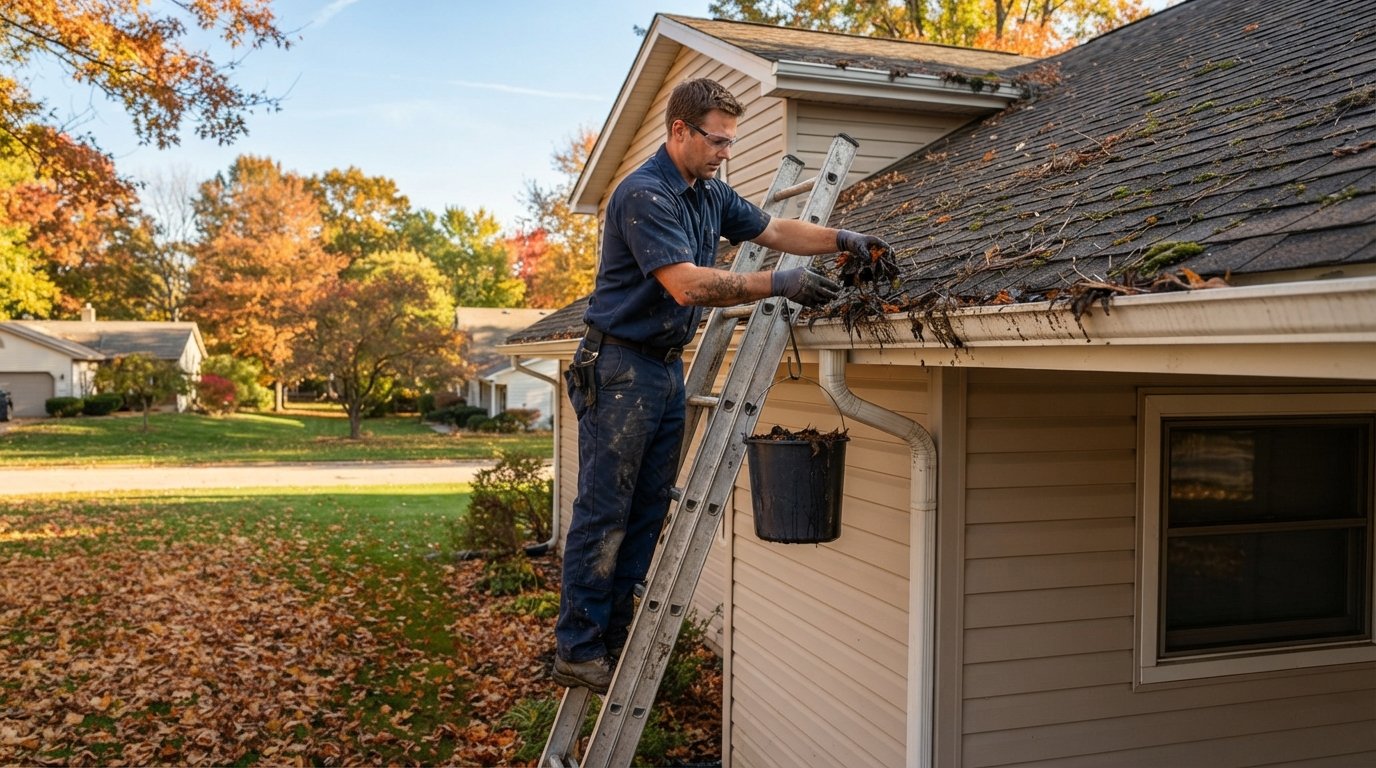
- Full debris removal: Technicians remove leaves, twigs, shingle grit, and nests from all gutters and downspouts, often using specialized tools like gutter scoops, vacuums, and blowers.
- Downspout flushing: Water is run through the downspouts to confirm they are flowing freely. Blockages are cleared, and any disconnected or damaged sections are identified.
- System inspection: Professionals check for loose hangers, sagging sections, leaks, rust, and improper slope. They also inspect the roof edge and fascia for signs of water damage.
- Minor adjustments and cleanup: Many services include tightening hangers, resealing minor leaks, and bagging all debris for disposal. They leave your property cleaner than they found it.
The DIY alternative carries real risks. Ladder falls send thousands of homeowners to the emergency room every year, and without proper training, it is easy to miss hidden damage or inadvertently damage the gutter system. Professionals have the safety equipment, experience, and insurance to do the job safely and thoroughly. They also spot early warning signs, such as loose flashing or cracked seals, that a homeowner might overlook. When you factor in the cost of a ladder, safety gear, and your time, professional cleaning is often more economical than it first appears.
If you are ready to find a reliable professional, Contractor.Homes connects homeowners with pre-vetted local contractors who specialize in gutter cleaning and exterior maintenance. The platform offers a free quote request system, making it easy to compare services and pricing from qualified professionals in your area.
How Neglected Gutters Lead to Foundation and Roof Damage
The consequences of skipped cleanings are rarely immediate, which is why gutter maintenance is so easy to postpone. However, the damage accumulates silently. When gutters overflow, water cascades down the exterior walls, saturating siding, trim, and window frames. This moisture creates ideal conditions for wood rot, mold, and peeling paint. Over time, water finds its way into the basement or crawl space, where it can undermine the foundation and create costly structural problems.
On the roof side, clogged gutters cause water to back up under the shingles. This is especially dangerous in cold climates, where the trapped water freezes and forms ice dams. Ice dams force water into the attic and interior walls, leading to insulation damage, stained ceilings, and mold growth. In warmer months, standing water in gutters becomes a breeding ground for mosquitoes and other pests, and the added weight of saturated debris can pull gutters away from the fascia entirely.
Foundation damage is perhaps the most expensive consequence. When gutters fail to direct water away from the house, the soil around the foundation becomes saturated. This can cause settling, cracks in the foundation walls, and basement flooding. Repairing a foundation can cost anywhere from $5,000 to $30,000 or more, far exceeding the cost of regular gutter cleaning. The math is simple: a few hundred dollars per year for professional cleaning is a fraction of the cost of repairing water damage.
When Cleaning Turns Into Replacement: Costs and Warning Signs
Sometimes cleaning is not enough. If your gutters are chronically clogging, sagging, or showing signs of structural failure, replacement may be the more cost-effective solution. Knowing the warning signs helps you plan ahead and avoid emergency repairs. Here are the key indicators that it is time to consider gutter replacement:
- Frequent clogs despite regular cleaning: If your gutters clog within weeks of cleaning, they may be improperly sized or damaged.
- Sagging or pulling away from the house: This indicates failing hangers or rotted fascia, which often requires replacement of both the gutters and the underlying wood.
- Visible rust, cracks, or holes: Small leaks can sometimes be sealed, but widespread rust or multiple cracks mean the system is near the end of its life.
- Water damage on siding or foundation: If you notice peeling paint, mold, or water stains despite regular cleaning, the gutters may be improperly pitched or undersized.
- Age: Most gutter systems last 20 to 30 years. If yours is approaching that age, replacement is likely more economical than repeated repairs.
The cost of gutter replacement varies by material and home size. Vinyl and aluminum are the most affordable options, typically ranging from $3 to $8 per linear foot installed. Seamless aluminum gutters run $6 to $12 per linear foot, while copper or steel systems can cost $15 to $30 per linear foot or more. For an average single-family home with 200 linear feet of gutters, replacement typically falls between $1,200 and $2,500 for standard materials. Professional cleaning, by contrast, usually costs $150 to $400 per service depending on home size and debris volume.
When evaluating whether to clean or replace, consider the long-term picture. If you have spent several hundred dollars per year on cleaning and still experience overflow or water damage, replacement will likely save money within a few years. A professional contractor can assess your system and provide a clear recommendation based on its condition, the roof design, and your local climate. Requesting multiple quotes helps you compare options and avoid overpaying.
Building a Year Round Gutter Maintenance Plan
The best way to protect your home is to establish a proactive maintenance schedule rather than reacting to problems. A simple annual plan can prevent the majority of gutter related issues. Start by identifying your home's risk factors: tree cover, local rainfall patterns, and the age of your gutter system. Then set recurring reminders for inspections and cleaning.
A practical schedule for most homeowners includes a spring cleaning to remove winter debris and pollen, a late summer check to clear seed pods and early leaf drop, and a late fall cleaning after the majority of leaves have fallen. Homes in heavy tree cover areas should add a midsummer service. Mark these dates on your calendar and treat them with the same importance as changing your HVAC filters or testing smoke detectors. The small investment of time and money pays dividends in avoided repairs.
Finally, keep records of each service. Note the date, the contractor, what was done, and any issues identified. This history helps you track the condition of your gutters over time and provides valuable documentation if you ever sell your home or file an insurance claim. If you need help finding a qualified professional in your area, a free quote request through a trusted marketplace can connect you with local experts who understand your climate and home style. Consistent maintenance is the simplest way to keep your gutters, roof, and foundation in good shape for years to come.