
Fall Home Maintenance Checklist Before Winter: Hire Contractors Early
Use this fall home maintenance checklist before winter contractors book up. Call (833)-211-1668 to schedule vetted pros and avoid cold-weather emergencies.

By Jack Dawson
Learn more about Handyman for guides, costs, and what to expect.
Compare Handyman Pros Near You

Enter your ZIP code to compare top-rated local professionals and request free quotes.
When the first cold front rolls through, the last thing you want is a furnace that will not ignite or a roof leak that turns into an indoor waterfall. Fall is the narrow window when homeowners can catch small problems before freezing temperatures, snow, and ice amplify them into expensive emergencies. A disciplined fall home maintenance checklist before winter contractors get booked solid is not just about comfort; it is about protecting your largest investment and avoiding the premium prices and long waits that come with panic repairs in December. The smartest move is to treat early autumn as a deadline: identify the tasks that need a professional, schedule them now, and knock out the simple checks yourself.
This guide walks through the highest-priority fall maintenance items, explains when to call a pro versus when to grab a ladder, and shows how to lock in qualified help before the seasonal rush. Along the way, you will see how platforms like requesting contractor quotes for home projects can simplify the process of comparing bids and securing your spot on a busy schedule.
Start With the Roof, Gutters, and Drainage: Your First Line of Defense
Water is the most destructive force a home faces in winter, and most water damage starts at the roof and gutters. Before the first freeze, you need a clear picture of your roof's condition and a drainage system that moves water away from the foundation. This is the single most important area to inspect in early fall, because once snow and ice arrive, roof repairs become dangerous and far more expensive.
A professional roof inspection in early fall should cover more than a quick glance from the ground. Ask the contractor to check for cracked or missing shingles, worn flashing around chimneys and vents, loose fasteners, and signs of water intrusion in the attic. They should also look at the condition of the roof deck and any skylights. If your roof is more than 15 to 20 years old, this inspection is not optional; it is a risk assessment. Small issues like a lifted shingle or a bead of failed sealant can be fixed for a few hundred dollars in September, while a full roof replacement in January can cost thousands more and may not be immediately available if contractors are slammed.
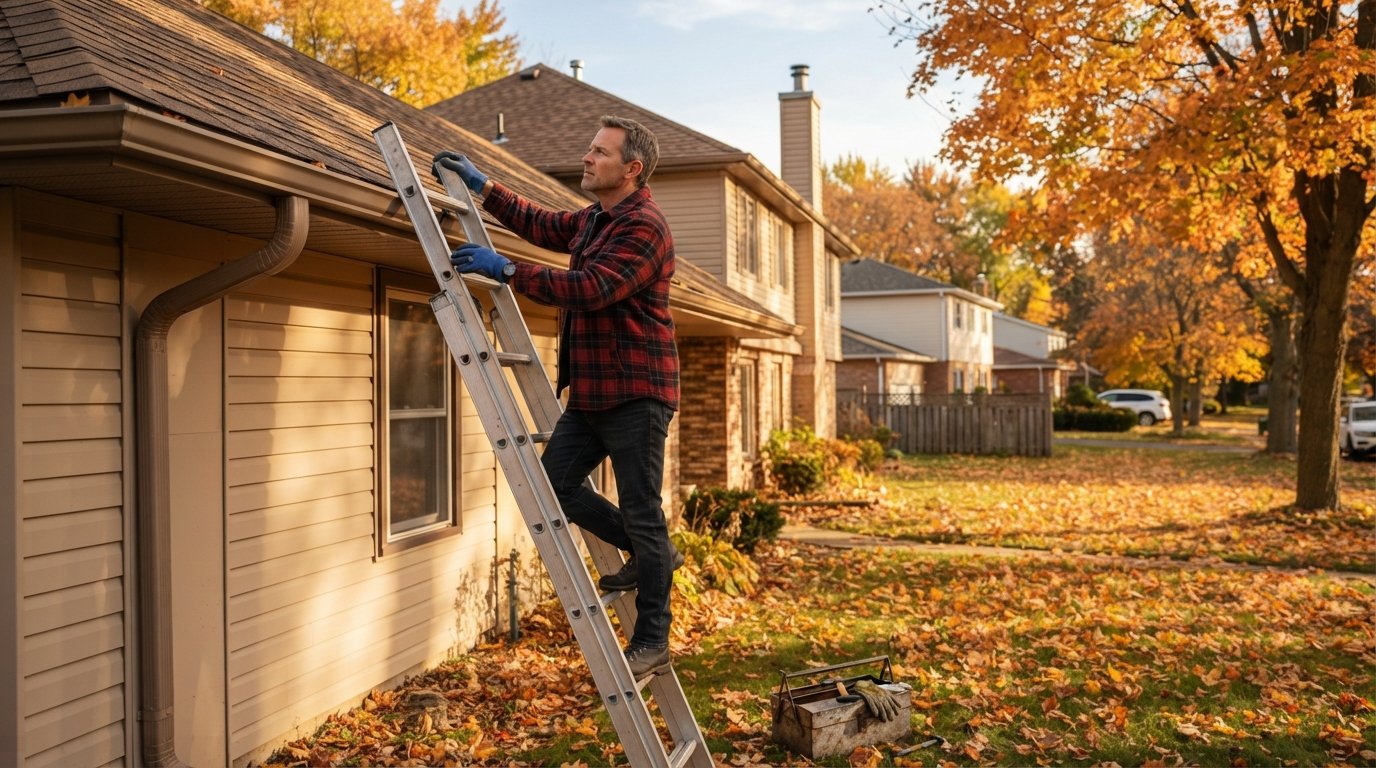
Gutters and downspouts deserve equal attention. Clogged gutters cause ice dams, which force water under shingles and into your walls. They also overflow and dump water at the foundation, leading to basement flooding and foundation cracks. While you can clean gutters yourself if you are comfortable on a ladder, many homeowners choose to hire a professional for safety and thoroughness. A pro will not only clear debris but also check for sagging, loose hangers, and proper slope. Downspouts should direct water at least six feet away from the foundation; if they do not, extensions or splash blocks are a cheap fix now versus a costly foundation repair later.
Here is a quick priority list for the roof and drainage phase of your fall checklist:
- Schedule a roof inspection in September or early October, before inspectors fill up.
- Clean gutters and downspouts after the bulk of leaves have fallen, and consider gutter guards to reduce future clogs.
- Check the attic for daylight, dampness, or dark stains that signal roof leaks.
- Trim overhanging branches that could scrape the roof or drop limbs under snow load.
- Verify downspout drainage slopes away from the foundation and does not pool near the house.
Once these items are handled, you have eliminated the most common sources of winter water damage. The next priority is your heating system, because a failure during a cold snap is both uncomfortable and dangerous.
HVAC Tune-Up Timing: Why Early Fall Is the Sweet Spot
Your heating, ventilation, and air conditioning system works hardest in extreme temperatures, and winter is its toughest test. An HVAC tune-up in early fall accomplishes two things: it catches worn parts before they fail, and it ensures your system runs efficiently when energy bills spike. The ideal timing is late September to mid-October, before the first heating demand and before contractors are swamped with emergency no-heat calls.
A proper heating inspection should include more than a filter change. A qualified technician will clean and inspect the furnace or heat pump, test the thermostat and safety controls, check the heat exchanger for cracks, measure airflow and refrigerant levels (for heat pumps), and verify that the condensate drain is clear. They should also inspect the flue and ventilation for blockages or leaks that could cause carbon monoxide issues. If you have a boiler, the inspection should cover pressure, water levels, and zone valves. Ask for a written report and any recommended repairs; this documentation is useful if you need to make a warranty claim later.
While you can replace air filters yourself (and should, monthly during heavy use), the deeper inspection and adjustment of burners, blowers, and electrical components are not DIY tasks. Attempting to service a gas furnace without training is risky, and many manufacturers require professional maintenance to keep warranties valid. Booking this service in early fall also gives you leverage: if the technician finds a failing part, you have time to order it and schedule the repair before the heating season begins in earnest.
Beyond the HVAC unit itself, fall is the time to address air sealing and insulation. Gaps around windows, doors, and utility penetrations let cold air in and warm air out, forcing your system to work harder. Adding insulation in the attic and sealing drafts are relatively inexpensive improvements that pay for themselves in lower heating bills. Some of these tasks are DIY-friendly, but if you are unsure about proper ventilation or insulation levels, a home energy audit from a qualified contractor can pinpoint exactly where you are losing heat.
DIY Versus Contractor: Which Fall Tasks Are Safe to Handle Yourself
Not every fall maintenance item requires a professional, and knowing the difference saves money without sacrificing safety. The general rule: if a task involves heights, gas, electricity, or structural systems, hire a licensed pro. If it is a simple visual check, cleaning, or minor weatherproofing, you can likely do it yourself.
Safe DIY tasks include replacing HVAC filters, cleaning gutters from the ground with the right tools (or hiring out if you are uncomfortable on ladders), testing smoke and carbon monoxide detectors, sealing small cracks with caulk, weatherstripping doors, draining and storing garden hoses, and winterizing outdoor faucets. You can also visually inspect your roof from the ground with binoculars, check for loose siding, and clear debris from window wells. These tasks are low-risk and require minimal tools.
Tasks that warrant a contractor include roof repairs or full inspections, HVAC servicing, chimney cleaning and inspection, electrical work (including adding outdoor outlets or upgrading panels), plumbing repairs beyond a simple washer replacement, and any structural work. Chimney inspections are especially important if you use a fireplace or wood stove; creosote buildup is a fire hazard, and a professional sweep will also check the flue for cracks or blockages. Similarly, if your home has a sump pump, have a plumber test it and check the discharge line before winter; a failed sump pump during a thaw can flood a basement.
For homeowners who are unsure, a good rule is to get a professional assessment for anything that could cause a safety issue or major water damage. Many contractors offer free or low-cost inspections, and the peace of mind is worth it. The table below summarizes common fall tasks by recommended approach.
Fall Maintenance Task Matrix
- DIY: Replace filters, test detectors, seal drafts, drain hoses, winterize faucets, clean gutters (if comfortable).
- Pro recommended: Roof inspection, HVAC tune-up, chimney sweep, gutter cleaning (if multi-story), electrical checks.
- Pro required: Roof repairs, furnace repairs, gas line work, structural fixes, sump pump replacement.
Once you have sorted your list into DIY and pro tasks, the next challenge is timing. Fall is a busy season for contractors, and the best ones book up quickly. Scheduling early is the difference between a relaxed October appointment and a desperate December search.
Book Early: How to Avoid the Pre-Winter Scheduling Crunch
Every year, homeowners delay fall maintenance until the first cold snap, and every year, contractors are overwhelmed with emergency calls. The result is longer wait times, higher prices, and sometimes the inability to get any service at all. The solution is to book your professional services in late summer or early fall, ideally by the end of September. Roofers, HVAC technicians, chimney sweeps, and gutter cleaners all see a surge in demand from October through December; locking in your appointment early ensures you get the best professionals, not just the ones who happen to be available.
Start by identifying the tasks that absolutely must be done before winter: roof inspection, HVAC tune-up, gutter cleaning, and chimney inspection (if applicable). Then, reach out to multiple contractors for quotes. This is where a platform like Contractor.Homes can help; it connects homeowners with pre-vetted local contractors and allows you to request free quotes for multiple services at once. By comparing bids side by side, you can choose a qualified pro at a fair price without spending hours on the phone.
When you contact contractors, be clear about your timeline and ask about their availability. A good contractor will appreciate the advance notice and may offer a discount for off-peak scheduling. Also, confirm that they are licensed, insured, and willing to provide a written estimate. Avoid anyone who pressures you into unnecessary repairs or demands full payment upfront. A reputable pro will explain what they found, show you photos if possible, and give you options.
Finally, keep a record of your maintenance appointments and receipts. This documentation helps you track warranty periods, plan future budgets, and demonstrate to insurers that you have maintained your home. Some insurance policies require proof of maintenance for certain claims, so a simple folder or digital file can save headaches later.
Your Fall Maintenance Calendar: A Week-by-Week Plan
To make this actionable, here is a simple timeline you can follow. Adjust the dates based on your climate, but the sequence remains the same.
Early September: Conduct a visual inspection of your roof, gutters, and siding from the ground. Call to schedule a professional roof inspection and HVAC tune-up. Clean gutters if you are doing it yourself, or book a gutter cleaning service.
Mid-September: Have your HVAC system serviced. Schedule chimney cleaning if you have a fireplace. Check weatherstripping and caulk around windows and doors; replace as needed. Test smoke and carbon monoxide detectors and replace batteries.
Late September to Early October: Complete any roof repairs identified during inspection. Winterize outdoor faucets and irrigation systems. Drain and store hoses. Clean window wells and check basement for dampness. If you have a sump pump, test it and clear the discharge line.
Mid-October: Do a final gutter check after most leaves have fallen. Inspect your driveway and walkways for cracks that could worsen with freezing; seal them if DIY-friendly or hire a pro for larger repairs. Review your home insurance policy and document any maintenance completed.
This calendar keeps you ahead of the cold and ensures you are not scrambling when the first freeze hits. It also helps you budget: spreading tasks over several weeks is easier than paying for everything at once.
Budgeting for Fall Maintenance: What to Expect
Fall maintenance costs vary widely depending on your home's age, size, and location, but planning ahead prevents surprises. A typical roof inspection might cost $150 to $300, while a full HVAC tune-up runs $100 to $250. Gutter cleaning for an average single-story home is $100 to $200, and a chimney sweep is $150 to $300. These are small investments compared to emergency repairs: a furnace replacement can cost $3,000 to $7,000, and roof replacement can exceed $10,000.
If your budget is tight, prioritize the tasks that prevent the most expensive damage: roof and gutter checks, HVAC service, and plumbing winterization. Many contractors offer payment plans or financing for larger repairs, and some utility companies offer rebates for energy-efficient upgrades. By booking early, you also have time to save for any recommended repairs rather than putting them on a credit card at the last minute.
Remember that maintenance is not a one-time expense; it is an ongoing part of homeownership. Homeowners who consistently perform fall maintenance avoid the cycle of emergency repairs and enjoy lower energy bills, better indoor air quality, and a safer home. The checklist above is your roadmap. Start today, and you will enter winter with confidence.