
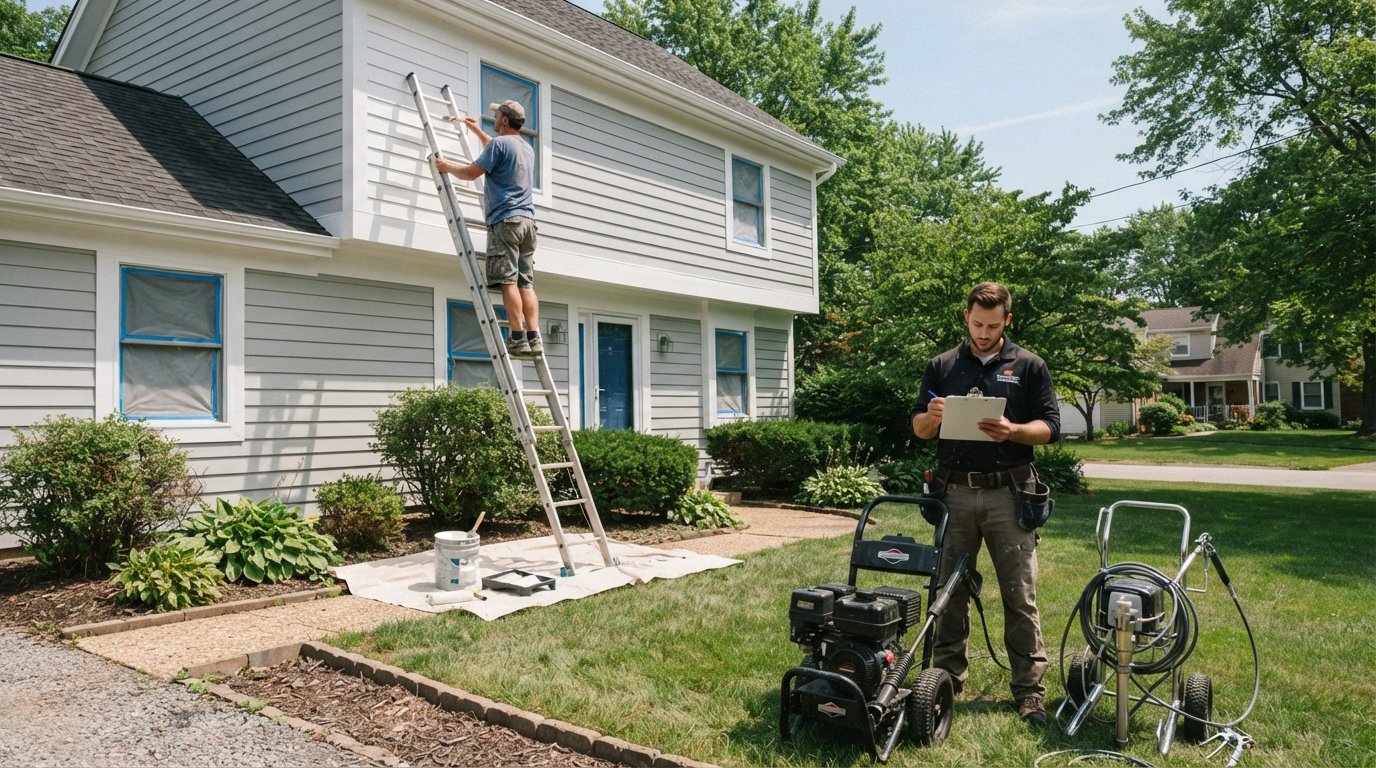
DIY vs Professional Exterior Painting Cost Comparison
Compare DIY vs professional exterior painting cost comparison to see hidden prep, tool, and safety costs. Call (833)-211-1668 for free local quotes and expert help.

By Sophie Reed
Learn more about Exterior Painting for guides, costs, and what to expect.
Compare Exterior Painting Pros Near You

Enter your ZIP code to compare top-rated local professionals and request free quotes.
Your home's exterior is its first line of defense against sun, rain, and temperature swings, and a fresh coat of paint does more than boost curb appeal. It seals siding, prevents rot, and can add thousands to your resale value. But when the estimate arrives, many homeowners face a tough question: should you pick up a brush yourself or hire a pro? The DIY vs professional exterior painting cost comparison is not as simple as comparing a paint receipt to a contractor invoice. It involves hidden labor, safety risks, and long-term durability that can swing the true cost by thousands of dollars. This guide breaks down the real numbers so you can decide which route protects both your wallet and your home.
The Real Cost of DIY Exterior Painting
At first glance, DIY painting looks like a steal. A five-gallon bucket of quality exterior paint runs $150 to $300, and a few rollers, brushes, and drop cloths might add another $100. For a typical 1,500-square-foot single-story home, the paint alone could cost $400 to $700. That is a fraction of a professional quote, which often lands between $3,000 and $8,000 for the same house. But the DIY budget rarely stops at paint and basic tools.
Exterior painting demands specific equipment that most homeowners do not own. A sturdy extension ladder, a pressure washer, a sprayer (if you choose that route), scaffolding for tall walls, and high-quality masking materials can easily add $500 to $1,200 to your upfront costs. If you plan to repaint every five to seven years, those tools amortize over time, but for a one-time project, they represent a significant hidden expense. You also need to account for surface preparation: caulk, wood filler, primer, sanding blocks, and possibly a scraper or heat gun for peeling areas.
Then there is the value of your time. A professional crew of two to three painters can prep and paint an average house in three to five days. Doing it yourself, especially if you have a full-time job, often stretches into two or three weekends, plus evenings. If you value your weekend at $30 per hour and spend 60 hours on the project, that is $1,800 in opportunity cost, which narrows the gap between DIY and professional pricing considerably. And that estimate assumes no major repairs or complications.
What Professional Exterior Painting Quotes Actually Cover
When a painting contractor hands you a quote, it should be far more than a number for labor and paint. A reputable professional estimate includes surface preparation, minor repairs, priming, masking, cleanup, and a warranty. Understanding what is bundled into that price helps you compare it fairly against your DIY budget. If you request quotes through a platform like Contractor.Homes, you can receive detailed proposals from pre-vetted local pros, which makes line-by-line comparison much easier.
A thorough professional quote typically covers pressure washing to remove dirt, mildew, and chalky paint residue; scraping and sanding loose paint; caulking gaps around windows, doors, and trim; spot-priming bare wood or repaired areas; and applying two coats of premium paint. It also includes protection for landscaping, windows, and walkways, plus daily cleanup and final debris removal. Many contractors offer a labor warranty of one to three years, meaning if the paint peels prematurely due to application error, they will fix it.
Here is a checklist of items that should appear in a professional exterior painting quote:
- Pressure washing and surface cleaning
- Scraping, sanding, and minor carpentry repairs (e.g., replacing rotten trim)
- Caulking and sealing gaps and joints
- Priming bare or repaired surfaces
- Two coats of specified paint (brand and product line named)
- Masking and protection of windows, doors, fixtures, and plants
- Daily cleanup and final walkthrough
- Warranty terms and payment schedule
If a quote omits surface prep or lists only one coat, treat it as a red flag. The cheapest bid is often the one that skips steps that determine how long the paint lasts. In a true DIY vs professional exterior painting cost comparison, the professional price includes labor and expertise that directly affect durability, so a low bid that cuts corners is not a bargain.
Prep and Repair Work: The Hidden Cost Driver
Paint is only as good as the surface beneath it. Exterior prep is physically demanding and time-consuming, and it is where many DIY projects derail. If your home has peeling paint, you must remove all loose material, feather-sand edges, and prime bare spots. If there is rot in siding or trim, you need to cut it out and replace it before painting. These repairs require carpentry skills and tools that go beyond a paintbrush.
Professionals account for prep in their quotes because they know from experience that skipping it leads to callbacks and ruined reputations. A DIYer might underestimate the scope: a small patch of peeling paint can reveal widespread moisture damage once scraped. Suddenly, a $600 DIY project becomes a $2,000 repair job with materials, tools, and multiple weekends of labor. For a deeper look at how prep and product choices affect interior projects, see our guide on DIY vs professional interior painting, where similar trade-offs apply.
Another hidden cost is primer. Many exterior paints are paint-and-primer-in-one, but they still require a dedicated primer over bare wood, metal, or glossy surfaces. Skipping primer can cause adhesion failure and premature peeling, which erases any savings from DIY. Professionals include primer in their material estimate and know when it is mandatory versus optional.
Safety and Access Risks on Multi-Story Homes
Exterior painting involves heights, ladders, and sometimes steep rooflines. According to the Consumer Product Safety Commission, ladder-related injuries send tens of thousands of homeowners to emergency rooms each year. The risk multiplies on two-story homes, where reaching gables and upper siding requires extension ladders, scaffolding, or lifts. Renting a lift can cost $300 to $800 per day, and operating it safely requires training.
Professional painters carry liability insurance and workers' compensation, which protects you from financial responsibility if an accident occurs on your property. If you hire an uninsured handyman or do the work yourself, you bear that risk. For multi-story homes with complex architecture, the safety premium alone can justify hiring a pro. The DIY vs professional exterior painting cost comparison must include the potential cost of a fall, which can far exceed any painting quote.
Access also affects quality. Painting from a ladder is slower and more fatiguing than painting from stable scaffolding, which can lead to uneven coverage and missed spots. Professionals invest in the right access equipment and know how to set it up safely, reducing the likelihood of rework.
Comparing Long-Term Durability and Resale Value
A professional paint job with proper prep and premium paint typically lasts seven to ten years, while a rushed DIY job may start peeling within three to five years. That difference matters in a cost comparison because you must amortize the expense over its lifespan. If a $5,000 professional job lasts eight years, it costs about $625 per year. If a $1,200 DIY job lasts four years, it costs $300 per year, but you also spent 60 hours of labor each time and risked safety. When you factor in your time and the shorter cycle, the professional job often delivers better value.
Resale value is another factor. A well-executed exterior paint job signals a well-maintained home to buyers and can increase perceived value. Sloppy DIY work, such as paint on windows, lap marks, or peeling edges, can raise questions about overall maintenance and potentially lower offers. Real estate agents often recommend professional exterior painting before listing because it offers one of the highest returns on investment among exterior projects.
If you are planning a larger renovation, our interior painting comparison guide explains how to weigh similar trade-offs for indoor spaces.
When DIY Makes Sense and When to Hire a Pro
DIY exterior painting can be a reasonable choice for single-story homes with simple siding, minimal prep work, and a homeowner who has the time, tools, and comfort with heights. If your home is a ranch-style house with wood siding in good condition, and you can dedicate two weekends, you might save $2,000 to $4,000 compared to a professional quote. Just be honest about the prep work and your tolerance for ladder work.
Hiring a professional is the smarter choice when any of the following apply:
- Your home is two or more stories, or has steep gables or hard-to-reach areas
- There is extensive peeling, rot, or moisture damage that requires repairs
- You lack the time or physical ability to prep and paint safely
- You want a warranty and the confidence of insured, experienced labor
- You are preparing to sell and need a flawless finish quickly
For homeowners who decide to hire, the next step is gathering multiple quotes and comparing them line by line. A platform like FreeQuotes.Contractors connects you with local painting professionals who provide free, no-obligation estimates, so you can see exactly what each quote includes and choose the best value. You can also call (833)-211-1668 for guidance on your project.
Ultimately, the DIY vs professional exterior painting cost comparison is not just about the sticker price. It is about total cost of ownership: materials, tools, time, safety, durability, and resale impact. Run the numbers for your specific home, factor in your hourly value, and be realistic about prep and height risks. Whether you choose the brush or the checkbook, informed decisions protect your home and your budget.