
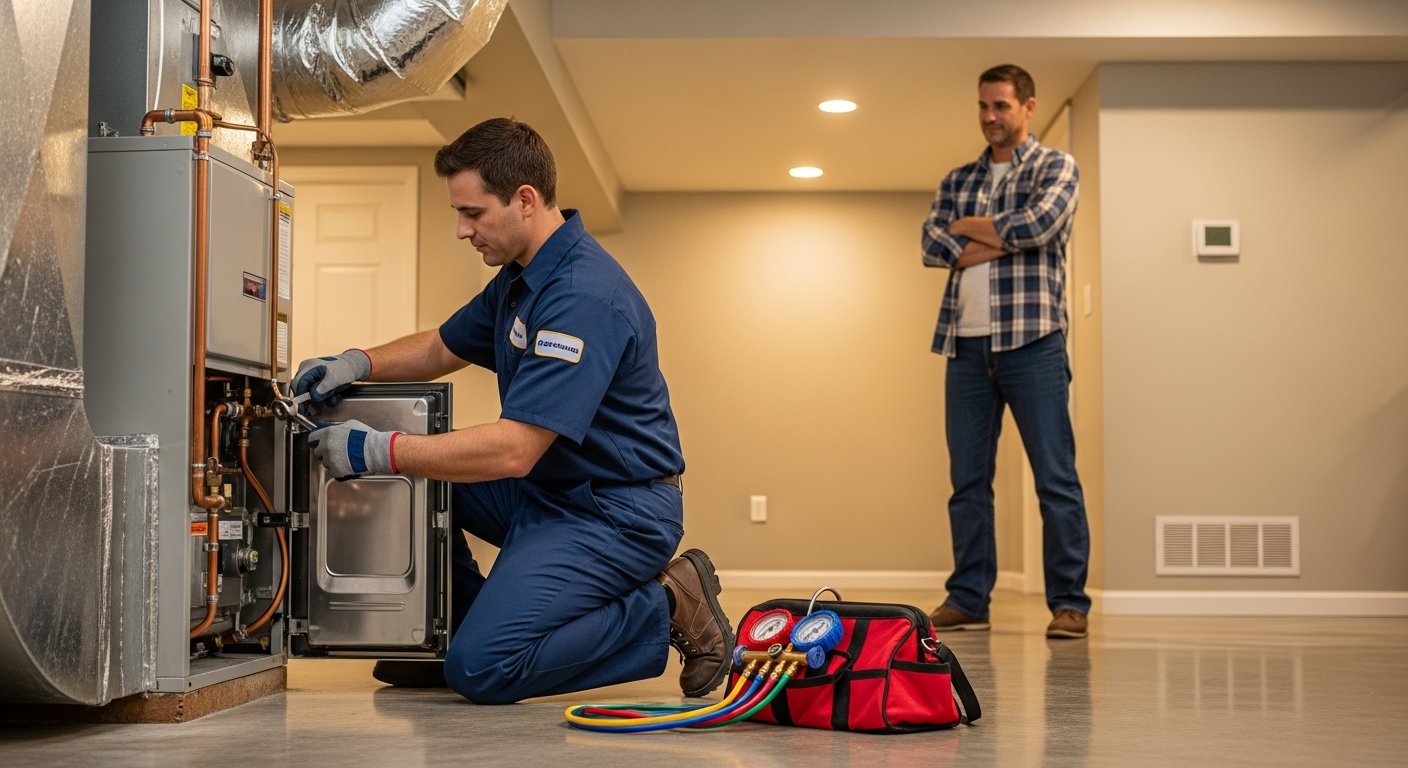
How to Choose HVAC Contractors You Can Trust
Learn how to vet HVAC contractors, avoid common mistakes, and secure reliable service with help from FreeQuotes.Contractors.
By Adnan Nazir
Learn more about Central Air Conditioning Installation or Replacement for guides, costs, and what to expect.
Compare Central Air Conditioning Installation or Replacement Pros Near You

Enter your ZIP code to compare top-rated local professionals and request free quotes.
Your heating and cooling system works quietly in the background until the day it stops. That is usually the moment you realize how much you depend on it. Whether your air conditioner struggles through a heat wave or your furnace fails on a cold morning, finding the right professional becomes urgent. But urgency should not lead to a rushed decision. HVAC contractors vary widely in skill, pricing, and reliability, and the choice you make affects your comfort, your energy bills, and the lifespan of your equipment. This guide walks you through the process of evaluating, selecting, and working with HVAC contractors so you can make a confident choice that protects your home and your budget.
What HVAC Contractors Actually Do
HVAC stands for heating, ventilation, and air conditioning. These professionals handle the installation, maintenance, and repair of the systems that keep your home comfortable year round. Their work goes far beyond swapping out a filter. A qualified contractor performs load calculations to size equipment correctly, installs ductwork or refrigerant lines, checks electrical connections, and verifies that your system meets local building codes.
Beyond installation, they diagnose breakdowns, replace worn parts, and tune up systems to improve efficiency. Some also offer indoor air quality services, such as duct cleaning or air purifier installation. The scope of work depends on the contractor's license and training, so it helps to know what you need before you start calling around. For a simple repair, a smaller local company may be enough. For a full system replacement, you likely want a contractor with experience in load calculations and system design.
Red Flags to Avoid When Vetting HVAC Contractors
Not every company that advertises heating and cooling services has your best interests in mind. Some red flags are obvious, while others are subtle. Before you schedule a visit, pay attention to these warning signs.
- No physical address or only a mobile phone number listed on their website.
- Pressure to sign a contract immediately, especially with a large deposit.
- Refusal to provide proof of licensing, bonding, or insurance.
- Vague or unusually low written estimates that omit equipment models or labor details.
- No online presence or a pattern of recent negative reviews that mention unprofessional behavior.
If you notice any of these signs, move on to the next candidate. A legitimate contractor will happily share their credentials and explain their pricing. They also understand that replacing a major home system is a significant decision, and they will give you space to compare options. Trust your instincts: if a conversation feels pushy or evasive, that is a strong signal to look elsewhere.
Questions to Ask Before Hiring an HVAC Pro
Once you have a shortlist of potential contractors, schedule a consultation or a phone call to ask targeted questions. The answers will reveal their level of expertise and how they treat customers. Start with these:
Are you licensed and insured? Licensing requirements vary by state, but a real contractor will carry liability insurance and workers compensation. Ask for proof and confirm that the policy is current.
How do you size the system? A professional should mention a Manual J load calculation, which accounts for your home's square footage, insulation, windows, and local climate. If they quote a price based only on square footage, they are guessing, and that often leads to an oversized or undersized unit.
What brands do you carry, and why? A contractor who pushes only one brand may have a financial incentive. A trustworthy professional explains the pros and cons of several brands and recommends options that fit your budget and efficiency goals.
Do you offer a written warranty? The manufacturer warranty covers parts, but the contractor's labor warranty protects you against installation errors. Ask how long the labor warranty lasts and what it covers.
Can you provide references? Reliable contractors have a list of recent customers who are happy to share their experience. Call a few references and ask about punctuality, cleanliness, and whether the work was completed on schedule.
How to Get Accurate HVAC Quotes
Getting multiple quotes is the smartest way to ensure you pay a fair price for quality work. But not all quotes are created equal. To compare them accurately, you need to understand what each estimate includes.
Ask for a detailed, itemized quote that lists the equipment brand and model, the labor cost, the cost of any additional materials, and the timeline. A vague estimate that says "new AC unit, installed" is not enough. You also want to know the SEER rating for cooling and the AFUE rating for heating, because higher efficiency units cost more upfront but save money over time through lower utility bills.
When you receive quotes from different HVAC contractors, compare them line by line. The lowest price is not always the best deal, especially if it comes with a shorter warranty or a less efficient unit. Factor in the company's reputation, the quality of the equipment, and the warranty terms. A slightly higher quote from a contractor with excellent reviews and a 10 year labor warranty may save you thousands in the long run.
Seasonal Maintenance: Why It Matters
Once you hire a contractor for an installation or repair, you have the option to sign up for a maintenance plan. Many HVAC companies offer annual tune ups that include inspecting the system, cleaning coils, checking refrigerant levels, and testing safety controls. These visits catch small issues before they become expensive breakdowns, and they keep your system running at peak efficiency.
Manufacturers often require proof of regular maintenance to honor their warranty, so keeping a service record is smart even if you skip the formal plan. Most experts recommend a maintenance check twice a year: once for the air conditioner in spring, and once for the furnace in fall. A well maintained system can last 15 years or more, while a neglected one may fail in half that time.
Emergency Repairs: What to Do When the System Fails
Even with regular maintenance, equipment can fail unexpectedly. When that happens, you need a contractor who offers emergency service, ideally available 24/7. But emergency calls often come with premium rates, so it pays to be prepared.
Before you call, turn off the system to prevent further damage. Check the obvious things first: the thermostat, the circuit breaker, and the air filter. A clogged filter is a common cause of system shutdown. If those checks do not solve the problem, call a contractor and describe the symptoms clearly. Ask about their emergency fee and the expected response time before they arrive.
Financing Options for HVAC Replacement
A new HVAC system is one of the larger home investments you will make. Costs typically range from $5,000 to $12,000 depending on the system size, efficiency, and your location. If you do not have the cash on hand, many HVAC contractors offer financing plans, sometimes with 0% interest for a promotional period. Be sure to read the terms carefully, since deferred interest can kick in if you do not pay off the balance in time.
You might also qualify for rebates from your utility company or tax credits for high efficiency equipment. Ask the contractor about current incentives, or check the Department of Energy website for federal programs. These savings can offset the higher upfront cost of a premium unit, making it a more affordable choice over time.
How FreeQuotes.Contractors Simplifies the Search
Finding reliable HVAC contractors does not have to mean hours of internet research and cold calls. FreeQuotes.Contractors connects you with pre-vetted local professionals who serve your area. You submit one simple form, and the platform matches you with contractors who are ready to provide free, competitive quotes for your project. That gives you a shortlist of qualified candidates without the guesswork.
The platform also offers educational resources, including an HVAC FAQ hub, to help you understand the process from start to finish. You can compare quotes side by side, ask questions directly, and choose the contractor who feels like the best fit for your home and budget. It is a streamlined way to get the information you need while keeping your options open.
Making Your Final Decision
After you have gathered quotes and asked the right questions, take a step back and evaluate your options holistically. Consider the contractor's communication style, the clarity of their proposal, and their willingness to answer your questions. A contractor who takes time to explain things is more likely to do careful work on the job.
Check their status with your local Better Business Bureau and read recent reviews on platforms like Google or Angi. Look for patterns in the feedback, not just a single bad review. If a contractor has dozens of positive reviews and one complaint that seems like a misunderstanding, that is a good sign. If several reviews mention the same problem, take it seriously.
Finally, trust your gut. You are inviting this person into your home and trusting them with a system that affects your family's comfort and safety. If something feels off during the sales process, it will likely feel even worse during the installation. Choose the contractor who earns your confidence through transparency, expertise, and genuine care for your home.
Your HVAC system is a long term investment, and the contractor you choose determines whether that investment pays off. By vetting candidates carefully, comparing detailed quotes, and using a platform like FreeQuotes.Contractors to simplify the search, you can find a professional who delivers quality work at a fair price. Take your time, ask the right questions, and rest easy knowing your home is in capable hands.
Learn more about Central Air Conditioning Installation or Replacement for guides, costs, and what to expect.
Compare Central Air Conditioning Installation or Replacement Pros Near You
Enter your ZIP code to compare top-rated local professionals and request free quotes.