
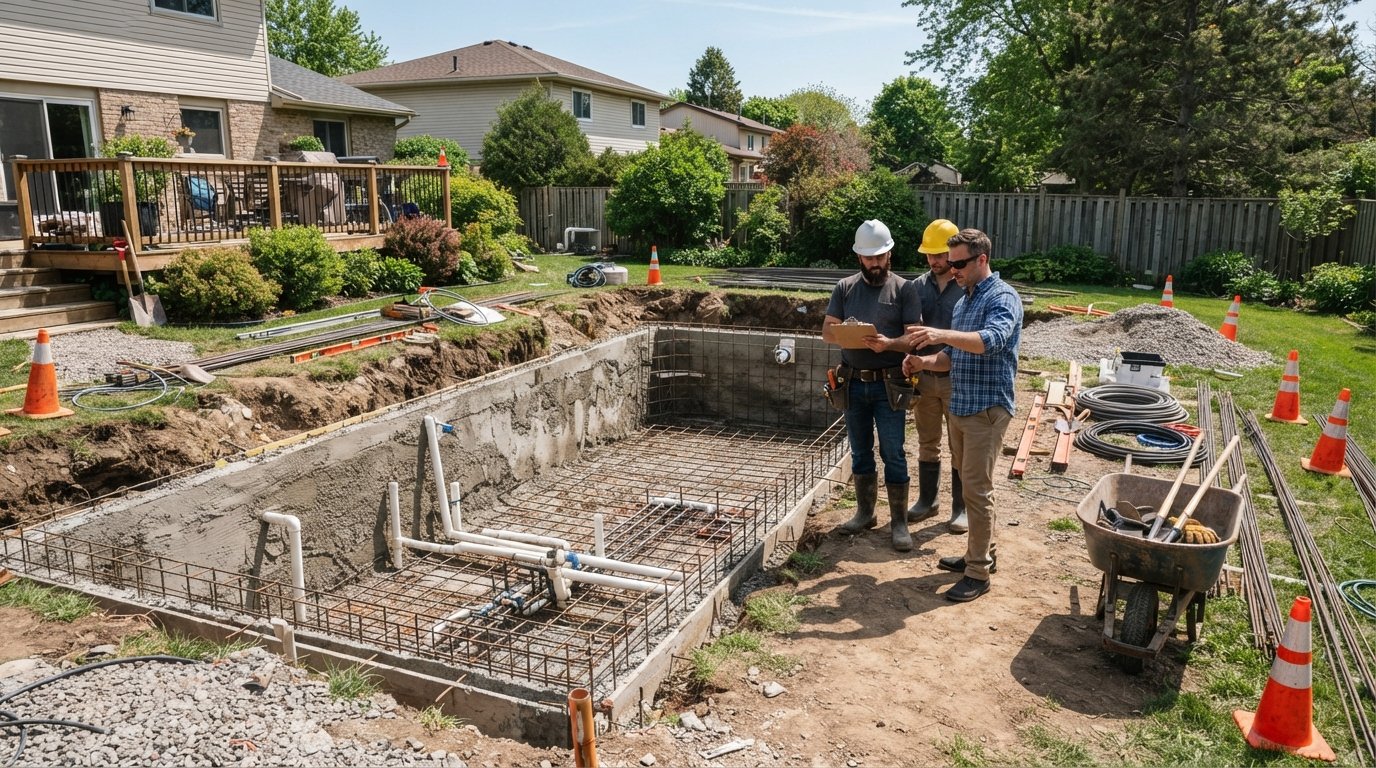
How to Vet Pool Contractors and Understand Pool Installation Costs
Master how to vet pool contractor and understand pool installation costs before you sign. Call (833)-211-1668 for free local quotes and avoid surprise bills.

By Ethan Turner
Learn more about Above Ground Swimming Pool Installation for guides, costs, and what to expect.
Compare Above Ground Swimming Pool Installation Pros Near You

Enter your ZIP code to compare top-rated local professionals and request free quotes.
Installing a swimming pool is one of the largest and most permanent investments a homeowner can make, and the difference between a dream backyard and a financial nightmare usually comes down to two things: the contractor you hire and the budget you build. Homeowners who rush the vetting process or accept a vague bid often discover hidden fees, delayed timelines, and workmanship problems long after the final payment clears. Understanding how to vet a pool contractor and understand pool installation costs before you sign anything protects your money, your property, and your peace of mind.
The stakes are real. A typical inground pool project can run from $35,000 to well over $100,000 depending on size, materials, and site conditions, while above-ground options may land between $5,000 and $25,000 installed. With that much capital on the line, treating the process like a formal interview, complete with documentation requests and written comparisons, is the only sensible approach. This guide walks through cost drivers, permit requirements, vetting questions, timelines, and payment schedules so you can move forward with confidence.
Pool Installation Costs: What Drives the Final Price
Pool pricing is not a single number; it is a stack of line items that shift based on your yard, your municipality, and the features you choose. The two broad categories are inground and above-ground pools, and each carries its own cost structure. Inground pools generally range from $35,000 to $100,000 or more, with vinyl liner pools at the lower end, fiberglass in the middle, and gunite or concrete pools at the top. Above-ground pools typically fall between $5,000 and $25,000 installed, though decking, grading, and electrical work can push that figure higher.
Several factors move the number up or down, and a reputable builder will walk you through each one during the estimate rather than burying them in a lump sum. Ask for a line-item breakdown so you can see exactly what you are paying for and where you might trim scope without compromising safety.
- Excavation and site access: Rocky soil, tight side yards, and steep slopes require extra equipment and labor, sometimes adding thousands of dollars.
- Pool shell material: Vinyl liners are the most affordable, fiberglass sits in the middle, and gunite concrete commands the highest price but offers the most design flexibility.
- Decking and coping: Concrete, pavers, and natural stone carry very different material and installation costs per square foot.
- Equipment and features: Pumps, filters, heaters, lighting, salt systems, slides, and spas each add to the base price.
- Permits and inspections: Fees vary widely by jurisdiction and are often excluded from initial quotes.
One useful budgeting exercise is to separate the project into hard costs (shell, excavation, equipment) and soft costs (permits, engineering, landscaping restoration). Homeowners who plan for a 10 to 15 percent contingency on top of the quoted price are far better prepared for surprises like unexpected rock excavation or upgraded electrical service. If you are also comparing interior finish options, our guide on laminate flooring installation cost shows how material tiers affect pricing in a similar way, which can help you frame conversations with any contractor about where the money actually goes.
Permits, Setbacks, and Safety Code Requirements
Every pool installation is a regulated construction project, and the permit process exists to protect you as much as your neighbors. Most municipalities require a building permit, electrical permit, and often a separate plumbing or gas permit if heaters or water features are involved. Fencing and barrier requirements are nearly universal, and many jurisdictions mandate specific gate hardware, alarm systems, or self-closing latches. Setback rules dictate how close the pool can sit to property lines, easements, septic systems, and the home itself, and these distances vary significantly from one city to the next.
A qualified pool contractor should handle permit applications on your behalf, but you should still verify that permits are pulled in your name and that inspections are scheduled at the required milestones. Unpermitted pools can create serious problems at resale, trigger fines, and void insurance coverage. Ask the builder how they handle inspections and who is responsible for compliance with local barrier codes.
Safety codes also cover electrical bonding and grounding, anti-entrapment drain covers, and equipment placement. These details rarely appear in a sales brochure, but they are exactly the kind of technical competence you are paying a licensed professional to deliver. During the estimate, request written confirmation that the proposal includes permit fees, inspection coordination, and code-compliant safety equipment.
How to Vet a Pool Contractor: Licensing, Insurance, and Warranty Checks
Vetting a pool contractor is a verification exercise, not a personality contest. Start with the state or local licensing board and confirm that the contractor holds an active license for swimming pool construction, not just a general contractor license. Some states require specialty pool licenses, and hiring an unlicensed builder can leave you without recourse if something goes wrong. Ask for the license number in writing and look it up yourself rather than relying on a logo on a truck.
Insurance is the next checkpoint. Request a certificate of general liability insurance and a separate certificate for workers compensation, then call the insurer to confirm the policies are current and the coverage limits are adequate for a project of this size. If a worker is injured on your property and the contractor lacks workers comp, you could be exposed to liability. Similarly, confirm that the builder will name you as an additional insured on the liability policy during construction.
Warranties deserve the same scrutiny. A strong pool contract separates the warranty on the shell structure, the interior finish, the equipment, and the workmanship, because each has a different duration and a different party standing behind it. Equipment warranties usually come from the manufacturer, while workmanship warranties come from the builder. Ask how warranty claims are handled, who pays for labor, and whether the warranty is transferable if you sell the home.
Beyond paperwork, verify reputation through multiple channels: online reviews, the local better business bureau, and references from customers whose pools are at least two years old. Older references reveal how the builder responds when something needs adjustment after the honeymoon phase. A short, structured checklist keeps the vetting process consistent across every bidder:
- Confirm active licensing with the state or county registry.
- Obtain and verify certificates of liability insurance and workers compensation.
- Request three references from projects completed at least two years ago.
- Review the written warranty terms for shell, finish, equipment, and workmanship.
- Check complaint history with the better business bureau and local consumer agencies.
When you are ready to compare multiple bids side by side, platforms like Contractor.Homes connect homeowners with pre-vetted local professionals and provide project guides that make apples-to-apples comparisons easier. The key is to compare scope, not just totals, because the lowest bid is frequently the one with the most exclusions.
Timeline Expectations and Payment Schedule Best Practices
Pool construction timelines vary by method and market conditions, but most inground projects take eight to sixteen weeks from excavation to swim-ready water, and fiberglass installations can move faster while gunite projects often run longer due to curing and finish schedules. Weather, permitting delays, and equipment backorders can stretch those windows, so a realistic builder will build buffer into the schedule and communicate proactively when things shift.
Payment structure is where many homeowners get hurt. A safe schedule ties payments to completed milestones rather than calendar dates, and it never requires a large deposit before work begins. As a rule of thumb, the initial deposit should be modest (often 10 to 20 percent), with subsequent payments released after excavation, shell completion, decking, and equipment installation. Final payment should be held until the pool passes inspection, the equipment is demonstrated, and the site is cleaned.
Put everything in writing. The contract should specify the payment schedule, the completion timeline, change-order procedures, lien waivers from subcontractors, and what happens if the project stalls. Request lien waivers with each payment to confirm that suppliers and subcontractors have been paid, which protects you from mechanics liens on your property. If a builder resists milestone-based payments or demands most of the money upfront, treat that as a serious warning sign and keep shopping.
Comparing Bids Without Getting Fooled by the Lowest Number
Three bids rarely arrive in the same format, which makes direct comparison difficult. Normalize each proposal by asking every builder to quote the same scope: pool dimensions, depth, shell material, decking square footage, equipment brands and model numbers, permit handling, and cleanup. Create a simple comparison sheet with rows for each scope item and columns for each bidder, then note where proposals diverge. A bid that looks $8,000 cheaper often excludes decking, permits, or the electrical hookup, which quietly erases the savings.
Ask each contractor to explain their assumptions in writing. What soil conditions are they expecting? What happens if rock is encountered? Is landscaping restoration included? Who handles the final grading and fence installation? Builders who answer these questions clearly and put the answers in the contract are the ones who tend to deliver fewer unpleasant surprises. When a proposal is vague on a material specification, request the exact brand and model so you can compare like for like.
Finally, trust the pattern of communication during the bidding process. A contractor who returns calls promptly, provides detailed documentation, and answers technical questions directly is demonstrating exactly how they will behave once construction starts. The vetting work you do before signing is the cheapest insurance you will ever buy on a pool project, and it is the difference between a backyard you enjoy for decades and a repair bill you never saw coming.