
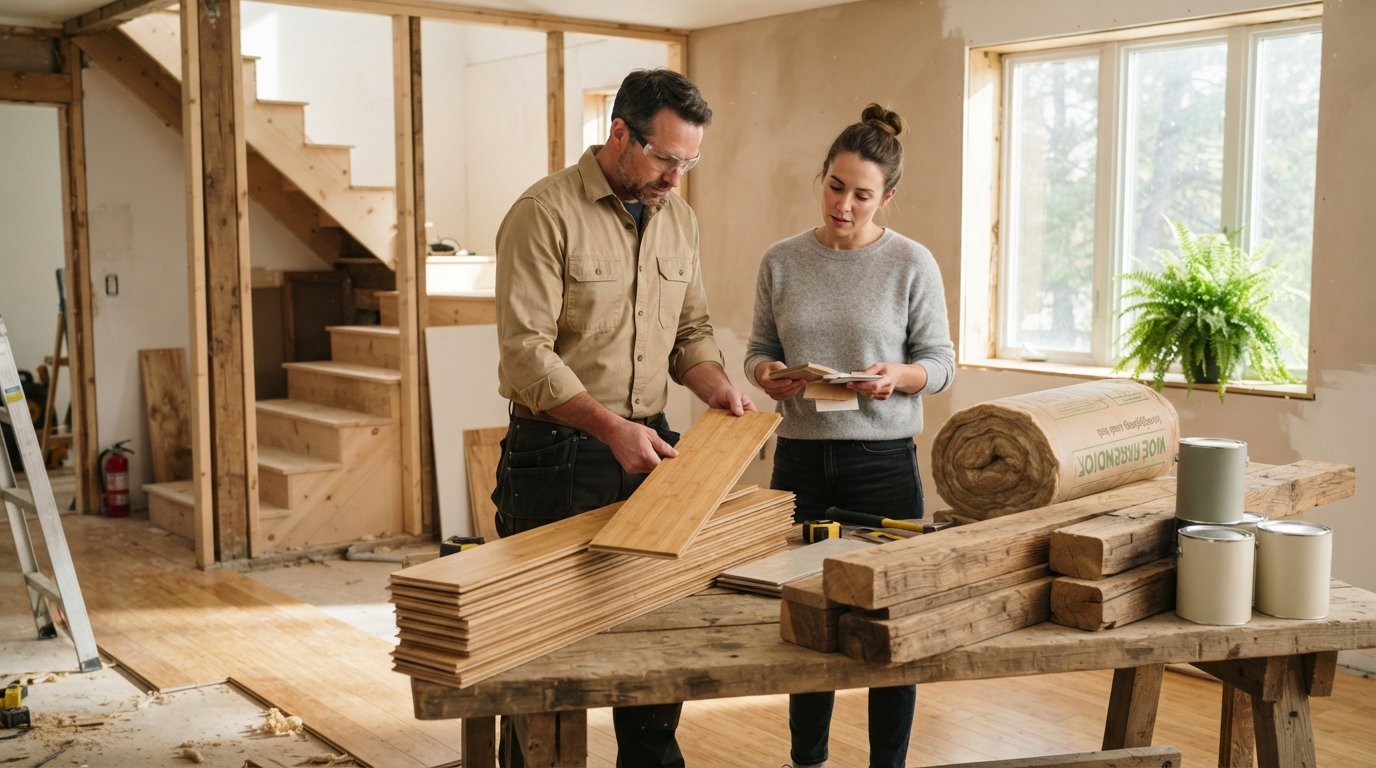
Long-Term Value of Green Building Materials in Renovation
Green building materials can cut energy bills and boost resale value. Call (833)-211-1668 to compare contractor quotes for your sustainable renovation.
By Adnan Nazir
Learn more about Home Remodeling for guides, costs, and what to expect.
Compare Home Remodeling Pros Near You

Enter your ZIP code to compare top-rated local professionals and request free quotes.
When you plan a renovation, the choices you make about materials ripple outward for decades. They affect your monthly utility bills, the air your family breathes, the resale value of your home, and the environmental footprint you leave behind. Green building materials often carry a higher price tag upfront, which makes some homeowners hesitate. But focusing only on the initial invoice misses the bigger financial and practical picture. The long-term value of green building materials in renovation comes from durability, energy savings, healthier indoor air, and stronger resale appeal. This guide breaks down what that value looks like in real numbers and real homes, so you can decide where sustainable upgrades make the most sense for your project.
What Makes a Building Material Green
Green building materials are not a single product category. They are defined by a combination of attributes: recycled or rapidly renewable content, low volatile organic compound (VOC) emissions, energy-efficient manufacturing, durability, and responsible sourcing. A material can be green in one dimension and average in another. For example, bamboo flooring is rapidly renewable but may travel long distances, while reclaimed hardwood is salvaged locally but limited in supply. Understanding these trade-offs helps you evaluate claims and avoid greenwashing.
The most useful way to assess a material is to look at its full lifecycle, from extraction or harvest through manufacturing, installation, use, and eventual disposal or reuse. Materials that last longer, require less maintenance, and can be recycled or composted at end of life score better. This lifecycle thinking is central to the long-term value of green building materials in renovation because it captures costs and benefits that a simple price comparison ignores.
Common Green Materials for Flooring, Insulation, and Countertops
Three areas of a renovation offer some of the clearest opportunities to choose green materials with strong long-term payoffs: flooring, insulation, and countertops. Each category has established sustainable options with proven performance.
Flooring
Flooring takes heavy wear and is expensive to replace, so durability matters. Green flooring options include reclaimed hardwood, bamboo, cork, linoleum made from linseed oil and wood flour, and carpet tiles made from recycled PET. Reclaimed hardwood offers character and keeps old-growth timber out of landfills. Bamboo regenerates quickly, though quality varies widely. Cork and linoleum are resilient and soft underfoot, and both can last 20 to 40 years with proper care. For a deeper look at how material choices affect project scheduling and installation timelines, see our guide on how long home renovation projects usually take.
Insulation
Insulation is where energy savings show up fastest on your utility bill. Green options include cellulose (made from recycled newspaper), mineral wool, sheep wool, and spray foam with low global warming potential blowing agents. Cellulose and mineral wool are particularly strong choices because they are made from recycled content, resist mold and pests, and maintain performance for the life of the building. Proper installation matters as much as the material itself; gaps and compression can erase the benefits.
Countertops
Countertops are a visible, high-impact surface. Green choices include recycled glass surfaces, paper composite counters, reclaimed wood butcher block, and concrete with fly ash. These materials divert waste and often have lower embodied energy than quarried stone or virgin quartz. Durability varies, so match the material to the use: a paper composite works well in a low-traffic powder room but may not suit a busy family kitchen.
Upfront Premiums Versus Lifecycle Savings
Green materials often cost more at purchase. A bamboo floor might run 10 to 30 percent more than mid-grade laminate, and recycled glass countertops can exceed entry-level granite. These premiums are real and should be budgeted honestly. The question is whether the extra cost pays back over time through lower energy bills, reduced maintenance, longer replacement cycles, and higher resale value.
Consider insulation first. Upgrading from standard fiberglass to cellulose or mineral wool in an attic or wall cavity typically adds a modest percentage to the insulation line item but can cut heating and cooling costs by 10 to 20 percent depending on climate and existing conditions. Over 15 to 20 years, those savings often exceed the premium several times over. Flooring offers a different math: a durable bamboo or cork floor that lasts 25 years may cost less per year of service than a cheaper floor replaced twice in the same period. Countertops rarely pay back through energy savings, but they contribute to resale appeal and avoid the cost and disruption of early replacement.
To compare options fairly, calculate a simple lifecycle cost: purchase price plus installation, plus estimated maintenance over the expected life, minus expected energy savings, divided by years of service. This per-year figure makes apples-to-apples comparisons easier and reveals where the long-term value of green building materials in renovation is strongest for your specific project.
Certifications and Labels to Look For
Green claims are everywhere, and not all are meaningful. Third-party certifications give you a shortcut to verifying performance. The most useful ones for residential renovation fall into a few groups:
- Indoor air quality: GREENGUARD Gold and FloorScore certify low VOC emissions for flooring, furniture, and finishes.
- Forest sourcing: Forest Stewardship Council (FSC) certification confirms wood comes from responsibly managed forests.
- Material content and lifecycle: Cradle to Cradle Certified assesses material health, reusability, and renewable energy use across the product lifecycle.
- Energy performance: ENERGY STAR labels apply to appliances, windows, and some insulation products, indicating verified efficiency.
- Overall building programs: LEED and the Living Building Challenge set broader standards, though they are more relevant to whole-home or commercial projects.
Ask for documentation, not just marketing language. A manufacturer that cannot produce a certificate or a material safety data sheet is a red flag. When you request quotes through a platform like Contractor.Homes, you can ask prospective contractors which certified products they routinely install and whether they can source alternatives on request.
How to Ask Contractors About Sourcing and Installation
The best material in the world underperforms if it is installed incorrectly or sourced from a supplier with poor practices. Contractors are your frontline partners in getting this right, but many are not accustomed to detailed questions about green materials. Frame your questions around performance and cost, not ideology, and you will get more useful answers.
Start with sourcing. Ask where the material comes from, whether it is stocked locally, and what the lead time is. Local sourcing reduces transportation emissions and often shortens schedules. Next, ask about installation experience. Cellulose insulation, cork flooring, and paper composite counters each have specific installation requirements; a contractor who has not worked with them before may need manufacturer training or a specialist subcontractor. Finally, ask about warranties. Green materials sometimes carry shorter or conditional warranties, and you want to know who honors them and for how long.
A practical sequence for vetting contractors on green materials looks like this:
- Request written product specifications and certifications for every green material in the bid.
- Ask for two or three references from projects where the same materials were installed.
- Confirm whether the contractor will follow manufacturer installation guidelines and whether that affects the warranty.
- Clarify disposal and recycling practices for removed materials, which affects project cost and environmental impact.
Homeowners who ask these questions early tend to get more accurate bids and fewer change orders. They also signal to contractors that quality matters, which often improves the overall working relationship.
Resale Value and Market Appeal
Green features increasingly influence buyer decisions, particularly in markets with high energy costs or strong environmental awareness. Real estate listings that mention energy-efficient windows, healthy indoor air, and sustainable materials can attract buyers willing to pay a premium. Appraisers are also getting better at valuing efficiency upgrades, though the effect varies by region and price point.
The resale benefit is strongest when green features are documented. Keep a folder with product certifications, installation records, utility bills before and after upgrades, and warranty information. This documentation turns vague claims into verifiable value and can support a higher asking price or a smoother negotiation. Even in markets where green premiums are modest, durability and low maintenance are universally attractive, and those are core benefits of well-chosen sustainable materials.
Where Green Materials Deliver the Most Long-Term Value
Not every green upgrade pays off equally. If your goal is to maximize the long-term value of green building materials in renovation, prioritize the areas where savings and durability compound: insulation and air sealing, windows, and high-wear surfaces like flooring. These are the upgrades that reduce ongoing costs and delay replacement. Countertops and finishes contribute more to comfort and resale appeal than to energy savings, so treat them as value-adds rather than payback plays.
It also helps to phase upgrades. A whole-home green renovation can overwhelm a budget, but sequencing insulation first, then windows, then flooring spreads cost while capturing savings early. Each phase builds on the last, and the cumulative effect on comfort, bills, and property value is greater than the sum of individual upgrades. For homeowners planning a larger project, working with pre-vetted local contractors who understand green materials can simplify sourcing, installation, and documentation. If you are ready to compare bids from qualified professionals, start by requesting free quotes for your renovation and ask specifically about sustainable material options and their lifecycle costs.
Green building materials are not a luxury add-on for every budget, but they are a strategic investment when chosen and installed with care. The homeowners who benefit most are those who look past the sticker price, ask the right questions, and plan for the decades of use that follow the final walkthrough.