
How to Prepare Your Home for a Long Renovation Absence
Heading out during a remodel? Learn how to prepare your home for a long renovation absence, from security to remote payments. Call (833)-211-1668 for contractor quotes.

By Sophie Reed
Learn more about Home Remodeling for guides, costs, and what to expect.
Compare Home Remodeling Pros Near You

Enter your ZIP code to compare top-rated local professionals and request free quotes.
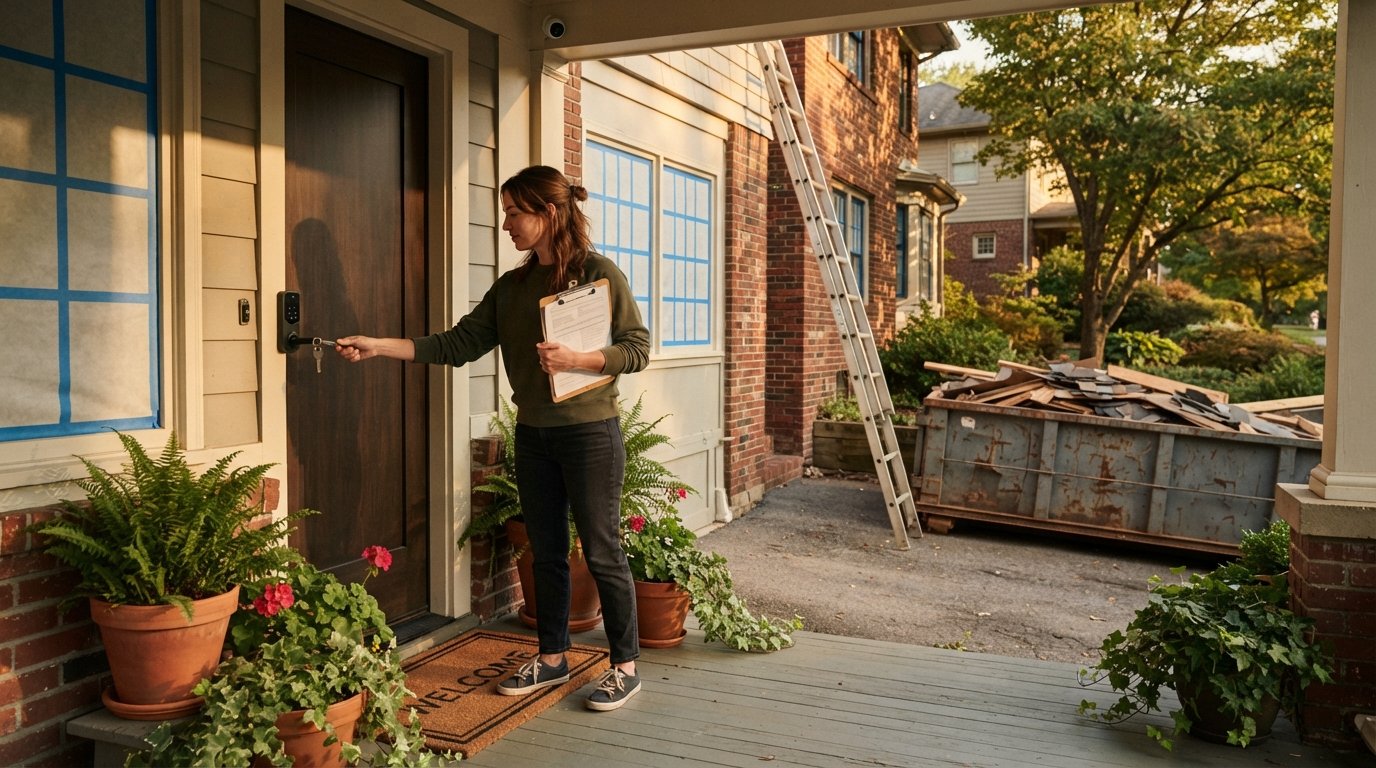
You have signed the contract, the dumpster is in the driveway, and the crew starts Monday. Then you will be three states away for the next three months. Whether for work, family, or a well-deserved vacation, leaving your home during a major renovation is a high-stakes juggling act. One missed detail, like a water line that never gets shut off or a contractor who cannot reach you for approvals, can turn your dream remodel into a stressful, expensive nightmare. The good news is that a successful absence is not about luck; it is about preparation. By treating your departure like a mini-project of its own, you can secure your property, keep the build on schedule, and protect your sanity from a distance.
Lock Down Security and Valuables Before You Leave
An empty house is an attractive target, and a construction site is even more so. Before you hand over the keys, you need to think like a security consultant. The goal is to make the home look occupied, remove temptation, and restrict access to only the people who need it. Start by removing all valuables, jewelry, firearms, and sensitive documents from the property. Even if you trust your contractor implicitly, a rotating crew of subcontractors and delivery people will be in and out of the house. A lockbox for the key is standard, but you must change the code after the project or use a smart lock that allows you to issue temporary digital keys and revoke them instantly.
Lighting and landscaping are your first lines of defense. Put interior lights on timers that mimic your normal evening routine. Ask a neighbor to park in your driveway occasionally, or hire a lawn service to keep the grass cut so the house does not scream "nobody is home." If you have a security system, ensure it has a cellular backup in case the power gets cut during electrical work. Notify your local police department that the home will be vacant and provide them with the contractor's information and a contact number for your project manager. Some departments offer a "vacation house check" where officers drive by periodically.
Finally, secure the construction site itself. Ensure the contractor has a plan for locking windows and doors at the end of each day, even if the house is not fully weather-tight. Discuss where materials will be stored and whether a temporary fence or security camera is warranted. A simple Wi-Fi-enabled camera pointed at the main entry or the material staging area can give you peace of mind and provide evidence if anything goes missing.
Manage Utilities, Keys, and Insurance Logistics
Construction requires power and water, but you do not want to pay for heating and cooling an empty shell. The trick is to find the balance between keeping the crew productive and preventing damage. Do not shut off the main power or water unless the contractor explicitly tells you to. They will need electricity for tools and water for mixing materials. However, you can adjust the thermostat to a safe minimum in winter (to prevent pipes from freezing) or a reasonable maximum in summer (to keep humidity from warping new drywall).
Water is the biggest risk. A slow leak behind a new wall can cause thousands in mold damage before you return. Ask your contractor to install a leak detection system or ensure that the main water valve is easily accessible and turned off at the end of each workday if the plumbing is incomplete. If you are replacing the HVAC system, coordinate the timeline so you are not without climate control during extreme weather, which can damage materials like hardwood flooring.
Insurance is another critical piece. Your standard homeowner's policy may not cover a home that is vacant for more than 30 or 60 days, and it may exclude damage caused by construction defects. Call your insurance agent before you leave. Explain that the home will be unoccupied but under active construction. You may need a builder's risk policy or a vacancy permit. Do not assume you are covered; a denied claim after a fire or theft will be devastating. Also, verify that your contractor's liability insurance is current and that you have a copy of the certificate.
Key handoff requires a formal chain of custody. Instead of hiding a key under a mat, use a lockbox with a code that you can share with the contractor and change later. If you have a smart lock, create a temporary user code for the lead carpenter and the project manager. Keep a log of who has access and when. If you are using a property manager or a trusted neighbor to check in, give them a separate code. The goal is accountability: you want to know exactly who is in your home and when.
Build a Remote Communication Plan That Works
You cannot manage a renovation by text message alone. You need a structured communication plan that sets expectations for updates, emergencies, and decision-making. Before you leave, sit down with your contractor and agree on a schedule. A daily or every-other-day email with photos is reasonable for a major project. For smaller projects, a weekly call might suffice. Put this in writing as an addendum to your contract. Specify the preferred method of communication (email for non-urgent, phone for urgent) and the hours you are available.
Create a shared digital folder (Google Drive, Dropbox, or a project management app) where the contractor can upload daily photos, receipts, and change orders. This creates a paper trail and allows you to review progress at your convenience. If you are in a different time zone, make it clear what constitutes an emergency. A broken pipe is an emergency; a question about tile grout color is not. Give the contractor a secondary contact (a friend or relative) who can make immediate decisions if you are unreachable.
Remote progress updates should be visual. Ask for wide shots of each room and close-ups of any work that is about to be covered up (like plumbing or electrical rough-in). This is your chance to catch mistakes before they are hidden behind drywall. Schedule a weekly video walkthrough using your phone. This is more effective than photos because you can ask questions in real time. If you are using a platform like Contractor.Homes, you can often find tools and resources to help manage communication and vet professionals, ensuring you have a reliable point of contact.
Remember that time zones and travel can make you slow to respond. Set an auto-reply on your email that states you are traveling and provides the contractor's contact info for urgent matters. If you are going to be completely off-grid (like a camping trip), notify the contractor in advance and designate a decision-maker. The last thing you want is a crew standing idle because they cannot get approval to proceed.
Handle Payments and Change Approvals from a Distance
Money is the most sensitive part of any renovation, and distance can make it feel riskier. You need a payment schedule that protects you without starving the contractor of cash flow. Never pay the entire contract upfront. A standard schedule might be 10% at signing, 25% at material delivery, 30% at rough-in completion, 25% at substantial completion, and 10% at final walkthrough. Set up online bill pay or wire transfers so you can pay quickly when milestones are met. Require lien waivers from subcontractors before making payments to the general contractor; this protects you from paying twice if the contractor fails to pay their subs.
Change orders are the enemy of a remote project. A casual verbal agreement can lead to a disputed invoice later. Insist that all changes, no matter how small, be documented in a written change order with a fixed price and a revised timeline. You can approve these via email, but you must have a system for tracking them. Create a simple spreadsheet that lists each change order, the date, the cost, and the schedule impact. Review it weekly so you are not surprised by a ballooning budget at the end.
If you need to approve a change while traveling, request a photo or video of the issue first. For example, if the contractor discovers rotten framing behind a wall, ask for a photo with a tape measure for scale. Then get two quotes for the repair if possible. Do not let urgency force you into a bad deal. If the contractor says they need an answer in an hour, that is a red flag. A reputable professional will give you time to review. If you are unsure about a large expense, it is okay to say, "I need to sleep on it." A delay of 24 hours is rarely a dealbreaker.
For final payment, never pay in full until you have done a walkthrough. If you cannot be there in person, hire a home inspector or a trusted friend to do a punch list walkthrough with the contractor. Use a video call to inspect the work yourself. Make sure all permits are closed out and that you have the final lien waivers. Only then should you release the final payment.
Prepare the Home Itself for an Empty House
Beyond the construction zone, the rest of your home needs to be prepped for vacancy. If you are not moving out completely, you still need to protect your belongings from dust and debris. Seal off non-construction areas with plastic sheeting and zipper doors. This keeps dust from migrating through the HVAC system. Change your HVAC filter before you leave and consider using a cheap filter during construction to catch debris, then swap to a high-quality filter when you return.
Empty the refrigerator and freezer if you are gone for more than a few weeks. Turn off the ice maker and leave the doors open to prevent mold. Unplug electronics to protect them from power surges. If you are leaving furniture, cover it with drop cloths. Remove all perishables and take out the trash. The last thing you want is a pest infestation while you are away. If you have a sump pump, test it and consider a battery backup. A power outage during a storm could flood your basement while you are gone.
Mail and packages are a dead giveaway that a house is empty. Put a hold on your mail with the post office or have a neighbor collect it daily. Cancel newspaper delivery. If you are expecting packages, have them held at a pickup location. A pile of flyers on the porch is an invitation to burglars. Also, notify your alarm company and your neighbors. Give a trusted neighbor a spare key and ask them to walk around the exterior once a week to check for signs of trouble.
Finally, think about the return. You will be tired and possibly facing a punch list. Make sure the utilities are scheduled to be turned back on or adjusted before you arrive. Have a cleaning service scheduled for the day before you return. The dust from construction will be everywhere, even with plastic barriers. A professional cleaning will make the home feel move-in ready. And keep a folder with all warranties, manuals, and permit documents in one place so you can file them when you get back.
Preparing for a long absence during a renovation is a test of organization and trust. By securing your valuables, setting clear communication rules, and managing payments remotely, you can turn a potentially chaotic situation into a smooth, predictable process. The key is to over-communicate before you leave and to have a written plan for every contingency. With the right preparation, you can focus on your time away and return to a beautifully renovated home.