
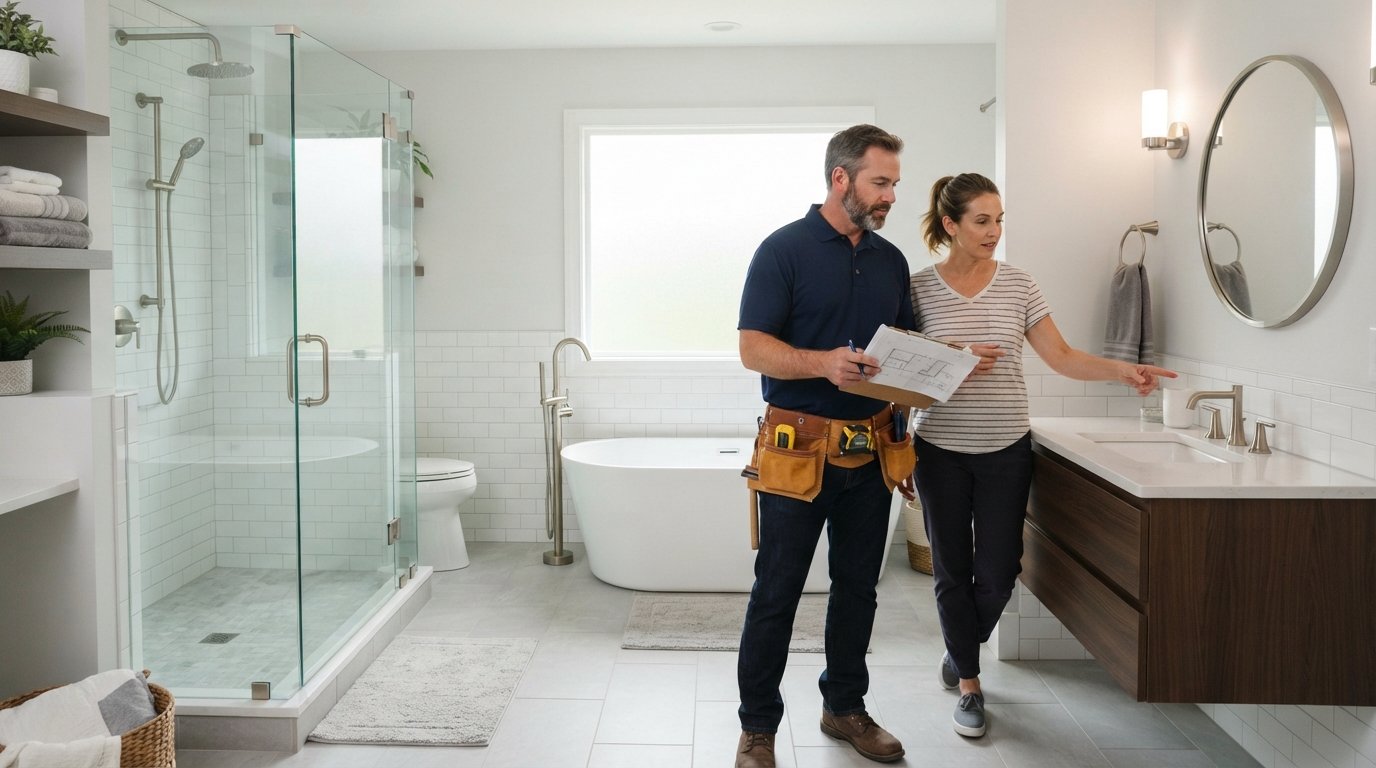
Cost to Add a Bathroom to a House: A 2026 Homeowner Guide
The cost to add a bathroom to a house runs $12,000 to $85,000, depending on bath type and plumbing. Call (833)-211-1668 for free local quotes.
By Adnan Nazir
Learn more about Bathroom Remodel for guides, costs, and what to expect.
Compare Bathroom Remodel Pros Near You

Enter your ZIP code to compare top-rated local professionals and request free quotes.
Adding a bathroom to your house is one of the most practical and value-adding home improvements you can make, but the price tag can vary dramatically depending on whether you are adding a simple half bath or a full spa-like retreat. According to national remodeling data, the average cost to add a bathroom to a house ranges from $12,000 to $45,000 for a half bath and $45,000 to $85,000 for a full bath, with luxury additions exceeding $100,000. Those numbers can feel overwhelming, especially when you factor in plumbing changes, permits, and the cost of hiring licensed contractors. But understanding what drives those costs, and how to compare quotes from local professionals, can help you plan with confidence and avoid surprise bills. Whether you are converting a closet into a powder room or building a new master suite, this guide breaks down the real numbers, the hidden expenses, and the steps to get accurate estimates for your project.
Average Cost to Add a Bathroom to a House in 2026
To give you a realistic starting point, it helps to look at national averages broken down by bathroom type. The cost to add a bathroom to a house is not a single number; it depends on square footage, fixture quality, and the complexity of plumbing and electrical work. A half bath, also known as a powder room, typically includes a toilet and a sink. A full bath adds a shower or tub, and often a fan, vanity, and tile work. The table below summarizes typical cost ranges for 2026, based on data from remodeling industry sources and contractor surveys.
- Half bath (powder room): $12,000 to $45,000, with a national average around $28,000.
- Full bath (tub or shower, toilet, sink): $45,000 to $85,000, with a national average near $65,000.
- Luxury or master bath addition: $85,000 to $150,000+, depending on high-end fixtures, custom tile, and square footage.
These ranges assume you are adding a bathroom within the existing footprint of your home, such as converting a closet or unused space. If you need to build an addition or extend the foundation, expect to add 20 to 40 percent to those figures. Labor costs also vary significantly by region; urban areas and high-cost states like California, New York, and Massachusetts tend to be at the upper end of the range, while rural areas in the Midwest and South may be closer to the lower end.
It is also important to distinguish between a remodel and an addition. Remodeling an existing bathroom costs far less because the plumbing rough-in is already in place. Adding a new bathroom where none existed before requires running new supply lines, drain lines, and venting, which is where the bulk of the expense often lies. For homeowners considering a larger structural change, our guide on attic conversion cost and ROI explains how adding a bathroom in an attic or bonus room can affect your overall budget and resale value.
Half Bath vs. Full Bath: What Drives the Price Difference
The gap between a half bath and a full bath comes down to three main factors: square footage, fixture count, and the complexity of plumbing and ventilation. A half bath typically requires only 15 to 20 square feet, while a full bath needs at least 35 to 40 square feet to comfortably fit a tub, toilet, and vanity. That extra space may mean reconfiguring walls, moving doors, or sacrificing closet space, all of which add labor and material costs.
Fixtures are another major cost driver. A basic toilet and sink for a powder room might cost $300 to $800 total, while a full bath requires a tub or shower base, shower valve, tile surround, vanity, mirror, and lighting. High-end finishes like freestanding tubs, frameless glass showers, and heated floors can push the cost to add a bathroom to a house well above the national average. Ventilation is also critical: full baths require an exhaust fan that vents to the exterior, which may involve cutting through the roof or siding, an added expense that half baths sometimes avoid.
Plumbing is the wild card. If the new bathroom can be located near existing plumbing lines, you may save thousands of dollars. If it is on the opposite side of the house or on a slab foundation, running new drain lines and supply pipes becomes a major undertaking. The further the bathroom is from the main stack, the more you will pay for pipe, labor, and potential wall or floor repairs.
Plumbing and Venting Constraints That Change the Price
Plumbing is often the single largest line item in a bathroom addition budget, and it is also the most unpredictable. To understand why, you need to know a little about how drain, waste, and vent (DWV) systems work. Every fixture must connect to a drain line that slopes toward the main sewer or septic line, and every drain must have a vent to allow air into the system so wastewater flows freely. Adding a new bathroom means tying into the existing DWV system, which may require new pipes, fittings, and a vent stack that runs through the roof.
There are several scenarios that can dramatically increase plumbing costs:
- Slab foundation: If your home is built on a concrete slab, adding a bathroom in a location without existing plumbing may require cutting into the slab to run drain lines. This is labor-intensive and can add $5,000 to $15,000 to the project.
- Distance from the main stack: The farther the new bathroom is from the existing soil stack, the more pipe and labor are required. A bathroom directly above or adjacent to existing plumbing is far cheaper to add.
- Venting challenges: If the new bathroom cannot tie into an existing vent, you may need to run a new vent through the roof or use an air admittance valve (AAV) if local codes allow. Roof penetrations add cost and require proper flashing to prevent leaks.
- Upgrading the water heater or supply lines: Adding a full bath may increase demand on your water heater. If your current unit is undersized, you may need to upgrade, which can cost $1,000 to $3,000 installed.
Because plumbing costs are so variable, it is essential to get a detailed quote from a licensed plumber before you commit to a design. A good contractor will inspect your existing system and identify potential obstacles early, so you can budget accordingly. This is also where comparing quotes pays off: two plumbers may propose different routing solutions, and the costs can vary by thousands of dollars.
Permits, Inspections, and Code Requirements
Almost every jurisdiction in the United States requires a permit for adding a bathroom, and for good reason: plumbing, electrical, and structural work must meet building codes to ensure safety and sanitation. Permit fees vary widely, from $200 to $2,000 or more, depending on the scope of work and local fee schedules. In some cities, the permit cost is based on the project valuation, so a higher-end bathroom will have a higher permit fee.
Beyond the fee, permits trigger inspections at key stages: rough plumbing, rough electrical, framing, and final inspection. These inspections are there to protect you, but they also require your contractor to be on site and available, which can add time to the schedule. If work is done without a permit, you may face fines, be required to tear out and redo work, and run into problems when selling your home. Most real estate transactions require disclosure of unpermitted work, and buyers may walk away or demand a price reduction.
Code requirements for bathrooms typically cover minimum room dimensions, ceiling height, ventilation, electrical outlets (GFCI protection), and lighting. For example, many codes require a window or an exhaust fan that vents to the exterior. If your planned bathroom has no window, you will need to install a fan, which adds $150 to $500 for the unit plus labor for ductwork and electrical. Understanding these requirements before you finalize your budget will help you avoid surprises during the inspection process.
When you request quotes from contractors, ask whether the permit and inspection fees are included. Some contractors include them in their bid, while others expect you to pull the permit yourself. For a hassle-free experience, it is usually best to have the contractor handle permitting, since they know the local requirements and can schedule inspections efficiently.
How to Compare Quotes from Plumbing and General Contractors
Getting multiple quotes is the single most effective way to control the cost to add a bathroom to a house. But not all quotes are created equal, and comparing them requires more than looking at the bottom line. A low bid may exclude important items like permits, debris removal, or finish materials, leaving you with unexpected costs later. A high bid may include upgrades you did not ask for. To make an apples-to-apples comparison, follow these steps:
- Request a detailed, line-item estimate. Ask each contractor to break down costs by labor, materials, permits, and subcontractors (plumbing, electrical, HVAC). This allows you to see exactly what is included and compare specific line items.
- Verify licensing and insurance. Check that the contractor holds a valid state or local license and carries general liability and workers compensation insurance. This protects you from liability if an accident occurs on your property.
- Ask about subcontractors. Many general contractors use subcontractors for plumbing and electrical work. Confirm that those subs are licensed and insured, and ask who will be managing them and scheduling inspections.
- Review the scope of work carefully. Make sure the quote specifies the brand and model of fixtures, tile, paint, and other finishes. If it says "allowance," ask what happens if you go over that amount.
- Check the timeline and payment schedule. A reasonable payment schedule ties payments to milestones, such as rough-in completion or final inspection. Avoid contractors who demand a large upfront deposit (more than 10 to 20 percent).
It is also wise to ask for references from recent bathroom addition projects and to read online reviews. A contractor who specializes in bathroom remodeling will be more familiar with local codes and common pitfalls, which can save you time and money. If you are unsure where to start, you can use a service like Contractor.Homes to connect with pre-vetted local contractors and request free, no-obligation quotes for your bathroom addition. This can streamline the process of finding qualified professionals and comparing bids side by side.
Finally, do not automatically choose the lowest bid. The cheapest quote may be missing critical items or may come from a contractor who cuts corners. Look for a bid that is detailed, transparent, and within your budget, and trust your gut if something feels off. A reputable contractor will be happy to answer your questions and provide documentation.
Hidden Costs and Ways to Save
Even with a detailed quote, it is smart to set aside a contingency fund of 10 to 20 percent of the project cost to cover unexpected issues. Older homes often have surprises behind the walls, such as outdated wiring, corroded pipes, or asbestos, which must be addressed before the new bathroom can be completed. These discoveries can add thousands of dollars to the project, so having a buffer is essential.
There are also several ways to reduce the cost to add a bathroom to a house without sacrificing quality. Consider keeping the new bathroom close to existing plumbing to minimize pipe runs. Choose stock cabinets and standard-size fixtures instead of custom pieces. Do some of the demolition yourself if you are handy, but leave plumbing and electrical work to the pros. You can also save by selecting mid-range materials for tile and flooring, which can look just as good as high-end options but cost significantly less.
Another often-overlooked cost is the impact on your property taxes. In many areas, adding a bathroom increases your home's assessed value, which can lead to higher property taxes. Check with your local assessor's office to understand how a bathroom addition might affect your tax bill. On the flip side, adding a bathroom can increase your home's resale value; according to remodeling industry data, homeowners typically recoup 50 to 70 percent of the cost of a bathroom addition when they sell. That is not a full return, but it is a significant portion, and the added comfort and functionality are valuable in their own right.
For homeowners planning a larger renovation, it may make sense to combine a bathroom addition with other projects to save on labor and permit costs. For example, if you are already remodeling a kitchen or finishing a basement, the incremental cost to add a bathroom may be lower than doing it as a standalone project. Just be sure to plan the sequencing carefully so that plumbing and electrical work can be coordinated efficiently.
Ultimately, the cost to add a bathroom to a house is an investment in your home's livability and value. By understanding the major cost drivers, getting multiple detailed quotes, and planning for contingencies, you can move forward with confidence. Start by requesting free quotes from licensed contractors in your area, and use those estimates to refine your budget and design. With the right team and a clear plan, your new bathroom can be a beautiful and functional addition for years to come.
Learn more about Bathroom Remodel for guides, costs, and what to expect.
Compare Bathroom Remodel Pros Near You
Enter your ZIP code to compare top-rated local professionals and request free quotes.