ROI of Smart Home Automation Systems for Resale
Smart home automation can boost resale value when you pick the right features. Call (833)-211-1668 to compare local contractor quotes today.

By Ethan Turner
Learn more about Smart Home Installation or Repair for guides, costs, and what to expect.
Compare Smart Home Installation or Repair Pros Near You
Enter your ZIP code to compare top-rated local professionals and request free quotes.
Sixty-two percent of homebuyers say they would pay more for a house with smart technology, yet most sellers never see a clear dollar-for-dollar return on every gadget they install. The truth about the ROI of smart home automation systems for resale sits somewhere between the hype of fully connected living and the skepticism of buyers who fear obsolescence. Understanding which upgrades actually move the needle, and which ones simply add clutter, is the difference between a smart investment and an expensive hobby that buyers ignore at closing.
This guide breaks down the real numbers behind smart home returns, the features buyers prioritize in 2026, and how to compare integrator estimates so your automation budget works as hard as your furnace. Whether you are selling within a year or simply want to future-proof your property, the goal is the same: spend where the market rewards you and skip the rest.
What Buyers Actually Pay For in 2026
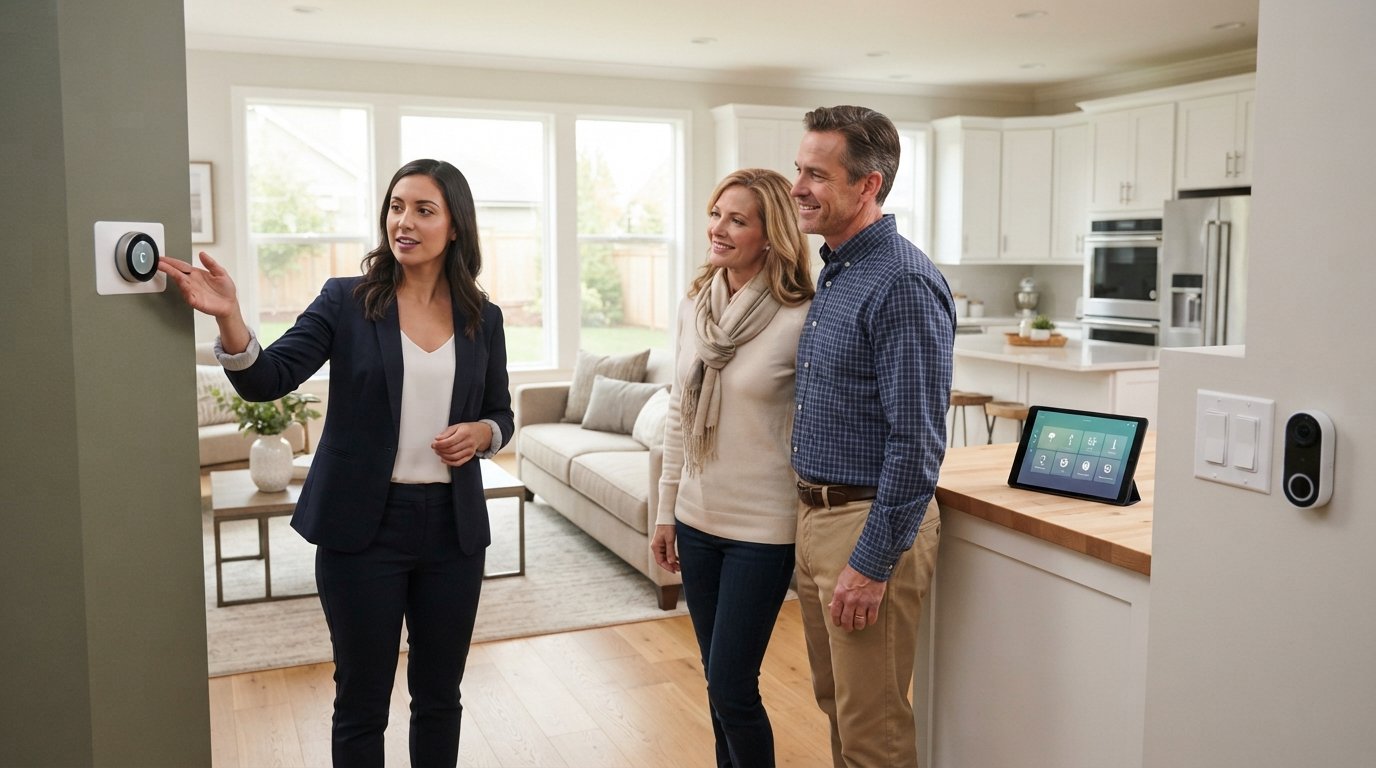
Buyer preferences have matured considerably since the early days of voice assistants and novelty lighting. Today's purchasers, many of whom work remotely or manage busy households, value automation that solves concrete problems: security, energy management, and convenience that works reliably without a manual. A 2025 survey from the National Association of Realtors found that 34 percent of buyers ranked smart security features among their top three desired home attributes, while smart thermostats and lighting followed closely behind.
The features that consistently command a premium share a common trait: they are invisible when they work and easy to understand when explained. Buyers do not want to inherit a complex ecosystem that requires a subscription or a degree in network administration. They want to walk in, see a clean interface, and know the system will still be supported in five years.
Here are the smart home features that appraisers and agents report as most valuable in 2026:
- Smart security systems with professional monitoring: Buyers pay for peace of mind, and integrated cameras, door sensors, and alarm panels rank highest in perceived value.
- Smart thermostats: Recognized by appraisers as a value-add because they demonstrably reduce utility bills, often saving 10 to 15 percent on heating and cooling.
- Smart lighting and motorized shades: Popular for energy efficiency and convenience, particularly in homes with high ceilings or large windows.
- Smart locks and video doorbells: Low-cost, high-visibility features that make a strong first impression during showings.
- Whole-home energy monitoring: Growing in demand as electricity costs rise, allowing homeowners to track consumption in real time.
Notice what is missing from that list: elaborate voice-controlled scenes, smart appliances with proprietary apps, and novelty devices like connected coffee makers. These items rarely recoup their cost and can even deter buyers who worry about repair expenses or data privacy. The lesson is clear: buyers reward systems that reduce risk and operating costs, not systems that simply add novelty.
Estimated Costs Versus Documented Resale Returns
The ROI of smart home automation systems for resale varies widely by category. Industry data from remodeling cost trackers and real estate surveys suggests that some upgrades return over 100 percent of their cost at resale, while others return less than 30 percent. The difference usually comes down to whether the feature is seen as essential infrastructure or a discretionary luxury.
Smart thermostats offer the most reliable return. A unit costing $200 to $300 installed typically adds $300 to $500 in perceived value, according to agent surveys, and the energy savings provide a tangible selling point. Smart locks and video doorbells, which cost $150 to $400 combined, often return their full cost because they enhance security and curb appeal. Security systems with monitoring can add $500 to $1,500 in value depending on the package, though buyers may discount the value if they must assume a long-term contract.
On the lower end, smart appliances and lighting scenes return far less. A $3,000 smart refrigerator might impress during a showing, but appraisers rarely adjust value for connectivity features. Similarly, automated blinds and scene-based lighting controls, which can cost thousands installed, typically return less than half their cost. The pattern is consistent: the more a feature resembles basic infrastructure (security, climate control, access), the better it holds value. The more it resembles a gadget, the more it depreciates.
One practical way to keep automation costs in check is to treat smart upgrades like any other material line item. Just as you would compare cabinet and flooring prices before committing, pricing sensors, hubs, and installation labor side by side helps avoid overpaying. A solid home renovation material cost guide can help you benchmark what components should cost before integrators quote you.
When Automation Makes More Sense Than Appliances or Finishes
Homeowners often face a trade-off: spend $8,000 on a smart home package or put that money into new countertops, a bathroom vanity, or a kitchen appliance suite. The right answer depends on what buyers in your price bracket expect and what your home currently lacks. In many markets, basic smart features have become table stakes, while cosmetic finishes are negotiable.
Automation tends to outperform finishes when the home already has updated kitchens and baths but lacks modern safety and efficiency features. A house with a dated security system and a manual thermostat feels behind the times even if the floors are new. Conversely, if your kitchen is original and your neighborhood comps all feature renovated kitchens, spending on smart blinds will not close the gap. The general rule: address structural and safety deficiencies first, then add automation, then upgrade finishes.
Automation also wins when the upgrades are integrated rather than piecemeal. A cohesive system with a single app, professional installation, and clear documentation signals quality and reduces buyer anxiety. Piecemeal devices from different brands, each with its own app, often confuse buyers and lower perceived value. If you cannot afford a full package, prioritize a hub-based system that can expand later.
How to Choose a Smart Home Integrator and Compare Estimates
Hiring the right integrator is as important as choosing the right technology. A skilled installer will design a system that fits your home, explain trade-offs clearly, and provide documentation that reassures buyers at resale. A poor installation, by contrast, can turn a promising upgrade into a liability with dead spots, unreliable connectivity, and unsupported devices.
Start by defining your goals and budget before requesting quotes. Decide whether you want security-first, energy-first, or convenience-first automation, and set a realistic ceiling. Then gather at least three estimates from integrators who specialize in residential systems. Ask each one the same questions so you can compare apples to apples.
Follow these steps to vet integrators and compare bids effectively:
- Verify licensing and insurance: Ask for proof of state licensing where required and current liability coverage. A legitimate integrator will provide these without hesitation.
- Request a site survey: Good integrators visit the home to assess wiring, Wi-Fi coverage, and device placement rather than quoting from a floor plan alone.
- Compare line-item details: Insist on itemized quotes listing hardware brands, model numbers, labor, programming, and warranty terms. Lump-sum bids make it impossible to spot inflated costs.
- Ask about ongoing costs: Clarify subscription fees for monitoring, cloud storage, and software updates so you can disclose them to buyers.
- Check references and portfolio: Ask for recent projects similar in size and scope, and follow up with past clients about reliability and support.
After you collect bids, compare them on total cost of ownership, not just sticker price. A slightly higher quote that includes programming, training, and a three-year warranty often delivers better value than a cheap bid with hidden fees. If you are unsure whether your project aligns with broader market expectations, platforms like Contractor.Homes can connect you with pre-vetted local professionals and help you benchmark quotes against local norms.
Finally, document everything. Keep manuals, warranty cards, app credentials, and a simple one-page guide to the system. Buyers pay more for automation they understand and can maintain. A well-documented, professionally installed system is an asset; a tangle of unlabeled devices is a negotiation liability.
Maximizing ROI Without Overspending
The highest-return strategy is to invest in a few high-impact, widely understood features and let the rest go. Smart thermostats, smart locks, video doorbells, and a monitored security system consistently deliver the best combination of low cost and high perceived value. Together, these four categories can be installed for roughly $1,500 to $3,500 and often recoup most or all of their cost at resale while making the home more appealing during showings.
Resist the temptation to automate everything. Elaborate scenes, smart appliances, and whole-home audio rarely return their cost and can complicate the sale if buyers worry about maintenance. If you want those features for your own enjoyment, install them with the understanding that they are lifestyle purchases, not investments. Keep the resale-focused upgrades separate and simple.
Energy efficiency deserves special mention because it compounds returns. Smart thermostats, energy monitoring, and automated lighting reduce monthly bills, and those savings can be documented and marketed to buyers. In markets with high utility costs, efficiency features can justify a higher asking price and shorten time on market. Pair automation with basic weatherization and insulation for the strongest effect.
Finally, consider the buyer's perspective at every step. Will the system still be supported in five years? Are there subscription fees? Is the interface intuitive? Can a new owner easily add devices? Systems that answer yes to all four questions hold value far better than closed ecosystems. The ROI of smart home automation systems for resale is ultimately a function of clarity, reliability, and relevance, not the number of devices you install.
Smart home upgrades can pay off, but only when they are chosen with the same discipline as any other renovation line item. Focus on security, efficiency, and simplicity, compare integrator quotes carefully, and document the results. Do that, and your automation investment will look as smart at closing as it does on move-in day.