
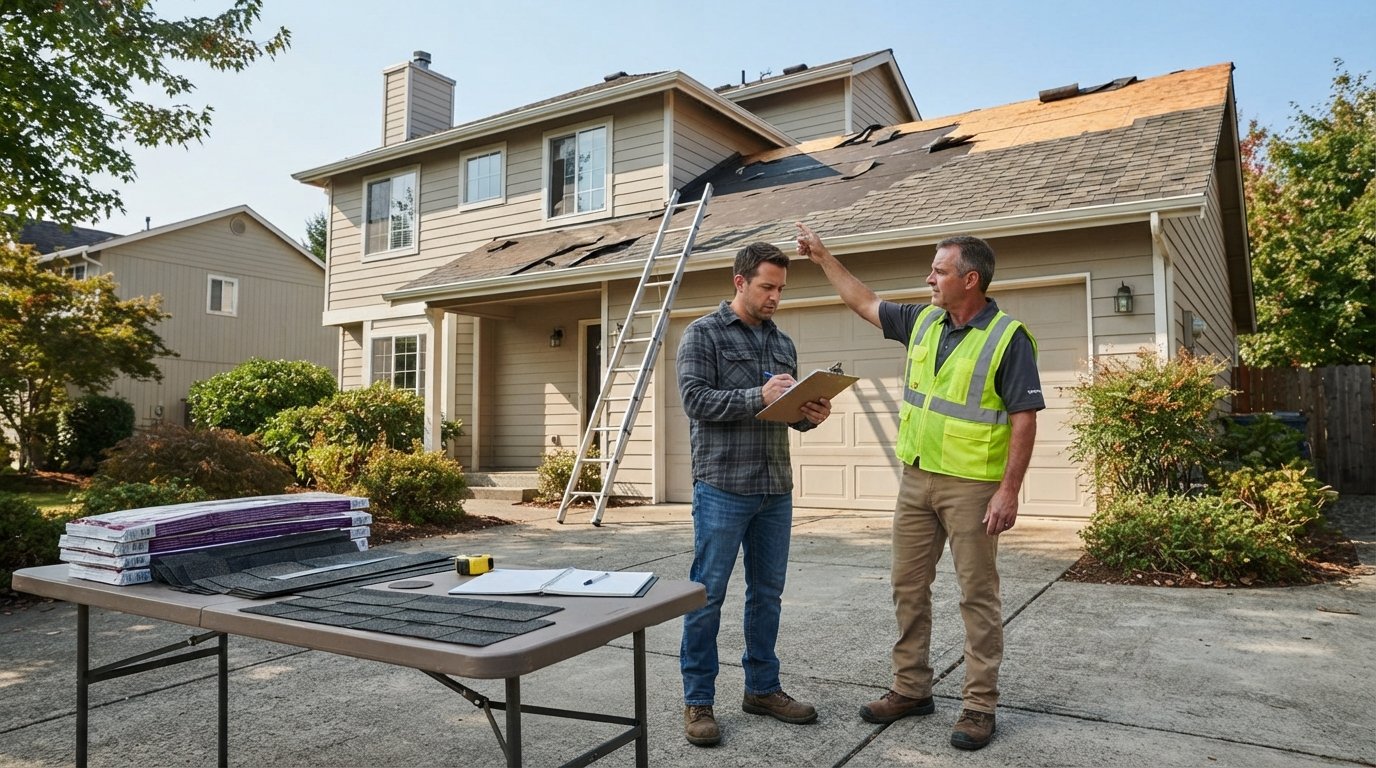
Roof Replacement Contractor Selection and Estimate Checklist
A roof replacement contractor selection and estimate checklist that helps you compare bids, spot red flags, and avoid costly mistakes before you sign.

By Elena John
Learn more about Roof Installation or Replacement for guides, costs, and what to expect.
Compare Roof Installation or Replacement Pros Near You

Enter your ZIP code to compare top-rated local professionals and request free quotes.
A roof replacement is one of the most expensive and consequential home improvement projects a homeowner can undertake. A single misstep in hiring can lead to leaks, structural damage, voided warranties, and thousands of dollars in avoidable costs. The difference between a smooth installation and a recurring nightmare often comes down to how carefully you select your contractor and how thoroughly you review each estimate. This guide provides a practical roof replacement contractor selection and estimate checklist that walks you through every stage of the process, from initial research to final signature.
Whether your roof has reached the end of its lifespan, suffered storm damage, or you are planning ahead for an aging system, the stakes are high. You need a contractor who is licensed, insured, experienced with your roofing material, and transparent about pricing. You also need to understand what a fair estimate looks like, line by line, so you can spot red flags before they become expensive problems. For a deeper dive into typical costs and what drives them, our guide on roof replacement cost breaks down the numbers you should expect.
Why Contractor Selection Makes or Breaks Your Roof Replacement
Roofing is not a commodity. Two contractors can quote the same square footage and deliver wildly different results based on the quality of materials they use, the skill of their crew, and how they handle the details that are hidden once the job is done. Poor installation is the leading cause of premature roof failure, and manufacturers routinely deny warranty claims when they determine the roof was installed incorrectly. That means the contractor you choose directly affects how long your new roof lasts and whether your warranty is honored.
Beyond workmanship, contractor selection affects your legal and financial exposure. An unlicensed or uninsured contractor who gets injured on your property could leave you liable for medical bills. A contractor who takes a large deposit and disappears leaves you with a torn-up roof and no recourse. A contractor who cuts corners on ventilation or flashing can create moisture problems that rot your decking and insulation. Every one of these risks is manageable if you vet properly before signing.
The estimate is your primary tool for comparison, but only if you know what to look for. A low bid often means missing line items that will reappear as change orders later. A high bid does not automatically mean better quality. Your goal is to compare apples to apples, and that requires a checklist that forces every contractor to disclose the same information in the same format.
Pre-Screening Contractors: The First Layer of Your Checklist
Before you invite anyone to inspect your roof, do a basic background check. This step takes less than an hour per contractor and eliminates most of the risk before you waste time on estimates. Start by verifying licensing and insurance, then move on to reputation and local presence. A contractor who cannot produce these basics is not worth your time, no matter how attractive the price.
Here are the essential pre-screening items to confirm before scheduling an inspection:
- State or local license: Verify the license number directly with your state licensing board or local building department. Do not rely on a photocopy alone.
- General liability insurance: Ask for a certificate of insurance and call the insurer to confirm the policy is active and covers roofing work.
- Workers compensation coverage: If the contractor has employees, this is non-negotiable. If they use subcontractors, ask for proof of coverage for those crews as well.
- Physical business address: A P.O. box or a temporary address is a red flag. You want a local presence you can visit if problems arise.
- Online reviews and complaints: Check the Better Business Bureau, Google Reviews, and your state's consumer protection database for patterns of complaints.
Once a contractor passes pre-screening, you can move to the inspection and estimate phase with confidence. If any contractor resists providing license numbers or insurance certificates, treat that as a disqualifying signal. Legitimate professionals expect these requests and have the documents ready. For homeowners who want to streamline this process, platforms like USremodel connect you with independent contractors across the United States for roofing and other renovation projects, which can reduce the time you spend hunting for qualified pros.
What a Complete Roof Replacement Estimate Must Include
An estimate is more than a total price. It is a scope of work, a materials list, a timeline, and a contract all rolled into one. If any of these elements are missing, you cannot fairly compare bids or hold the contractor accountable later. Insist on a written, itemized estimate before you make any decision. Verbal quotes and one-line totals are not acceptable for a project of this size.
Use this checklist to evaluate every estimate you receive. Each item should be explicitly addressed in writing:
- Scope of work: Removal of old roofing, inspection and replacement of damaged decking, installation of underlayment, flashing, drip edge, and new roofing material. Tear-off versus layover should be stated clearly.
- Materials specification: Brand, product line, color, and warranty terms for shingles, underlayment, ice and water shield, and ventilation components. Vague terms like "architectural shingles" are not enough.
- Ventilation plan: Ridge vents, soffit vents, or other ventilation solutions, with quantities and placement described.
- Flashing and penetration details: How chimneys, skylights, vents, and valleys will be flashed and sealed.
- Disposal and cleanup: Dumpster placement, magnetic sweep for nails, and landscaping protection.
- Timeline and payment schedule: Start date, estimated completion, and milestone-based payments. Never pay more than a small deposit upfront.
- Warranty terms: Manufacturer warranty and workmanship warranty, including length, transferability, and what voids coverage.
- Permits and inspections: Who pulls the permit and who schedules the final inspection.
After you have all estimates in hand, compare them side by side using the same categories. If one bid is significantly lower, identify which line items are missing or undervalued. If one is significantly higher, ask the contractor to justify the difference. A trustworthy contractor will welcome the conversation and explain their pricing clearly. A contractor who gets defensive or evasive is showing you how they will handle problems later.
Questions to Ask Before You Sign Anything
The estimate tells you what the contractor plans to do. The questions you ask tell you how they operate. A contractor who answers directly, provides documentation, and welcomes scrutiny is far more likely to deliver a quality job than one who deflects or pressures you to decide quickly. Set aside time for a focused conversation with each finalist before making your choice.
Ask these questions and pay attention to both the answers and the body language:
- How many roofs have you installed with this specific material in the last year?
- Will your own employees do the work, or will you subcontract it?
- What happens if you find damaged decking or rotten framing once the old roof is removed?
- How do you handle change orders, and what is your process for approving them?
- Can you provide three recent local references for roofs similar to mine?
- What is your policy on weather delays and scheduling conflicts?
Call the references. Ask those homeowners whether the crew showed up on time, cleaned up thoroughly, and resolved any issues promptly. A contractor with a strong track record will have no problem connecting you with satisfied customers. If references are hard to reach or reluctant to talk, that is a warning sign. Trust your instincts here: if something feels off during the vetting process, it usually gets worse once work begins.
Red Flags That Should End the Conversation
Most roofing disasters are predictable in hindsight. The warning signs appear during the estimate phase, but homeowners often overlook them because they are eager to get the project done or because the price is attractive. Train yourself to recognize the patterns that separate professionals from predators. Walking away from a bad contractor costs you nothing. Hiring one costs you thousands.
Watch for these specific red flags during your contractor selection process:
- Pressure to sign immediately: "This price is only good today" or "We have a crew in the area tomorrow" are classic high-pressure tactics.
- Large upfront deposit: A deposit of more than 10 to 15 percent, or any request for cash, should raise immediate concern.
- No written contract: If the contractor resists putting the scope, price, and timeline in writing, walk away.
- Door-to-door solicitation after a storm: Storm chasers often disappear before warranty issues surface.
- No local address or license number: These are basic requirements, not optional details.
- Reluctance to provide insurance certificates: This often means the contractor is uninsured or underinsured.
One red flag alone might be explainable. Two or more should end the conversation immediately. There is no roofing project so urgent that you cannot find another qualified contractor. Even after storm damage, you have time to vet properly, and your insurance company expects you to do so. Rushing the selection process is how homeowners end up paying twice for the same roof.
Financing, Permits, and Final Verification
Once you have selected a contractor and reviewed the estimate, the final steps are about protecting your investment. Confirm that the contractor will pull all required permits and that the final inspection will be scheduled before final payment. Verify the payment schedule ties to milestones, not calendar dates. If you are financing the project, review the terms carefully and make sure the contractor is comfortable working with your lender. Do not let anyone talk you into financing through an unfamiliar third party without reading the fine print.
On the day work begins, do a brief walkthrough with the crew leader. Confirm the scope, the dumpster location, and the plan for protecting your landscaping. Take photos of your roof and attic before work starts, and again after completion. Keep all documents, including the signed contract, change orders, receipts, and warranty paperwork, in one folder. If a problem arises later, you will have everything you need to resolve it quickly. A disciplined approach to the estimate and selection process is the best protection you can give yourself, and it is the same approach that separates a stressful project from a successful one.