
Roof Replacement Cost: What Homeowners Must Know
Learn the true cost of roof replacement, how to choose materials, and avoid common contractor mistakes. Get expert tips and free quotes.
By Adnan Nazir
Learn more about Roof Installation or Replacement for guides, costs, and what to expect.
Compare Roof Installation or Replacement Pros Near You

Enter your ZIP code to compare top-rated local professionals and request free quotes.
Your roof is your home's first line of defense against the elements, and when it reaches the end of its lifespan, a full replacement becomes inevitable. For many homeowners, the prospect of a roof replacement is daunting, primarily due to the significant investment involved. However, with the right knowledge and a clear plan, you can navigate this major home improvement project with confidence. This guide will walk you through everything you need to understand, from cost factors and material options to the critical steps of hiring a contractor and avoiding common pitfalls.
The decision to replace a roof is rarely a spontaneous one. It usually follows years of wear and tear, visible damage, or the advice of a professional inspector. While the financial outlay can be substantial, delaying a necessary replacement can lead to far more expensive problems, including structural damage, mold growth, and compromised insulation. By understanding the process and preparing yourself for what lies ahead, you can ensure that your new roof not only protects your home but also enhances its value and curb appeal.
How Much Does a Roof Replacement Really Cost?
The most common question homeowners ask is, "How much will this cost?" The honest answer is that it depends on a variety of factors. On a national average, homeowners can expect to pay between $5,500 and $11,000 for a standard asphalt shingle roof on a typical single-family home. However, this is a broad range, and your specific project could fall outside of it. The final cost is influenced by the size of your roof, the materials you choose, the complexity of the job, and your geographic location.
To get a more accurate picture, you need to understand the breakdown of these costs. The total price includes not only the materials themselves but also the labor for the crew, disposal of the old roof, and any necessary repairs to the underlying decking. It is also prudent to set aside a contingency fund of 10% to 15% for unexpected issues that may arise once the old shingles are removed, such as rotted wood or damaged flashing. Being financially prepared for these surprises can prevent stress and delays during the project.
Because costs can vary so widely, the best way to get a reliable estimate for your specific home is to request quotes from multiple local contractors. A professional will inspect your roof, measure its dimensions, and consider all the variables before giving you a detailed, written estimate. This is where a platform like FreeQuotes.Contractors becomes invaluable. It allows you to connect with several pre-vetted roofing professionals in your area and receive free, competitive quotes, making it easier to compare pricing and services without the hassle of calling around yourself.
Key Factors That Influence the Price
Several variables can significantly impact the final cost of your roof replacement. Understanding these will help you interpret the quotes you receive and make informed decisions.
- Roof Size and Pitch: Larger roofs require more materials and labor. A steeper pitch is also more dangerous and difficult to work on, which increases labor costs.
- Material Choice: Asphalt shingles are the most economical, while materials like metal, tile, or slate are significantly more expensive but offer longer lifespans and different aesthetics.
- Geographic Location: Labor rates and material costs vary by region. In areas with a high cost of living or strict building codes, you can expect to pay more.
- Removal of Old Roof: The cost includes tearing off and disposing of your existing roof. If you have multiple layers of shingles, the removal process is more time-consuming and costly.
- Underlayment and Decking Repairs: Once the old roof is removed, the wood sheathing beneath may show signs of rot or damage. Replacing this adds to the total cost.
Each of these factors plays a role in the final number you see on your estimate. A reputable contractor will break down these costs for you, ensuring you understand exactly what you are paying for. This transparency is a sign of a trustworthy professional and helps you avoid any surprise charges down the line.
Choosing the Right Roofing Material
Your choice of roofing material is one of the most significant decisions you will make. It affects not only the cost of the project but also the longevity, durability, and overall look of your home. The most common choice for American homeowners is asphalt shingles, which come in two main types: architectural (or dimensional) and three-tab. Architectural shingles are thicker, more durable, and have a more attractive appearance, making them a worthwhile upgrade for most homeowners.
If you are looking for a more premium option, consider metal roofing. Metal roofs are incredibly durable, fire-resistant, and can last 40 to 70 years, far longer than asphalt. While the upfront cost is higher, the longevity and energy efficiency can offset the initial investment over time. Other materials like clay or concrete tiles, slate, and wood shakes offer unique aesthetics and excellent durability but come with a higher price tag and often require specialized installation. Your choice should align with your budget, your home's architectural style, and the local climate.
To make the best choice, it is wise to discuss your options with a professional. A local contractor can advise you on which materials perform best in your region's weather patterns. For instance, homes in areas prone to hail or high winds may benefit from impact-resistant shingles, while those in hot climates might consider cool-roofing options that reflect solar heat. By leveraging the expertise of a qualified roofer, you can select a material that offers both beauty and long-term performance.
The Roof Replacement Process: Step by Step
Knowing what to expect during the roof replacement process can alleviate anxiety and help you prepare your home. While the specifics can vary, most projects follow a similar sequence. The entire process typically takes one to three days for a standard-sized home, depending on the weather and the complexity of the roof. It is a major operation that requires a professional crew to ensure safety and quality.
- Initial Inspection and Estimate: A contractor inspects your roof, measures it, and provides a detailed estimate.
- Material Delivery: The new roofing materials are delivered to your property, usually the day before or the morning of the start date.
- Protecting Your Property: The crew will place tarps over your landscaping and use magnets to pick up stray nails.
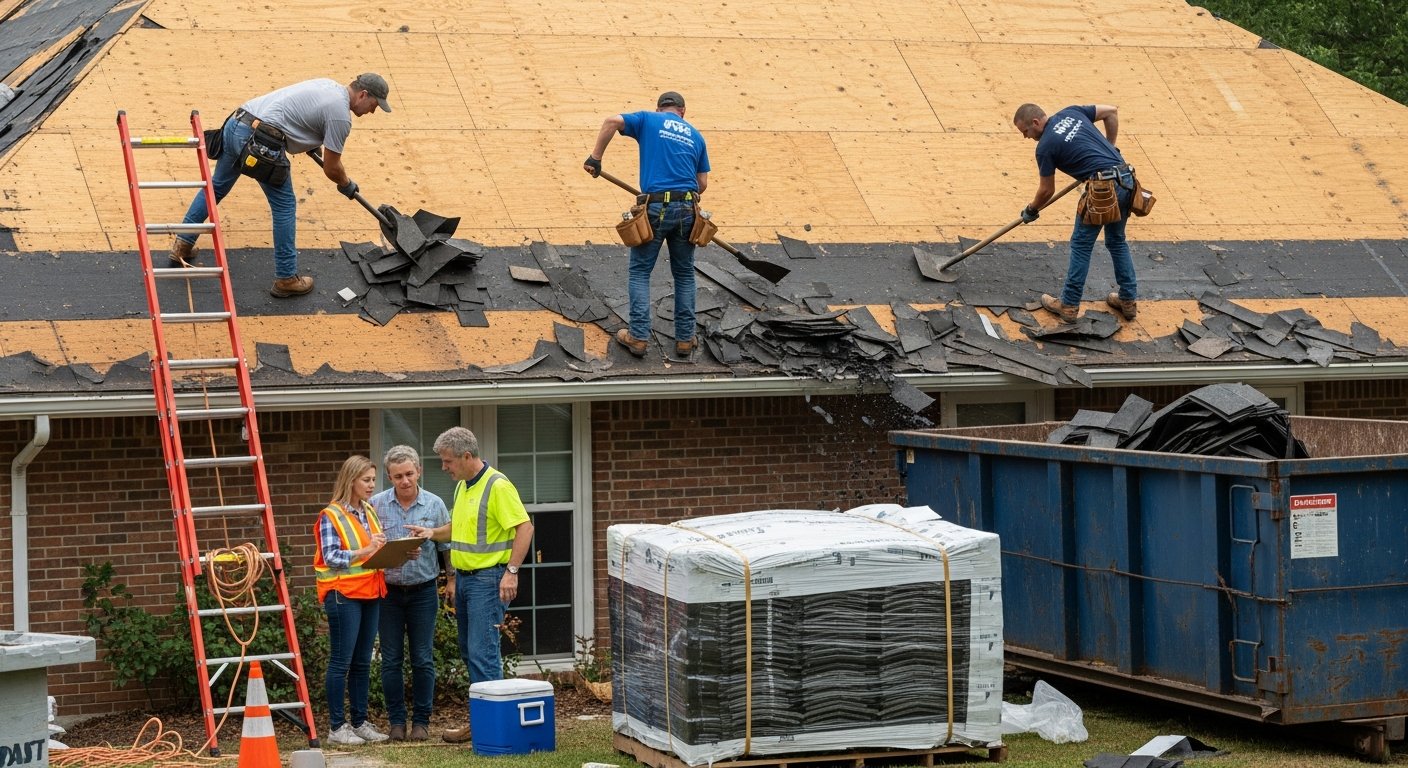
- Tearing Off the Old Roof: The old shingles and underlayment are removed and hauled away.
- Inspecting and Repairing the Decking: The wood sheathing is inspected, and any damaged sections are replaced.
- Installing New Underlayment: A protective waterproof barrier is laid down over the decking.
- Installing Flashing: Metal flashing is placed around chimneys, vents, and valleys to prevent water penetration.
- Laying New Shingles: The new shingles are installed, starting from the bottom edge and working upward.
- Final Cleanup and Inspection: The crew cleans up all debris, nails, and materials, and a final walkthrough is conducted.
Throughout this process, communication with your contractor is key. A professional crew will keep you informed of their progress and any issues they discover. It is also common for the contractor to take photos of the work, especially of any repairs to the decking, to show you what was done and why. This transparency builds trust and ensures you are satisfied with the final result.
Hiring a Roofing Contractor: What to Look For
Choosing the right contractor is arguably the most important step in the entire roof replacement journey. A good contractor will deliver a quality installation that lasts for decades, while a poor one can lead to leaks, structural damage, and legal headaches. Start by asking for recommendations from friends, family, and neighbors, and then verify their credentials. You should always check that the contractor is licensed, insured, and bonded. Insurance is particularly crucial, as it protects you from liability if a worker is injured on your property.
When you have a few candidates, ask for detailed written estimates. Compare the scope of work, materials, and warranties. A reputable contractor will be happy to provide references and will have a physical business address, not just a P.O. box. They should also be able to provide proof of workers' compensation and general liability insurance. Be wary of contractors who ask for a large down payment upfront or who offer to waive your insurance deductible, as these are common red flags in the roofing industry.
The goal is to find a contractor who is not only skilled but also communicative and trustworthy. A platform like FreeQuotes.Contractors simplifies this process by connecting you with pre-vetted professionals who have been screened for licensing and insurance. This not only saves you time but also provides peace of mind, knowing that the contractors you are considering have met certain standards. Instead of cold-calling local companies, you can compare multiple, vetted options from the comfort of your home.
Financing Your Roof Replacement
Given the substantial cost, many homeowners need to explore financing options. The good news is that there are several ways to fund a roof replacement without draining your savings. Many roofing contractors offer financing plans that allow you to spread the cost over several months or years, often with promotional interest rates. This can be a convenient option, but it is essential to read the fine print and understand the interest rates and terms.
Another common option is to use a home equity loan or a home equity line of credit (HELOC). These loans typically offer lower interest rates than credit cards, as they are secured by your home. You can also consider a personal loan, which is unsecured and may have higher rates but offers a lump sum of cash. Some homeowners also use a credit card with a 0% introductory APR, but this is a risky strategy if you cannot pay off the balance before the promotional period ends. Before committing to any financing, it is wise to compare offers and consider how the monthly payments will fit into your budget.
Ultimately, the best financing option depends on your financial situation, credit score, and long-term goals. A reputable roofing contractor can often help you navigate the financing process and point you toward lenders they have worked with. However, you should always do your own research and compare offers to ensure you are getting a fair deal. By preparing financially, you can move forward with your project with confidence and peace of mind.
Warranties and Guarantees
A good roof installation should come with a robust warranty. There are typically two types of warranties to consider: the manufacturer's warranty on the materials and the contractor's workmanship warranty. The manufacturer's warranty covers defects in the shingles or other materials themselves, and it can last anywhere from 25 years to a lifetime, depending on the brand and product. The workmanship warranty, on the other hand, covers the installation process and protects you against leaks or other issues caused by poor installation.
When reviewing quotes, pay close attention to the warranty terms. A standard workmanship warranty is usually for a period of 5 to 10 years, but some contractors offer longer guarantees. Make sure you get the warranty in writing and understand what is covered and what is not. For example, some warranties are prorated, meaning the coverage decreases over time, while others are non-prorated, offering full replacement value for a certain period. It is also essential to register your warranty with the manufacturer after the installation is complete, as failure to do so can void the coverage.
A strong warranty is a sign of a contractor's confidence in their work. It provides you with long-term protection and peace of mind. When you are comparing contractors, ask about their warranty offerings and what the process is for making a claim. A contractor who stands behind their work is a valuable asset, and their warranty is a testament to their quality and reliability.
Preparing Your Home for the Big Day
Once you have signed the contract and set a start date, there are several things you can do to prepare your home and property for the roof replacement. This will help the job go smoothly and protect your belongings. First, move any vehicles away from the driveway and the perimeter of your home to keep them clear of falling debris. Cover or move any outdoor furniture, grills, and potted plants. Inside your home, secure or remove any items hanging on the walls, as the vibration from the work can cause them to fall.
It is also a good idea to trim any overhanging tree branches that might interfere with the crew's access or pose a risk to your new roof. If you have an attic, cover your stored items with plastic sheeting to protect them from dust and debris that may filter down. You should also let your neighbors know about the upcoming work, as it will be noisy and may involve workers on their property line. Clear communication with your contractor about any access points, such as gates or specific doors, will also help the crew work efficiently.
Preparation is about more than just protecting your stuff; it is about ensuring the safety of the workers and the success of the project. A clean and accessible work site allows the crew to focus on the job at hand. By taking these simple steps, you contribute to a smoother, faster, and more professional roof replacement experience for everyone involved.
Signs You Need a Roof Replacement
How do you know when it is time to replace your roof rather than simply repair it? Recognizing the warning signs early can prevent significant damage to your home. The most obvious sign is visible damage, such as missing, cracked, or curling shingles. If you see granules from the shingles accumulating in your gutters, this is a sign that the shingles are losing their protective coating and are nearing the end of their life. Another critical indicator is daylight showing through the roof boards in your attic or water stains on your ceilings and walls.
Other signs include a sagging roofline, which could indicate structural issues, and the presence of moss or algae growth, which can trap moisture and cause rot. The age of your roof is also a major factor. Asphalt shingle roofs typically last 20 to 25 years, while metal roofs can last 50 years or more. If your roof is approaching or exceeding its expected lifespan, it is wise to have it inspected by a professional, even if there are no obvious problems. A thorough inspection can identify weak spots that are not yet visible from the ground.
If you notice any of these signs, do not delay in seeking professional advice. A small problem can quickly escalate into a major, costly repair. A professional roofer can assess the condition of your roof and give you an honest recommendation on whether a repair will suffice or if a full replacement is the more cost-effective long-term solution. By acting promptly, you can protect your home and avoid much larger expenses down the road.
Replacing your roof is a significant undertaking, but it is one of the most important investments you can make in your home. By understanding the costs, materials, and process, and by choosing a reputable contractor, you can ensure a smooth and successful project. With the right preparation and guidance, you will have a beautiful, durable roof that protects your family and your property for years to come. Start your journey by getting free, competitive quotes from trusted professionals in your area and take the first step toward a secure and valuable home.
Learn more about Roof Installation or Replacement for guides, costs, and what to expect.
Compare Roof Installation or Replacement Pros Near You
Enter your ZIP code to compare top-rated local professionals and request free quotes.