
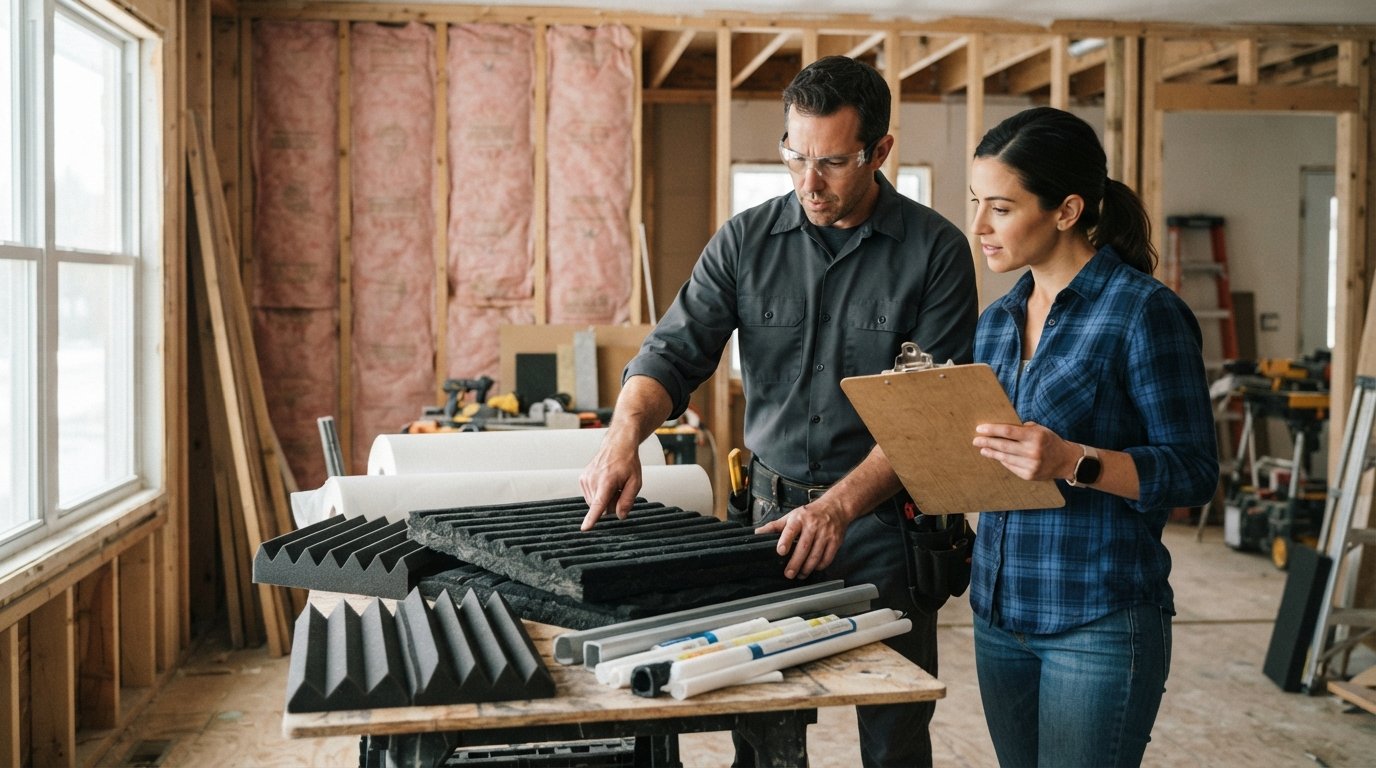
Soundproofing and Insulation Contractor Hiring Questions
Ask the right soundproofing and insulation contractor hiring questions to avoid costly mistakes. Call (833)-211-1668 for expert guidance and free quotes.

By Elena John
Learn more about Sound Proofing for guides, costs, and what to expect.
Compare Sound Proofing Pros Near You

Enter your ZIP code to compare top-rated local professionals and request free quotes.
You finally decide to reclaim your home from the neighbor's barking dog, the endless traffic hum, or the upstairs stomping. You budget for soundproofing and insulation, envision a quiet sanctuary, and then realize the hardest part: finding a contractor who truly understands acoustics and building science. Hiring the wrong pro can leave you with thinner walls, a lighter wallet, and a noise problem that is barely improved. The questions you ask before signing a contract will determine whether your project succeeds or becomes a costly lesson in what not to do. This guide walks you through the exact soundproofing and insulation contractor hiring questions you need to ask, with context on why each answer matters and how to compare bids fairly.
Start with Credentials: Certifications and Experience Signals
Soundproofing and insulation are not generic handyman tasks. They sit at the intersection of acoustics, building science, and code compliance, and a contractor who mainly does drywall patching or basic weatherization may not have the depth you need. When you interview candidates, ask directly about their certifications and the specific types of projects they have completed. Look for credentials such as Certified Acoustical Consultant (from the Institute of Noise Control Engineering), Building Performance Institute (BPI) certification for insulation work, or manufacturer-specific training from companies like Owens Corning, Rockwool, or QuietRock. These signals indicate that the contractor has invested in specialized knowledge rather than treating your project as a side job.
Experience matters, but not just the number of years in business. Ask how many projects they have completed that are similar to yours, and request references from at least two recent clients with comparable noise problems. A contractor who has soundproofed a home theater or a home office will understand flanking noise and impact transmission better than someone who has only installed batt insulation in attics. Also ask whether they have worked with both airborne noise (voices, TV, music) and structure-borne noise (footsteps, doors, appliances), because the solutions differ significantly. If they cannot explain the difference, that is a red flag for your soundproofing and insulation contractor hiring questions checklist.
Measuring Success: Requesting Before-and-After Noise Measurements
One of the most overlooked soundproofing and insulation contractor hiring questions is about measurement. Noise reduction is not a vague promise; it can be quantified. Professional acoustic contractors use sound level meters to record baseline noise levels before work begins and then measure again after completion. Ask whether they will provide before-and-after measurements, and clarify what metric they use. Common metrics include Sound Transmission Class (STC) for airborne noise and Impact Insulation Class (IIC) for impact noise. STC ratings apply to wall and floor assemblies, while IIC applies to floor-ceiling assemblies. A contractor who cannot explain these terms or who dismisses measurement as unnecessary is likely guessing rather than engineering a solution.
Requesting measurements does more than verify results. It creates accountability and gives you a benchmark for the warranty discussion later. For example, if your goal is to reduce a 65-decibel street noise to below 40 decibels inside the bedroom, the contractor should be able to explain how the proposed materials and assembly will achieve that reduction. They should also account for flanking paths, such as gaps around outlets, ducts, and doors, which can undermine even the best insulation. If a bid promises "significant noise reduction" without numbers, ask for specifics. A reputable contractor will welcome the chance to document performance.
Warranty Terms for Insulation and Soundproofing Work
Warranties for soundproofing and insulation are not one-size-fits-all. Ask each contractor to provide a written warranty that covers both materials and labor, and read the fine print. Manufacturer warranties on insulation may cover product defects but not installation errors, while a contractor's labor warranty should address workmanship issues like gaps, compression, or improper sealing. Ask how long the warranty lasts and what exclusions apply. For instance, some warranties void coverage if you later modify the wall assembly or install recessed lighting without proper acoustic treatment.
Another key question: what is the process for a warranty claim? A contractor who is local and established will typically offer a straightforward inspection and repair process. If the contractor is a one-person operation with no physical address, the warranty may be difficult to enforce. Also ask whether the warranty is transferable if you sell your home, which can be a selling point. Finally, clarify whether the warranty covers noise reduction performance or only material integrity. A warranty that guarantees the insulation will not settle is useful, but a warranty that guarantees a specific STC improvement is stronger. Get all warranty terms in writing before signing.
Comparing Quotes: Materials Versus Labor Only
When you request estimates, you will likely see a range of formats. Some contractors provide an all-inclusive price that covers materials, labor, disposal, and permits. Others quote labor only, expecting you to purchase materials separately. Both approaches can work, but they complicate comparison. Ask each contractor to break down the quote into labor, materials, and any other costs such as permits or site protection. This transparency lets you compare apples to apples and spot unusually low or high line items.
For soundproofing and insulation, material quality is critical. A quote that lists "acoustic insulation" without specifying the product, R-value, or sound rating is too vague. Ask for product names, quantities, and installation methods. For example, a proper soundproofing assembly might include resilient channels, acoustic caulk, and specific insulation batts. If the contractor cannot provide a detailed material list, you cannot verify that the bid meets your performance goals. Also ask whether the quote includes post-installation testing and cleanup. A low labor-only quote may seem attractive until you add the cost of materials, rental equipment, and your own time coordinating deliveries.
To streamline the comparison process, consider using a platform that connects you with pre-vetted local contractors who provide detailed, competitive quotes. For homeowners in the United States, Contractor.Homes offers a free quote request system and educational resources to help you evaluate bids. And if your project scope expands to include emergency repairs, such as a sudden roof leak or HVAC failure, our guide on emergency home repair contractor hiring fast explains how to expedite the process without sacrificing due diligence.
Essential Soundproofing and Insulation Contractor Hiring Questions
To keep your vetting process organized, use the following list as a core set of soundproofing and insulation contractor hiring questions. Each item addresses a critical aspect of the project, from technical competence to business practices.
- What specific certifications and training do you hold for acoustic and insulation work, and can you provide proof?
- How do you measure noise reduction, and will you provide before-and-after sound level readings?
- What warranty do you offer on labor and materials, and what are the exclusions?
- Can you provide a detailed quote that separates labor, materials, and other costs, including product specifications?
- How do you handle unexpected issues like hidden gaps, mold, or code violations discovered during installation?
These questions go beyond surface-level vetting. For instance, the last question about unexpected issues reveals how the contractor manages change orders and communicates during the project. A contractor who has a clear process for handling surprises is less likely to spring extra costs on you later. Similarly, asking for proof of certifications filters out those who exaggerate their qualifications. Use these questions in your initial phone screening and follow up in writing so you have a record of the answers.
Red Flags and Green Lights in Contractor Responses
Not all answers are created equal. Pay attention to how contractors respond, not just what they say. Green lights include willingness to provide references, detailed written estimates, and clear explanations of technical concepts in plain language. A contractor who asks about your noise sources, building construction, and budget before proposing a solution is demonstrating a consultative approach. They should also be transparent about limitations: for example, some noise problems cannot be fully solved without major structural changes, and an honest contractor will tell you that upfront.
Red flags include pressure to sign immediately, vague promises like "guaranteed silence," reluctance to provide a written contract, and no physical business address. Also be wary of contractors who propose solutions without inspecting the space. Soundproofing requires understanding the existing assembly, flanking paths, and ventilation. A contractor who quotes a price over the phone without a site visit is guessing. Finally, check online reviews and verify licenses with your state or local licensing board. For insulation work, some states require specific licenses, while others do not. Ask the contractor to clarify their licensing status and insurance coverage.
Finalizing Your Choice and Preparing for the Project
Once you have answers to your soundproofing and insulation contractor hiring questions, compare the finalists on more than price. Consider their communication style, the thoroughness of their proposal, and their willingness to educate you. A slightly higher bid from a contractor who provides detailed measurements and a strong warranty may be the better value. Before work begins, confirm the project timeline, payment schedule, and site protection plan. Ask how they will minimize dust and disruption, especially if you are living in the home during the work. Get everything in writing, including the scope, materials, warranty terms, and change order process.
After the project, conduct a walkthrough and verify that the agreed-upon measurements have been taken. Keep all documentation, including the contract, warranty, and before-and-after readings, in a safe place. If you notice any issues, report them promptly while the warranty is active. With the right contractor and the right questions, you can transform your home into a quieter, more comfortable space without the guesswork. For more guidance on hiring and comparing contractors for any home improvement project, explore the resources and free quote tools available through FreeQuotes.Contractors.