
Spring Home Inspection Checklist to Catch Winter Damage
Use this spring home inspection checklist to catch winter damage early and avoid costly repairs. Call (833)-211-1668 for expert contractor quotes.

By Maya Parker
Learn more about Home Inspection for guides, costs, and what to expect.
Compare Home Inspection Pros Near You

Enter your ZIP code to compare top-rated local professionals and request free quotes.
Winter leaves more than just cold memories behind. As the snow melts and temperatures climb, your home may be hiding damage that was invisible during the freezing months: cracked siding, leaking roofs, foundation shifts, and hidden moisture that can quietly rot wood or spawn mold. A focused spring home inspection checklist to catch winter damage helps you find these problems early, before they turn into expensive summer repairs. This guide walks you through the critical areas to inspect, what warning signs to look for, and when it is time to call in a professional. It also covers how to budget for likely fixes and how to get competitive quotes from local contractors when you need them.
Why Spring Is the Best Time to Inspect for Winter Damage
Spring offers a unique window to assess your home's condition. The ground has thawed enough to reveal foundation shifts, but the summer heat has not yet dried out and masked moisture problems. Snow and ice are gone, so you can see the full exterior clearly. At the same time, spring rains can quickly expose any roof or siding leaks that winter created, making it easier to identify the source of a problem rather than just the symptom.
Winter damage often gets worse with time. A small crack in the foundation can widen as the soil expands and contracts with freeze-thaw cycles. Ice dams on the roof can force water under shingles, leading to rot in the attic and ceilings. Caulk that dried out and cracked lets water into wall cavities, where it can support mold growth for months before you notice a musty smell. By inspecting in spring, you give yourself the best chance to fix these issues while they are still minor.
Beyond the physical benefits, a spring inspection also helps you plan financially. If you identify potential repairs early, you can budget for them and avoid the panic of a sudden emergency expense. You can also get ahead of contractor busy season; by scheduling inspections and quotes in early spring, you are more likely to secure a reliable pro before summer demand spikes.
Exterior Signs of Freeze Damage on Siding, Masonry, and Foundations
Start your inspection on the outside of the house. Winter weather attacks exterior surfaces relentlessly, and the evidence is often visible if you know where to look. Walk around your property on a dry day and examine the following areas carefully.
Siding and Trim
Check for cracks, warping, or loosening in siding and trim. Freeze-thaw cycles can force water behind siding panels, and when that water freezes, it expands and can push panels apart. Wood siding may show signs of rot or peeling paint, while vinyl or fiber cement can crack. Pay special attention to areas around windows and doors, where caulk and weatherstripping often degrade. Look for gaps or cracks in caulk that could let water in. If you find soft spots or extensive peeling, it may be time to consult a siding professional.
Masonry and Brickwork
Inspect brick, stone, and concrete surfaces for spalling, which is when the surface flakes or chips off. This often happens when water enters small cracks and freezes. Also check mortar joints for cracking or crumbling. Chimneys are especially vulnerable; look for loose bricks, cracked mortar, or a damaged chimney cap. If you see significant masonry damage, a mason should evaluate it to prevent water intrusion and structural issues.
Foundation
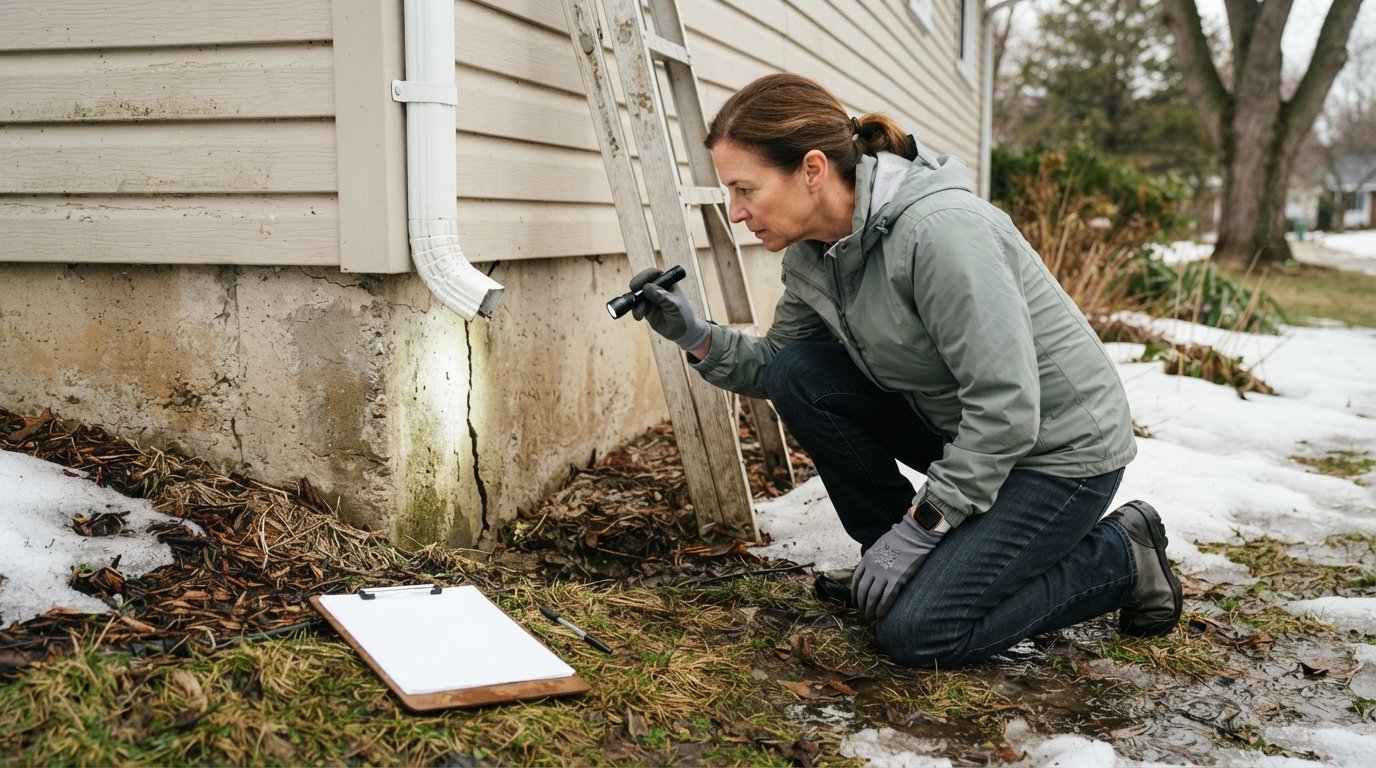
The foundation is your home's support system, and winter can be hard on it. Look for new cracks in the foundation walls, especially horizontal cracks or ones that are wider at one end. Check for signs of settlement, such as cracks above windows or doors, or doors that suddenly stick. Also inspect the grading around the foundation: soil should slope away from the house to direct water away. If you see pooling water or soil that has settled toward the foundation, regrade the area to prevent water from seeping in. Small hairline cracks are often cosmetic, but any crack wider than 1/4 inch or any horizontal crack warrants a call to a foundation specialist.
Decks and Porches
Wood decks and porches take a beating in winter. Check for loose or popped nails, rotting wood, and signs of frost heave around footings. Test the railing for stability. If the deck feels bouncy or you see significant rot, have it inspected by a professional before using it.
Roof and Attic Checks for Ice Dam and Leakage Evidence
The roof is one of the most vulnerable parts of your home during winter. Ice dams, heavy snow loads, and freeze-thaw cycles can cause leaks and structural damage. A thorough roof and attic inspection in spring can catch problems before they spread.
Roof Exterior
From the ground with binoculars, or safely on a ladder if you are comfortable, look for missing, cracked, or curling shingles. Check for loose flashing around chimneys, vents, and skylights. Look for granules from asphalt shingles collecting in gutters, which can indicate wear. Also inspect gutters and downspouts for damage; ice can pull them loose or cause them to sag. Ensure downspouts discharge water at least 4 to 6 feet away from the foundation.
Attic Interior
Go into the attic with a flashlight and look for water stains, dark spots, or mold on the roof deck and rafters. Check for damp insulation. Look for signs of ice dam formation: water stains near the eaves, peeling paint on the underside of the roof, or frost on the roof nails. Ice dams form when heat escapes into the attic and melts snow on the roof, which then refreezes at the eaves. Proper attic insulation and ventilation are key to preventing them. If you see evidence of leaks or poor ventilation, a roofing contractor can assess the situation and recommend repairs or improvements.
If you are unsure whether your roof needs professional attention, it is worth getting a roof inspection. Many roofing companies offer free or low-cost inspections, and catching a small leak now can save you from major structural repairs later.
Plumbing, HVAC, and Interior Checks
Winter can also affect your home's internal systems. Freezing pipes are a common problem, especially in older homes or poorly insulated areas. Check under sinks, in basements, and in crawl spaces for leaks or signs of water damage. Test all faucets and look for reduced water pressure, which can indicate a hidden leak or blockage. If you have a sump pump, test it by pouring water into the pit to ensure it activates.
Your heating, ventilation, and air conditioning (HVAC) system works hard all winter. Change the air filter and schedule a professional maintenance check before summer. Look for signs of rust or corrosion on the outdoor condenser unit, and clear away any debris. Also check for drafts around windows and doors; winter winds can reveal gaps that need weatherstripping or caulk.
Do not forget the interior of your home. Look for cracks in drywall or plaster, especially around windows and doors, which can indicate foundation movement. Check ceilings for water stains that may have appeared during winter. Test smoke and carbon monoxide detectors and replace batteries if needed.
When a Spring Inspection Warrants a Specialist Contractor
While many minor issues can be handled with DIY fixes, some problems require a licensed professional. Knowing when to call in a specialist can save you time, money, and stress. Here are key indicators that you should seek expert help.
- Foundation cracks that are wide, horizontal, or accompanied by sticking doors/windows: These can signal structural movement and should be evaluated by a foundation contractor.
- Roof leaks, missing shingles, or ice dam evidence: A roofing professional can assess damage and recommend repairs or replacement.
- Masonry damage such as spalling, cracked mortar, or chimney issues: A mason ensures repairs are done correctly to prevent water intrusion.
- Persistent musty odors or visible mold: This may indicate hidden moisture problems that require a mold remediation specialist or an indoor air quality expert.
- HVAC system malfunctions or unusual noises: An HVAC technician can diagnose and fix issues before they become costly breakdowns.
If you notice any of these signs, it is best to get a professional opinion. Trying to fix complex issues yourself can sometimes make matters worse and cost more in the long run. A qualified contractor can provide a thorough assessment and a written estimate for repairs.
When you need to find a reliable contractor, using a platform like Contractor.Homes can simplify the process. Contractor.Homes connects homeowners with pre-vetted local professionals for a wide range of services, from roofing and foundation repair to HVAC and plumbing. You can request free quotes and compare options to make an informed decision.
Budgeting for Likely Spring Repairs After a Hard Winter
After a harsh winter, it is wise to anticipate some repairs. Setting aside a budget now can prevent financial strain later. Start by estimating the potential costs based on what you find during your inspection. Minor fixes like caulking and painting are inexpensive, but larger issues like roof replacement or foundation repair can be significant.
A good rule of thumb is to allocate 1 to 3 percent of your home's value annually for maintenance and repairs. If you suspect bigger problems, get quotes from contractors to understand the potential costs. For example, a roof repair might range from a few hundred to a few thousand dollars, while foundation repair can cost several thousand. Having a clear picture helps you prioritize and plan.
For a structured approach to budgeting, consider using a home renovation budget planner to track expenses and plan for both expected and unexpected repairs. This can help you avoid overspending and ensure you have funds available when you need them.
Also, check with your homeowner's insurance to see if any winter damage is covered. Some policies cover sudden damage from ice dams or burst pipes, but not neglect. Document any damage with photos and keep receipts for repairs.
Creating Your Spring Home Inspection Checklist
To make your inspection systematic, create a checklist and walk through your home methodically. Here is a sample checklist you can adapt to your property.
- Exterior: Inspect siding, trim, masonry, foundation, decks, and porches for cracks, rot, or movement. Check gutters and downspouts.
- Roof and Attic: Look for missing shingles, flashing issues, water stains, and ice dam evidence. Check insulation and ventilation.
- Plumbing: Test faucets, look for leaks under sinks, and check the water heater for corrosion.
- HVAC: Change filters, clean outdoor unit, and schedule professional maintenance.
- Interior: Check for cracks in walls and ceilings, test detectors, and look for drafts.
Perform this inspection annually in early spring. It takes a few hours but can save you thousands in repairs. If you are not comfortable inspecting certain areas, such as the roof or crawl space, hire a professional home inspector for a comprehensive evaluation.
Remember that catching small problems early is the key to protecting your home's value and your peace of mind. A proactive approach now means a more comfortable and secure home all year.
When you are ready to tackle repairs, gather multiple quotes to compare prices and scope of work. FreeQuotes.Contractors can help you connect with local pros who can handle any project, big or small. By staying informed and acting promptly, you can turn winter damage into a thing of the past.