
Water Damage Restoration: Steps to Save Your Home
Learn the essential steps for water damage restoration, from immediate actions to professional repairs, and how to protect your home and maximize your insurance claim.
By Adnan Nazir
Learn more about Water Damage Cleanup and Restoration for guides, costs, and what to expect.
Compare Water Damage Cleanup and Restoration Pros Near You

Enter your ZIP code to compare top-rated local professionals and request free quotes.
Water damage can strike without warning. A burst pipe, a severe storm, or an overflowing appliance can turn a comfortable home into a soaked, chaotic scene in minutes. When this happens, the clock starts ticking. The difference between a quick recovery and a long, expensive nightmare often comes down to how fast and how correctly you respond. This guide walks you through the essential steps of water damage restoration, helping you protect your property, your belongings, and your family's health.
Understanding the Urgency of Water Damage
Water is relentless. It seeps into porous materials like drywall, wood, and insulation, weakening structures and creating the perfect environment for mold and bacteria. Within just 24 to 48 hours, mold can begin to grow, spreading allergens and potential toxins throughout your home. The longer water sits, the more extensive the damage becomes, and the higher the restoration cost. This is why immediate action is not just recommended; it is critical.
The restoration process involves more than just removing visible water. It requires thorough drying, sanitizing, and sometimes rebuilding to return your home to a safe, livable state. Professional water damage restoration companies follow a structured protocol to ensure every affected area is addressed, from the obvious puddle on the floor to the hidden moisture trapped behind walls.
Immediate Steps to Take After Water Damage
Your first actions after discovering water damage can significantly influence the outcome. Safety should be your top priority. Before you do anything else, ensure that the power to any affected rooms or the entire house is turned off if there is any risk of electrical hazards. Avoid wading through standing water if you suspect electrical wires or outlets are submerged. Also, be cautious of structural weaknesses, such as sagging ceilings or buckled floors.
Once you have secured the area, follow these critical steps:
- Stop the source: If a pipe burst, shut off the main water valve. If the damage is from rain or flooding, try to block the entry point with sandbags or heavy towels until professional help arrives.
- Document the damage: Take photos and videos of every affected area and item. This documentation will be invaluable when you file an insurance claim. Do not start cleaning up or removing items before you have this evidence.
- Remove valuable items: Move furniture, electronics, documents, and other valuables to a dry area if it is safe to do so. This helps prevent further damage and makes the restoration process easier.
- Call a professional water damage restoration service: Do not attempt to handle significant water damage on your own. Professionals have the equipment, expertise, and experience to dry your home thoroughly and prevent secondary issues like mold.
These steps are just the beginning. The real work involves the meticulous process of water extraction, structural drying, and sanitization that only a certified restoration team can properly execute.
The Professional Water Damage Restoration Process
When you hire a professional water damage restoration company, they follow a systematic approach to bring your home back to its pre-loss condition. Understanding this process can help you know what to expect and ensure that the restoration is thorough.
Inspection and Water Damage Assessment
The first thing a restoration technician will do is conduct a comprehensive inspection. They use moisture detectors, hygrometers, and thermal imaging cameras to find water not just on the surface but also hidden behind walls, under floors, and in other hard-to-reach areas. They will also classify the water damage based on the source and contamination level. Category 1 is clean water from a broken pipe or sink. Category 2 is contaminated water, like from a washing machine overflow. Category 3 is unsanitary water, such as sewage or floodwater. This classification determines the safety protocols and cleaning methods required.
Water Removal and Extraction
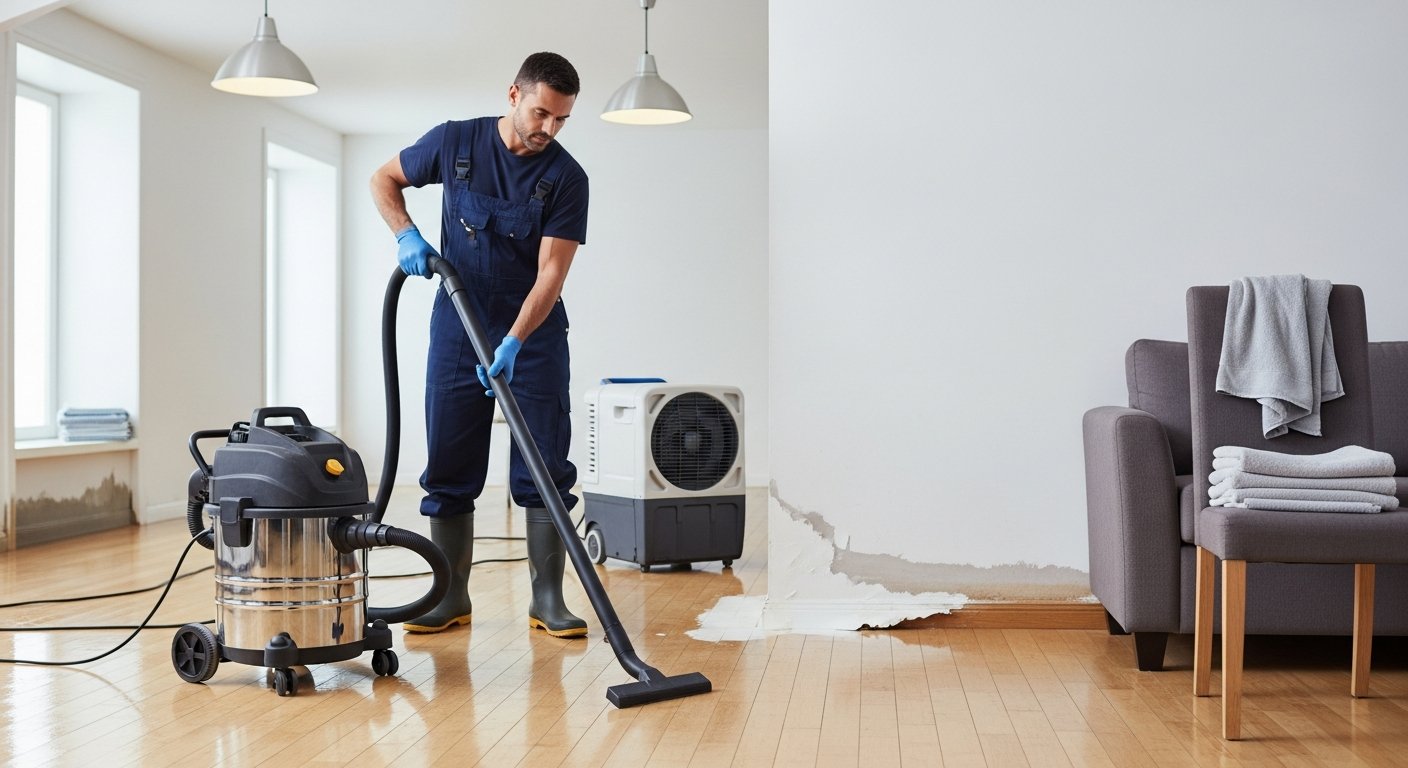
This is the heavy-duty phase. Powerful pumps and industrial-grade wet vacuums are used to extract standing water from your home. The goal is to remove as much water as possible as quickly as possible. This step is crucial for reducing drying time and preventing further damage to flooring and subfloors. The equipment used in this phase is far more powerful than any household tool, which is why DIY efforts often fall short.
Drying and Dehumidification
Once the standing water is gone, the real drying work begins. The restoration team will set up high-speed air movers and industrial dehumidifiers to pull moisture from walls, floors, and other porous materials. They will monitor the moisture levels in the air and materials daily to ensure that everything is drying properly. This phase can take several days, and it is essential to let it run its course. Cutting this step short can lead to trapped moisture, which leads to mold growth and structural rot.
Cleaning and Sanitizing
Water can carry bacteria, dirt, and other contaminants. The restoration team will clean all affected surfaces with professional-grade disinfectants to ensure your home is safe and free of odors. They may use techniques like air scrubbing to remove airborne mold spores and other particles. Belongings that were not removed may also be cleaned and sanitized. The specific cleaning method depends on the water category and the type of materials affected.
Restoration and Repairs
The final step is to restore your home to its former condition. This can range from minor repairs like replacing a piece of drywall to major reconstruction, such as rebuilding an entire room. The restoration company will work to get your home livable again, handling everything from carpentry to flooring installation. This phase is why it is critical to hire a company that offers full restoration services, not just water extraction.
Why Professional Help is Essential
It might be tempting to handle water damage yourself to save money. However, the risks far outweigh the potential savings. Professional restoration companies have access to industrial-grade equipment that extracts water and dries structures much faster and more thoroughly than consumer-grade rental machines. More importantly, they have the training and experience to detect hidden moisture and prevent mold, which is a serious health hazard and can cause significant damage to your home's structure and your health.
Moreover, professional restoration is often covered by homeowners' insurance. The documentation and detailed reports provided by a professional company make the claims process much smoother. They can also work directly with your insurance adjuster to ensure that all the necessary repairs are accounted for. Attempting a DIY restoration may lead to incomplete drying, which can result in costly mold remediation later, and may even jeopardize your insurance coverage if the damage is not properly documented.
Common Causes of Water Damage and Prevention Tips
While some water damage events are unavoidable, many can be prevented with regular maintenance and a watchful eye. Knowing the most common culprits can help you take proactive steps to protect your home.
- Leaking or burst pipes: Old, corroded pipes are prone to failure, especially during winter when freezing temperatures can cause them to burst. Insulate exposed pipes and have your plumbing system inspected annually.
- Appliance malfunctions: Washing machines, dishwashers, and water heaters can leak or overflow. Check hoses and connections regularly and replace them as recommended by the manufacturer, usually every 5 to 7 years.
- Roof leaks: Damaged or aging roofs can allow rainwater to seep into your attic and walls. Inspect your roof regularly for missing or broken shingles and address any issues promptly.
- Clogged gutters: When gutters are full of leaves and debris, water can back up and flow under your roof or into your foundation. Clean your gutters at least twice a year and ensure downspouts direct water away from your home's foundation.
- Basement flooding: Poor drainage, a high water table, or a failing sump pump can lead to basement flooding. Install a backup sump pump and ensure your yard slopes away from the foundation.
Even with the best prevention efforts, accidents happen. This is why having a plan and knowing who to call can make a huge difference. A professional restoration service can respond quickly to mitigate damage and get your life back on track.
How to Choose the Right Restoration Company
Selecting the right water damage restoration company is a critical decision. You want a team that is reliable, certified, and experienced. Start by looking for companies that are certified by organizations like the Institute of Inspection, Cleaning and Restoration Certification (IICRC). This ensures they follow industry standards for restoration practices. Also, check for proper licensing and insurance.
When you contact a restoration company, ask about their response time. In a water emergency, every minute counts, so you need a company that offers 24/7 emergency services. Ask about their process and the equipment they use. A reputable company will be transparent about their methods and provide a clear estimate of the work required. Reading online reviews and asking for references can also give you confidence in your choice. Remember, the cheapest option is not always the best. Look for a company that offers a balance of quality work, clear communication, and reasonable pricing.
The Cost of Water Damage Restoration
The cost of water damage restoration can vary widely depending on the extent of the damage, the category of water, and the size of the affected area. Minor cases, such as a small appliance leak that is caught quickly, might cost a few hundred dollars. However, severe flooding that affects an entire floor can run into thousands of dollars. On average, homeowners can expect to pay between $1,300 and $5,500 for water damage restoration, though costs can be higher for major events.
Your insurance policy may cover some or all of these costs, depending on the cause of the water damage. For example, a sudden, accidental pipe burst is typically covered, while damage from neglect or gradual leaks is not. Flood damage is usually not covered by standard homeowners' insurance and requires a separate flood policy. It is essential to review your policy and understand your coverage. When you file a claim, the detailed documentation and invoice from your restoration company will be your best allies in getting a fair settlement.
Working with Your Insurance Company
After water damage, you will likely need to file an insurance claim. This process can be stressful, but being organized can help it go smoothly. Start by calling your insurance company as soon as it is safe to do so. They will assign a claims adjuster to your case. Provide them with all the documentation you collected, including photos, videos, and a detailed list of damaged items. The restoration company you hire can also work directly with the adjuster, providing their own assessment and cost estimates.
Keep a log of all communications with your insurance company, including dates, times, and the names of the representatives you speak with. Be prepared to answer questions about the cause of the damage and the steps you took to mitigate it. Your insurance company may recommend a restoration company, but you have the right to choose your own. It is often beneficial to get a second opinion and to hire a company that you feel comfortable with and trust to act in your best interest.
Water damage restoration is a complex, demanding process. It requires immediate action, professional expertise, and careful coordination with your insurance provider. By understanding the steps involved and choosing the right help, you can navigate this challenging time with confidence and ensure your home is restored safely and properly. The key is to act fast, stay informed, and leverage the experience of certified professionals who can turn a disaster into a manageable recovery. Your home is one of your most valuable assets, and protecting it from the devastating effects of water is an investment worth making.
Learn more about Water Damage Cleanup and Restoration for guides, costs, and what to expect.
Compare Water Damage Cleanup and Restoration Pros Near You
Enter your ZIP code to compare top-rated local professionals and request free quotes.