
How to Choose Home Security Lighting for Your Property
Pick the right home security lighting with our tips on types, placement, and energy options. Call (833)-211-1668 for free quotes from local providers.

By Jack Dawson
Learn more about Lighting Installation for guides, costs, and what to expect.
Compare Lighting Installation Pros Near You

Enter your ZIP code to compare independent local professionals and request free quotes.
Your home's exterior lighting does more than chase away shadows. It shapes how safe you feel arriving after dark, how easily guests find your front door, and how confidently you navigate your own yard. Yet many homeowners treat outdoor lighting as an afterthought, grabbing whatever fixture is on sale and hoping it works. The result is often a mix of glaring floodlights, burned-out bulbs, and dark corners that leave you guessing. Choosing the right home security lighting does not require an electrician's license or a limitless budget, but it does demand a plan. This guide walks you through the key decisions, from fixture types and placement to energy sources and smart controls, so you can build a system that protects your property and looks good doing it.
Start With a Lighting Plan, Not a Shopping List
Before you browse fixtures, spend an evening walking around your property after sunset. Note where shadows pool, which entries feel unwelcoming, and where a single well-placed light could illuminate a path or deter someone from lingering. This simple audit reveals your real needs and prevents impulse buys that leave gaps. A written plan also helps when you compare quotes from independent local providers, because you can describe exactly what you want rather than asking for vague "security lighting."
Your plan should prioritize function over form. Security lighting serves three core purposes: visibility for you and your guests, deterrence for would-be intruders, and safe navigation along walkways and driveways. Each purpose calls for different fixture types and placements. For example, a bright floodlight over a driveway may deter someone from approaching a car, but it will blind you when you walk to the mailbox. A layered approach, combining low-level path lights with targeted motion fixtures, usually delivers better results than one overpowered spotlight.
As you sketch your plan, mark the locations of doors, windows, gates, and dark side yards. Consider how light spills onto neighboring properties, too; nobody wants a fixture that annoys the family next door. A quick conversation with neighbors about your intentions can save friction later. Once you have a rough map, you can move on to selecting fixture types that match each location's job.
Compare Fixture Types and Their Best Uses
The market offers a wide range of outdoor security lights, each suited to specific scenarios. Understanding the differences helps you avoid overbuying or underpowering a zone. Here is a breakdown of the most common options and where they shine.
- Motion-activated lights: These fixtures turn on when they detect movement, providing a sudden burst of light that can startle intruders and alert you to activity. They work well near garages, side doors, and dark driveways. Look for adjustable sensitivity and dual detection zones to reduce false triggers from passing cars or pets.
- Dusk-to-dawn lights: These stay on from evening until morning, offering consistent illumination for entries, porches, and long driveways. They are ideal for areas where you want steady visibility without the on-off surprise of motion sensors. Modern LED versions consume little energy, making them a practical choice for all-night use.
- Floodlights: High-output fixtures that cover a wide area, floodlights suit large yards, back patios, and parking areas. They can be motion-activated or switched, but be mindful of glare and light trespass. Shielded designs direct light downward where it is needed.
- Path lights: Low-level fixtures along walkways and garden beds improve safety and add a welcoming glow. They are not primary security lights, but they eliminate trip hazards and make your property look cared for, which itself can discourage intruders.
- Smart fixtures: These integrate with apps, voice assistants, and home automation systems, allowing scheduling, dimming, and remote control. They are a good fit if you want granular control and are comfortable with technology.
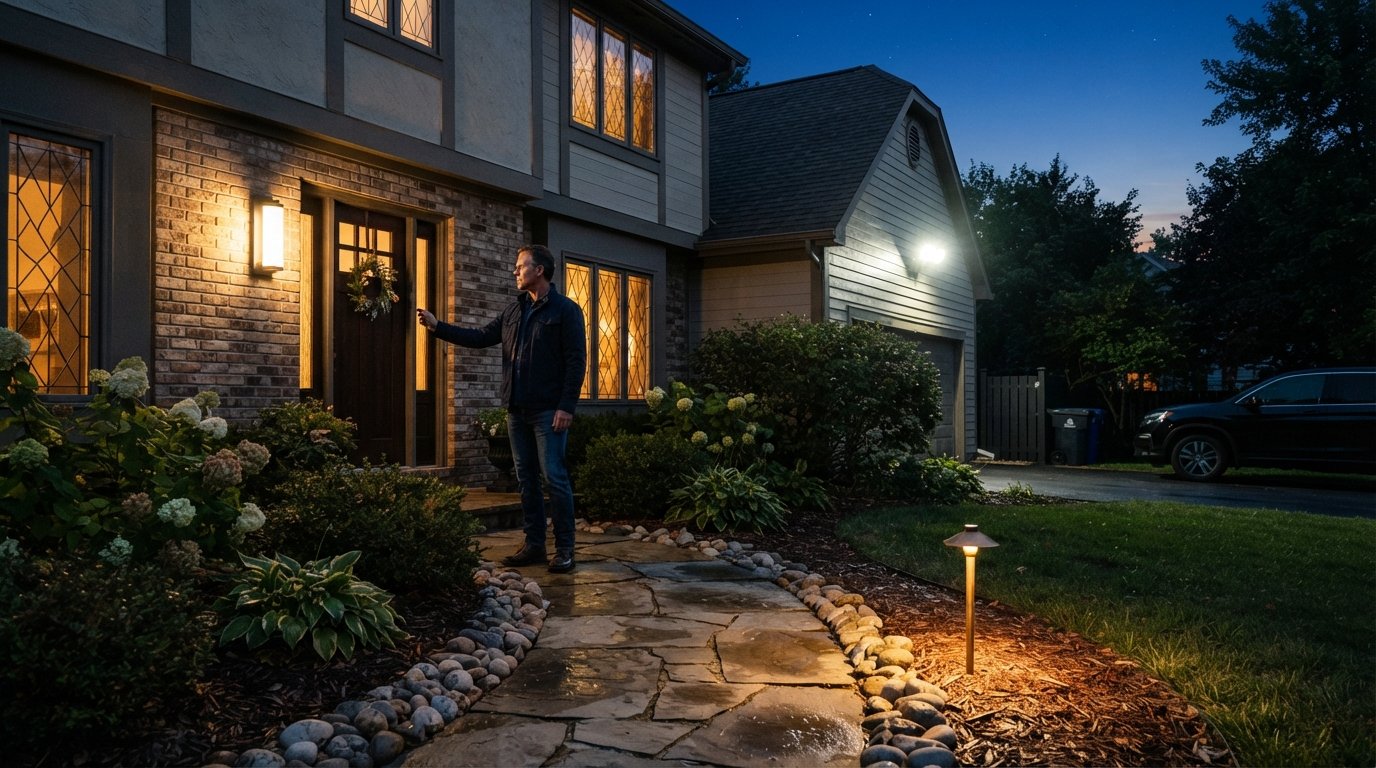
Many homeowners mix two or three types to cover all bases. For instance, dusk-to-dawn sconces at the front door, motion floodlights over the garage, and path lights along the walkway create layers of light that serve different purposes. If you need more detail on selecting among these categories, our guide on choosing the right type of home security lighting breaks down the trade-offs further.
When comparing fixtures, pay attention to beam spread and lumen output. A narrow beam concentrates light for long throws, while a wide beam covers more area at lower intensity. Lumens measure brightness; more is not always better. Overly bright lights create harsh shadows and glare, which can reduce visibility rather than improve it. Aim for a balanced approach: enough light to see clearly without turning your yard into a stadium.
Placement Principles for Entries, Drives, and Dark Sides
Where you place lights matters as much as which lights you choose. Good placement illuminates critical zones without wasting energy or annoying neighbors. Start with the areas you use most: the front entry, the driveway, and any side or rear doors. These are common access points and deserve reliable, well-directed light.
At the front entry, mount a fixture at least six feet above the ground and slightly to one side of the door. This angle prevents shadows on the lock and reduces glare for anyone approaching. A dusk-to-dawn or smart sconce works well here, providing consistent light without requiring you to remember a switch. For the driveway, position motion floodlights to cover the area where cars park and where you walk to the house. Aim the sensors away from the street to avoid triggering on passing traffic.
Dark sides of the house often get neglected, yet they can be vulnerable points. A motion-activated light on a side yard or along a fence line can deter someone from using that route to approach windows or rear doors. Keep the light directed downward and toward the property, not into a neighbor's window. For rear patios and decks, consider a combination of ambient lighting for entertaining and motion lights for security after hours.
Path lights should line walkways at intervals that eliminate dark gaps, typically every six to eight feet. Keep them low (around 18 to 24 inches) and aim them downward to light the path without creating glare. If your walkway has steps or uneven terrain, add extra fixtures there to prevent falls. Remember that the goal is safe navigation first, aesthetics second.
One often-overlooked principle is to light the perimeter rather than the center of your yard. Intruders approach from edges, so illuminating fences, gates, and property lines makes it harder to move unnoticed. Combine perimeter lighting with motion sensors inside the perimeter for a layered defense. If you are unsure about placement, a professional lighting assessment can help, but you can also experiment with temporary fixtures before committing to permanent installations.
Weigh Energy Sources: LED, Solar, and Hardwired
Every outdoor light needs power, and the source you choose affects installation cost, maintenance, and reliability. The three main options are hardwired, solar, and battery-powered LED. Each has strengths and limitations, so match the choice to the location and your willingness to handle upkeep.
Hardwired fixtures connect to your home's electrical system, offering consistent power and no need for battery changes. They are the most reliable option for primary security lights, especially in cold or cloudy climates where solar may struggle. However, installation often requires running new wiring, which is a job for a qualified electrician. If you are not comfortable working with electrical circuits, plan to hire an independent local provider for this part of the project.
Solar lights are quick to install and cost nothing to operate, making them attractive for paths, sheds, and remote areas. Modern solar fixtures with efficient panels and lithium batteries perform better than older models, but they still depend on sunlight. In shaded areas or during prolonged cloudy periods, output may drop. Use solar for supplemental lighting rather than sole security coverage, and choose fixtures with replaceable batteries to extend their lifespan.
Battery-powered LED lights offer a middle ground: no wiring, easy placement, and decent brightness. They require periodic battery changes, which can be a chore if you have many fixtures. Smart battery models can send reminders when power is low, reducing the guesswork. For renters or homeowners who want a temporary solution, battery lights are a practical choice.
LED technology has transformed outdoor lighting across all power sources. LEDs consume a fraction of the energy of incandescent bulbs, last for years, and produce less heat. When shopping, look for fixtures with integrated LEDs or standard bases that accept LED bulbs. Check the color temperature: warmer tones (2700K to 3000K) feel welcoming at entries, while cooler tones (4000K to 5000K) can improve visibility for security but may appear harsh. Many homeowners prefer warm white for aesthetics and reserve cooler light for utility areas.
Maintenance is another factor. Hardwired LEDs may need occasional cleaning but rarely burn out. Solar panels need wiping to maintain efficiency, and batteries may need replacement every few years. Battery fixtures demand regular checks. Factor these tasks into your decision; a light that is difficult to reach may end up neglected.
Integrate Smart Controls and Timers
Smart lighting controls add convenience and can enhance security by making your home appear occupied even when you are away. Timers are the simplest form of automation: set your lights to turn on at dusk and off at a prescribed time, or vary the schedule to mimic presence. Mechanical timers are inexpensive but can drift and require resetting after power outages. Digital and smart timers offer more precision and can adjust automatically for seasonal changes in daylight.
Smart fixtures and plugs let you control lights from a smartphone, create schedules, and group fixtures into zones. You can turn on all exterior lights with one command, dim them for entertaining, or set a vacation mode that randomizes on/off times. Some systems integrate with security cameras and doorbell cameras, triggering lights when motion is detected. If you already have a smart home hub, check compatibility before buying; standards like Matter and Zigbee are improving interoperability, but not all devices play nicely together.
Motion sensors are a form of control, too. Pair them with smart bulbs or switches to receive alerts when lights activate, giving you a heads-up about activity outside. Adjust sensitivity to avoid nuisance triggers from wind-blown branches or small animals. A well-tuned motion system balances deterrence with practicality.
When planning smart controls, consider your Wi-Fi coverage. Outdoor fixtures at the far end of your property may struggle to stay connected. Mesh Wi-Fi systems or smart hubs with local radios can extend range. Also, think about backup power: if the grid goes down, hardwired smart lights may go dark, while battery-backed models can continue to operate. No system is perfect, but understanding the limitations helps you set realistic expectations.
Decide When to Hire an Independent Provider
Some lighting projects are simple plug-and-play upgrades, while others involve running new circuits, installing transformers for low-voltage systems, or mounting fixtures on difficult surfaces. Knowing when to call a professional saves time and reduces risk. If your project involves any of the following, it is wise to bring in an independent local provider:
- Adding new hardwired fixtures where no wiring exists
- Installing a low-voltage landscape lighting system with a transformer
- Working with electrical panels or adding dedicated circuits
- Mounting heavy fixtures on brick, stone, or high eaves
- Troubleshooting recurring electrical issues or tripped breakers
For simple replacements of existing fixtures or plug-in solar and battery lights, many homeowners handle the job themselves. The key is to respect electrical safety and local codes. If you are unsure, consult a qualified electrician. When you are ready to compare quotes from independent local providers, you can use a platform like Contractor.Homes to request estimates and review options. This kind of service connects you with local professionals who can assess your property and recommend a suitable lighting plan. Remember that any provider you hire should be independent and properly credentialed for the work; always ask for proof of licensing and insurance before work begins.
Hiring a pro for wiring also gives you access to advice on fixture selection and placement. An experienced electrician or lighting designer can spot issues you might miss, such as voltage drop on long runs or the need for GFCI protection in wet locations. The cost of a consultation may be offset by avoiding mistakes and rework. For larger projects, getting multiple quotes helps you compare pricing and scope. FreeQuotes.Contractors offers a free quote request system that simplifies this step, connecting homeowners with independent local providers for a range of home services. You can describe your lighting project and receive competitive bids without obligation.
Before hiring, verify that the provider has experience with outdoor lighting and can supply references. Ask about warranties on labor and materials, and confirm that permits (if required) will be pulled. A clear written contract protects both parties and sets expectations for timeline and payment. Even a modest lighting upgrade benefits from a professional touch when wiring is involved.
Balance Security, Aesthetics, and Budget
Security lighting should not make your home look like a prison yard. Thoughtful design blends safety with curb appeal. Use warm-toned LEDs for entries and paths, reserve brighter cool-white lights for utility areas, and shield fixtures to direct light where it is needed. Layering different types of light creates depth and interest while covering security blind spots. A well-lit landscape is also a deterrent; it signals that someone is paying attention.
Budgeting for outdoor lighting involves more than the fixtures themselves. Consider wiring costs, transformers, timers, and potential electrical upgrades. Solar and battery options reduce installation expenses but may have higher upfront costs for quality fixtures. Energy savings from LEDs add up over time, especially if you replace older incandescent floodlights that run all night. Set a realistic budget and prioritize the most vulnerable areas first; you can add decorative or supplemental lighting later.
Maintenance should be part of your budget, too. Factor in occasional bulb replacements, battery changes, and cleaning. Choosing fixtures with easy-access panels and standardized parts reduces long-term hassle. If you install smart controls, consider the cost of replacement if a module fails. A simple, robust system often outperforms a complex one that requires constant attention.
Finally, think about the future. If you plan to add a deck, patio, or shed, leave room in your lighting plan for expansion. Smart systems can grow with your needs, and hardwired circuits can include extra capacity. A little foresight now prevents expensive retrofits later.
Choosing home security lighting is a process of matching fixtures to purpose, placement to need, and power source to practicality. Start with a walk-around audit, layer your lights for visibility and deterrence, and do not overlook the value of professional help when wiring is involved. With a clear plan and a bit of research, you can create an outdoor lighting system that makes your property safer, more welcoming, and easier to enjoy after dark.