
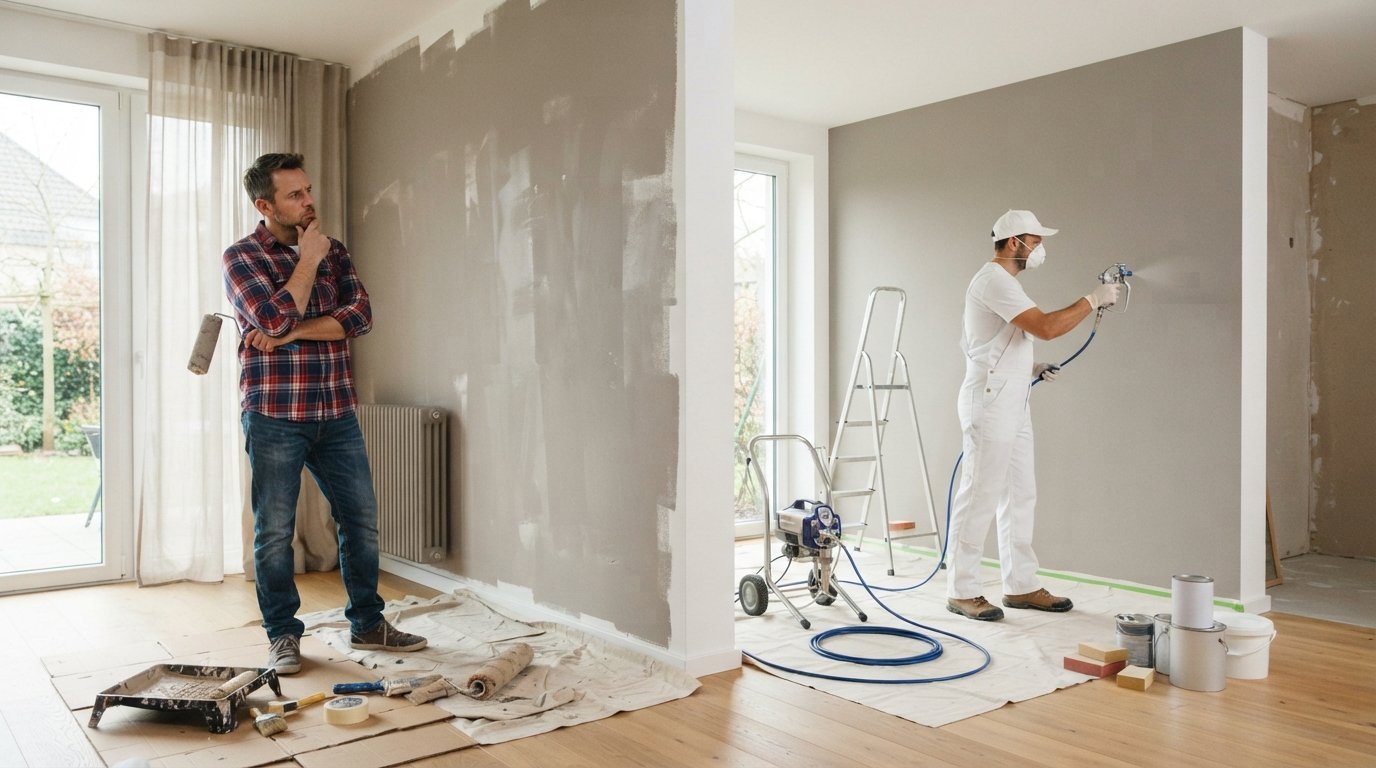
DIY vs Professional Interior Painting: What to Choose
Compare DIY vs professional interior painting: costs, time, skill, and finish quality. Decide which approach fits your home and budget.
By Adnan Nazir
Learn more about Interior Painting for guides, costs, and what to expect.
Compare Interior Painting Pros Near You

Enter your ZIP code to compare top-rated local professionals and request free quotes.
Standing in front of a wall that needs a fresh coat of paint, every homeowner faces the same fork in the road: should I pick up a brush myself or call in a professional? The appeal of DIY is obvious, saving money and gaining a sense of accomplishment. But the reality of interior painting involves much more than buying a gallon of paint and rolling it on. Surface preparation, proper technique, material costs, and time commitment all play a role in the final result. This guide breaks down the true costs, risks, and outcomes of DIY versus hiring a professional, so you can make a confident choice for your home and your budget.
Why Interior Painting Is More Complex Than It Looks
The average homeowner might assume that painting is a straightforward weekend project. In reality, a professional-grade finish requires a series of steps that most people never consider. Walls need to be cleaned, patched, sanded, and primed before the first drop of paint touches them. Skipping any of these steps leads to visible flaws: brush marks, roller lines, uneven sheen, and peeling paint within months.
Consider the prep work alone. Cracks, nail pops, and dents must be filled with spackle or joint compound, then sanded smooth. Edges and trim need to be taped with precision, and floors and furniture require protection. A professional painter spends roughly 70 percent of the job on preparation and only 30 percent on the actual painting. That ratio is a strong hint that the true skill lies in what happens before the color goes on.
Furthermore, paint selection is not as simple as picking a color from a swatch. The sheen (flat, eggshell, satin, semi-gloss) affects both appearance and durability. The type of paint (latex, oil-based, acrylic) must match the surface and the room's conditions. A bathroom needs moisture-resistant paint, while a hallway benefits from a scrubbable finish. Professionals know which products to use for each scenario, and they know how to apply them for a smooth, long-lasting result.
The True Cost of DIY Painting
When homeowners compare DIY vs professional interior painting, they often look only at the quoted price from a contractor versus the cost of paint and supplies. But this comparison is misleading. The true cost of a DIY project includes your time, your materials, and the potential cost of fixing mistakes.
Let's start with materials. A 10x12 room requires about one gallon of paint per coat, and two coats are standard. Quality paint costs $30 to $60 per gallon. Add primer, brushes, rollers, painter's tape, drop cloths, trays, and a ladder, and you are looking at $150 to $300 for a single room. For a whole house, that number jumps to $1,000 or more, especially if you need to rent equipment like a sprayer.
Then there is the time factor. A DIY paint job that a pro could complete in one day might take you an entire weekend or longer. If you have a full-time job and family commitments, the project could stretch to a week. Your time has value. If you earn $25 an hour, spending 30 hours on painting costs you $750 in lost leisure or productivity, on top of the material costs.
Finally, consider the hidden cost of errors. Uneven coverage, drips, and paint on trim are common for beginners. Fixing these issues requires more paint, more time, and sometimes professional help. In our guide on understanding interior painting quotes, we explain how contractors price these details into their estimates, which is why their quotes might seem high at first glance.
The Financial Breakdown of Hiring a Professional
Professional interior painters typically charge $2 to $6 per square foot, depending on the region, the condition of the walls, and the complexity of the job. For a 1,500-square-foot home, that translates to roughly $3,000 to $9,000. The wide range reflects variations in prep work, number of coats, and the type of paint used. Most contractors provide a free estimate, so you can get an exact number for your specific home.
That price includes not just labor but also the contractor's expertise, tools, and insurance. Professionals arrive with industrial-grade sprayers, high-quality brushes, and ladders that reach high ceilings safely. They also carry liability insurance, which protects you if an accident damages your property or injures someone. In the DIY route, you bear all that risk yourself.
One hidden advantage of hiring a pro is the speed. A team of two or three painters can finish a room in a day, and a whole house in three to five days. That speed reduces disruption to your daily life. It also means the job is done right the first time, with a warranty that covers any issues for a year or more. When you factor in the cost of your time and the cost of correcting errors, the gap between DIY and professional pricing narrows significantly.
Skill and Experience: The Unseen Differentiator
Anyone can roll paint onto a wall, but only a skilled painter can achieve a flawless, factory-like finish. Professionals have years of practice in cutting clean lines along ceilings and trim, feathering paint to avoid lap marks, and applying even coats that dry without bubbles or drips. They also know how to handle tricky surfaces like textured walls, old plaster, or wood paneling.
Experience also shows in the details. A pro will know that you need to back-roll after spraying to ensure adhesion, or that a second coat is necessary when painting over a dark color. They will notice if a wall has moisture damage or mold and will address it before painting. These are the kinds of issues that a novice might overlook, leading to a poor outcome and potentially costly repairs down the line.
Moreover, professionals bring a trained eye to color and finish. They can advise on the best sheen for a room's lighting, the right paint brand for durability, and the subtle differences between off-white shades. If you are unsure about your color choice, a pro can help you avoid a costly mistake, because repainting a room you hate is a waste of money and time.
Time and Convenience: The Real Cost of DIY
Time is often the most underestimated factor in the DIY vs professional interior painting debate. A professional crew can prep and paint a standard bedroom in a single day, including moving furniture (if you pay for that service), taping, and two coats. The same project might take a DIYer three full days, and that assumes no major mistakes or interruptions.
Consider your schedule. If you work 40 hours a week, painting a home over the weekends could take several weeks. During that time, your living space is cluttered with tarps, ladders, and paint cans. You might have to sleep in a room that smells of paint fumes, or avoid using your living room while the floor is covered. That disruption has a real cost, especially if you have children, pets, or work from home.
There is also the physical toll. Painting walls is repetitive and can strain your back, shoulders, and arms. Reaching high ceilings requires balancing on ladders, which carries a fall risk. Hiring a professional eliminates all of that physical strain and safety risk. You hand over the keys and return to a fresh, clean room, with no cleanup required.
Tools and Materials: What You Really Need
The list of supplies for a proper paint job is longer than most people expect. Beyond paint and primer, you need:
- Brushes (various sizes for trim and corners)
- Rollers and roller covers (with the right nap for your wall texture)
- Painter's tape (to protect trim and windows)
- Drop cloths (to protect floors and furniture)
- Trays and liners
- Ladder or step stool
- Spackle, putty knife, and sandpaper (for wall repairs)
- Cleaning supplies (to degloss and wipe down walls)
If you are painting a large area, you might also need a paint sprayer, which can cost $200 or more to rent. High-quality brushes and rollers make a noticeable difference in the finish, so skimping on these tools is a false economy. Add in the cost of drop cloths and tape, and your DIY budget grows quickly.
Professionals bring all of this equipment with them, and they know how to use it efficiently. They also buy paint at a contractor discount, so they often get better products for less money than you would pay at a retail store. That is another reason their quotes might be more competitive than you think.
When DIY Makes Sense
Despite the advantages of hiring a pro, there are situations where DIY is a perfectly reasonable choice. If you are painting a single accent wall, a small bathroom, or a piece of furniture, the scale is small enough that you can achieve a good result with minimal risk. The cost savings of skipping labor are significant when the project is tiny.
DIY also makes sense if you have previous painting experience and a flexible schedule. If you have painted rooms before and know how to prep properly, you can handle a bedroom or a hallway with confidence. You might even enjoy the process as a creative outlet. The key is to be honest about your skill level and your willingness to invest the time.
Another factor is the condition of your walls. If your walls are in good shape with no cracks, stains, or texture issues, the prep work is minimal. That reduces the complexity of the job. But if you are dealing with peeling paint, water damage, or heavy texture, that is a sign that you should call a professional, because those issues require expertise to resolve properly.
When to Call a Professional
On the other side, there are clear indicators that you should hire a professional. If your home has high ceilings (over 10 feet), a professional is safer and more efficient. If you are painting a large open space like a living room or an entire floor, the time savings and finish quality justify the cost. If you are selling your home, a professional paint job adds curb appeal and can increase the sale price.
Professionals are also the right choice for specialty finishes like faux painting, color washing, or limewash. These techniques require training and a steady hand. Similarly, if you have old lead-based paint that needs to be removed or encapsulated, you must hire a certified lead-safe contractor for safety reasons.
Finally, if you simply do not have the time or the physical ability to paint, hiring a pro is the smartest option. There is no shame in outsourcing a task that is outside your skill set. The peace of mind that comes with a guaranteed, warranty-backed finish is worth the investment, especially when you consider that a poor paint job can reduce your home's value.
Making the Final Decision
To decide between DIY and professional painting, start by measuring the scope of your project. Walk through each room and note the wall area, ceiling height, and condition of the surfaces. Then, get a few free quotes from local painters to understand the baseline cost. You can do this quickly through a platform like FreeQuotes.Contractors, which connects you with pre-vetted painting contractors in your area.
Next, calculate your DIY budget: materials, tool rental, and the value of your time. Be realistic about how many hours you can actually commit, and factor in the cost of fixing any mistakes. Compare that number to the professional quotes. If the difference is less than $500, hiring a pro is almost always worth it. If the difference is thousands of dollars, and the project is small and simple, DIY might be the better financial move.
Also, consider your tolerance for disruption. If you have a busy life and the thought of spending weekends painting fills you with dread, that emotional cost is real. A professional can have the job done before you even clear your schedule. On the other hand, if you enjoy hands-on projects and have the patience for prep work, DIY can be a rewarding way to save money.
Remember that the cheapest option is not always the most economical. A professionally painted room lasts 5 to 10 years, while a poorly executed DIY job might need repainting in 2 years. That is a false economy that ends up costing you more in the long run. The decision comes down to your budget, your skill level, and your time.
Whichever path you choose, the key is to plan carefully. For DIY, watch tutorials, buy quality materials, and set aside more time than you think you need. For professional hiring, vet contractors, read reviews, and get multiple quotes. A little effort in the planning stage ensures that your new paint job brings you joy for years to come.
Ultimately, the best choice is the one that fits your lifestyle and your wallet. If you are leaning toward professional help, reach out to a few contractors through a trusted marketplace like Repairmen, which can connect you with local pros. With the right approach, you will enjoy a fresh, beautiful interior without the stress of a botched paint job. Repairmen
Learn more about Interior Painting for guides, costs, and what to expect.
Compare Interior Painting Pros Near You
Enter your ZIP code to compare top-rated local professionals and request free quotes.