
Home Energy Audit Cost and Contractor Selection Guide
Home energy audit cost and contractor selection guide: typical prices, what each tier includes, and how to vet auditors. Call 8332111668 for help.

By Elena John
Learn more about Home Inspection for guides, costs, and what to expect.
Compare Home Inspection Pros Near You

Enter your ZIP code to compare top-rated local professionals and request free quotes.
A home energy audit is one of the smartest first steps before any major efficiency upgrade, yet many homeowners skip it because they are unsure what it costs or who to hire. That uncertainty is expensive. Without a professional assessment, you may replace the wrong windows, oversize an HVAC system, or miss air leaks that quietly add hundreds of dollars to your annual utility bills. This home energy audit cost and contractor selection guide walks you through realistic pricing, what each audit tier includes, how to vet auditors and efficiency contractors, and how to turn the findings into a project plan that actually pays you back.
What a Home Energy Audit Actually Includes
A home energy audit is a whole-house inspection that measures how your home uses and loses energy. A qualified auditor examines the building envelope, insulation levels, windows and doors, ductwork, heating and cooling equipment, water heating, lighting, and major appliances. The goal is not just to list problems but to rank them by cost, savings potential, and priority so you can sequence improvements intelligently.
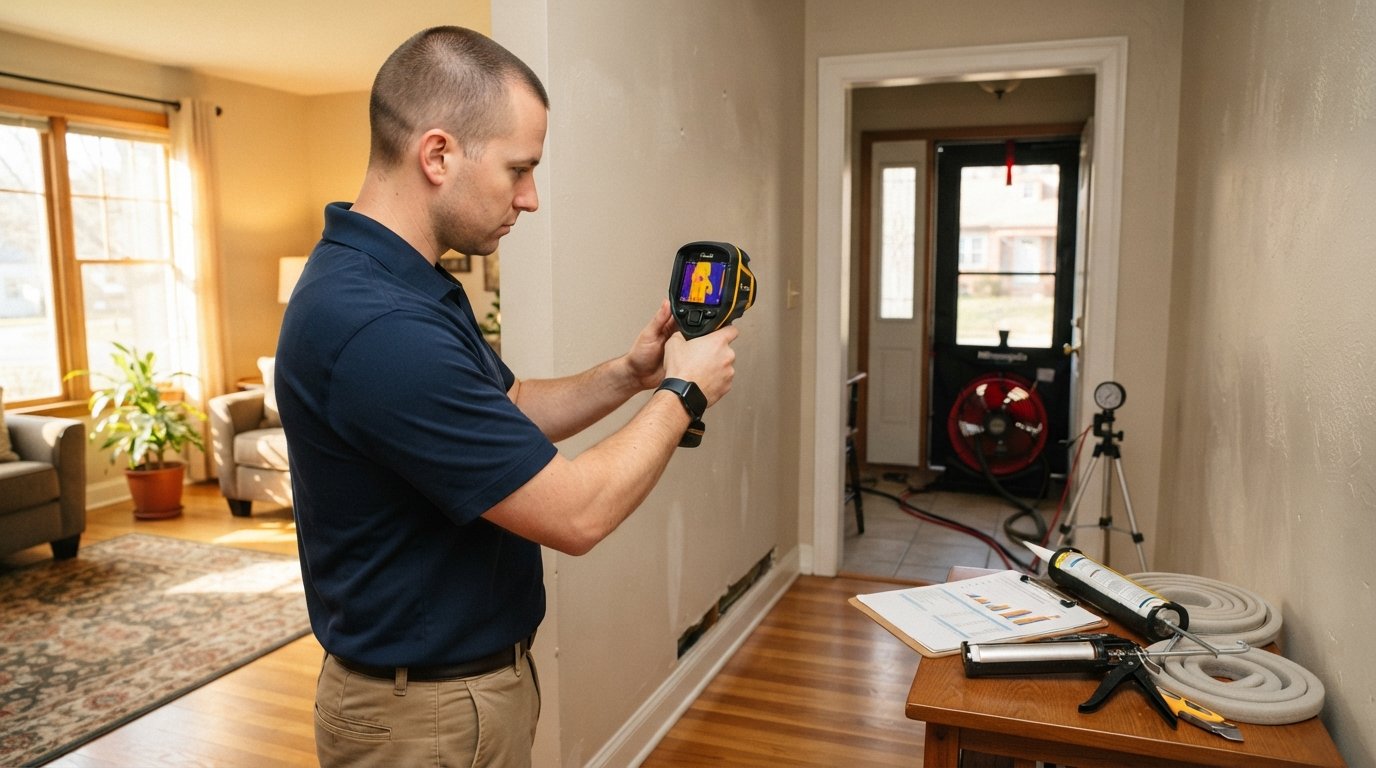
Most professional audits follow a similar structure. The auditor interviews you about comfort complaints (drafty rooms, uneven temperatures, high bills in specific seasons), reviews 12 months of utility statements, and then performs diagnostic testing. Common tools include a blower door to measure air infiltration, an infrared camera to find missing insulation and thermal bridges, combustion analyzers for gas appliances, and duct leakage testers. You should receive a written report with photos, measured data, and a prioritized list of recommended improvements with estimated costs and savings.
The depth of that report depends heavily on which tier of audit you buy. A basic walkthrough might take 60 to 90 minutes and rely mostly on visual inspection. A comprehensive audit with full diagnostic testing can take three to five hours and produce a detailed modeling report. Understanding the difference matters because the cheapest option is not always the best value, and the most expensive option is not automatically necessary for every home.
Home Energy Audit Cost Breakdown for 2026
Nationwide, a professional home energy audit typically costs between $200 and $800, with most homeowners paying around $400 to $500 for a comprehensive assessment. Pricing varies by region, home size, system complexity, and whether the auditor is a standalone energy consultant, an HVAC company, or a utility program contractor. In high-cost metros like Los Angeles or Chicago, expect the upper end of that range. In smaller markets, basic audits may start near $100 to $150.
It also helps to understand how audit pricing compares to the broader contractor estimate landscape. If you are planning envelope improvements alongside your audit, our guide to roof replacement contractor selection and estimate checklist explains how to read bids for related exterior work so you can bundle projects without overpaying.
Here is how the main audit tiers typically price out:
- Basic walkthrough audit: $100 to $250. Visual inspection, utility bill review, and a short list of low-cost recommendations. Often offered free or discounted by utilities.
- Comprehensive diagnostic audit: $300 to $800. Blower door testing, infrared scanning, duct leakage testing, combustion safety checks, and a modeled savings report.
- Specialty or large-home audit: $800 to $1,500+. Multi-zone systems, historic homes, or properties over 4,000 square feet with complex envelopes.
- Utility or utility-partnered audit: $0 to $100 out of pocket. Often subsidized, but the scope and contractor choice may be limited.
Several factors push the price up or down. Square footage is the biggest driver, followed by the number of HVAC systems, attic and crawlspace accessibility, and whether the auditor performs duct testing. Some auditors waive or discount the audit fee if you hire them for the recommended work, which sounds attractive but deserves scrutiny: an auditor who profits from the repairs has an incentive to inflate the scope. Whenever possible, separate the assessment from the installation, or at least get a second bid on any major recommendation.
Rebates and incentives can dramatically reduce your net cost. Many utility companies offer free or low-cost audits, and federal and state efficiency programs frequently cover part of the expense for income-qualified households. Some rebate programs even require a professional audit before you can claim incentives on insulation or HVAC upgrades, so the audit cost may effectively be reimbursed through the project. Ask your utility and your state energy office what is currently available in your ZIP code before you book anything.
What Drives Your Final Audit Price
Two homeowners in the same city can pay very different amounts for what sounds like the same audit. The gap usually comes down to scope and testing. A visual walkthrough with a clipboard is a fundamentally different service than a diagnostic audit with calibrated equipment and energy modeling software. Before comparing quotes, confirm exactly which tests are included, whether the report includes projected savings and payback periods, and whether the auditor is certified.
Certifications matter for both quality and eligibility. Look for credentials such as BPI (Building Performance Institute) Building Analyst, HERS Rater, or RESNET certification. These require training, testing, and continuing education. A certified auditor is more likely to follow consistent protocols, calibrate equipment properly, and produce a report you can hand to contractors and rebate programs. Certification also makes the auditor accountable to a professional standard if something goes wrong.
Report quality is another price differentiator that homeowners often overlook. A useful report should include measured air leakage numbers, infrared images with annotations, a prioritized improvement list, estimated costs, estimated annual savings, available rebates, and suggested sequencing. If a quote does not specify the deliverable, ask to see a sample report. That single request will tell you more about value than the headline price.
How to Select an Energy Audit Contractor
Choosing the right auditor is the difference between a useful roadmap and a sales pitch. Start by defining your goal: are you trying to lower bills, fix comfort problems, qualify for rebates, or plan a larger renovation? Your answer shapes which auditor type fits best. Utilities and program contractors are ideal for budget-conscious homeowners who want subsidized assessments. Independent energy consultants are best when you want an unbiased report with no installation upsell. HVAC and insulation companies can be convenient but carry an inherent conflict of interest.
Once you have a shortlist, verify credentials and experience before you invite anyone into your home:
- Confirm current certification (BPI, HERS, or RESNET) and ask for the certificate or registry number.
- Request proof of insurance, including general liability and workers compensation.
- Ask how many audits the auditor has performed in homes similar to yours (age, size, construction type).
- Request two or three references from the past year and actually call them.
- Ask whether the company also performs the recommended work, and how it separates auditing from sales.
During the audit itself, pay attention to process. A thorough auditor will move through the attic, crawlspace, and mechanical rooms, not just the living spaces. They should explain what they are testing and why, and they should welcome your questions. Red flags include refusing to share raw test data, pressuring you to sign a contract on the spot, quoting repair prices before the report is delivered, or promising specific savings percentages without measurements.
After you receive the report, get at least two or three bids on any recommended work above a few hundred dollars. This is where a platform like USremodel can save you time, since it connects homeowners with independent contractors across remodeling, HVAC, insulation, and repair categories, letting you compare quotes instead of chasing referrals one by one. Use the audit report as your scope document so every bidder prices the same work, and ask each contractor to flag anything in the report they disagree with. That comparison will quickly reveal who is padding the scope and who understands building science.
Audit versus Contractor Selection: Where Homeowners Go Wrong
The most common mistake is hiring the auditor and the installer as a package without competition. Bundling is convenient, but it removes the checks and balances that protect your wallet. Even if you ultimately hire the auditor's company, get outside bids first. A second opinion costs you nothing and often reveals that a recommended fix can be done for less, or that a cheaper fix should come first.
The second mistake is treating the audit as a one-time event rather than a plan. A good audit sequences improvements: air sealing before insulation, duct sealing before a new HVAC system, and envelope work before equipment upgrades. Doing them out of order wastes money. For example, replacing a furnace before sealing duct leaks means you are still paying to heat your attic. Follow the report's priority order unless a contractor gives you a specific, well-reasoned alternative.
Finally, do not ignore the paperwork. Keep the audit report, contractor bids, invoices, and rebate forms together. Many incentive programs require documentation that the work was recommended by a qualified audit and performed by a licensed contractor. Missing paperwork can cost you hundreds or thousands in forfeited rebates, and it makes resale or future upgrades harder to verify. A simple folder (digital or physical) with everything in one place protects your investment.
Turning Audit Findings into Savings
Once the report is in hand, focus on measures with the best combination of low cost and high impact. Air sealing and attic insulation consistently rank near the top for payback, often costing a few hundred to a few thousand dollars and cutting heating and cooling costs by 10 to 20 percent. Duct sealing and smart thermostats are also strong performers. Window replacement, by contrast, has a long payback period and is usually best reserved for failed units or a broader remodel.
Set a realistic budget and phase the work. Many homeowners start with a weekend of DIY air sealing (caulk, foam, weatherstripping), then hire a contractor for insulation and duct work, then revisit HVAC equipment in a later year. This staged approach spreads the cost, lets you measure actual savings after each step, and keeps you from overcommitting before you see results. Track your utility bills before and after each phase so you know what is working.
Above all, treat the audit as the beginning of a relationship with your home, not a one-time purchase. A well-chosen auditor gives you a factual baseline, and a well-chosen contractor executes the plan without cutting corners. Together, they turn an upfront expense of a few hundred dollars into years of lower bills, better comfort, and a more valuable property. Start with a certified auditor, compare at least three bids on the recommended work, and let measured data, not sales pressure, guide every decision.