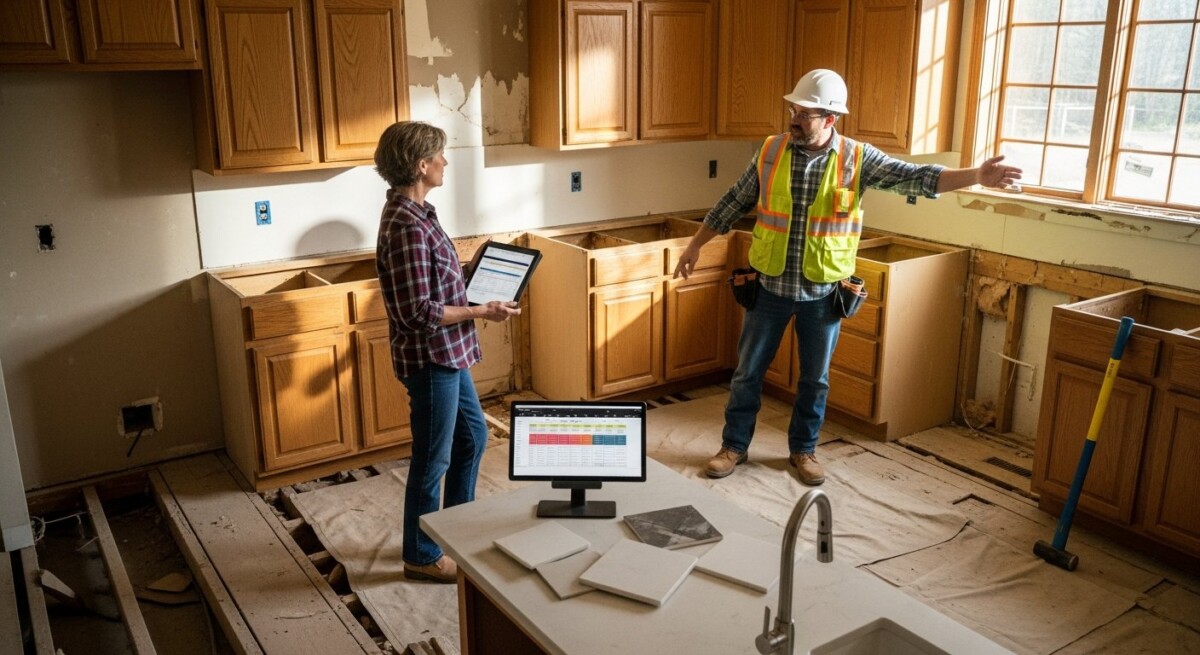
How to Break Down Renovation Costs: A Homeowner Guide

You finally have the budget and the vision. The kitchen needs new countertops, or that spare bathroom has been stuck in the 1980s for far too long. But the moment you start collecting rough numbers from friends or online forums, a cold wave of uncertainty hits. The estimates vary wildly, and you have no idea which number is realistic. This is the exact moment when learning how to break down renovation costs becomes essential,not just to save money, but to keep the entire project from derailing before it even starts.
Understanding how to break down renovation costs
Breaking down renovation costs simply means separating a lump-sum estimate into its individual parts: materials, labor, permits, cleanup, and unexpected contingencies. Instead of seeing one scary total, you see where every dollar is going. This process removes the mystery and gives you control over your spending.
Cost breakdowns matter for every home, but they are especially critical for older homes built before 1980. These properties often hide outdated wiring, corroded plumbing, or asbestos-laden materials that can quietly blow a budget if not accounted for upfront. Newer homes are not immune, either,unexpected structural issues or supply-chain price jumps can catch anyone off guard.
Why this matters for your home
When you ignore a detailed cost breakdown, you risk approving a project that will run out of money halfway through. That leads to unfinished rooms, damaged drywall, and months of living in a construction zone. Worse, it can force you to take out high-interest loans or use credit cards to finish the work.
Beyond the financial strain, skipping a proper breakdown can create safety hazards. A contractor who underprices labor may cut corners on electrical work or load-bearing walls. Over time, this puts your family and property at risk. Understanding the full financial picture helps you choose a contractor who will do the job right the first time.
If you notice signs of this issue in your home, it may help to speak with a qualified contractor. Request a free quote or call to explore your repair or remodeling options.
Common problems homeowners experience
Most homeowners stumble into cost confusion when they receive a single-line estimate that says “kitchen remodel,$25,000.” There is no way to tell if that covers new cabinets, countertops, labor, plumbing rerouting, or the dumpster rental. This lack of transparency often leads to surprise charges later.
Another frequent issue is forgetting about soft costs like design fees, permit applications, and temporary housing if the kitchen or bathroom is unusable for weeks. These items can add 10 to 20 percent to the total, but they rarely appear in initial quotes.
- Single-line estimates with no itemized details
- Unexpected permit or inspection fees
- Material price increases between quote and purchase
- Labor costs that balloon due to project delays
- Hidden structural problems discovered after demolition
- Lack of contingency funds for repairs
How professionals solve the problem
Experienced contractors solve the breakdown puzzle by providing a detailed scope of work before any materials are ordered. They walk through your home, take measurements, and identify potential pitfalls like knob-and-tube wiring or water damage. Then they produce a line-item estimate that shows exactly what each phase of the project costs.
A professional approach typically follows these steps:
- On-site inspection , The contractor evaluates the space, checks for hidden damage, and confirms measurements.
- Material selection , You choose finishes, fixtures, and materials, which are priced and locked in for a set period.
- Labor estimate , The contractor calculates hours needed for each trade,carpentry, plumbing, electrical, tiling.
- Permits and fees , All required permits and inspection costs are added to the breakdown.
- Contingency reserve , A 10,20 percent buffer is set aside for surprises.
Professional work is safer and more reliable than DIY because contractors carry insurance, follow building codes, and have relationships with suppliers. They also know how to sequence trades so that drywall goes up before painting, and flooring is installed after cabinets.
A professional inspection can reveal hidden issues before they become expensive repairs. Compare contractor quotes here or call to discuss your project.
Warning signs you should not ignore
Your home often gives subtle hints that a renovation might be more expensive than expected. Learning to spot these signs early can save you thousands and prevent a stalled project. Trust your gut,if something feels off, it probably needs a professional look.
- Musty smells or visible mold near walls or under sinks
- Flickering lights or outlets that feel warm to the touch
- Uneven floors or doors that stick in their frames
- Water stains on ceilings or walls
- Cracks in the foundation or exterior brickwork
- Old plumbing that makes banging or whistling noises
Addressing these issues early, before demolition begins, allows you to include the cost in your initial budget rather than scrambling for emergency funds later.
What affects the cost of repairs or installation
Several factors can push a renovation budget up or down. The size of the room is a major driver,a full kitchen remodel costs more than a powder room refresh. But even within the same room, material choices make a huge difference. Quartz countertops are more expensive than laminate, and custom cabinetry costs far more than semi-custom.
Labor rates vary by region and trade. In major metropolitan areas, skilled tradespeople charge more due to higher living costs. Accessibility also matters: a second-story bathroom is harder to work on than a ground-floor powder room, especially if the contractor has to haul materials up stairs with no elevator.
Costs can vary depending on the condition of your home. The best way to know the price is to get a personalized estimate. Request free quotes from contractors or call today.
How to choose the right contractor
Selecting a contractor is one of the most important decisions you will make during a renovation. The right professional will provide a clear cost breakdown, communicate regularly, and deliver quality work on schedule. The wrong one can turn your dream project into a nightmare.
- Verify licenses and insurance , Your state should have a licensing board where you can confirm the contractor is in good standing. Liability and workers’ compensation insurance protect you if accidents happen.
- Read recent reviews , Look for patterns in customer feedback, not just star ratings. Pay attention to comments about communication, timeliness, and budget adherence.
- Ask for detailed estimates , A trustworthy contractor will provide a line-item breakdown, not a single number. If they hesitate, move on.
- Compare at least three quotes , This gives you a realistic sense of market pricing and helps you spot outliers that are too low or too high.
- Confirm experience with similar projects , A contractor who specializes in bathroom remodels may not be the best fit for a foundation repair or a whole-house rewire.
Long-term benefits of professional work
Investing in professional renovation work pays off for years. A well-executed remodel improves your home’s safety by bringing electrical and plumbing systems up to modern code. It also increases energy efficiency,new windows, insulation, and appliances reduce utility bills month after month.
Professionally finished projects also boost resale value. Kitchens and bathrooms are the top two rooms buyers evaluate, and a quality remodel can return 60,80 percent of its cost at sale. Beyond money, you gain peace of mind knowing the work was done correctly, with proper permits and inspections.
Finally, professional work reduces future maintenance. A properly installed tile shower will not leak behind the walls. A correctly flashed window will not rot your siding. These long-term savings make the upfront investment worthwhile.
What is the best way to start breaking down renovation costs?
Start by listing every room or area you want to renovate. Then research average costs for that type of project in your area. Finally, request itemized quotes from at least three contractors. This gives you a data-driven foundation for your budget.
How much should I set aside for unexpected costs?
Most experts recommend a contingency fund of 10 to 20 percent of the total project cost. For a $30,000 kitchen remodel, that means setting aside $3,000 to $6,000 for surprises like rotten subfloors or outdated wiring.
Can I break down costs myself without a contractor?
Yes, but it requires significant research. You need to price materials locally, estimate labor hours for each trade, and understand permit fees. Most homeowners find it easier and more accurate to rely on a contractor’s professional breakdown.
Why do renovation quotes vary so much between contractors?
Quotes vary because contractors use different labor rates, material suppliers, and profit margins. Some include cleanup and permits in the base price; others add them as line items. Comparing itemized quotes helps you see exactly what you are paying for.
Is it cheaper to buy materials myself and hire labor only?
Sometimes, but it carries risks. If you buy the wrong material or not enough, you own the mistake. Contractors often get trade discounts that offset their markup, so the total cost may be similar or lower when they supply everything.
How do I know if a contractor’s breakdown is fair?
Compare it against two or three other quotes. Look for similar line items and ask about any that are missing. Trust your instincts,if a contractor refuses to provide a written breakdown, consider that a red flag.
What should I do if the final cost exceeds the breakdown?
Review the change order documentation. If the extra cost came from changes you requested, it is your responsibility. If it came from work the contractor missed in the original estimate, you may have grounds to negotiate. Always get change orders in writing before work proceeds.
Does a cost breakdown include furniture and decor?
Usually not. A standard renovation breakdown covers construction materials, labor, permits, and cleanup. Furniture, window treatments, and decorative items are typically separate expenses that homeowners purchase after the renovation is complete.
Understanding how to break down renovation costs is the single most powerful tool you have for protecting your budget and your peace of mind. Start your project on solid ground by requesting detailed quotes from multiple contractors. In our guide on home renovation cost breakdown, we explain how to evaluate each line item with confidence. For a deeper dive into the process, check out our how to break down renovation costs resource. Compare quotes, ask questions, and never sign a contract until you see exactly where your money is going.