
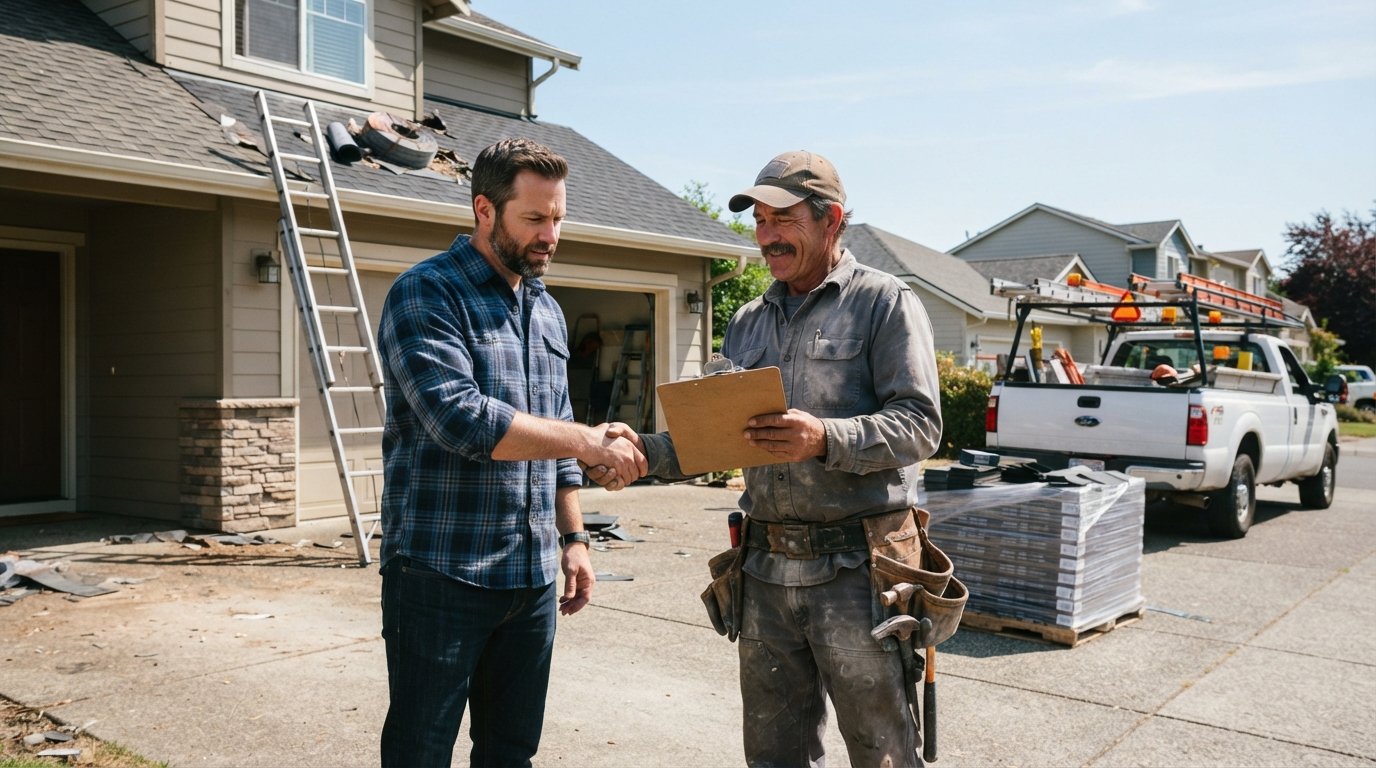
Contractor Insurance Requirements for Homeowners
Learn the contractor insurance requirements for homeowners to protect your finances and property. Verify coverage and avoid costly liability.

By Elena John
Learn more about General Contracting for guides, costs, and what to expect.
Compare General Contracting Pros Near You

Enter your ZIP code to compare top-rated local professionals and request free quotes.
You have found the perfect contractor for your kitchen remodel or roof repair. The price is fair, the timeline is clear, and the crew seems professional. But before you sign anything, there is a critical question you must ask: does the contractor carry proper insurance? The contractor insurance requirements for homeowners are not just a formality. They are your financial shield against lawsuits, property damage, and workplace injuries. Without proof of adequate coverage, you could be held liable for accidents on your property, even if you never hired the injured worker directly. This guide explains exactly what insurance you need to demand, how to verify it, and why skipping this step can lead to devastating costs.
Why Homeowners Must Verify Contractor Insurance
Many homeowners assume that a contractor's insurance is their own concern. In reality, your financial safety depends entirely on the contractor's coverage. If an uninsured worker falls off your roof, the medical bills may become your responsibility. If a contractor damages your neighbor's property, you could be sued for the repair costs. The contractor insurance requirements for homeowners exist to transfer these risks from you to the contractor's insurance company. Verifying coverage before work begins is the only way to guarantee that protection.
Beyond personal liability, proper insurance also signals a legitimate business. Contractors who carry comprehensive coverage typically follow industry standards, maintain proper licensing, and are more likely to deliver quality work. A contractor who cannot provide proof of insurance is often cutting corners elsewhere, which could mean subpar materials, rushed labor, or even abandonment of your project. By enforcing insurance requirements, you filter out high-risk operators and protect your investment from amateur mistakes.
Consider a scenario where a contractor's employee damages your home's foundation while excavating for a new patio. Without liability insurance, you would need to sue the contractor personally to recover repair costs, a process that can take years and yield nothing if the business has no assets. With the right policy, you simply file a claim with their insurer and receive compensation promptly. This is why insurance verification should be a non-negotiable step in your hiring process.
The Three Essential Insurance Policies
When you request proof of insurance, you should look for three specific types of coverage. Each protects you in different ways, and all are part of the basic contractor insurance requirements for homeowners. Do not settle for a contractor who only has one policy, as that leaves significant gaps in your protection.
General Liability Insurance is the most important policy for homeowners. It covers third-party bodily injuries and property damage caused by the contractor's operations. For example, if a worker accidentally breaks a window or a visitor trips over equipment, this policy pays for the damages. It does not cover the contractor's own mistakes in workmanship, but it does protect you from being sued by third parties. Most experts recommend a minimum of $500,000 in coverage, though $1 million or more is common for larger projects.
Workers' Compensation Insurance is equally critical. This policy covers medical expenses, lost wages, and rehabilitation costs for workers who are injured on your property. In most states, any business with employees must carry workers' comp. If a contractor does not have it, and a worker gets hurt on your job, you may be responsible for those costs under your homeowner's insurance or even out of pocket. You should never allow a contractor to start work without workers' comp, regardless of how small the crew is.
Builder's Risk Insurance is often overlooked but vital for larger projects. This policy covers the structure and materials during construction. If a fire, storm, or vandalism damages your home while it is under renovation, builder's risk pays for the repair. Your standard homeowner's policy may not cover construction-related losses, and the contractor's liability policy only covers third-party claims, not damage to your property itself. For any project that involves structural changes or high-value materials, insist on builder's risk coverage.
Additional Coverage for Specialized Work
Depending on your project, you may need to ask for additional policies. For example, contractors who handle asbestos or lead paint removal must have environmental liability coverage. Electricians and plumbers should carry professional liability or errors and omissions insurance, which protects against claims of negligent advice or faulty work. If the contractor uses subcontractors, ask for proof that those subcontractors also carry liability and workers' comp insurance. Your best defense is a contract clause that requires all subcontractors to provide certificates of insurance before they begin.
You should also consider whether the contractor has commercial auto insurance for any vehicles used on your property. A worker driving a personal truck to deliver materials may not be covered under a commercial policy. If that worker causes an accident on your driveway, you could be held liable. Request a certificate of insurance that lists all vehicles and confirms coverage for business use.
How to Verify Insurance Documentation
Asking to see a certificate of insurance is not enough. You need to verify that the policy is current, sufficient, and actually covers your project. Follow these steps to ensure the documentation is legitimate:
- Request a Certificate of Insurance (COI) directly from the contractor. This one-page document lists the insurance company, policy number, coverage limits, and effective dates. It should name the contractor's business exactly as it appears on your contract.
- Check the policy dates. The certificate must show that coverage is active on every day of your project. If the policy expires mid-project, the contractor must provide a renewal certificate before the old one lapses.
- Contact the insurance company. Call the agent or use the carrier's website to confirm that the policy is valid and has not been canceled. Insurance certificates can be forged, so a quick phone call is a wise precaution.
- Ask to be named as an additional insured. For large projects, you can request that the contractor's policy include you as an additional insured. This gives you direct rights to claim under their policy if something goes wrong. It is a standard practice for commercial work and can be added to many policies at no extra cost.
- Verify workers' comp coverage. The COI should list workers' compensation separately, including the state where the policy applies. You can also check your state's workers' comp board website to confirm the policy number is active.
Keep all insurance documents in your project file, along with the contract and payment schedule. If a dispute arises, these records prove that you fulfilled your due diligence and can help you pursue an insurance claim if necessary.
What Happens If the Contractor Has No Insurance?
If a contractor cannot provide proof of any of these policies, do not hire them. The savings you might gain upfront are far outweighed by the potential liability. Even a minor incident, such as a worker's minor injury, can result in medical bills that exceed what you saved on the bid. In the worst case, a serious accident could lead to a lawsuit that threatens your home equity, savings, and future earnings.
Some contractors may try to classify themselves as a sole proprietor with no employees, arguing that workers' comp is unnecessary. This is a common misconception. In many states, even sole proprietors are required to carry workers' comp if they have any employees, including part-time or temporary workers. Additionally, subcontractors working under a general contractor may be considered employees for insurance purposes, depending on the state's laws. Always consult your local regulations to understand the exact requirements.
If you are hiring a handyman for a small repair, you might be tempted to skip the insurance check. However, even a simple task like fixing a gutter can result in a fall from a ladder. The contractor insurance requirements for homeowners apply to projects of all sizes. A one-time repair is just as risky as a full renovation, and you should never waive insurance verification for convenience.
The Cost of Skipping Insurance Verification
Consider the real cost of hiring an uninsured contractor. Imagine a roofer without workers' comp who falls off your roof and breaks his spine. His medical bills could easily exceed $100,000. Without workers' comp, he may sue you for negligence, arguing that you failed to provide a safe work environment. Your homeowner's insurance might cover some of this, but many policies have exclusions for business activities on your property. You could end up paying the difference out of pocket, or worse, losing your home if the judgment exceeds your coverage.
Property damage is another silent risk. A contractor who accidentally starts a fire that destroys your home might not have enough liability coverage to pay for reconstruction. If they are uninsured, you would need to sue an individual who may have no assets to seize. Even if you win the lawsuit, collecting the judgment is often impossible. Builder's risk insurance would have covered the loss, but without it, you are left to rebuild with your own resources.
There is also the issue of incomplete or defective work. If a contractor disappears after taking your deposit, liability insurance does not protect you. That is where a performance bond or a contractor license bond comes into play. While not technically insurance, these bonds provide a fund to compensate homeowners if the contractor fails to complete the project. For large projects, consider requiring a performance bond in addition to insurance.
How to Include Insurance Requirements in Your Contract
Your contract should explicitly state the contractor insurance requirements for homeowners. Do not rely on verbal promises. Include a clause that requires the contractor to maintain general liability, workers' compensation, and builder's risk insurance for the duration of the project. Specify the minimum coverage limits, such as $1 million for general liability and $500,000 for workers' comp. Also, require the contractor to provide certificates of insurance before work begins and whenever policies are renewed.
Add a provision that allows you to stop work if the contractor fails to maintain coverage. This gives you leverage if the policy lapses mid-project. You should also require the contractor to notify you immediately if any policy is canceled or not renewed. This ensures that you are never left unprotected during the course of construction.
When you receive the contractor's bid, ask them to itemize the insurance costs. Some contractors roll insurance into their overhead, while others list it as a separate line item. This transparency helps you understand what you are paying for and confirms that the contractor has invested in proper coverage. If a bid is significantly lower than others, ask why. It may be because they have no insurance, which should be a red flag.
Navigating Insurance for Different Project Types
The insurance requirements can vary by project type. For a simple painting job, general liability and workers' comp may suffice. For a major home addition, you will want builder's risk and possibly a performance bond. Roofing projects are high-risk for falls, so workers' comp is non-negotiable. Plumbing and electrical work often require professional liability coverage to protect against claims of faulty work that causes water damage or fire. Always tailor your requirements to the specific risks of your project.
If you are hiring a general contractor for a large renovation, they should carry umbrella coverage that extends beyond their primary policies. This provides an extra layer of protection that can cover claims that exceed the underlying limits. For example, if a general liability policy has a $1 million limit and a lawsuit awards $1.5 million, umbrella coverage would pay the remaining $500,000. This is especially important for projects that involve multiple subcontractors, as the potential for claims increases.
For projects that require permits, your local building department will likely require proof of insurance before issuing a permit. This is a helpful backstop, as it ensures that the contractor has at least a basic level of coverage. However, do not rely solely on the permit process. Verify the insurance yourself, as permits are often issued based on the contractor's word, not a thorough review of policies.
When you use a platform like FreeQuotes.Contractors to find contractors, you can ask for insurance information as part of the vetting process. Many professional contractors are happy to provide proof of insurance because it demonstrates their credibility. If a contractor hesitates or makes excuses, that is a clear sign that they may not have the required coverage. You can also consult the Repairmen network for vetted professionals who meet strict insurance standards.
Common Insurance Myths Homeowners Believe
One myth is that your homeowner's insurance covers any accident on your property. While your policy may provide some coverage, it typically excludes incidents related to business activities. A contractor working on your home is considered a business operation, and many homeowner's policies have broad exclusions for such work. You cannot assume that your insurance will protect you if the contractor's coverage is insufficient.
Another myth is that a contractor's license guarantees insurance. Licensing requirements vary by state and trade, and some licenses are issued without any proof of insurance. A license shows that the contractor has passed an exam and paid fees, but it does not confirm that they carry liability or workers' comp. Always ask for the certificate of insurance separately, even if the contractor is licensed.
A third myth is that you can rely on the contractor's word. Verbal assurances are worthless if a claim occurs. The only proof that matters is a valid certificate of insurance from a reputable carrier. You also need to verify that the policy is active, not just that a certificate was issued in the past. Insurance policies can be canceled for non-payment, and you need to confirm coverage on the day work begins.
Where to Find More Help
If you are unsure about the insurance requirements in your state, contact your state's department of insurance. They can explain the minimum coverage limits and provide guidance on how to verify policies. You can also consult with an independent insurance agent who specializes in contractor coverage. They can review the contractor's certificate and help you understand any gaps in coverage.
For homeowners who are in the process of hiring a contractor, using a service that pre-screens professionals can save time and reduce risk. In our guide on roof replacement costs, we emphasize the importance of hiring insured contractors to protect your investment. When you request quotes through a reputable platform, you can ask for insurance documentation as part of the process, ensuring that you only receive bids from qualified, insured professionals.
Remember that you are the one hiring the contractor, so you have the right to demand proof of insurance. Do not let a contractor pressure you into waiving this requirement, no matter how desperate you are to start the project. The few minutes it takes to verify insurance can save you from years of financial distress. Your home is likely your largest asset, so it deserves the protection that proper insurance provides.
Ultimately, the contractor insurance requirements for homeowners are not a bureaucratic hurdle. They are your best defense against the unpredictable nature of construction, where accidents and mistakes are always possible. By enforcing these requirements, you ensure that you are not the one left holding the bag when something goes wrong. Make insurance verification a mandatory step in your hiring process, and you will have peace of mind knowing that your project is protected from start to finish.