
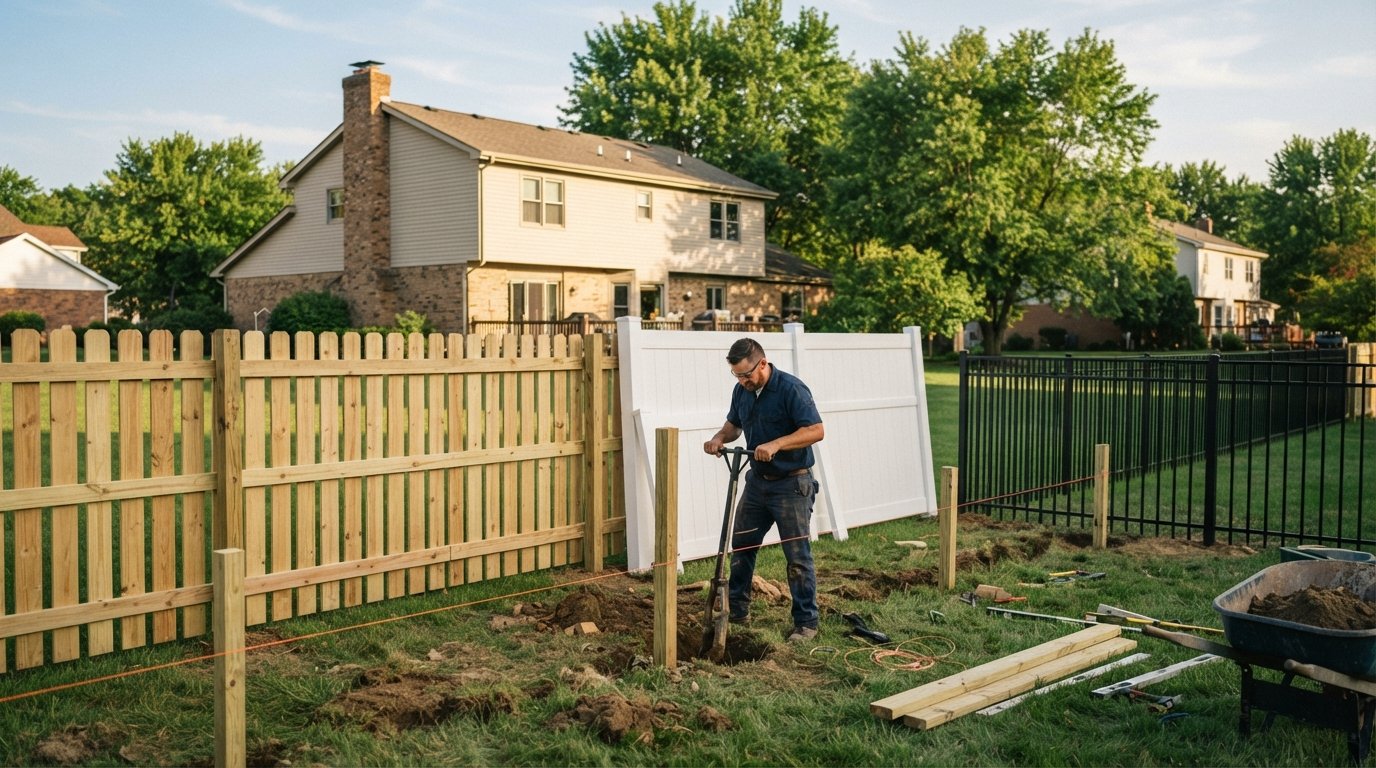
Fence Installation Cost: Wood vs Vinyl vs Metal in 2026
Compare fence installation cost wood vinyl metal side by side, including lifespan and maintenance. Call (833)-211-1668 for free quotes from local pros.

By Olivia Owens
Learn more about Fence and Gate Installation for guides, costs, and what to expect.
Compare Fence and Gate Installation Pros Near You

Enter your ZIP code to compare top-rated local professionals and request free quotes.
Choosing a fence for your property involves more than picking a style you like. The material you select affects your upfront budget, the amount of maintenance you will face in the coming years, and how long the fence will actually last. For homeowners comparing options, the fence installation cost wood vinyl metal comparison often comes down to three questions: How much will it cost per linear foot, how long will it last, and what will it take to keep it looking good? This guide breaks down those differences so you can request accurate quotes and make a confident decision.
Cost per Linear Foot: Wood, Vinyl, and Metal Compared
Fence installation cost is typically quoted per linear foot, which makes it easier to compare materials. However, the per-foot price you see advertised often reflects materials only or a basic installation on flat, clear ground. Real projects include posts, gates, removal of old fencing, and site-specific labor. Understanding the typical ranges for each material helps you spot unusually high or low bids.
Wood fencing remains the most common choice for privacy and appearance, and it generally falls in the middle of the price range. Vinyl has a higher material cost but lower long-term maintenance, while metal fencing varies widely depending on whether you choose aluminum, steel, or wrought iron. The table below summarizes typical installed costs per linear foot for common residential fences.
- Wood: $15 to $30 per linear foot installed, depending on wood species, height, and style.
- Vinyl: $20 to $40 per linear foot installed, with premium styles at the higher end.
- Metal: $25 to $60 per linear foot installed, with wrought iron and ornamental steel at the top of the range.
These ranges assume a standard height of four to six feet and relatively flat terrain. Sloped yards, rocky soil, and long runs requiring many gates can push costs higher. It is also worth noting that fence installation costs vary by region due to labor rates and material availability. For a broader look at how installation labor affects project budgets, you can explore our guide on average flooring installation cost, which explains how labor and material splits work in similar home improvement projects.
Lifespan and Maintenance Expectations
The cheapest fence upfront is not always the most economical over time. Wood requires periodic staining or sealing, and untreated wood can rot or warp within a decade. Vinyl is designed to resist moisture, rot, and insects, but it can crack in extreme cold or fade over many years. Metal fences, particularly aluminum and steel, are durable and low maintenance, but they can rust if the finish is damaged and may require touch-up painting.
When comparing lifespan, consider the climate in your area. In humid regions, wood demands more frequent sealing, while vinyl performs well but may need occasional cleaning. In coastal areas, salt air can accelerate corrosion on metal fences unless they are properly coated. The following list summarizes typical maintenance tasks by material.
- Wood: Seal or stain every two to three years; inspect for rot, insect damage, and loose boards.
- Vinyl: Wash with soap and water annually; check for cracks or loose panels after severe weather.
- Metal: Touch up scratches and rust spots promptly; clean with mild detergent to preserve the finish.
Expected lifespan also differs. Wood fences typically last 10 to 15 years with proper maintenance. Vinyl fences often last 20 to 30 years, and metal fences can last 30 years or more. These are general estimates, and actual lifespan depends on installation quality, climate, and care.
Property Line, Setback, and HOA Considerations
Before you request quotes, confirm where your property line is and whether your planned fence complies with local setback rules. Many municipalities require fences to be set back a certain distance from the property line, and some limit fence height, especially near the front yard. Building a fence without checking these rules can lead to fines or forced removal.
Homeowners associations (HOAs) often have additional requirements. They may restrict fence materials, colors, heights, and placement. Vinyl and metal fences are sometimes preferred by HOAs for their uniform appearance, while wood may face restrictions on style or finish. Always obtain written approval from your HOA before signing a contract. A professional fence installer can help you navigate these requirements, but the responsibility for compliance ultimately rests with you.
If you are planning a larger outdoor project, perhaps combining a fence with landscaping or a deck, the same permitting mindset applies. For projects that involve flooring or other interior upgrades, our article on average flooring installation cost offers useful parallels on how to plan and budget for labor and materials.
What to Include in Fence Quote Requests for Accurate Bids
To get accurate fence installation quotes, you need to provide contractors with clear, detailed information about your project. Vague requests lead to vague estimates, which often result in change orders and unexpected costs. A thorough quote request should include the following elements.
- Linear footage and layout: Measure the total length of the fence line and note any corners, gates, or obstacles.
- Material and style preferences: Specify wood, vinyl, or metal, along with height, color, and design details.
- Site conditions: Mention slopes, rocky soil, tree roots, and the need to remove an existing fence.
- Permits and HOA requirements: State whether permits are required and whether HOA approval has been obtained.
- Timeline and budget: Share your desired start date and a realistic budget range to filter out mismatched bids.
Including these details helps contractors prepare accurate estimates and reduces the likelihood of surprises. It also makes it easier to compare bids side by side, since each quote will be based on the same scope of work. When you are ready to request quotes, consider using a platform that connects you with pre-vetted local contractors. Contractor.Homes is a digital marketplace that helps homeowners find qualified professionals for projects like fence installation, roofing, and remodeling, and it offers a free quote request system to simplify the process.
Making the Final Decision: Weighing Cost, Durability, and Appearance
There is no single best fence material for every homeowner. Wood offers natural beauty and privacy at a moderate cost, but it requires regular maintenance. Vinyl provides excellent durability and low upkeep, with a higher upfront price. Metal delivers strength and longevity, often with a premium look, but it can be the most expensive option and may not suit every architectural style.
Consider how long you plan to stay in your home. If you are selling soon, a wood fence may offer the best cost recovery, while a vinyl or metal fence can be a selling point for buyers seeking low maintenance. Also think about your willingness to perform upkeep. If you prefer a fence that requires minimal attention, vinyl or metal may be worth the extra upfront cost.
Finally, obtain at least three quotes from licensed and insured contractors. Compare not only the total price but also the materials specified, warranty terms, and timeline. A professional installer can help you understand the trade-offs and choose a fence that meets your needs and budget. With careful planning and clear communication, you can install a fence that enhances your property for years to come.