
Yard Regrading for Drainage: 2026 Cost Guide
Regrading a yard for drainage costs $1,500 to $6,000 on average. Call (833)-211-1668 for free quotes from local drainage contractors.

By Maya Parker
Learn more about Land Leveling and Grading for guides, costs, and what to expect.
Compare Land Leveling and Grading Pros Near You

Enter your ZIP code to compare top-rated local professionals and request free quotes.
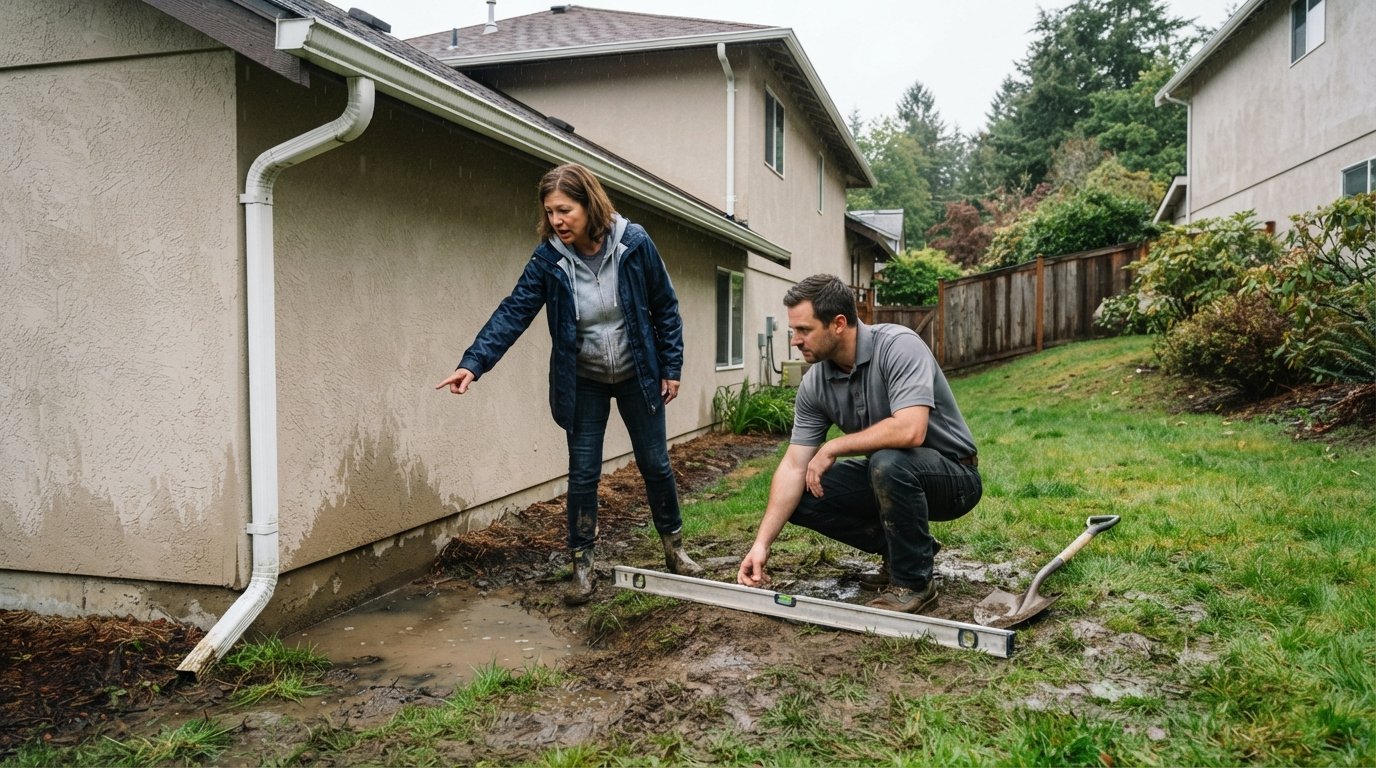
Water pooling against your foundation after every rainstorm is more than a nuisance. It is a warning sign that your yard's slope is directing water toward your home instead of away from it, and the fix (regrading) comes with a price tag that varies widely based on your property's specific conditions. Homeowners frequently ask how much does it cost to regrade a yard for drainage, and the honest answer is that it depends on factors like square footage, soil type, accessibility, and whether you need supplementary drainage solutions. Most projects fall between $1,500 and $6,000, but extreme cases can exceed $10,000. This guide breaks down the real numbers, the variables that move them, and how to hire the right professional for the job.
Signs Your Yard Needs Regrading for Drainage
Before you start collecting estimates, confirm that regrading is actually the right solution. Not every wet yard needs a bulldozer; sometimes a clogged gutter or a broken downspout is the real culprit. However, certain symptoms strongly suggest that the soil grade itself is the problem. The most obvious sign is standing water that lingers for more than 24 hours after rain, especially within 10 feet of your foundation. Another red flag is a visible slope toward the house, which you can often spot by looking at the soil line against the foundation: it should drop at least 6 inches over the first 10 feet. If the ground looks flat or slopes inward, regrading is likely necessary.
Other indicators include dampness or efflorescence (white powder) on basement or crawl space walls, cracks in the foundation, and recurring mold or mildew in low-lying areas. You might also notice that your downspouts discharge water directly onto a flat or inward-sloping surface, causing it to pool. In some cases, the problem is not the overall slope but a depression or swale that has settled over time. A professional can assess whether a simple spot regrade or a full-yard recontour is needed.
How Much Does It Cost to Regrade a Yard for Drainage?
The national average for regrading a yard for drainage ranges from $1,500 to $6,000, with most homeowners spending around $3,000. This price typically includes labor, equipment, and basic soil amendments. However, the cost can climb to $10,000 or more for larger properties, steep slopes, or sites with limited access. To understand what you might pay, it helps to break the project into its primary cost components: excavation and grading labor, soil and fill material, drainage components (such as French drains or catch basins), and permits or engineering fees if required.
Labor usually accounts for 40 to 60 percent of the total, depending on your region and the complexity of the work. Excavation in tight spaces or on steep inclines requires more time and specialized equipment, driving up the price. Soil and fill material costs vary by type and quantity; you may need to import topsoil or amend existing soil to improve drainage. If the project includes a French drain or surface drainage system, add $1,000 to $4,000. Permits are often required for grading that alters water flow, and some municipalities require an engineered plan, which can add $500 to $2,000.
Average Cost Breakdown by Yard Size
Yard size is one of the most straightforward cost drivers. A small urban lot (under 2,000 square feet) might cost $1,200 to $2,500 to regrade, while a typical suburban yard (5,000 to 8,000 square feet) runs $2,500 to $5,000. Large properties over an acre can easily exceed $8,000. Keep in mind that these figures assume moderate slope and easy access. If your yard is terraced, heavily landscaped, or accessible only through a narrow gate, expect a 20 to 50 percent premium.
Key Cost Factors: Slope, Soil, and Access
Three variables have an outsized impact on the final price: slope, soil, and access. Slope matters because creating a proper drainage gradient requires moving more earth. A yard that already has a slight slope away from the house may need only minor adjustments, while a flat or inward-sloping yard requires significant earthmoving. Steep slopes (greater than 10 percent) often need retaining walls or terracing to stabilize the soil, which can add thousands to the project. Soil type also plays a role: clay soils drain poorly and may require amendment with sand or organic matter, while sandy soils drain quickly but may need stabilization to prevent erosion. Rocky soil can slow excavation and increase labor costs.
Access is the third major factor. If a contractor can drive equipment directly into the yard, costs stay lower. But if the yard is enclosed by a fence, accessible only through a narrow side gate, or located behind a building, laborers may need to move soil by wheelbarrow or use smaller, less efficient equipment. This can double or triple the labor portion of the bill. Similarly, mature trees, irrigation systems, and hardscaping (patios, walkways) must be protected or temporarily removed and replaced, adding to the expense.
To summarize, the following factors will push your project toward the higher end of the cost range:
- Yards larger than 8,000 square feet or with multiple drainage issues
- Steep slopes requiring retaining walls or terracing
- Heavy clay soil that needs amendment or replacement
- Limited access for machinery (narrow gates, steep driveways, fenced yards)
- Existing landscaping, irrigation, or hardscaping that must be removed and reinstalled
Conversely, a straightforward regrade on a small, accessible lot with sandy loam soil will be at the low end. When you request quotes, ask contractors to itemize these factors so you can compare apples to apples. For a broader look at how material costs fit into renovation budgets, see our home renovation material cost guide.
Combining Regrading with Gutters, French Drains, and Foundation Repair
Regrading alone may not solve all drainage problems. In many cases, it works best as part of a comprehensive water management plan that includes gutters, downspouts, French drains, and sometimes foundation repair. If your gutters are clogged or downspouts discharge too close to the foundation, even a perfectly graded yard can suffer from water intrusion. Extending downspouts at least 6 to 10 feet away from the house is a low-cost supplement that enhances the effectiveness of regrading. Similarly, a French drain (a gravel-filled trench with a perforated pipe) can intercept subsurface water before it reaches your foundation, especially on slopes or in yards with high water tables.
The cost of these add-ons varies: gutter cleaning and downspout extensions might cost $200 to $600, while a French drain system runs $1,000 to $4,000 depending on length and depth. If your foundation has already suffered water damage, you may need to address cracks or bowing walls before or after regrading. Foundation repair can range from $2,000 for crack injection to $15,000 or more for piering. It is often wise to consult a structural engineer if you see signs of foundation movement. A drainage contractor can help you prioritize which improvements will deliver the most benefit for your budget.
When planning your project, consider this sequence: first, fix gutters and downspouts to redirect roof water; second, regrade the yard to create a positive slope away from the foundation; third, install French drains or surface drains in problem areas; and finally, repair any foundation damage. This order ensures that each investment supports the others. For homeowners in areas with heavy clay soil, adding soil amendments or a French drain is often essential to prevent regrading from simply moving the problem elsewhere.
How to Vet Landscapers and Drainage Contractors
Hiring the right contractor is critical because poor grading can make drainage worse or even cause structural damage. Start by looking for licensed and insured professionals who specialize in drainage or landscape grading. Not all landscapers have expertise in water management, so ask specifically about their experience with drainage solutions and whether they employ a certified drainage technician. Check for licenses with your state's contractor licensing board and verify insurance coverage (general liability and workers' compensation).
Request at least three written estimates that detail the scope of work, materials, labor, and timeline. Be wary of any bid that seems unusually low; it may omit essential steps like soil compaction or proper slope calculation. Ask each contractor to explain how they will determine the correct slope (typically a 2 to 5 percent grade away from the foundation) and how they will protect existing landscaping. Also inquire about warranties: a reputable contractor should offer a workmanship warranty of at least one year. Finally, check online reviews and ask for references from recent projects similar to yours.
To streamline the process, consider using a platform that connects you with pre-vetted local contractors. Contractor.Homes is a digital marketplace that helps homeowners find qualified professionals for projects like yard regrading and drainage. You can request free quotes from multiple contractors, compare proposals side by side, and choose the best fit for your needs. This saves time and reduces the risk of hiring an unqualified individual.
Permits, Regulations, and Hidden Costs
Many homeowners are surprised to learn that regrading often requires a permit, especially if it changes the flow of stormwater or affects neighboring properties. Local regulations vary widely, but most municipalities require a grading permit for moving more than a certain volume of soil (often 50 cubic yards) or for any work that alters drainage patterns. Some areas also require erosion control measures during construction. Permit fees typically range from $100 to $500, but the process can add time to your project. Failing to obtain a permit can result in fines and forced removal of the work.
Hidden costs can also arise from unforeseen conditions. For example, contractors may encounter buried utilities, old tree roots, or unstable fill soil that requires excavation and replacement. It is wise to have a contingency fund of 10 to 20 percent of the project cost. Additionally, if your yard contains protected trees or is in a historic district, you may need special approvals or arborist consultations. Discuss these possibilities with your contractor during the estimate phase so you can budget accordingly.
DIY vs. Professional Regrading: Is It Worth the Savings?
Some homeowners consider regrading as a DIY project to save money, but this is rarely advisable for anything beyond minor spot fixes. Proper grading requires an understanding of slope calculations, soil compaction, and water flow dynamics. A mistake can direct water toward your foundation, leading to costly repairs that far exceed the savings. Moreover, manual labor for moving cubic yards of soil is backbreaking and time-consuming; renting equipment like a mini-excavator adds rental fees and safety risks.
For small areas (less than 500 square feet) with a clear slope problem, a motivated homeowner might handle the work with hand tools and bagged soil. But for whole-yard regrading or any project involving drainage structures, hiring a professional is the safer and often more cost-effective choice in the long run. Professionals have the equipment, expertise, and insurance to complete the job correctly and efficiently.
Planning Your Budget and Getting Quotes
To get an accurate picture of how much does it cost to regrade a yard for drainage, start by defining the scope. Walk your yard after a heavy rain and note where water pools. Use a line level or a smartphone level app to check the slope near your foundation. Then, request quotes from at least three contractors, providing them with your observations and any relevant details about your property (size, soil type, access). A good contractor will visit the site to assess conditions firsthand.
When comparing quotes, look beyond the bottom line. Check that each bid includes permits, soil amendments, compaction, and cleanup. Ask about the timeline and any potential disruptions to your landscaping. Also, confirm that the contractor will provide a written contract that specifies the slope to be achieved and the materials to be used. With careful planning, you can solve your drainage problems and protect your home's value for years to come.
Regrading a yard for drainage is an investment in your home's structural health. While costs vary, the average project ranges from $1,500 to $6,000, with factors like slope, soil, and access driving the final price. By understanding these variables and hiring a qualified professional, you can ensure the job is done right and avoid much more expensive repairs down the line.