
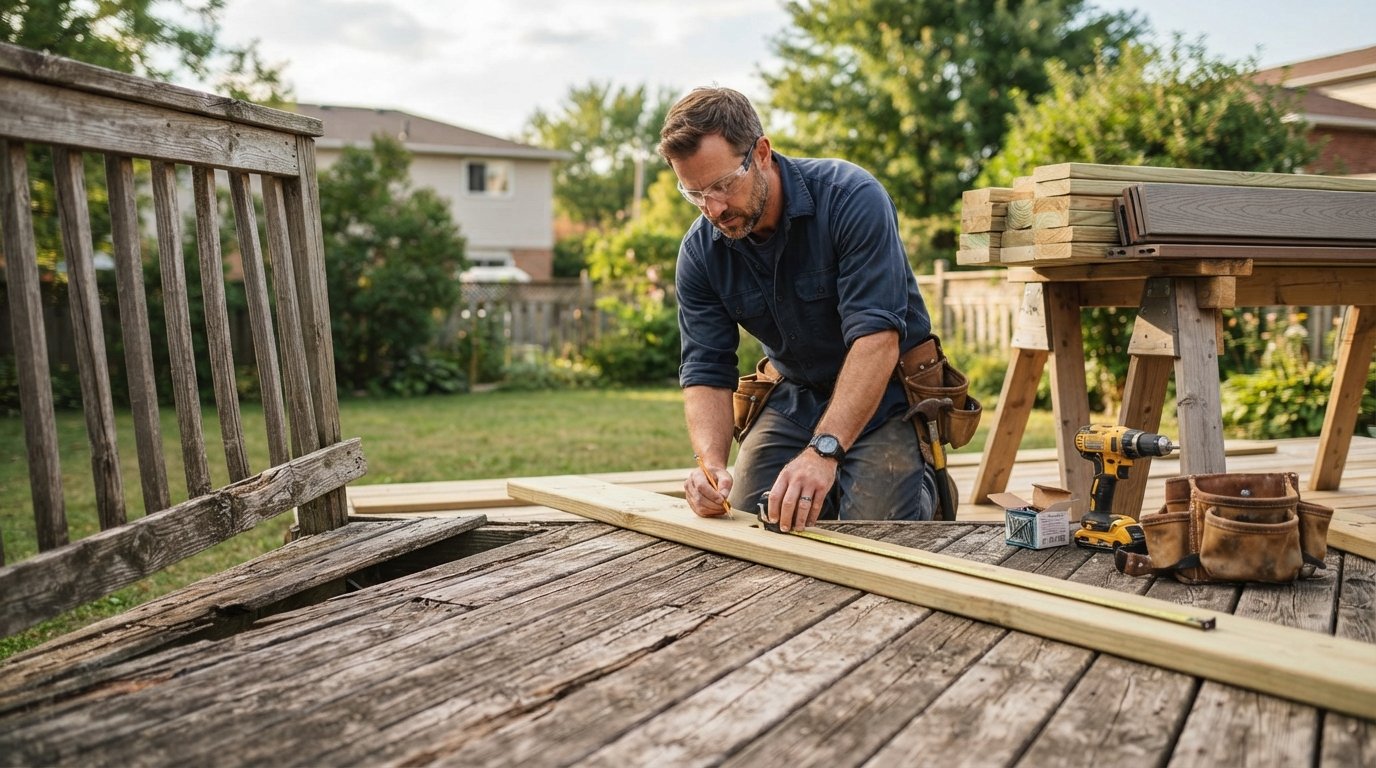
Deck Replacement Cost and Contractor Hiring Guide
Plan your deck replacement with confidence. This deck replacement cost and contractor hiring guide covers pricing, permits, and vetting tips. Call (833)-211-1668 for expert help.

By Jack Dawson
Learn more about Deck or Porch Remodel or Addition for guides, costs, and what to expect.
Compare Deck or Porch Remodel or Addition Pros Near You

Enter your ZIP code to compare top-rated local professionals and request free quotes.
Your deck has seen better days. The boards are splintering, the railings wobble, and you are starting to wonder if it is time to replace the entire structure. Before you start collecting estimates, it helps to understand what a full deck replacement actually costs and how to hire a contractor who will do the job right. This deck replacement cost and contractor hiring guide breaks down price ranges by material and size, explains when repair makes more sense than replacement, and walks you through the hiring process so you can avoid costly mistakes.
Deck Replacement Cost by Material and Size
The cost of a deck replacement depends on several factors: the size of the deck, the material you choose, local labor rates, and the condition of the existing structure. On average, homeowners across the United States spend between $4,000 and $20,000 for a full replacement, with most projects landing in the $8,000 to $12,000 range for a standard 12x16-foot deck. However, these figures can vary significantly based on regional differences and material selection.
Material choice is the single biggest driver of cost. Pressure-treated wood remains the most budget-friendly option, while composite and PVC decking cost more upfront but offer lower maintenance over time. Below is a breakdown of typical cost ranges for a 200-square-foot deck (roughly 12x16 feet) using different materials, including labor and materials for a full replacement.
- Pressure-treated wood: $4,000 to $7,000. This is the most common and economical choice, though it requires annual sealing and staining.
- Composite decking: $7,000 to $12,000. Composite boards resist rot, fading, and staining, and they typically come with 25- to 30-year warranties.
- PVC decking: $10,000 to $16,000. PVC is fully synthetic, offers superior moisture and insect resistance, and often carries a premium price tag.
- Hardwood (ipe, mahogany): $12,000 to $20,000 or more. Exotic hardwoods provide a high-end look and exceptional durability, but they require specialized installation and maintenance.
Deck size also plays a major role. Doubling the square footage does not always double the cost because some expenses (like permits and equipment) are fixed, but larger decks require more materials and labor. For example, a small 10x10-foot deck might cost $3,000 to $5,000 with pressure-treated wood, while a 20x20-foot deck could run $12,000 to $20,000 or more. Keep in mind that complex designs, multi-level decks, built-in seating, and custom railings will push costs higher.
Repair vs. Replacement: Key Signals to Watch For
Not every problem requires a full replacement. Sometimes a targeted repair can extend the life of your deck for several years. However, certain red flags indicate that replacement is the safer and more economical choice in the long run. Understanding these signals can help you make an informed decision and avoid throwing money at a structure that is beyond saving.
Consider repair if the damage is isolated to a few boards, loose railings, or minor surface issues like splinters or faded stain. Replacing a handful of boards or tightening fasteners is relatively inexpensive and can be a good stopgap. However, if you notice any of the following, replacement is likely the better option:
- Widespread rot or soft spots: If the wood feels spongy underfoot or you can easily push a screwdriver into the boards, rot has compromised the structural integrity.
- Failing footings or posts: Cracked, shifting, or heaved concrete footings and wobbly support posts signal a foundation problem that is rarely worth repairing.
- Extensive rust or corrosion: Severely rusted joist hangers, nails, or screws weaken the entire frame and may require a full rebuild.
- Multiple code violations: If your deck lacks proper guardrails, has unsafe stairs, or does not meet current building codes, bringing it up to standard often costs as much as a new build.
Age is another factor. Most pressure-treated wood decks last 15 to 20 years with proper maintenance, while composite decks can last 25 to 30 years. If your deck is approaching or exceeding its expected lifespan and showing multiple issues, replacement is usually the more cost-effective path. A professional contractor can assess the structure and give you an honest recommendation, but it helps to know the warning signs beforehand.
Permits, Codes, and Inspection Requirements
Deck replacement almost always requires a building permit, even if you are rebuilding in the same footprint. Permit requirements vary by jurisdiction, but most local building departments require a permit for any deck that is attached to the house, exceeds a certain height (often 30 inches), or includes stairs and railings. The permit process ensures that the deck meets current safety codes, which have evolved significantly over the past few decades.
Building codes cover critical details such as footing depth, joist spacing, ledger board attachment, guardrail height and infill spacing, and stair geometry. For example, modern codes typically require guardrails on decks higher than 30 inches, with balusters spaced no more than 4 inches apart to prevent children from slipping through. Ledger boards must be properly flashed and attached with lag screws or through-bolts, not just nails. Footings must extend below the frost line in cold climates to prevent heaving.
Your contractor should handle the permit application and schedule the required inspections. This is a key part of the hiring process: a reputable contractor will include permit fees in the estimate and will not suggest skipping the permit to save money. Skipping permits can lead to fines, forced removal, and problems when you sell your home. During the inspection process, the building department will check the framing, footings, and final construction to ensure everything is up to code. Always verify that your contractor is familiar with local codes and has experience pulling permits in your area.
How to Hire a Deck Contractor: A Step-by-Step Guide
Finding a reliable deck contractor is just as important as choosing the right materials. A poor installation can lead to premature failure, safety hazards, and costly repairs down the road. Follow these steps to vet contractors and select the best professional for your project.
- Gather multiple quotes: Aim for at least three written estimates from licensed contractors. This gives you a baseline for pricing and helps you spot outliers. Use a service like Contractor.Homes to connect with pre-vetted local pros and request free quotes.
- Verify licensing and insurance: Ask for the contractor's license number and verify it with your state or local licensing board. Also, request a certificate of insurance showing general liability and workers' compensation coverage. Never hire an uninsured contractor, as you could be held liable for injuries on your property.
- Check references and reviews: Ask for references from recent deck projects similar to yours and follow up with those homeowners. Online reviews can also provide insight into the contractor's reliability and quality of work.
- Review the contract carefully: The contract should include a detailed scope of work, material specifications, timeline, payment schedule, and warranty terms. Avoid contracts that require large upfront payments (more than 10 to 20 percent) or those that lack a written agreement.
- Ask about warranties: A good contractor will stand behind their work with a labor warranty, typically one to five years. Manufacturer warranties on materials (such as composite decking) may be longer, but they often require professional installation to remain valid.
For more detailed guidance on comparing estimates and avoiding hidden costs, you can refer to our roof replacement cost planner, which shares similar principles for vetting contractors and understanding project costs. While the focus is roofing, the process of evaluating bids and checking credentials applies to any major home improvement project, including deck replacement.
Key Questions to Ask About Fasteners, Footings, and Warranties
When interviewing contractors, ask specific questions about construction methods and materials to gauge their expertise and ensure quality. The details matter, especially for fasteners, footings, and warranty coverage. Here are the most important questions to ask.
Fasteners: What type of fasteners will you use? For pressure-treated wood, stainless steel or hot-dipped galvanized nails and screws are essential to prevent corrosion. For composite decking, hidden fastener systems are often recommended to create a clean look and avoid surface damage. Ask whether the contractor will use nails or screws (screws are generally preferred for better holding power) and whether they will use construction adhesives for added stability.
Footings: How deep will you dig the footings? Footings must extend below the frost line to prevent heaving in cold climates. Ask about the size and type of footing (concrete pour vs. pre-cast) and whether the contractor will use rebar for reinforcement. Proper footing design is critical for structural stability, especially for elevated decks.
Warranties: What does your labor warranty cover, and how long does it last? Will you provide a written warranty that covers workmanship and materials? Ask if the warranty is transferable to a new homeowner, which can be a selling point if you plan to move. Also, confirm that the contractor will register any manufacturer warranties on your behalf.
Other important questions include: Will you obtain the permit and schedule inspections? How will you handle unexpected issues like hidden rot or code violations? What is the estimated timeline, and how will weather delays be communicated? A reputable contractor will answer these questions transparently and provide a detailed, written estimate.
Budgeting Beyond the Basics: Hidden Costs to Anticipate
When planning your deck replacement budget, it is wise to set aside a contingency fund of 10 to 20 percent for unexpected expenses. Older homes often reveal hidden issues once the old deck is removed, such as rotted siding, damaged framing, or inadequate footings. These problems must be addressed before the new deck can be built, and they can add significantly to the project cost.
Other costs to consider include permit fees (typically $100 to $500, depending on your location), design fees if you hire an architect or designer, and landscaping or site restoration if the construction damages your yard. If you are upgrading to composite or PVC decking, you may also want to budget for upgraded railings, lighting, or built-in seating, which can add thousands to the total.
To keep your project on budget, get a detailed written estimate that itemizes materials, labor, permits, and any other charges. Avoid contractors who provide vague lump-sum quotes without breaking down costs. A transparent estimate helps you compare bids fairly and avoid surprise charges later. If you need help finding qualified contractors who provide competitive quotes, Contractor.Homes can connect you with local professionals who have been vetted for licensing and insurance.
Replacing a deck is a significant investment, but with the right information and a trustworthy contractor, you can enjoy a safe, beautiful outdoor space for decades. Use this deck replacement cost and contractor hiring guide to plan your budget, understand the repair-versus-replace decision, and hire a professional who will deliver quality workmanship and peace of mind.
Learn more about Deck or Porch Remodel or Addition for guides, costs, and what to expect.
Compare Deck or Porch Remodel or Addition Pros Near You
Enter your ZIP code to compare top-rated local professionals and request free quotes.