
Vinyl Plank vs Engineered Hardwood: Durability Guide
Compare vinyl plank vs engineered hardwood durability room by room. Call (833)-211-1668 to get matched with local flooring pros and free quotes.

By Julian Ellis
Learn more about Floor Installation or Replacement for guides, costs, and what to expect.
Compare Floor Installation or Replacement Pros Near You

Enter your ZIP code to compare top-rated local professionals and request free quotes.
Choosing between vinyl plank and engineered hardwood often comes down to one question: which floor will hold up better in your home? Both materials look beautiful in photos, both promise long life, and both come with confident sales pitches. Yet they age very differently under real world conditions. A floor that thrives in a sunny living room may fail in a steamy bathroom. A material that shrugs off muddy dog paws may still dent under a dropped cast iron pan. Understanding how to compare vinyl plank vs engineered hardwood durability means looking past the showroom shine and examining wear layers, moisture behavior, scratch resistance, and installation costs side by side. This guide walks you through those comparisons step by step so you can choose a floor that matches your household, your climate, and your budget.
Start With Construction: Why Durability Begins Under the Surface
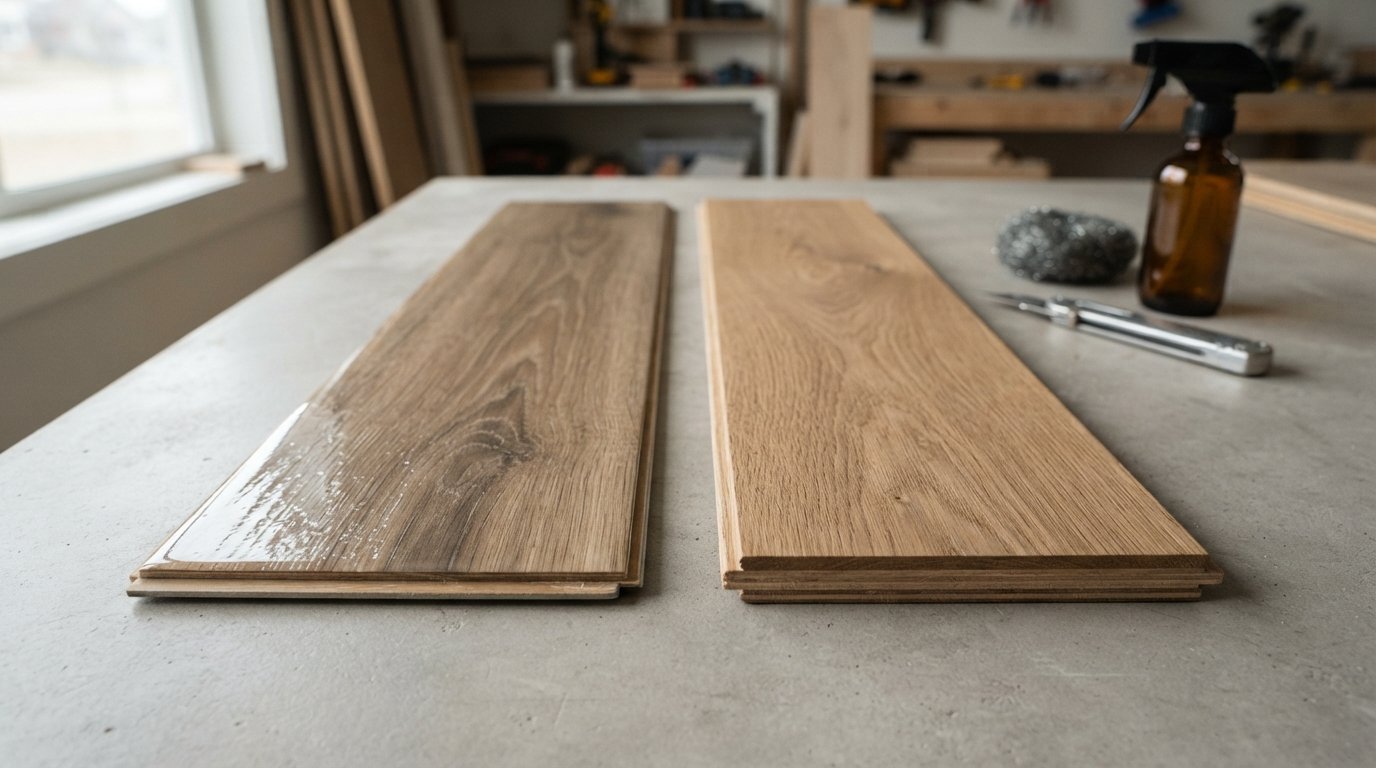
Durability comparisons only make sense once you understand what each product actually is. Vinyl plank, often called luxury vinyl plank or LVP, is a synthetic floor built from layers of PVC. The top layer is a transparent wear layer, followed by a printed design layer that mimics wood grain, a rigid core (usually SPC or WPC), and a backing. The wear layer thickness, measured in mils, is the single most important durability spec. Thin wear layers (6 to 8 mils) suit bedrooms and light traffic. Thick wear layers (20 mils and above) handle pets, kids, and commercial level abuse.
Engineered hardwood is real wood, but not solid wood. It consists of a top veneer of genuine hardwood, typically 1 to 6 millimeters thick, bonded to a plywood or high density fiberboard core. The veneer thickness drives durability. A 1 millimeter veneer can be sanded and refinished once at most. A 4 to 6 millimeter veneer may allow two or three refinishing cycles over its lifetime. That difference matters enormously: a refinish restores a worn wood floor to like new condition, while a worn vinyl wear layer cannot be restored, only replaced.
In practical terms, vinyl plank durability is engineered into the wear layer and core. Engineered hardwood durability depends on veneer thickness, the species of wood, the finish applied at the factory, and the quality of the core. Neither material is universally tougher. They simply fail in different ways, which is why the next comparisons focus on specific stressors.
Wear, Scratch, and Dent Resistance Compared
Scratches are the number one complaint among wood floor owners, and for good reason. Engineered hardwood has a factory applied finish (usually polyurethane or aluminum oxide) that resists everyday scuffs reasonably well, but the wood beneath is still vulnerable. Keys dropped by the door, chairs dragged across the kitchen, and grit tracked in from outside can all leave marks. Softer species like pine and walnut dent and scratch more easily than hard species like oak, hickory, or maple. Once the finish wears through in high traffic zones, the wood itself begins to show damage.
Vinyl plank handles surface abrasion differently. The wear layer is a tough plastic film that resists scratches from pet claws and foot traffic far better than most wood finishes. Many LVP products carry wear warranties of 15 to 25 years for residential use. However, vinyl has a weakness wood does not: it can tear, gouge, or puncture under sharp point loads, and heavy furniture legs left in one spot can leave permanent indentations in softer cores. A dropped knife or a shifted refrigerator can damage vinyl in ways that would merely dent wood.
Here is a quick breakdown of how each material responds to common household hazards:
- Pet claws and daily foot traffic: Vinyl plank generally wins, especially with a 20 mil or thicker wear layer.
- Dropped heavy objects: Engineered hardwood resists punctures better, though it may dent; vinyl can tear or gouge.
- Furniture drag and grit: Roughly even, but hardwood shows scratches more visibly because the damage penetrates the finish.
- Long term restoration: Engineered hardwood wins because it can be sanded and refinished; vinyl cannot.
The takeaway is that scratch resistance favors vinyl in everyday life, but long term resilience favors engineered hardwood because damage can be repaired rather than endured. Homeowners with large dogs and active kids often lean vinyl. Homeowners who plan to stay in the house for decades and want a floor that can be renewed often lean engineered wood.
Moisture and Water Resistance: The Decisive Category
Water is where the two materials diverge most sharply. Vinyl plank is inherently waterproof. The PVC core and wear layer do not absorb water, so spills, splashes, and even minor flooding (as long as water does not sit under the planks for days) are manageable. This is why LVP has become the default choice for bathrooms, laundry rooms, basements, and kitchens. Pet accidents, mop water, and humid summers pose little threat to a properly installed vinyl floor.
Engineered hardwood is not waterproof, but it is more stable than solid hardwood. The cross ply core resists the expansion and contraction that plagues solid wood, so it tolerates normal indoor humidity swings better. Still, standing water is the enemy. Spills left overnight can seep into seams, stain the wood, and cause the core to swell. In bathrooms and basements, engineered hardwood is a risky choice unless the room is well ventilated and the floor is protected with mats and prompt cleanup habits.
This is the category where the comparison becomes practical rather than theoretical. Ask yourself where the floor will go. If the answer includes a bathroom, a basement, or a kitchen with a dishwasher and a pet water bowl, vinyl plank offers a durability advantage that engineered hardwood cannot match. If the floor is destined for a living room, dining room, or bedroom with controlled humidity, engineered hardwood performs well and brings genuine wood underfoot.
For a broader look at how different flooring materials balance toughness against price, see this comparison of flooring materials durability and cost, which puts vinyl, engineered wood, laminate, and tile in the same frame.
Cost Per Square Foot Installed: Durability You Can Afford
Durability only matters at a price you can pay, so the cost comparison belongs in any serious evaluation. Vinyl plank typically ranges from about $2 to $7 per square foot for materials, with installation adding roughly $1 to $3 per square foot. A realistic installed range is $3 to $10 per square foot depending on wear layer thickness, core type, and local labor rates. Thicker wear layers, attached underlayment, and waterproof cores push toward the higher end, but even premium LVP usually lands below mid grade engineered wood.
Engineered hardwood materials generally run from $4 to $12 per square foot, and installation adds about $2 to $5 per square foot because the material is heavier, requires acclimation, and often needs a moisture barrier or glue down method. A realistic installed range is $6 to $17 per square foot. Exotic species, wide planks, and thick veneers push the upper end higher. The gap is meaningful: for a 500 square foot room, vinyl might cost $2,500 to $5,000 installed while engineered hardwood might cost $3,000 to $8,500.
Cost per year of service changes the math slightly. Engineered hardwood can be refinished once or twice, extending its useful life to 30 years or more in good conditions. Vinyl plank typically lasts 15 to 25 years and is replaced rather than restored. Over a very long horizon, the two narrow in cost, but vinyl wins on upfront affordability and engineered wood wins on long term renewability. Homeowners on a tight budget who need waterproof performance will find vinyl hard to beat. Homeowners investing in a forever home may prefer the refinishing option.
Where Each Material Performs Best Room by Room
Matching material to room is the most reliable way to get durability you can count on. Vinyl plank shines in moisture prone and high traffic zones. Bathrooms, laundry rooms, mudrooms, basements, and kitchens are natural fits because water and dirt are constant companions in those spaces. Pet owners often choose LVP for the entire main floor because accidents and claw marks are easier to live with on a waterproof surface. Finished basements, which can experience humidity and occasional seepage, are almost always better served by vinyl.
Engineered hardwood performs best in climate controlled living spaces with moderate traffic. Living rooms, dining rooms, bedrooms, hallways, and home offices let the material show off its warmth and realism without exposing it to standing water. Homes in dry climates with stable indoor humidity give engineered wood its best chance to last decades. It is also the better choice when resale value matters, since many buyers still view genuine wood as a premium feature. If the room sits above a crawl space or over a slab with a proven moisture barrier, engineered wood is viable with proper installation.
A hybrid approach works well for many households: vinyl plank in wet rooms and engineered hardwood in the main living areas. Transitions between the two are easy with matching thresholds, and each material gets to do what it does best.
Questions to Ask Flooring Contractors Before You Order
Specs on a box do not install themselves. The quality of the installation determines whether either floor delivers on its durability promise, so vet your contractor carefully and ask direct questions. Start with the wear layer or veneer thickness, since these numbers predict long term performance more than any marketing claim. Then move to subfloor preparation, moisture testing, and acclimation, because shortcuts in these steps cause failures that no warranty will cover.
Use this checklist when interviewing installers:
- What is the wear layer thickness (vinyl) or veneer thickness (engineered wood) of the product you recommend, and why does it fit my household?
- How will you test and prepare my subfloor, and what moisture readings do you consider acceptable?
- What underlayment or moisture barrier is required, and is it included in the quote?
- How long will the material acclimate in my home before installation, and how will you protect it during the job?
- What does the manufacturer warranty actually cover, and what voids it?
Compare at least three itemized quotes so you can see whether underlayment, furniture moving, old floor removal, and trim work are included. A low bid that omits prep work is not a bargain; it is a durability risk. For help finding and comparing pre-vetted local flooring professionals, Contractor.Homes connects homeowners with contractors who can walk you through these questions and provide competitive quotes.
Also confirm the contractor will follow the manufacturer installation instructions to the letter, since most warranties require it. Ask for references from jobs with similar materials and similar household conditions (pets, kids, moisture). A contractor who has installed the exact product you are considering can speak from experience about how it wears.
Making the Final Call on Durability
Comparing vinyl plank vs engineered hardwood durability is not about crowning a single winner. It is about matching failure modes to your household. Vinyl plank wins on waterproof performance, scratch resistance, and upfront cost, making it the safer choice for bathrooms, basements, kitchens, and homes with pets or young children. Engineered hardwood wins on repairability, resale appeal, and long term renewal, making it the better fit for climate controlled living spaces in homes where the floor is meant to last decades.
Think about the next ten years in your house: the spills, the muddy shoes, the furniture rearranging, the humidity swings. Whichever material handles those specific conditions with the least drama is the more durable choice for you. Once you know which material fits, gather itemized quotes from several local flooring contractors, ask the checklist questions above, and compare the full scope rather than the headline price. A floor is only as durable as its installation and its match to the room around it.