
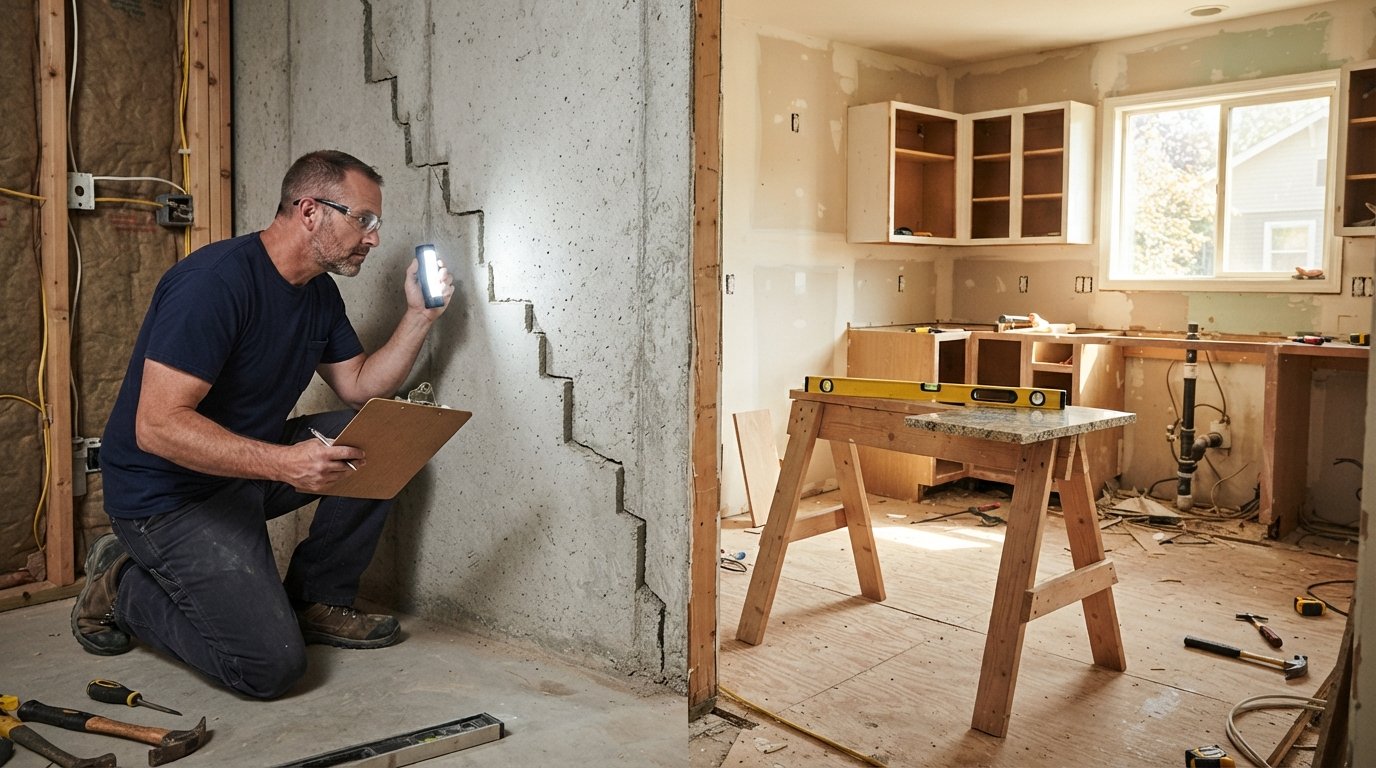
Foundation Repair vs Renovation: Deciding Priorities in 2026
Deciding between foundation repair and renovation? Call 8332111668 to get free quotes and prioritize your home projects wisely.

By Elena John
Learn more about Foundation Repair for guides, costs, and what to expect.
Compare Foundation Repair Pros Near You

Enter your ZIP code to compare top-rated local professionals and request free quotes.
Your home is likely your largest investment, so when cracks appear in the walls or floors start to slope, the anxiety is immediate. You face a critical decision: do you spend your limited budget on fixing the bones of the house, or do you move forward with the kitchen remodel you have been dreaming about for years? This is the classic foundation repair vs renovation deciding priorities dilemma. Choosing incorrectly can lead to tens of thousands of dollars in wasted effort, or worse, a renovation that gets destroyed by ongoing structural movement. To protect your investment, you need a clear framework for evaluating the urgency of structural repairs against the desirability of cosmetic updates.
Understanding the Stakes: Structural Integrity vs. Cosmetic Appeal
The primary difference between foundation repair and renovation is the intent. Renovation is about improving aesthetics, functionality, and comfort. Foundation repair is about restoring structural stability and safety. If your foundation is failing, no amount of new paint or granite countertops will fix the underlying issue. In fact, proceeding with a renovation while ignoring structural problems is a recipe for disaster. New drywall will crack, new tiles will pop, and new doors will stick within months.
However, not every crack is a crisis. Understanding the distinction between cosmetic settling and structural failure is the first step in prioritizing your budget. Cosmetic issues, like hairline cracks in drywall or minor concrete shrinkage, are often harmless. Structural issues, such as horizontal cracks in a foundation wall, bowing walls, or doors that no longer latch, indicate a failure that must be addressed immediately. If you ignore these signs, the cost of repair will only escalate, potentially making the home unsafe to inhabit.
Before you make any decisions, it is wise to understand the financial landscape of these repairs. If you are leaning toward fixing the structure first, reviewing foundation repair quotes can help you gauge the scope of the project. Knowing the potential costs allows you to create a realistic budget that balances essential repairs with your renovation goals.
Assessing the Severity of Foundation Damage
To decide whether to prioritize repair or renovation, you must first diagnose the condition of your foundation. This requires a professional inspection, but you can perform a preliminary assessment yourself. Look for specific warning signs that indicate the foundation is moving or failing. The severity of these signs will dictate your priority list.
If you notice any of the following, structural repair takes precedence over any cosmetic renovation:
- Stair-step cracks in brick or block walls.
- Horizontal cracks in the foundation wall, especially if the wall is bowing inward.
- Doors and windows that stick or fail to latch properly.
- Sloping floors or uneven surfaces.
- Gaps around exterior windows or doors.
These symptoms suggest that the soil beneath your home is shifting, expanding, or contracting, which is putting pressure on the foundation. If you proceed with a renovation while these issues exist, the movement will continue. For example, installing new tile in a bathroom located on a sloping floor will result in cracked grout and loose tiles. Fixing the foundation first ensures that your renovation investment is protected.
The Financial Equation: Repair Costs vs. Renovation ROI
Budget is the most common constraint homeowners face. You likely have a finite amount of money to spend. If you spend it all on foundation repair, you may not have enough left for the renovation. Conversely, if you spend it on the renovation, you may not have the funds to fix the foundation later. This requires a careful cost-benefit analysis.
Foundation repair costs can vary widely depending on the method and the extent of the damage. Minor crack injections might cost a few hundred dollars, while installing piers or helical anchors can cost thousands. Renovations, on the other hand, are often priced based on square footage and material quality. A kitchen remodel can easily cost $30,000 or more. If your foundation repair costs $10,000, that is a significant chunk of your total project budget.
However, you must consider the return on investment (ROI). Renovations like kitchen and bathroom remodels often recoup a portion of their cost at resale. Foundation repair, while not aesthetically pleasing, is essential for maintaining the home's value. A home with a failing foundation is difficult to sell and may not qualify for conventional financing. Therefore, foundation repair is not just a maintenance cost; it is a necessary step to preserve the asset.
When evaluating contractors for these projects, using a platform like Repairmen can help you find vetted professionals who can provide accurate estimates for both structural and cosmetic work. This allows you to compare bids and make a data-driven decision about where to allocate your funds.
Deciding Priorities: A Step-by-Step Framework
If you are still unsure how to proceed, use this structured framework to determine your priorities. This process helps you separate emotional desires (wanting a new kitchen) from practical necessities (needing a stable foundation).
Step 1: Get a Professional Inspection. Hire a licensed structural engineer or foundation specialist to inspect your home. Do not rely on a general contractor's opinion for structural issues. The engineer will provide a report detailing the condition of the foundation and recommend specific repairs.
Step 2: Categorize the Damage. Based on the report, categorize the work needed. Is it emergency structural repair, preventative maintenance, or cosmetic settling? Emergency repairs must be done now. Preventative maintenance should be scheduled soon. Cosmetic settling can often be addressed during a renovation or ignored.
Step 3: Evaluate the Renovation Plan. Look at your renovation plans. Do they involve areas affected by the foundation issues? If you plan to remodel a room with sloping floors or cracked walls, the foundation repair must happen first. If the renovation is in an unaffected area, you might be able to proceed with caution, but it is still risky.
Step 4: Create a Phased Plan. If your budget does not cover both projects at once, phase them. Fix the foundation first to stop the damage. Then, save up for the renovation. This approach ensures you are not throwing good money after bad. For example, if you need a new roof and foundation repair, but can only afford one, choose the one that protects the other. A failing roof causes water damage, which can worsen foundation issues. A failing foundation causes structural damage, which can compromise the roof's support. Usually, the foundation is the priority because it supports the entire structure.
When Renovation Can Wait (and When It Cannot)
There are scenarios where prioritizing renovation over foundation repair makes sense, but they are rare and require caution. If the foundation issue is purely cosmetic and localized (e.g., a small crack in a slab that is not widening), you might choose to proceed with a renovation in a different part of the house. However, you should seal the crack to prevent moisture intrusion.
Conversely, if the renovation is necessary for safety or habitability, such as repairing a leaking roof or fixing a broken HVAC system, those might take precedence over a non-emergency foundation issue. For instance, if you live in an area with extreme temperatures, a functioning HVAC system is a health and safety requirement. You might delay foundation repair if it is not immediately dangerous to address the HVAC first.
However, if the foundation issue is causing water intrusion or structural instability, it cannot wait. Water intrusion leads to mold, which is a health hazard and a major expense to remediate. Structural instability can lead to collapse. In these cases, foundation repair is the only priority.
Financing Your Priorities
Often, the decision between foundation repair and renovation comes down to financing. If you do not have the cash to cover both, you have options. You can explore home equity loans, which allow you to borrow against the value of your home. Since foundation repair preserves value, lenders may be willing to finance it. You can also look for foundation repair financing options offered by contractors.
For renovations, personal loans or credit cards are common, but they often have higher interest rates. If you are forced to choose, using a low-interest loan to fix the foundation is a better financial move than using a high-interest loan for a renovation. The foundation repair stops the bleeding, while the renovation is an upgrade.
It is also worth noting that some foundation repairs come with warranties. These warranties can be transferred to a new owner if you sell the home, which is a selling point. Renovations rarely come with such warranties. This adds to the argument for prioritizing the repair.
Finding the Right Professionals for the Job
Whether you decide to repair or renovate, you need reliable contractors. The success of your project depends on the quality of the work. For foundation repair, look for companies that specialize in structural repair and have experience with the specific soil conditions in your area. For renovations, look for general contractors with a portfolio of similar projects.
Always get multiple quotes. This is standard advice, but it is especially important for foundation repair, where prices can vary significantly. A reputable contractor will explain the repair process, provide references, and offer a written estimate. Avoid contractors who pressure you into a quick decision or demand a large upfront payment in cash.
By taking the time to vet your contractors and understand the scope of work, you can ensure that your money is well spent. Whether you are fixing a foundation or remodeling a kitchen, the goal is to improve your home and your quality of life.
Ultimately, the choice between foundation repair and renovation is about protection. Foundation repair protects the structure and the value of your home. Renovation protects your lifestyle and comfort. In most cases, structural integrity must come first. Once the foundation is secure, you can renovate with confidence, knowing that your investment is built on solid ground.