
How to Compare Attic Fan and Whole House Fan Quotes
Compare attic fan and whole house fan quotes with confidence. Call (833)-211-1668 to get matched with local pros and avoid surprise costs.

By Victor Lawson
Learn more about Fan Installation for guides, costs, and what to expect.
Compare Fan Installation Pros Near You

Enter your ZIP code to compare top-rated local professionals and request free quotes.
Your attic is a silent energy thief. On a summer day, temperatures up there can soar past 150 degrees, and that heat radiates down into your living space, forcing your air conditioner to work overtime. Two popular solutions promise relief: attic fans and whole house fans. Both move air, both claim to cut cooling costs, and both come with quotes that can be surprisingly difficult to compare. The problem is that these systems are not interchangeable, and the quotes you receive will reflect very different scopes of work. Learning how to compare attic fan and whole house fan quotes is less about finding the lowest number and more about understanding what each bid actually delivers.
At FreeQuotes.Contractors, we connect homeowners with pre-vetted local pros who provide free, competitive quotes for HVAC and ventilation projects. This guide walks you through the technical differences, the hidden line items, and the questions to ask so you can evaluate every bid with confidence. By the end, you will know how to spot an underpriced quote that cuts corners and an overpriced one that pads the bill.
Attic Fans vs. Whole House Fans: Two Different Machines, Two Different Jobs
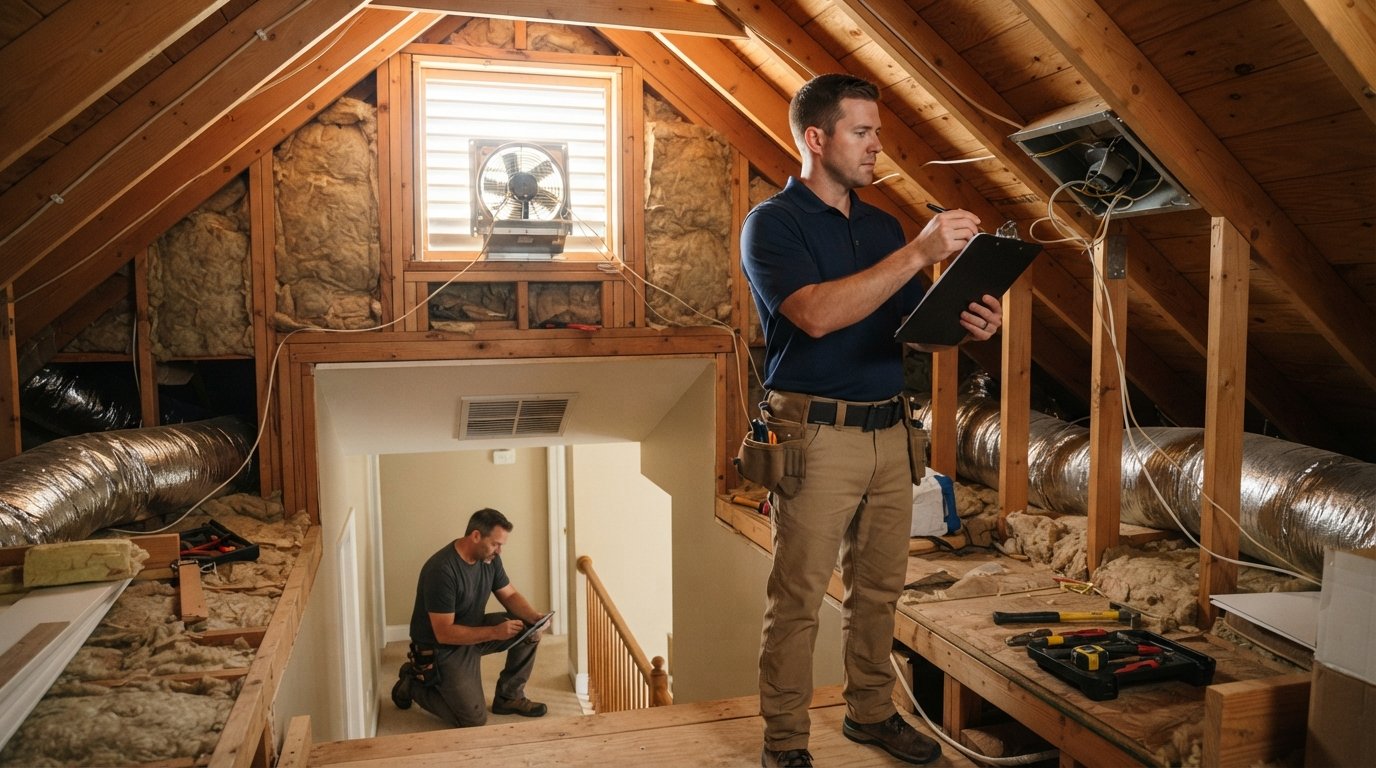
An attic fan, sometimes called a powered attic ventilator, mounts on your roof or gable and exhausts superheated air from the attic itself. It does not directly cool your living space. Instead, it reduces the temperature differential between the attic and the rooms below, which eases the burden on your air conditioner and extends the life of your roof shingles. A whole house fan, by contrast, sits in the ceiling of your top floor and pulls cool outdoor air through open windows while pushing hot indoor air out through attic vents. It cools the people and the air inside the house, not just the attic.
That functional difference drives everything else in the quote. An attic fan installation typically involves roof or gable work, a dedicated electrical circuit, and careful sealing to prevent air leaks. A whole house fan installation requires cutting into the ceiling, reinforcing framing, adding a large vent path, and often upgrading attic venting to handle the increased exhaust volume. When you compare quotes, you are not comparing apples to apples unless you first confirm which system the contractor is proposing and why.
Cost expectations vary widely by region and home layout, but national averages offer a starting point. Attic fan projects commonly land between 300 and 1,200 dollars installed, while whole house fans often range from 1,500 to 4,000 dollars depending on square footage and electrical work. A quote that seems dramatically lower than these ranges deserves scrutiny: it may omit permit fees, venting upgrades, or labor for attic access.
Climate and Insulation: Why the Same Quote Performs Differently in Different Homes
Before you even open a quote, assess your climate. Whole house fans shine in dry, temperate regions where nighttime air is cool and humidity is low. In hot, humid climates, pulling outdoor air into a house can introduce moisture that your air conditioner then has to remove, undermining the savings. Attic fans, meanwhile, help in almost any climate because they address the universal problem of attic heat gain, but their benefit shrinks if your attic floor is poorly insulated or air-sealed.
Insulation and air sealing are the quiet variables that make or break both systems. A whole house fan will pull air through every gap in your ceiling, including recessed lights and attic hatches, so those leaks must be sealed first. An attic fan can actually worsen energy bills if your attic floor is leaky, because it depressurizes the attic and draws conditioned air up from the house. A thorough quote should include a blower door test or at least a visual inspection of insulation and air barriers. If a bid skips this step entirely, treat it as incomplete.
Ask each contractor how they accounted for your climate zone, roof design, and existing insulation. A professional who explains why a whole house fan needs 1 to 2 square feet of net free venting per 750 CFM of fan capacity is demonstrating the kind of expertise you want. A bidder who simply quotes a unit and a labor rate is guessing.
Electrical and Venting Requirements: The Line Items That Separate Good Quotes from Cheap Ones
Both fan types need power, but the electrical scope often differs. Attic fans typically require a dedicated 120-volt circuit, a thermostat or humidistat control, and sometimes a junction box run from an existing source. Whole house fans usually need a dedicated circuit as well, plus a two-speed wall switch or remote control, and occasionally a timer. If your electrical panel is full or outdated, the quote should include a subpanel upgrade or tandem breaker installation. Missing electrical line items are the most common reason a low bid balloons during installation.
Venting is the second hidden cost. Attic fans need adequate intake vents (soffit vents) to function; without them, the fan starves and motor life drops. Whole house fans need a large exhaust path through the attic and out the roof or gable, often requiring additional static vents or ridge vents. Contractors who quote a whole house fan without verifying net free vent area are setting you up for a noisy, inefficient system.
Here is a checklist of what a complete quote should itemize for either system:
- Fan unit make, model, CFM rating, and warranty terms
- Dedicated electrical circuit and control (thermostat, humidistat, timer, or switch)
- Permit fees and inspection scheduling
- Venting upgrades (soffit, gable, ridge, or static vents) with quantities
- Air sealing and insulation work, if recommended
- Labor for attic access, framing modifications, and cleanup
Use this list as a scorecard. A quote that includes all six categories is easier to compare against another complete quote. If one bid is missing permits and another includes them, adjust the totals before judging price. For a broader framework on evaluating bids, see our guide on Los Angeles home renovation quotes, which explains how to normalize scopes across different contractors.
How to Read a Quote: Five Steps to a Fair Comparison
Once you have two or three bids in hand, resist the urge to sort by price. Instead, follow a structured comparison process that forces each contractor onto the same playing field. This is the core of how to compare attic fan and whole house fan quotes without getting fooled by presentation.
- Confirm the system type and goal. Make sure every bidder is proposing the same category of equipment or clearly explaining why a different approach suits your home. Attic fan versus whole house fan is a design decision, not a pricing detail.
- Normalize the scope. Create a spreadsheet with columns for equipment, electrical, venting, permits, insulation, and labor. Enter each bid into the same rows. Any blank cell is a question to ask.
- Check the math on CFM and sizing. For whole house fans, the rule of thumb is 2 to 3 CFM per square foot of living space. For attic fans, look for 0.7 to 1 CFM per square foot of attic floor. A quote with an undersized unit will underperform no matter how polished the proposal looks.
- Verify licensing and insurance. Ask for the license number and a certificate of insurance. In most states, HVAC and electrical work require specific credentials, and a general handyman license may not cover the electrical portion.
- Compare warranty and service terms. A lower price with a one-year labor warranty may cost more over time than a slightly higher bid with a five-year warranty and a written service commitment.
After you normalize, rank the bids by value rather than price alone. A bid that includes air sealing, a permit, and a premium fan with a ten-year motor warranty may be the better investment even if it is several hundred dollars higher. Conversely, a bid that omits venting upgrades is not really cheaper; it is incomplete.
Red Flags and Questions to Ask Before You Sign
Certain warning signs should prompt you to walk away or demand clarification. Be cautious of any quote that is verbal only, that asks for a large deposit before materials are ordered, or that pressures you to decide on the spot. A contractor who cannot explain the difference between static pressure and CFM is not ready to design your ventilation system.
Ask these questions of every bidder: How did you calculate the fan size for my home? What is the net free vent area of my attic, and does your plan address it? Will you pull permits, and who schedules the inspection? What happens if the fan is noisier than expected? Can you provide three local references from the past year? The answers will tell you more about the quote than the bottom line ever will.
For homeowners who want a streamlined way to gather and compare bids from pre-vetted professionals, Contractor.Homes offers a free quote request system that connects you with local contractors for HVAC, roofing, and ventilation projects. Submitting one request can put you in touch with multiple qualified bidders, which is the fastest way to see how different contractors approach the same job.
Making the Final Decision: Value Over Price
The best quote is not the cheapest or the most expensive; it is the one that matches your home's needs, documents its scope completely, and comes from a contractor who communicates clearly. Attic fans and whole house fans solve different problems, and your climate, insulation, and budget should drive the choice. If you live in a dry climate with cool evenings, a whole house fan may deliver dramatic comfort and savings. If your priority is roof longevity and reducing AC load in a humid climate, an attic fan with proper air sealing may be the smarter play.
Whichever system you choose, insist on a written, itemized quote and compare at least three bids using the normalization steps above. That discipline is how you compare attic fan and whole house fan quotes effectively and avoid the surprise costs that turn a bargain into a headache. When you are ready to start collecting quotes, request free estimates from local pros and let the comparison process work for you.