
How to Prepare Home for Renovation While Living in It
Planning to renovate without moving out? Get practical tips to prepare your home for renovation while living in it. Call 8332111668 for contractor quotes.

By Jack Dawson
Learn more about Home Remodeling for guides, costs, and what to expect.
Compare Home Remodeling Pros Near You

Enter your ZIP code to compare top-rated local professionals and request free quotes.
Living through a home renovation sounds like a test of patience, but thousands of homeowners do it every year without moving out. The trick is not luck. It is preparation. Whether you are updating a kitchen, adding a bathroom, or finishing a basement, the difference between a smooth project and a chaotic one comes down to how well you plan before the first hammer swings. This guide walks you through how to prepare home for renovation while living in it, from setting up temporary spaces to protecting your sanity and your budget.
Start with a Realistic Plan and Budget
Before you move a single piece of furniture, you need a clear picture of what the renovation involves. Scope creep, the tendency for projects to grow beyond the original plan, is the number one reason renovations disrupt daily life more than expected. Sit down with your contractor and map out exactly which rooms will be affected, how long each phase will take, and what parts of your home will remain usable.
Budget planning matters just as much when you are living on-site. Hidden costs often force homeowners to cut corners on temporary setups, which makes daily life harder. A solid renovation budget should include not just materials and labor but also temporary housing for tough phases, storage units, eating out more often, and replacing items damaged during construction.
If you need help structuring your numbers, a good home renovation budget planner can walk you through categories most homeowners forget. Getting the financial side right early means fewer surprises when you are already stressed by dust and noise.
Set Up Temporary Living Spaces
When your kitchen is torn apart or your only bathroom is being retiled, you need workarounds that actually function. The goal is to create a parallel version of your home that covers the basics: cooking, cleaning, sleeping, and relaxing.
Think about which rooms will stay untouched and how you can concentrate your daily activities there. A dining room can become a temporary kitchen. A laundry room can serve as a mini prep station. A spare bedroom can become a family hangout zone. The key is to designate spaces clearly so you are not constantly tripping over construction materials.
Here are the most important temporary setups to plan:
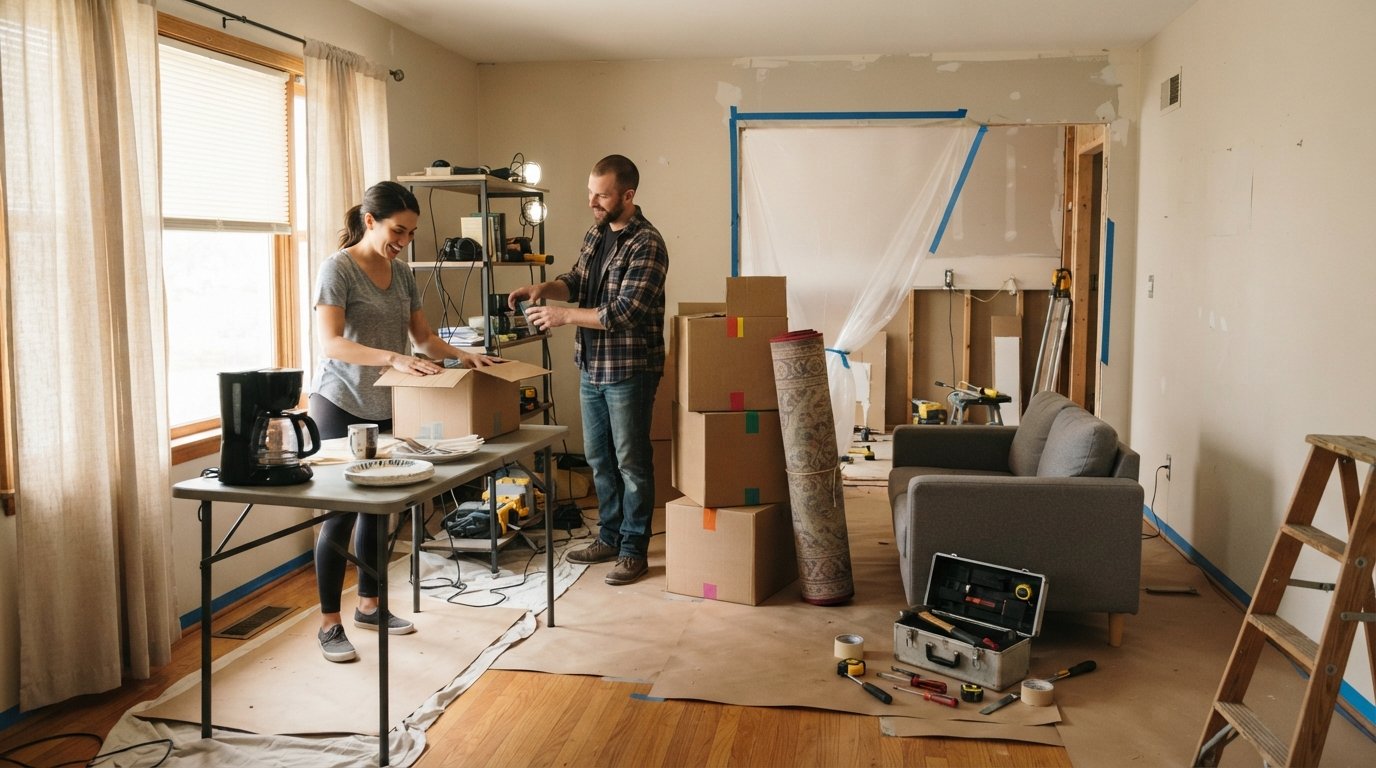
- Temporary kitchen: Set up a microwave, mini fridge, coffee maker, and a small table with essentials in a room far from the work zone.
- Portable bathroom solution: If your only bathroom is being renovated, arrange access to a neighbor's bathroom, a gym membership, or a rented portable unit.
- Sleeping arrangements: If bedrooms are affected, set up air mattresses or rearrange furniture in unaffected rooms well before work begins.
- Washing station: Keep a utility sink or a large basin with soap, towels, and hand sanitizer near the construction area to reduce dust tracking.
Once these temporary systems are in place, label everything. Use painter's tape and markers to identify which outlets work, which cabinets are off-limits, and where cleaning supplies are stored. Clear labeling reduces confusion for family members and helps contractors avoid accidentally using your temporary kitchen counter as a cutting station.
Protect Your Belongings and Reduce Dust
Dust is the silent invader of every renovation. It travels through doorways, settles on every surface, and can damage electronics, upholstery, and even your HVAC system. Preparing your home means creating barriers before the first wall comes down.
Start by decluttering. Remove personal items, photographs, and fragile decor from rooms near the work zone. Pack them into labeled boxes and store them in a garage, basement, or rented storage unit. The less clutter you have, the easier it is to clean and the less likely something valuable gets broken.
Next, seal off the construction area. Plastic sheeting and zipper doors are inexpensive and highly effective. Tape plastic over doorways, cover vents in nearby rooms, and use negative air pressure machines if your contractor recommends them. These steps keep dust from spreading into your temporary living spaces.
For furniture you cannot move, invest in plastic covers or old sheets. Electronics should be unplugged and covered, especially computers and televisions that pull air through their cooling systems. If you have pets, keep them away from the work zone and consider boarding them during the noisiest phases.
Coordinate with Your Contractor and Set Boundaries
Communication is the glue that holds a live-in renovation together. Before work starts, sit down with your contractor and agree on daily start and end times, which entrances workers will use, and where they can store tools and materials. A written schedule posted on the refrigerator keeps everyone on the same page.
Boundaries matter for your comfort and your contractor's efficiency. Decide which rooms are strictly off-limits and mark them clearly. If you work from home, let the crew know your meeting times so they can pause loud tasks. Small courtesies like providing a bathroom for workers or a designated water station go a long way toward a positive working relationship.
You should also plan for inspections and deliveries. Someone needs to be home to receive materials or let inspectors in. If you cannot be there, arrange for a neighbor or family member to help. Missed deliveries can delay your project by days, which means more time living in a construction zone.
When you are ready to hire professionals who understand the challenges of occupied renovations, connecting with experienced local contractors makes a huge difference. Platforms like USremodel help homeowners find vetted remodeling and repair specialists across the country, so you can compare options and choose a team that respects your daily routine.
Manage Noise, Meals, and Daily Routines
Noise is unavoidable, but you can manage its impact. Schedule your most important activities, like work calls or study sessions, during quieter phases. Ask your contractor which days will involve heavy demolition or loud machinery so you can plan accordingly. Noise-canceling headphones and white noise machines are worthwhile investments.
Meals require extra planning when your kitchen is out of commission. Batch cook before demolition begins and freeze portions you can reheat in a microwave. Keep a stash of easy, no-cook options like sandwiches, salads, and fruit. If eating out becomes necessary, factor those costs into your budget so they do not feel like a financial shock.
Daily routines will shift, so build flexibility into your expectations. Morning routines might take longer when you are sharing a bathroom or navigating plastic barriers. Evening cleanups become essential to keep dust from migrating into sleeping areas. A quick vacuum and wipe-down each night keeps your temporary spaces livable.
If you have children or pets, prepare them for the changes too. Explain which areas are dangerous, set up alternative play spaces, and keep a consistent schedule as much as possible. Familiar routines provide comfort when the physical environment is in flux.
Prepare for Utilities and Unexpected Outages
Renovations often involve shutting off water, power, or gas for hours or even days. Knowing when these outages will happen lets you prepare. Fill bathtubs and buckets with water if the supply will be cut. Charge all devices and backup batteries before electrical work begins. Have flashlights, candles, and a portable phone charger ready.
If your HVAC system will be affected, plan for temperature extremes. Portable heaters and fans can bridge the gap. In summer, keep windows open when safe. In winter, layer clothing and use space heaters responsibly. Your contractor should give you advance notice of any planned outages, so ask for a schedule at the start of the project.
It also helps to create a small emergency kit for renovation days. Include dust masks, safety glasses, a first aid kit, and basic tools like a screwdriver and utility knife. You may need to make quick adjustments to temporary setups, and having supplies on hand saves trips to the hardware store.
Keep Your Sanity and Stay Flexible
Living through a renovation tests your patience, but mindset matters. Accept that some days will be chaotic and that timelines sometimes slip. Focus on the end result and celebrate small milestones, like when drywall goes up or the new floor is installed.
Take breaks away from the house when you can. A walk, a coffee shop visit, or a weekend trip can reset your mood and remind you that the disruption is temporary. Lean on friends and family for support, especially during the messiest phases.
Finally, keep a sense of humor. Renovations rarely go exactly as planned, but the outcome, a refreshed, more functional home, is worth the temporary inconvenience. With the right preparation, you can live comfortably through the process and come out the other side with a space you love.
Preparing your home for a renovation while living in it is entirely doable when you plan ahead, set up temporary systems, communicate clearly with your contractor, and protect your daily routines. Take it one phase at a time, and remember that every bit of preparation now saves you stress later.