
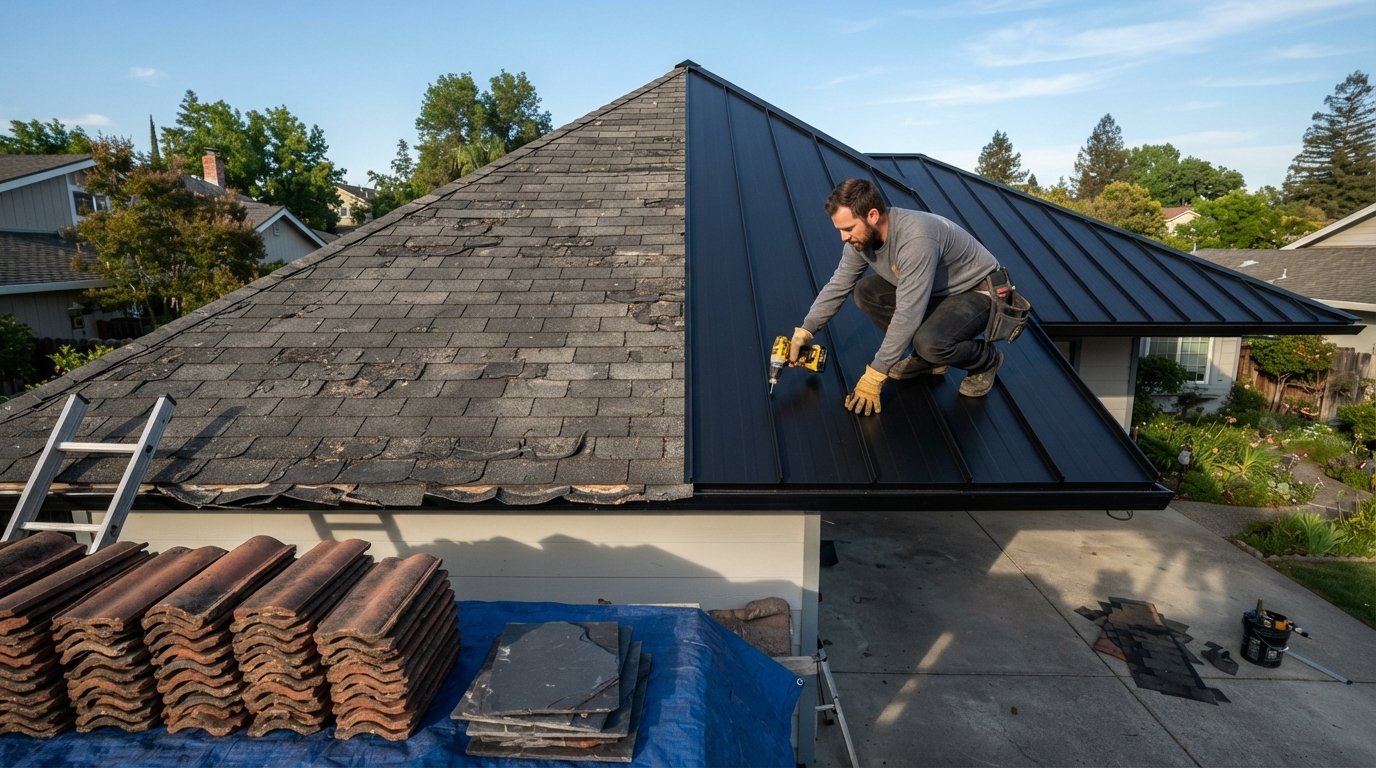
Roofing Materials Comparison: Pros, Cons, Lifespan
Compare roofing materials by lifespan, cost, and durability to find the best fit for your home and budget.
By Adnan Nazir
Learn more about Roof Installation or Replacement for guides, costs, and what to expect.
Compare Roof Installation or Replacement Pros Near You

Enter your ZIP code to compare top-rated local professionals and request free quotes.
Your roof is your home's first line of defense, but choosing the right material can feel overwhelming. With asphalt shingles, metal panels, clay tiles, and slate all promising durability and curb appeal, how do you know which one fits your budget, climate, and long-term goals? This roofing materials comparison pros cons lifespan guide breaks down the top options, giving you a clear framework to make a smart investment. Whether you are repairing storm damage or planning a full replacement, understanding the trade-offs of each material will help you avoid costly surprises and choose a roof that performs for decades.
Why the Roofing Material Decision Matters More Than You Think
Your roofing choice affects more than just the look of your house. It impacts your energy bills, your home's resale value, and how often you will need to schedule repairs. A material that seems cheap upfront might require frequent maintenance, while a premium option could last longer than you own the home. Homeowners who rush this decision often end up paying double: once for the initial install and again for premature replacements or repairs.
That is why a structured roofing materials comparison pros cons lifespan review is essential. By weighing factors like climate resistance, fire rating, weight, and warranty, you can narrow down the field. For example, a homeowner in Florida facing hurricane-force winds has different needs than someone in Colorado dealing with heavy snow loads. The right material in one region could be a poor choice in another, so always start by considering your local weather patterns.
Asphalt Shingles: The Affordable Workhorse
Asphalt shingles dominate the North American market, and for good reason. They offer the lowest upfront cost, a familiar appearance, and installation is quick and straightforward. Most homes with architectural shingles have a classic, textured look that appeals to a wide range of buyers. If you are on a tight budget or planning to sell within a few years, asphalt is often the most practical choice.
However, the lifespan of asphalt shingles typically ranges from 20 to 30 years, which is shorter than metal or tile. They are also vulnerable to high winds, hail, and extreme temperature swings. In hot climates, they can crack and curl; in cold regions, ice dams can damage the granules. While you can buy premium impact-resistant versions, they still rarely exceed a 30-year service life.
- Pros: Low initial cost, easy to install, widely available, decent color selection.
- Cons: Shorter lifespan, susceptible to wind and hail damage, not eco-friendly, may require more frequent repairs.
- Lifespan: 20 to 30 years, depending on quality and climate.
If you choose asphalt, select architectural shingles over three-tab for better durability and a thicker profile. Also, ensure proper attic ventilation to prevent heat buildup, which accelerates granule loss. While asphalt won't last forever, it remains the benchmark for affordability and simplicity.
Metal Roofing: Longevity and Energy Efficiency
Metal roofs have surged in popularity, and for good reason. They offer exceptional durability, often lasting 40 to 70 years, and they reflect solar heat, which can reduce cooling costs by 10 to 25 percent. Standing seam metal panels are particularly popular for modern and farmhouse-style homes, while metal shingles mimic the look of slate or wood without the maintenance. If you plan to stay in your home for decades, metal is a strong contender.
On the downside, metal roofing has a higher upfront cost, usually two to three times more than asphalt. It can also dent from large hail, and expansion and contraction noises during temperature changes may surprise some homeowners. Proper installation is critical: fasteners must be placed correctly to prevent leaks and allow for thermal movement. Additionally, metal roofs can be slippery, making maintenance and repairs more hazardous for DIY enthusiasts.
Despite these drawbacks, the long-term value is compelling. A metal roof requires little upkeep, resists fire and insects, and often comes with a 30 to 50 year manufacturer warranty. Many homeowners find the energy savings offset the initial investment over time. If you live in an area prone to wildfires or severe storms, metal is one of the most resilient options available.
Standing Seam vs. Corrugated Metal Panels
Within the metal category, you have two primary styles: standing seam and corrugated. Standing seam panels feature hidden fasteners and vertical raised seams, which provide superior watertight integrity and allow for thermal expansion. Corrugated panels use exposed screws and are generally cheaper, but they may require more maintenance over time. For most homeowners, standing seam is the recommended choice for longevity and performance, even though it costs more per square foot.
Clay and Concrete Tiles: Classic Beauty With Heavy Weight
Clay and concrete tiles bring a distinctive, Mediterranean or Spanish style to homes, and they are incredibly durable. Clay tiles can last 50 to 100 years, while concrete tiles offer a similar lifespan with a slightly lower cost. Both are fire-resistant, insect-proof, and excellent at insulating against heat. They also withstand high winds and heavy rain, making them popular in coastal and desert regions.
The biggest drawback is weight. These tiles are heavy, often requiring additional roof framing and structural reinforcement. That extra engineering adds to the installation cost, making tile one of the most expensive roofing materials per square foot. The initial investment can be two to three times that of asphalt. Additionally, walking on tile roofs can crack them, so maintenance and repairs are best left to professionals. In freeze-thaw climates, moisture can seep into porous tiles and cause cracking during winter cycles.
If you love the look and your home can support the weight, tile is a lifetime investment. Many homeowners pair tile roofs with solar panels, as the durable surface provides a stable base. Just be prepared for a longer installation timeline and a higher budget, both for materials and structural work.
Slate Roofing: The Premium, Timeless Option
Slate is the gold standard for roofing, offering unmatched elegance and a lifespan of 75 to 200 years. Natural slate is quarried from stone, giving each roof a unique character that no synthetic material can replicate. It is completely fireproof, resistant to rot and insects, and requires minimal maintenance. A slate roof can even increase your home's resale value, as buyers appreciate its longevity and craftsmanship.
However, slate is also the most expensive roofing material, both in material cost and labor. Because it is heavy, your roof structure must be reinforced, and installation requires specialized skills that few contractors possess. The steep price tag, often exceeding $30 per square foot, makes slate impractical for many homeowners. Furthermore, walking on slate can cause breakage, so any future repairs will need a professional who understands how to handle it.
For those who can afford it, slate offers a sense of permanence that other materials lack. It is an investment in architectural heritage, and many historic homes feature slate roofs that are still protecting their structures after a century. If you are restoring an older home or building a custom property, slate might be worth the premium.
Synthetic and Composite Roofing: Modern Alternatives
Synthetic roofing materials, made from rubber, plastic, or polymer composites, mimic the look of slate, wood, and tile at a fraction of the weight and cost. They are designed to be impact-resistant, low-maintenance, and eco-friendly, as many are made from recycled materials. These products often come with 50-year warranties and are popular in areas where real slate or wood is too heavy or expensive.
The downside is that synthetic products are relatively new, so long-term performance data is limited. Some lower-quality versions may fade or become brittle over time. Also, because the market is fragmented, you need to research brands carefully and verify that the product is certified for your specific climate. While synthetic shingles can be a great middle-ground option, they are not a perfect substitute for natural materials.
When considering synthetic options, look for products with a class A fire rating and a wind resistance rating of at least 130 mph. Many manufacturers offer warranties of 50 years, which gives you confidence in their durability. If you want the look of slate without the weight or cost, synthetic slate is an attractive alternative.
Wood Shakes and Shingles: Natural Charm With High Maintenance
Wood shakes and shingles, typically made from cedar, offer a rustic, natural beauty that enhances many architectural styles. They are excellent insulators and can last 30 to 40 years when properly maintained. Wood is also a renewable resource, making it an eco-friendly choice for some homeowners. However, wood roofs are highly susceptible to moisture, insect damage, and fire, which is why many regions have strict fire codes that restrict their use.
Regular maintenance is required, including periodic cleaning, treatment for moss and mildew, and replacement of damaged shakes. In dry climates, the fire risk is significant, and insurance premiums may be higher. Unless you are prepared for the upkeep, wood may not be the most practical choice. If you do choose wood, opt for fire-retardant treated shakes and ensure proper ventilation to keep the material dry.
How to Choose the Right Roofing Material for Your Home
Now that you have the roofing materials comparison pros cons lifespan facts, the next step is to apply them to your situation. Start by setting a clear budget, but remember to factor in the total cost of ownership, not just the initial price. A cheaper material that needs replacement in 20 years may cost more over time than a premium option that lasts 50. Also, think about your plans: if you are staying for 10 years, you might prioritize curb appeal over lifespan, but if this is your forever home, durability and low maintenance should lead.
Next, check local building codes and homeowner association rules. Some neighborhoods restrict certain materials, while others require specific fire ratings. Your insurance company may also have preferences or offer discounts for impact-resistant roofs. Consulting a local roofing contractor early in the process can help you understand these constraints and get realistic quotes. For a deeper look at vetting contractors, our guide on how to choose roofing contractors you can trust provides a step-by-step framework for finding qualified professionals.
Finally, consider the climate: heavy snow, hail, high winds, and extreme heat all affect material performance. For example, metal is excellent for snow shedding, but in hot climates, a light-colored metal roof can significantly reduce cooling costs. Tile and concrete are ideal for warm, sunny regions, but they may crack in freezing temperatures. Matching the material to your environment is the single best way to maximize its lifespan.
Cost vs. Value: Making a Smart Investment
Your roofing material choice is one of the most significant financial decisions you will make as a homeowner. While the initial price is important, think about the total cost per year of service. Asphalt shingles may cost $8,000 installed but last 25 years, which is about $320 per year. A standing seam metal roof might cost $24,000 but last 60 years, equating to $400 per year, and you also get energy savings and lower insurance premiums. Over the long run, the gap narrows significantly.
Additionally, a high-quality roof can increase your home's resale value. According to real estate experts, a new roof often returns about 60 to 70 percent of its cost at resale. If you choose a premium material like slate or metal, the return can be even higher, especially in upscale markets. When you request quotes from local contractors, ask for a breakdown of material, labor, and disposal costs so you can compare apples to apples.
Final Considerations for Your Roofing Project
No single roofing material is perfect for everyone. The best choice depends on your budget, aesthetic preferences, local climate, and long-term plans. We recommend narrowing your options to two or three materials and getting detailed quotes from at least three contractors. During the consultation, ask about warranties, ventilation requirements, and potential issues specific to your home's design. A reputable contractor will guide you toward the most cost-effective solution without overcharging.
Remember that proper installation is just as important as the material itself. Even the most durable roof will fail if it is installed incorrectly. Always verify that your contractor is licensed, insured, and experienced with the material you choose. For additional peace of mind, consider using a platform like Repairmen, which connects you with vetted professionals for your home improvement needs. By combining the right material with skilled installation, you can enjoy a beautiful, long-lasting roof that protects your family and your investment for decades.